Artwork
Vanity
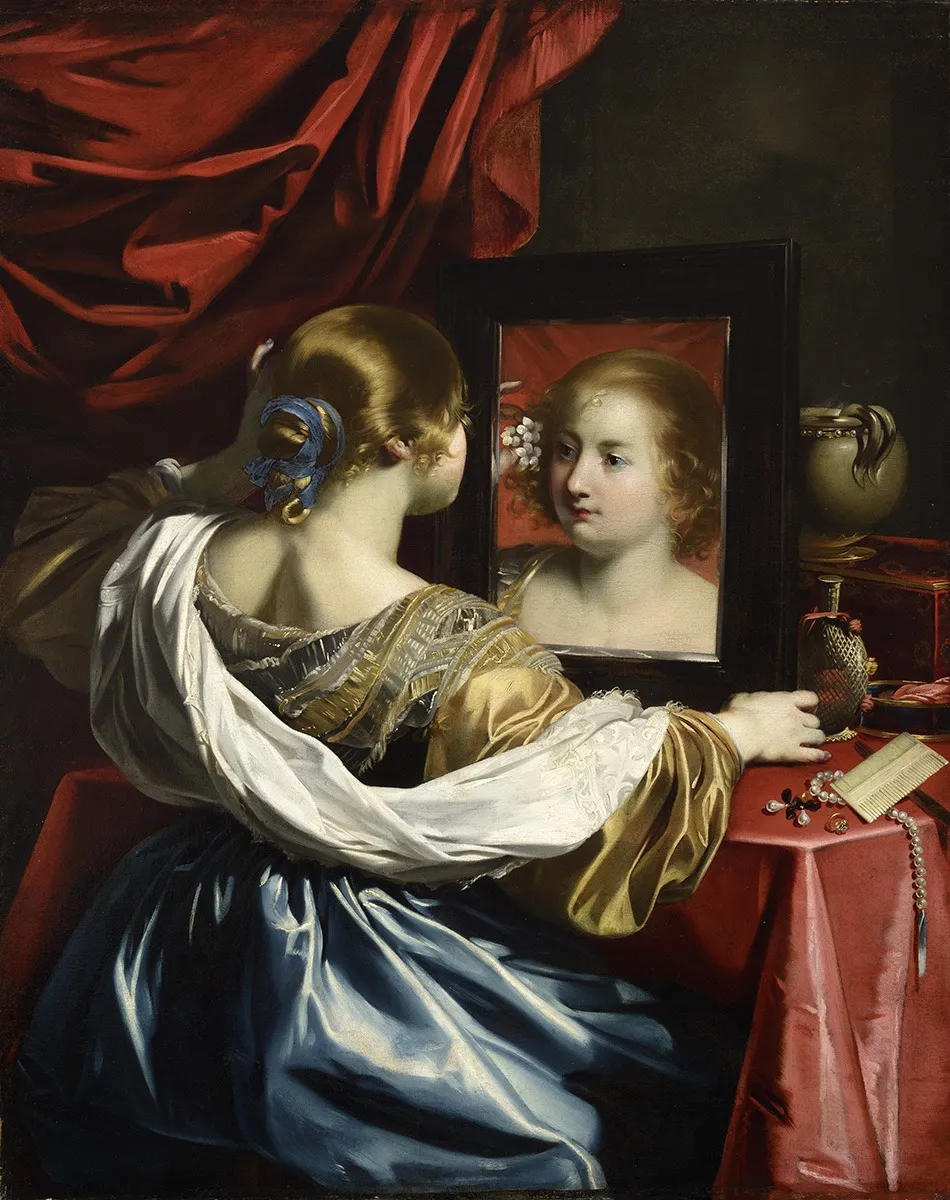
Vanity is an oil painting by the Caravaggisti artist Nicolas Régnier. It dates from 1630 and is held in the collection of the Museum of Fine Arts of Lyon.
About this work
Vanity is a 1630 oil painting by Nicolas Régnier. It shows a young woman at her dressing table. The work sits in the Museum of Fine Arts of Lyon.
Régnier trained in Italy before moving to France. This painting blends Dutch still-life detail with Italian style. It’s a quiet scene but full of small, careful choices.
Check out Nicolas Régnier next.
Overview
Vanity, also known as Young Woman at her Toilette, is an oil on canvas painting by the French artist Nicolas Régnier, dated to approximately 1630-1635.
Vanity, also known as Young Woman at her Toilette, is an oil on canvas painting by the French artist Nicolas Régnier, dated to approximately 1630-1635. Measuring 132 by 105.5 centimetres, the work is held in the collection of the Museum of Fine Arts of Lyon, where it has resided since 1976. The painting exemplifies Régnier's mature Venetian period, synthesising the dramatic lighting of his Caravaggesque training with the sensual colourism and decorative richness of Venetian painting. As a vanitas image, it occupies a significant place within seventeenth-century French and Italian art, demonstrating how a genre painting could simultaneously celebrate and question the transience of earthly beauty and luxury.
Subject & Meaning
The painting depicts a seated woman at her toilette, viewed from behind as she gazes into a mirror. Her face is visible only in the mirror's reflection, creating a doubled image that invites meditation on appearance and self-regard. She arranges her hair, which is bound with a blue ribbon and gold ornament, while her left hand rests on a table covered with red cloth. Upon this table lie objects of adornment: a comb, strands of pearls, a ring, and a small ornate bottle. These items, together with the ceramic vessel in the background, constitute a still life of luxury goods that anchors the painting's vanitas meaning. The mirror itself operates as the central symbol, evoking not merely self-beautification but also the classical figure of Narcissus and the vice of Pride, one of the seven deadly sins. The woman's elegant costume, blue skirt, and bodice with gold and silver embroidery, beneath voluminous white sleeves and golden oversleeves, signal aristocratic status. Yet the genre classification as vanitas suggests that these very markers of wealth and beauty are subject to decay. The painting thus participates in a broader early modern debate about the place of women and luxury in society, a controversy particularly acute in Venice where, as contemporary sources note, women such as Lucrezia Marinella and Arcangela Tarabotti defended the right to adornment against male critics including Giovan Francesco Loredan and Francesco Buoninsegni.
Technique & Style
The painting is executed in oil on canvas, a support that allowed Régnier the flexibility to achieve smooth, layered surfaces. Light falls from the left, illuminating the woman's neck, shoulder, and the mirror's reflection, while the background remains in deep shadow. This dramatic chiaroscuro recalls the artist's Caravaggesque formation, yet the handling of colour and texture reflects his absorption of Venetian influences. The palette is dominated by deep reds, blues, golds, and whites set against a dark ground. The heavy red drapery that sweeps from the upper left, the red tablecloth, and the blue of the skirt create a rich, warm tonality. The surface is smoothly painted with careful attention to the sheen of fabrics and the soft modelling of flesh. The white of the woman's skin and her ornamental garments provide points of luminosity that emerge from the surrounding darkness. This interplay of light and shadow, combined with the theatrical presentation and decorative opulence, characterises Régnier's Venetian manner, even as certain nuances of his earlier Roman period persist in the handling of form and space.
History & Provenance
The circumstances of the painting's commission and early history remain unknown. The work entered the collection of the Museum of Fine Arts of Lyon in 1976, where it is inventoried as Inv. 1976-7. Its acquisition was noted in the professional literature of that year, including La Revue du Louvre and subsequent museum bulletins. Since its arrival in Lyon, the painting has been featured in several exhibitions and catalogues. It appeared in the travelling exhibition 'Grand siècle: peintures françaises du XVIIe siècle dans les collections publiques françaises', shown at the Musée des Beaux-Arts in Montréal, Rennes, and Montpellier in 1993. It was also included in 'The Triumph of French Painting: 17th Century Masterpieces from the Museums of France', which travelled to Portland and Birmingham in 2003-2004. More recently, it featured in 'Vanité: Mort, que me veux-tu?' at the Fondation Pierre Bergé, Yves Saint Laurent in Paris in 2010, and in 'La Toilette: naissance de l'intime' at the Musée Marmottan Monet in Paris in 2015.
Context
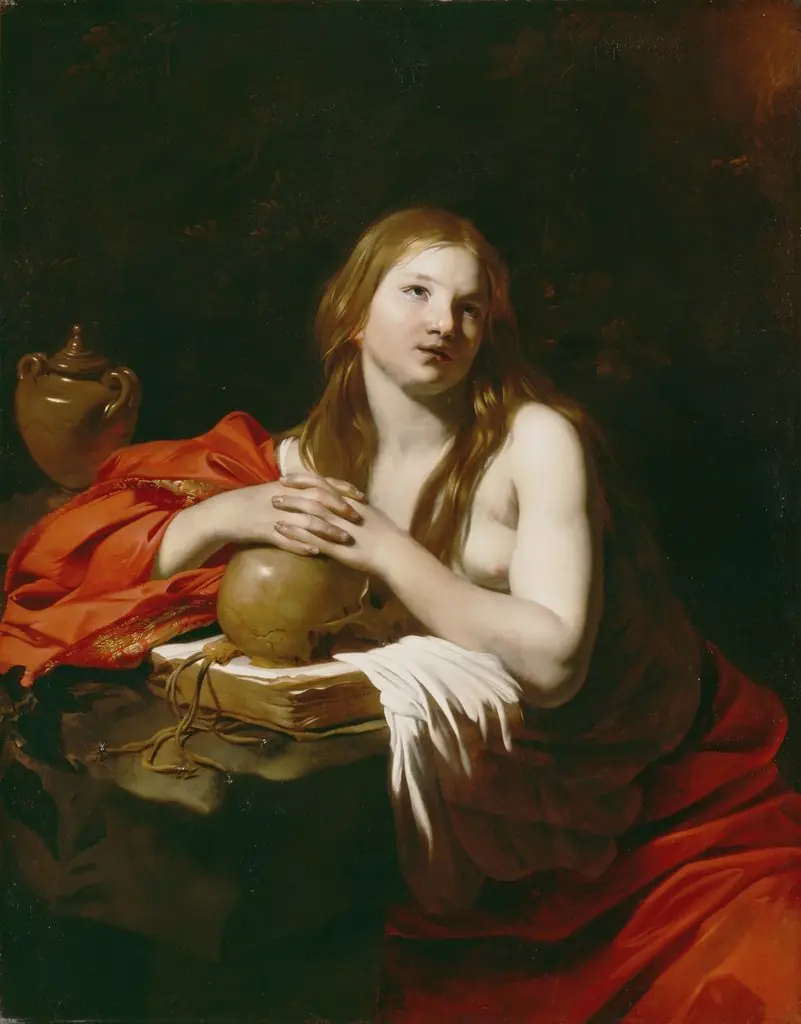
Nicolas Régnier was born in Maubeuge and trained in Antwerp before establishing his career in Italy, where he acquired considerable renown for paintings executed in the manner of Caravaggio. After a formative period in Rome, he settled in Venice, where his style evolved through engagement with local traditions. Vanity belongs to this Venetian phase, demonstrating theatricality, sensuality, and decorative richness while retaining traces of his earlier Caravaggesque manner. The painting connects to Régnier's earlier production, including his series of penitent Magdalenes sometimes referred to as the 'Birmingham' series, yet it shifts the emphasis from religious penitence to secular self-regard. Within the broader field of seventeenth-century European painting, the work participates in the tradition of the toilette scene, a subject that allowed artists to explore the boundaries between portraiture, genre painting, and moral allegory. Scholarship on the painting includes contributions by Arnauld Brejon de Lavergnée and Jean-Pierre Cuzin, who published on the work following its acquisition by Lyon, and Annick Lemoine, whose 2007 monograph on Régnier provides the standard catalogue reference. The painting is discussed in relation to French Caravaggesque painting and has been cited in studies of mirrors and reflection in art, including works by France Borel and Jonathan Miller.
Legacy
Since its acquisition by the Museum of Fine Arts of Lyon, Vanity has become a fixture in studies of French seventeenth-century painting and Caravaggesque art. Its inclusion in major travelling exhibitions has introduced the work to international audiences, while its presence in scholarly catalogues and monographs has secured its place in the Régnier literature. The painting's subject matter, a woman at her toilette gazing into a mirror, has made it a touchstone for discussions of vanity, gender, and the gaze in early modern European art. Its afterlife in popular and scholarly contexts reflects the enduring fascination with images of self-regard and the moral ambiguities of beauty and adornment. As a work that bridges the Caravaggesque and Venetian traditions, it continues to serve as a significant example of how French artists working in Italy negotiated between competing aesthetic models, and how a single canvas could engage simultaneously with the pleasures of the senses and the warnings of moral philosophy.
Artist & collection

Artist
Nicolas Régnier (1591–1667), known in Italy as Niccolò Renieri, was a painter, art dealer and art collector from the County of Hainaut, a French-speaking part of the Spanish Netherlands.





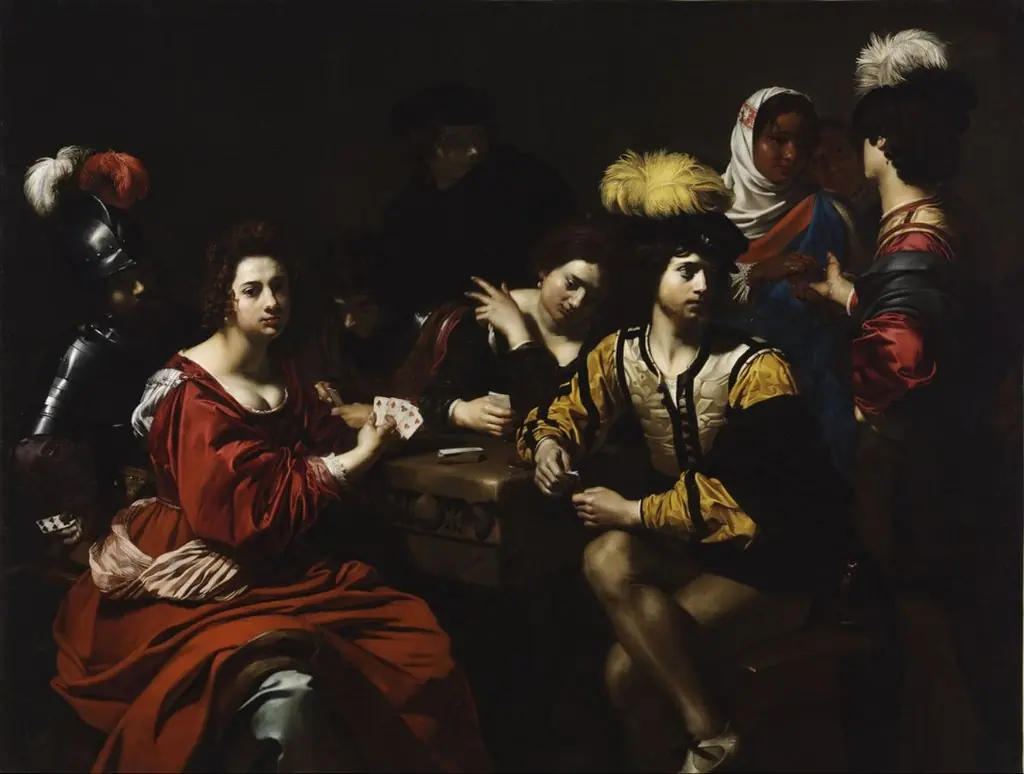
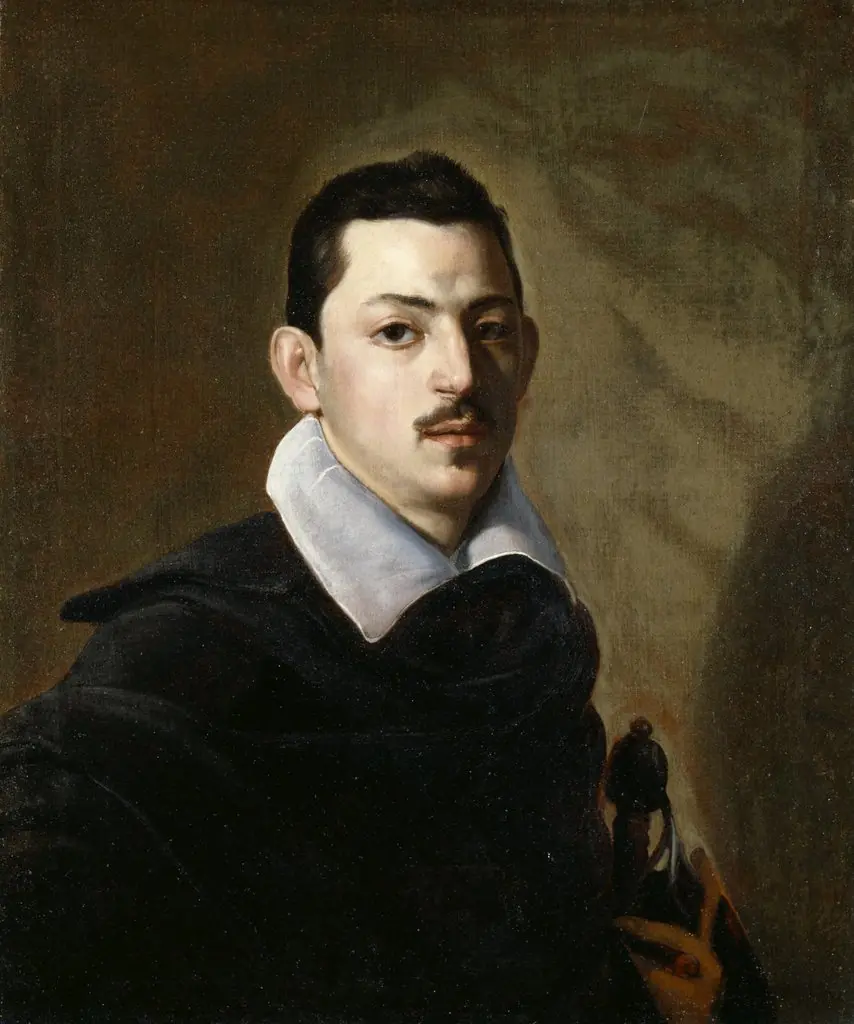
- Girl at the mirror
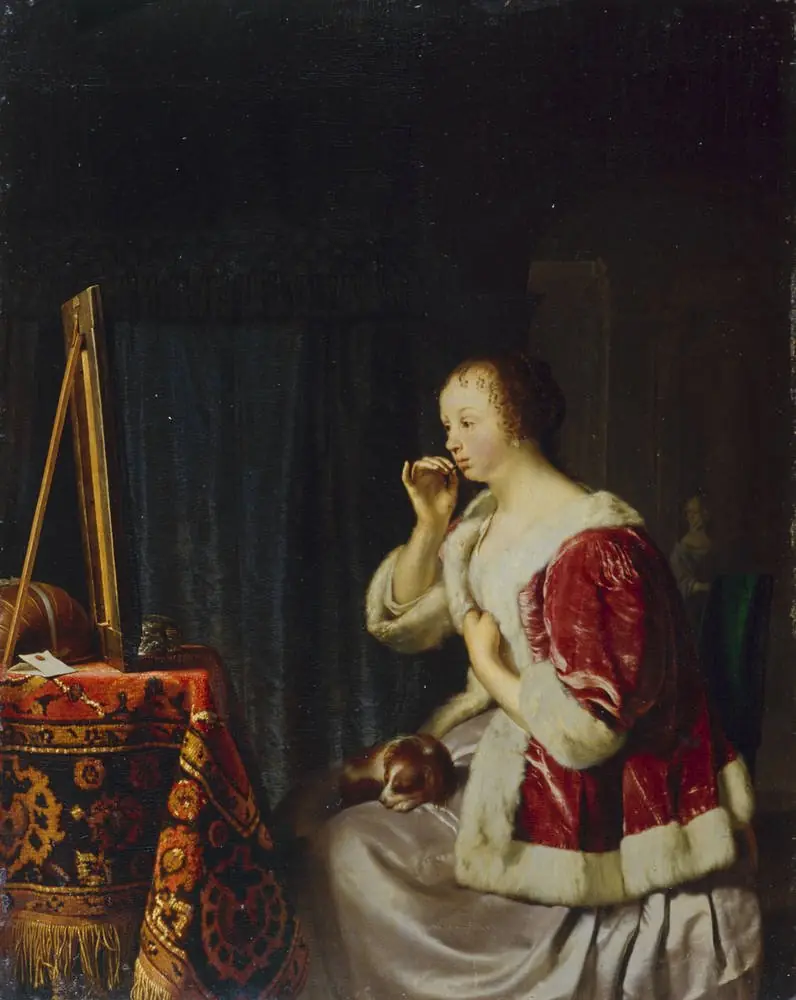 Young Woman at her Toilet
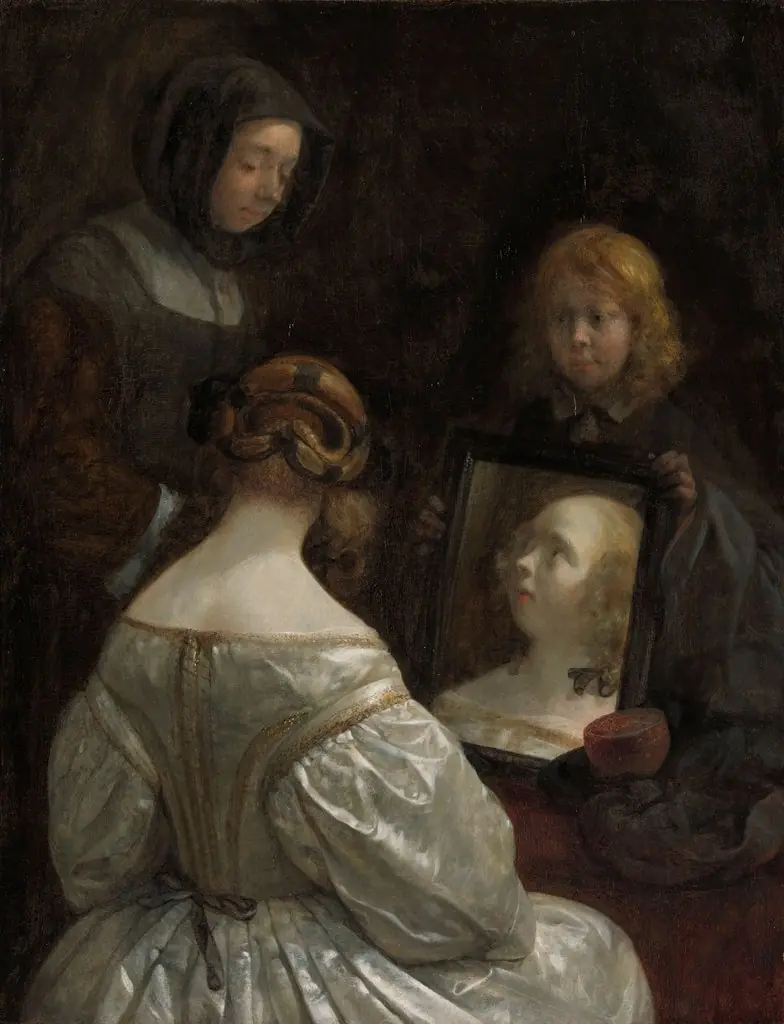 Woman at a Mirror
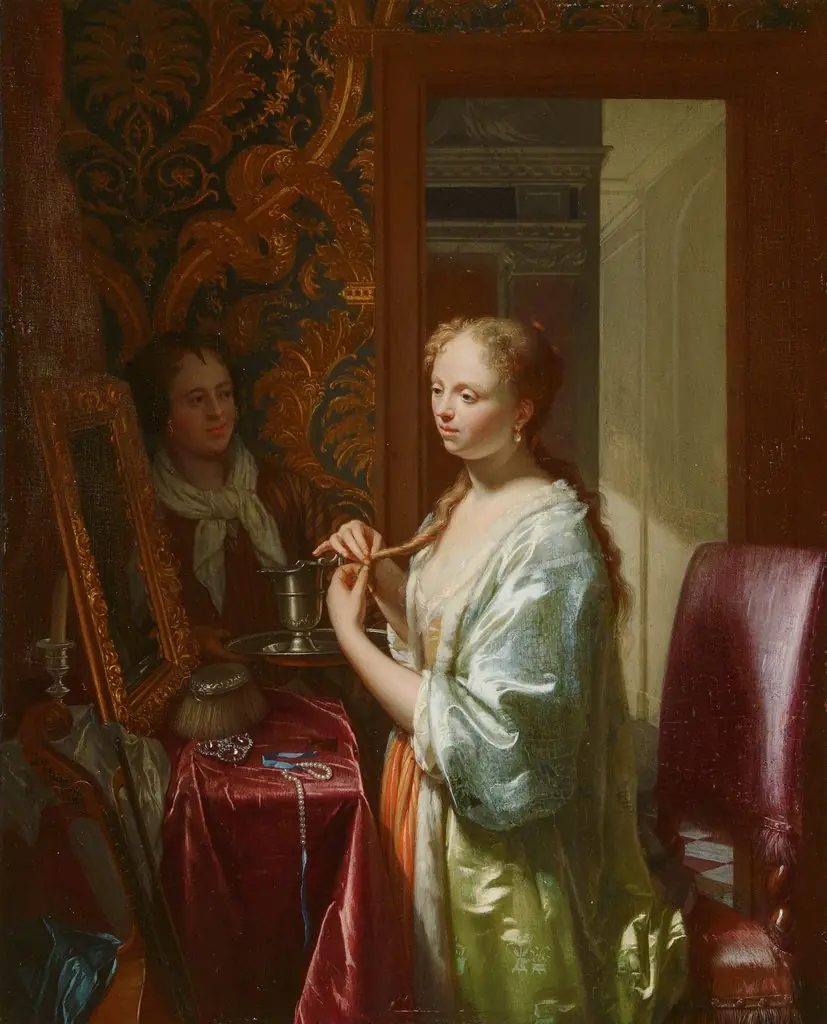 Lady attending to her toilet
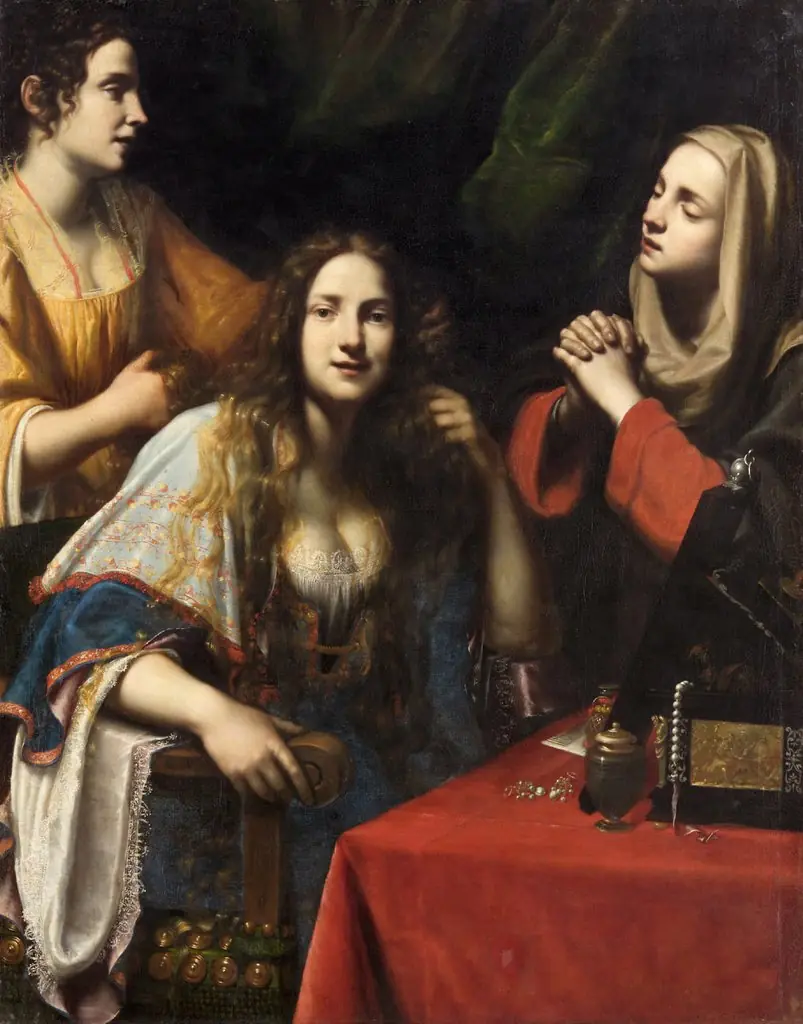 Martha scolding her vain sister Mary Magdalene
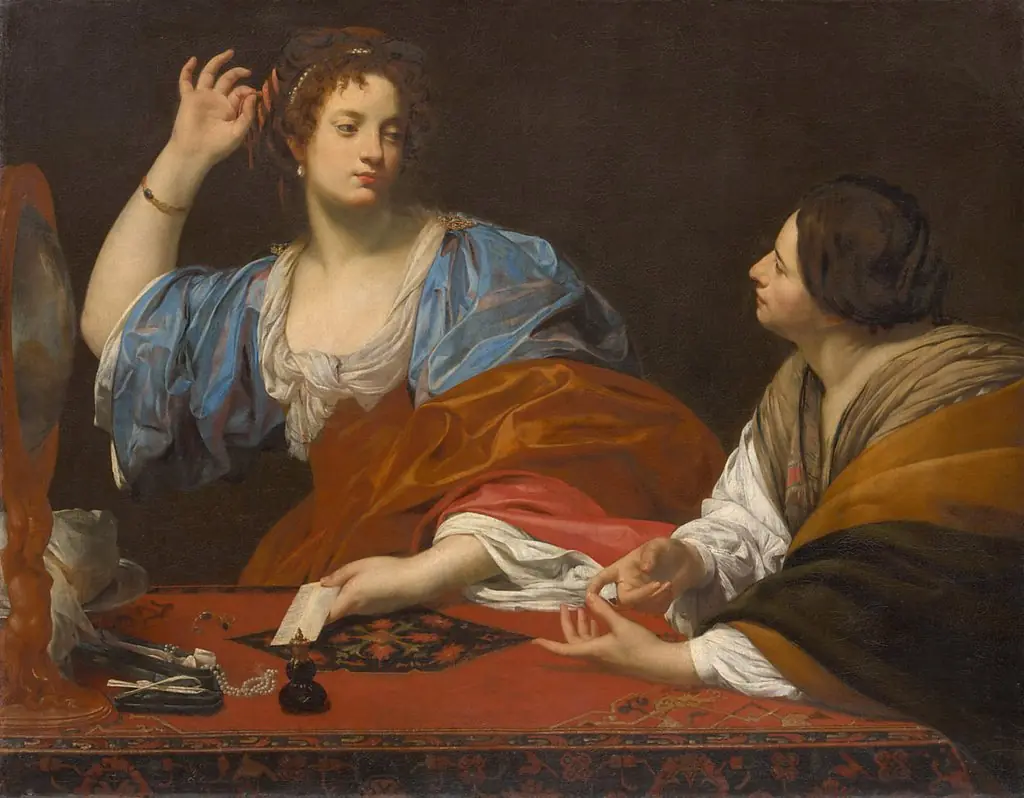 Martha blames her vain sister, Mary Magdalene
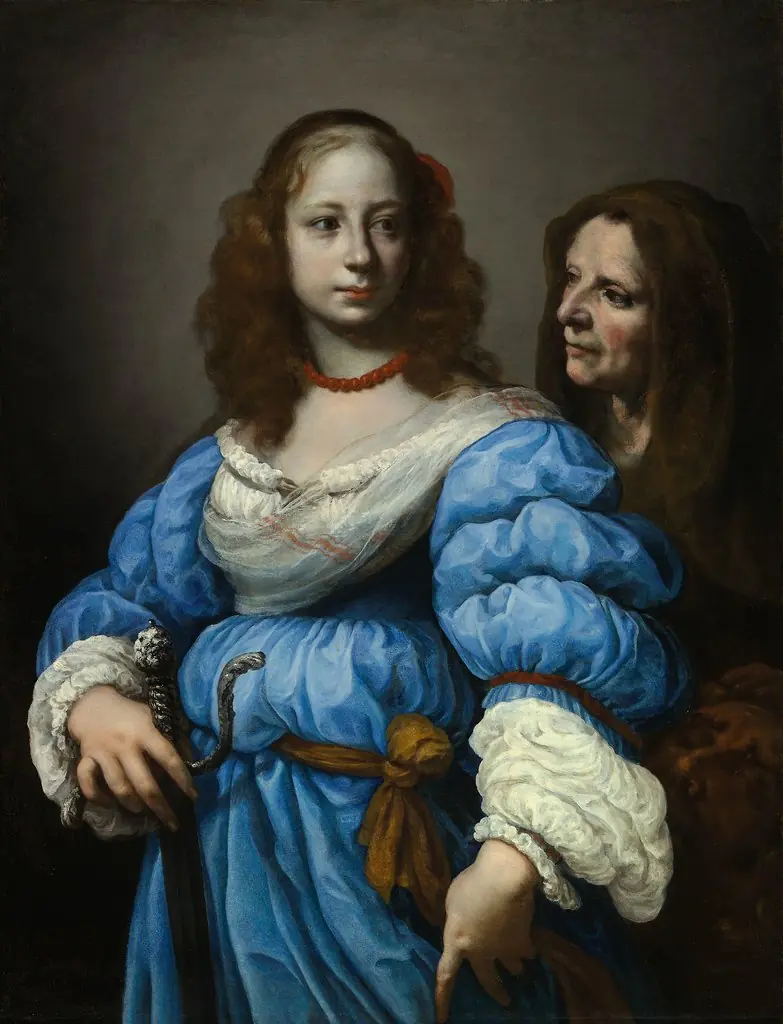 Judith with the Head of Holofernes
 Rachel Ruysch in her studio
 Girl Standing before a Mirror
 Music-making company
 A girl with a mirror, an allegory of Profane Love
 Woman Portrayed as the Goddess Diana