Artwork
Woman at a Mirror
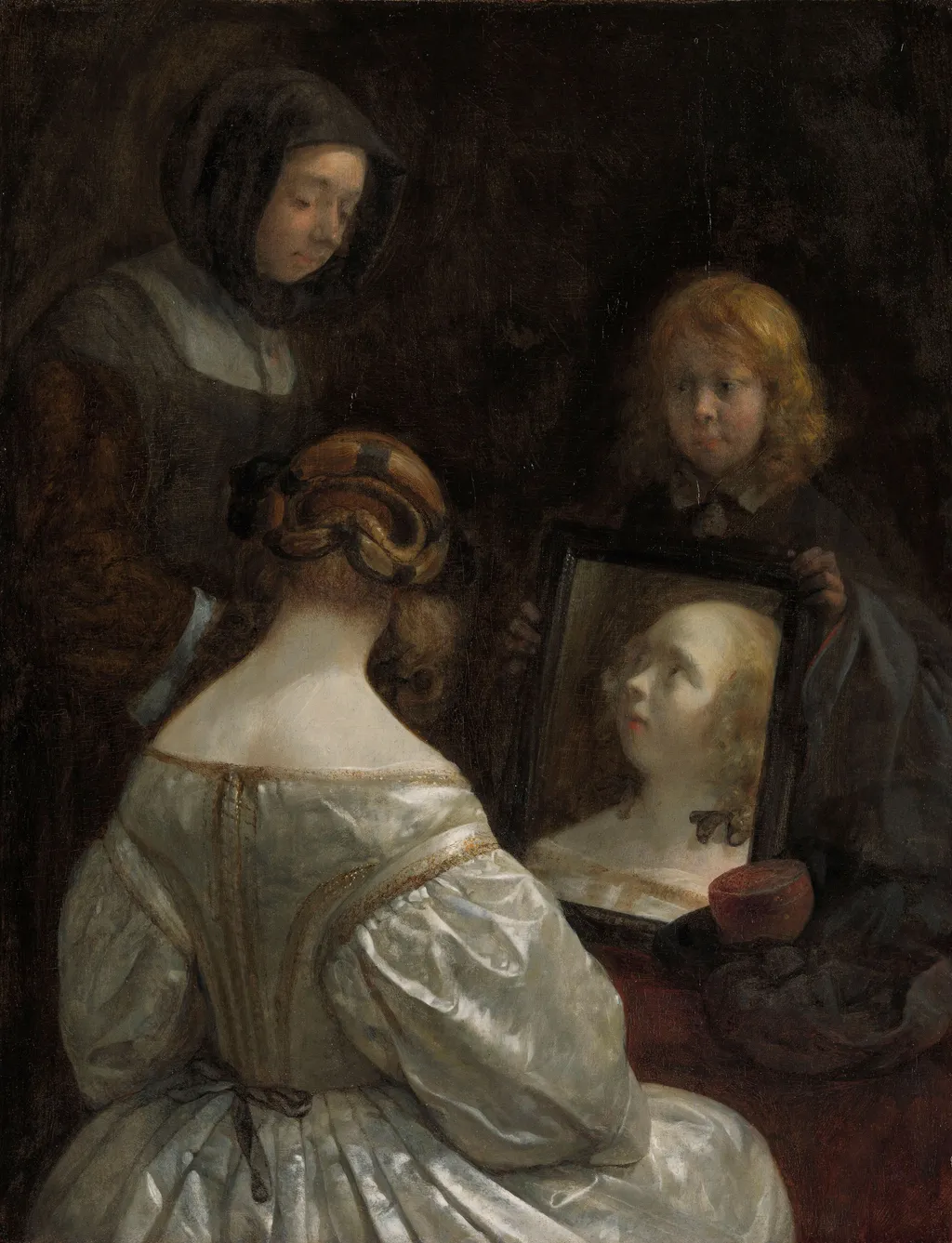
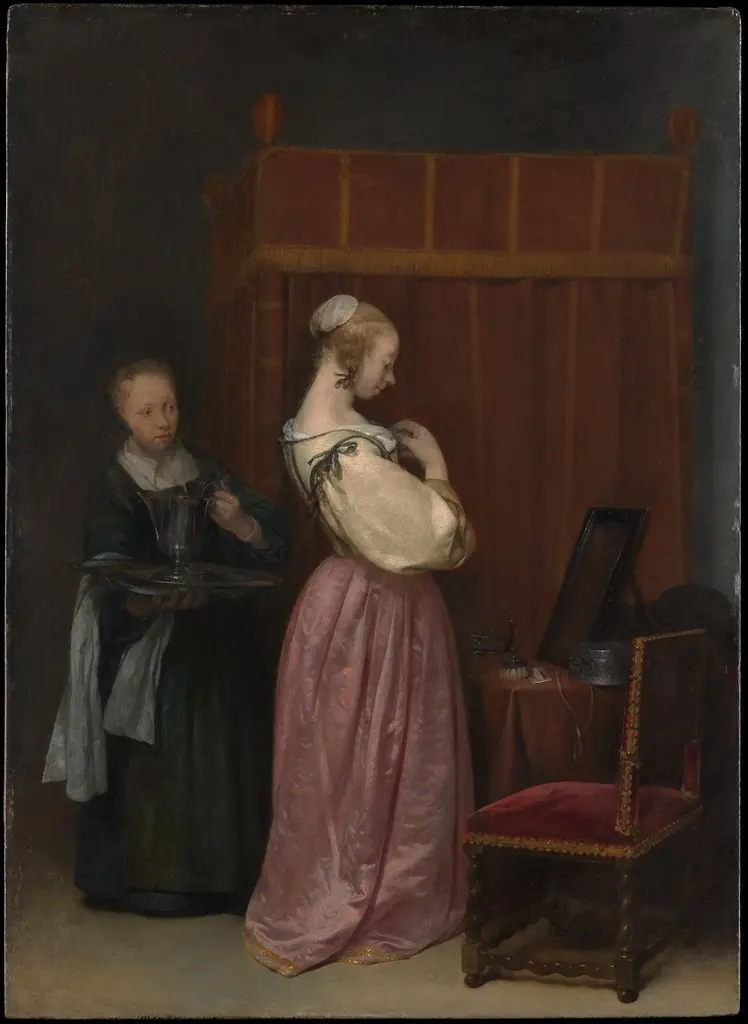
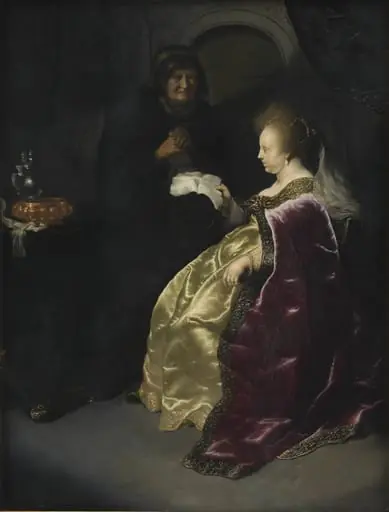
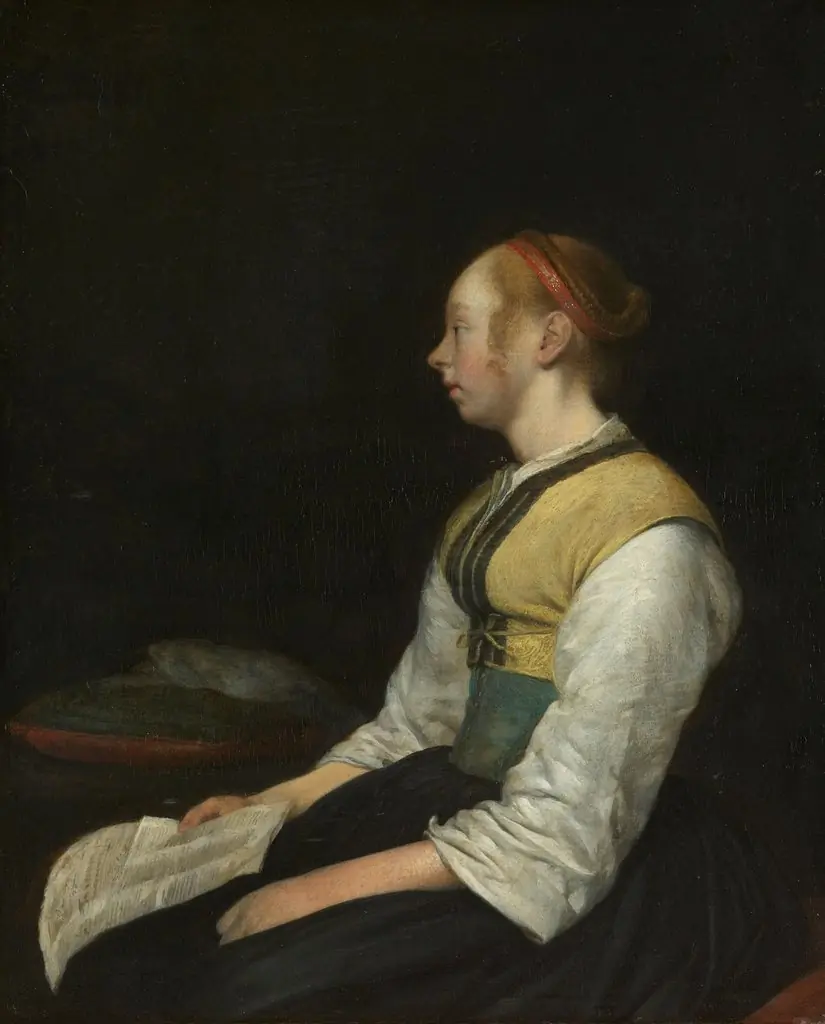
Woman at a Mirror is an oil painting by the Dutch Golden Age artist Gerard ter Borch. It dates from 1652 and is held in the collection of the Rijksmuseum.
About this work
Subject & Meaning
The mirror and letter function as symbols of introspection and the fleeting nature of time, common themes in Dutch Golden Age genre scenes.
The painting shows a young woman seated before a mirror, her gaze directed toward her reflection. She holds a letter, suggesting contemplation of personal correspondence or future intentions. The mirror and letter function as symbols of introspection and the fleeting nature of time, common themes in Dutch Golden Age genre scenes.
The work belongs to the genre of interior domestic scenes that explore private moments and moral or psychological nuance. Its meaning is tied to contemporary interpretations of female behavior and domestic virtue in 17th-century Dutch society.
Technique & Style
The painting is executed in oil on panel, a common support for Dutch genre works of the mid-seventeenth century. Its handling is notable for the refined, smooth brushwork and subtle transitions of light and shadow across the sitter’s satin dress and the mirror’s reflective surface. The composition emphasizes quiet interiority, with a low viewpoint that focuses attention on the woman’s contemplative pose at the mirror.
The subdued palette and delicate modeling contribute to an atmosphere of restrained elegance, characteristic of Gerard ter Borch’s mature style.
The work’s small scale and polished finish align with contemporary Dutch cabinet pictures designed for private collectors.
History & Provenance
Gerard ter Borch created the oil painting Woman at a Mirror in 1652. The work was executed on a panel measuring 34.5 cm in height and 26 cm in width. Historical records indicate that the painting was once owned by William Coxe.
In the modern era, the artwork entered the collection of the Rijksmuseum, where it remains housed. The piece has been featured in significant exhibitions, including Vermeer and the Masters of Genre Painting: Inspiration and Rivalry.
Woman at a Mirror is held at the Rijksmuseum under inventory number SK-C-5. The work entered the collection through the ownership of William Coxe before its acquisition. It was featured in the exhibition Vermeer and the Masters of Genre Painting. Inspiration and Rivalry.
Context
Gerard ter Borch's 1652 painting Woman at a Mirror entered the collection of William Coxe before being acquired by the Rijksmuseum, where it remains on display as part of their Dutch Golden Age holdings. The work has been featured in major scholarly exhibitions, including 'Vermeer and the Masters of Genre Painting. Inspiration and Rivalry,' which highlighted its significance within 17th-century Dutch genre painting.
Art historians have analyzed its technical mastery and psychological depth as representative of Borch's refined approach to interior scenes, situating it within broader discussions of artistic exchange in Leiden during the mid-1600s.
Scholarly discourse continues to engage with the painting's compositional subtlety and its role in shaping genre conventions, cementing its reputation as a key example of Dutch Baroque artistry.
Overview
Gerard ter Borch painted Woman at a Mirror in 1652, employing oil on canvas. The work is part of the Dutch Golden Age repertoire and is presently owned by the Rijksmuseum in Amsterdam.
Own this work as a print
Artist & collection

Artist
Gerard ter Borch (Dutch:; December 1617 – 8 December 1681), also known as Gerard Terburg (Dutch: ), was a Dutch Golden Age painter mainly of genre subjects.