Movement
Grand Siècle
Grand Siècle is an art movement of the 1610–1723 period. The gallery holds 2 works in this movement. Browse Grand Siècle paintings, portraits, pictures and artworks from the world's public-domain museum collections.
The Grand Siècle—French for "Great Century"—is the name given to the brilliant flowering of French culture across the seventeenth century, when France displaced Italy and Spain as the arbiter of European taste. Though it culminates in the long personal reign of Louis XIV (1643–1715), historians often trace its beginnings to the accession of Henri IV in 1589, spanning the reigns of Henri IV, Louis XIII, and the Sun King. What distinguishes the period is the deliberate harnessing of art to the prestige of the crown and the state: a network of royal academies was founded to regulate creative life, including the Académie française in 1635, the Académie royale de peinture et de sculpture in 1648 (reorganised in 1664), and the Académie royale d'architecture in 1665. Under Louis XIV and his minister Colbert, the arts became, in effect, instruments of monarchical glory.
The dominant visual idiom was French classicism, which set itself apart from the exuberant Italian Baroque. It prized rationalism, clarity of composition, reverence for the art of classical antiquity, and a sense of a world ordered by divine reason. Its founding masters worked largely in Rome: Nicolas Poussin, who formulated the *grande manière*—the principle that a picture should narrate its subject with the utmost clarity, free of distracting detail—and Claude Lorrain, whose luminous, idealised landscapes became the European standard. At home, Simon Vouet bridged Baroque and classical tendencies, Philippe de Champaigne brought austere gravity to portraiture and religious painting, and Charles Le Brun, first painter to the king, codified the academic style and orchestrated the decoration of Versailles.
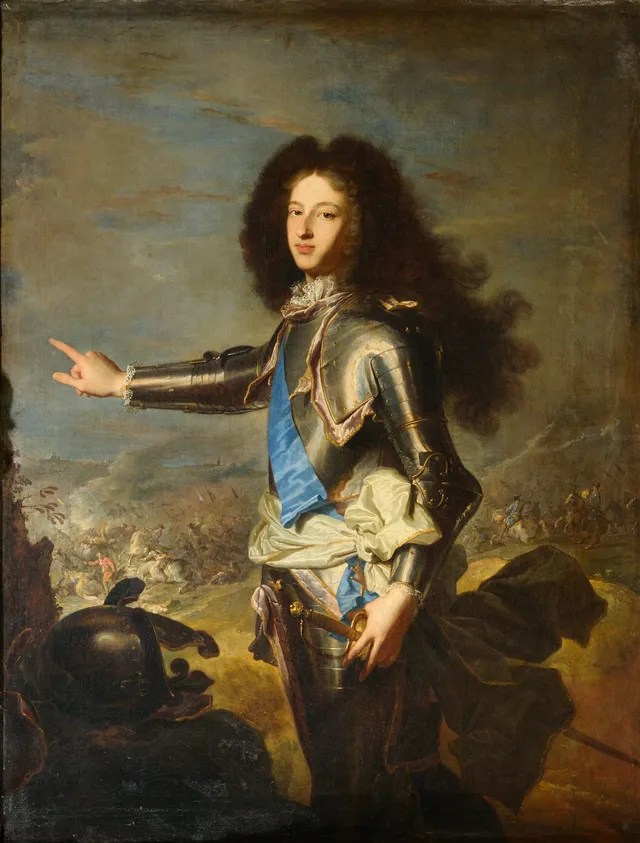
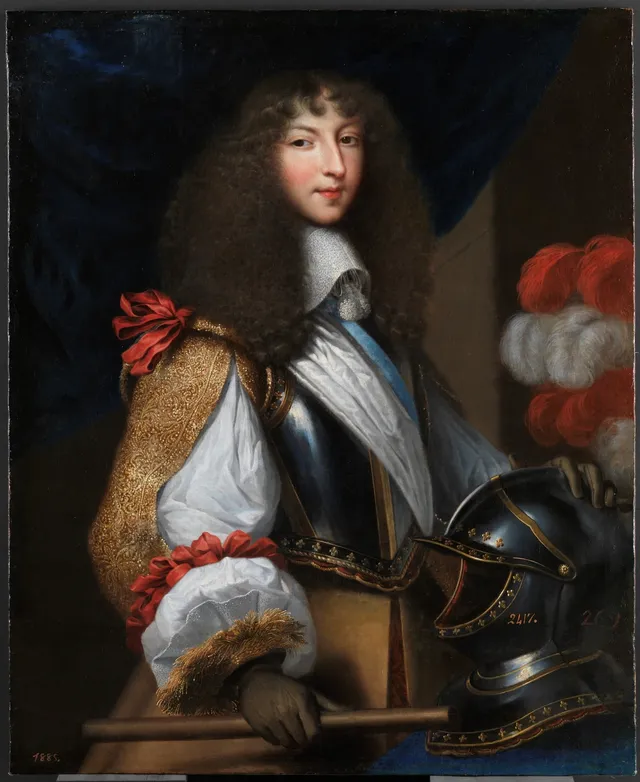
Versailles was the Grand Siècle's supreme monument, the product of a celebrated team: the architects Louis Le Vau and, later, Jules Hardouin-Mansart, the garden designer André Le Nôtre, and Le Brun, whose painted ceilings in the Hall of Mirrors recount the king's victories. Court portraiture reached its apogee with Hyacinthe Rigaud, whose state image of Louis XIV (1701) became the very emblem of absolutism; our collection holds his *Louis de France, Duke of Burgundy*, depicting the king's grandson. We also hold Jean Nocret's *Louis XIV as a young man*; Nocret rose to rector of the Académie.
The legacy of the Grand Siècle was immense. Its academic system, with its hierarchy of genres and ideal of disciplined classicism, governed French art for over a century and shaped the later Salon, before giving way to the lighter Rococo of the Régence and the Neoclassical revival of the late eighteenth century.
Works
Frequently asked questions
What is Grand Siècle?
Grand Siècle is an art movement. The 'Grand Century' — the reign of Louis XIV (1643–1715) — during which the French court at Versailles set the cultural standard for all of Europe.
When did Grand Siècle take place?
Grand Siècle dates from 1610–1723.
Where can I see Grand Siècle works?
Grand Siècle works in the collection are held by Museum of the History of France and Museo del Prado.