Artwork
Untitled
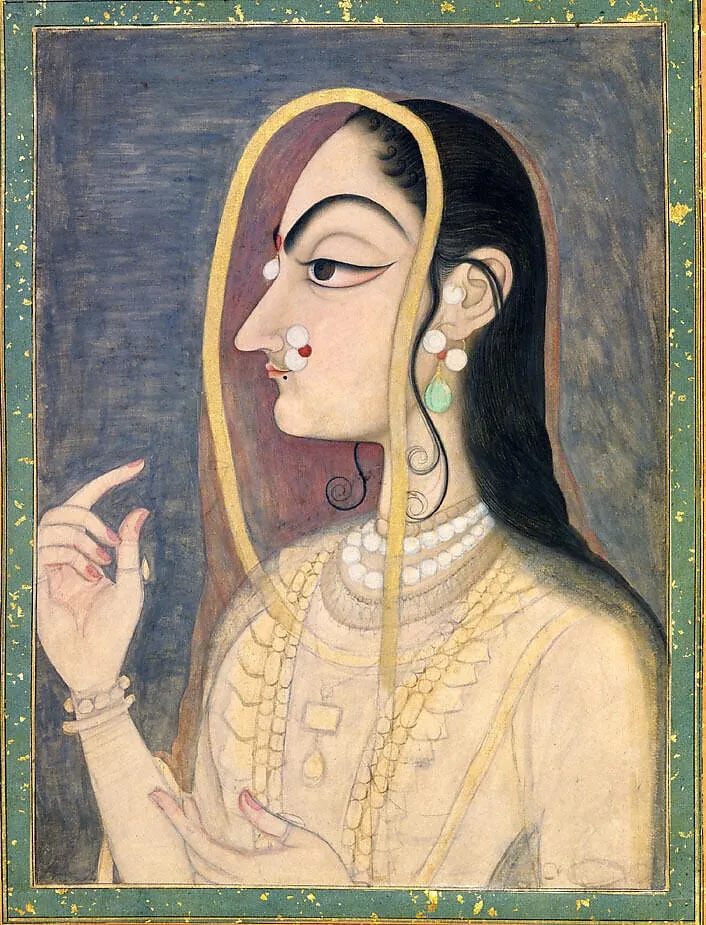
Untitled is a watercolor painting. It dates from 1750 and is held in the collection of the Metropolitan Museum of Art.
About this work
Subject & Meaning
The intimate, side‑by‑side composition emphasizes their spiritual union and serves as an iconographic representation of divine love and spiritual longing.
The work portrays the Hindu deities Krishna and Rādhā in a profile view, focusing on the divine couple as a central theme of devotional portraiture. Krishna is shown with his characteristic attributes, while Rādhā appears as the beloved female figure, together embodying the ideal of loving devotion (bhakti) in Rajasthani painting tradition. The intimate, side‑by‑side composition emphasizes their spiritual union and serves as an iconographic representation of divine love and spiritual longing.
History & Provenance
Created in 1750 in Rajasthan, India, this ink and opaque watercolor portrait on paper depicts the figures of Krishna and Rādhā. The work was produced by an anonymous artist, with no specific commissioning patron or detailed creation narrative recorded in available documentation. Following its production in the eighteenth century, the painting eventually entered the collection of the Metropolitan Museum of Art, where it is currently housed and classified as a painting within the museum's holdings.
Overview
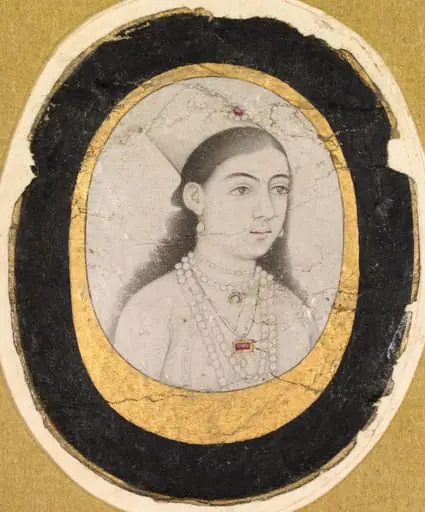
This untitled painting depicts a woman's profile rendered with ink and opaque watercolor on paper. Her face, characterized by delicate features such as long lashes, a small nose, and red-painted lips, emerges from a soft, pale background. Adorned with a pearl in her hair and a single flower-shaped earring, the figure embodies a serene and contemplative expression.
Technique & Style
The artwork showcases a refined artistic approach, blending softness with meticulous precision. Executed in ink and opaque watercolor, the piece features exceptionally fine ink lines that contribute to its delicate appearance, almost dissolving into the painted surface. This technique creates a subtle yet defined profile, emphasizing the figure's graceful contours and the intricate details of her adornments.
Context
This portrayal aligns with the distinctive aesthetic developed by artists in Kishangarh, a princely state in Rajasthan, India, during the 1700s. The repeated depiction of Radha with her characteristic dreamy gaze was a hallmark of this regional school of painting. Such works reflect the artistic conventions and devotional themes prevalent in the courtly art of the period.
Artist & collection

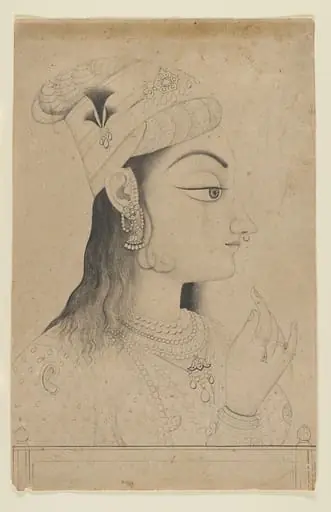
- Untitled
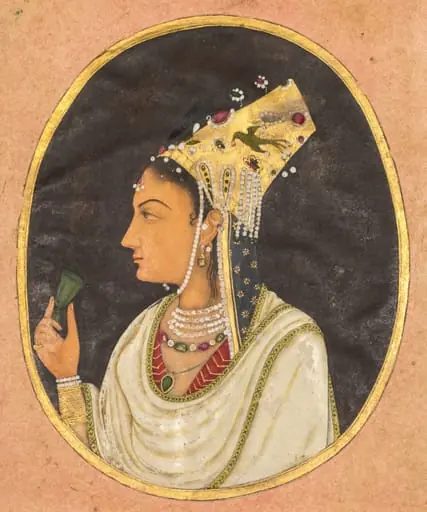 Oval portrait of a woman in a Chaghtai hat
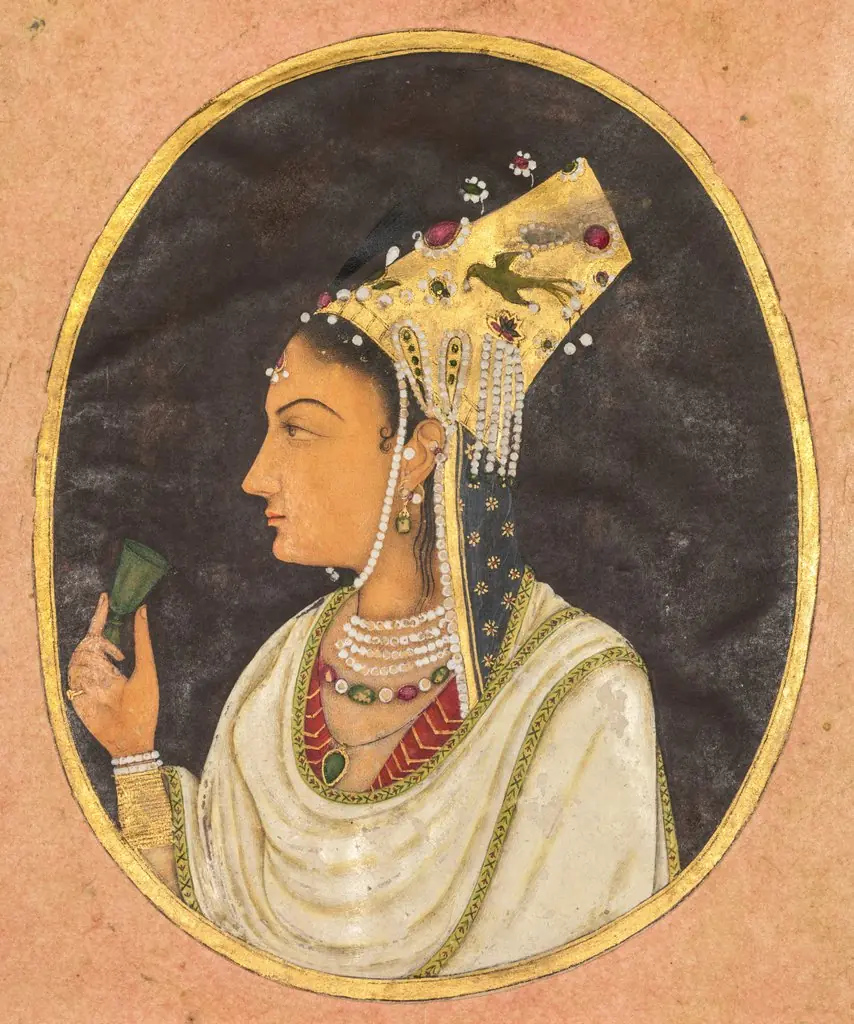 Oval portrait of a woman in a Chaghtai hat
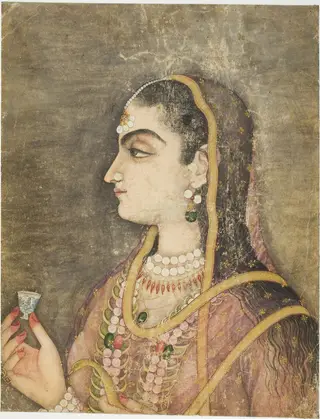 Portrait of a Princess
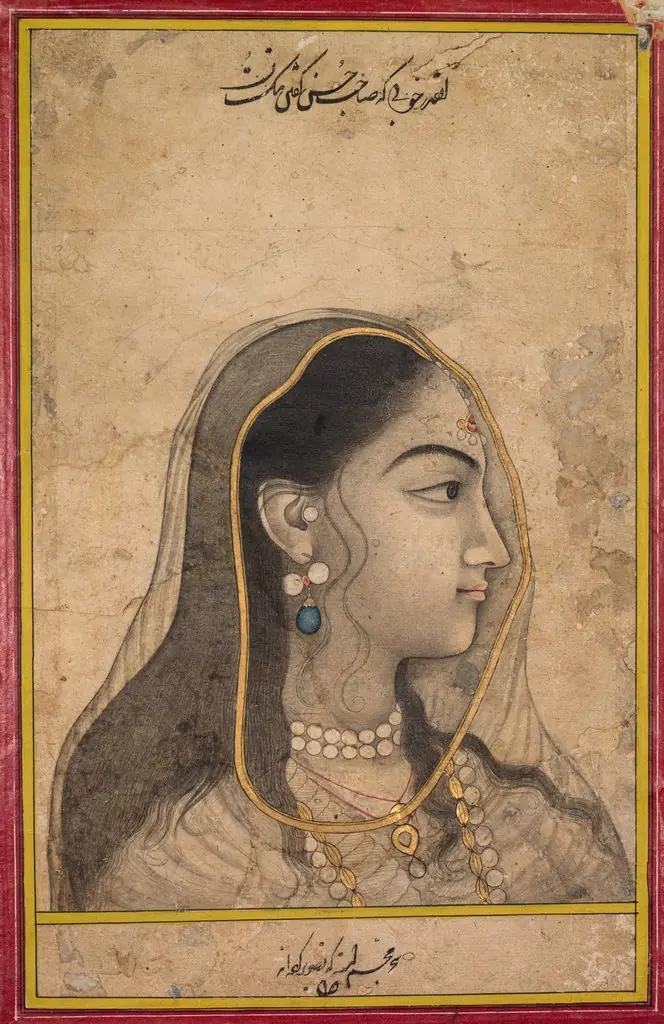 Head of a Beauty
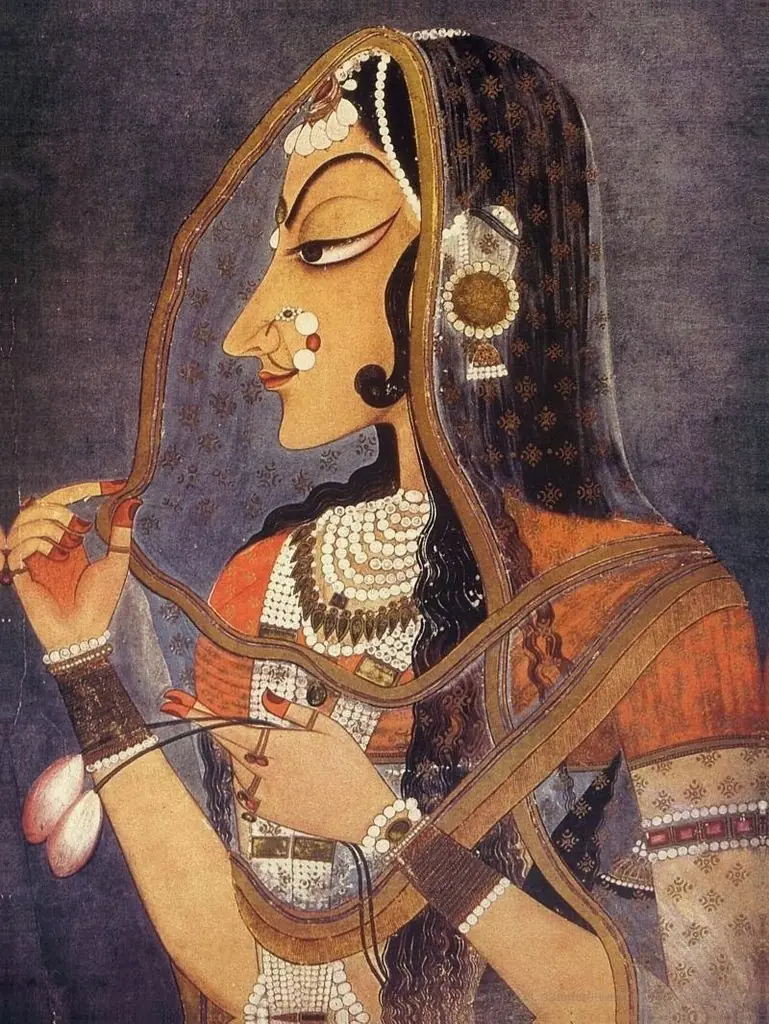 Bani Thani
 Head of a Beauty
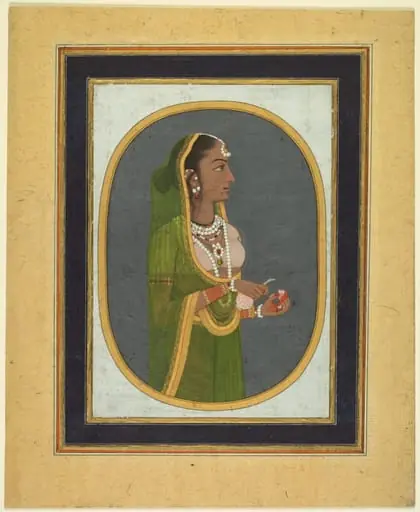 Court Lady Pouring Wine (recto)
 Court Lady Pouring Wine (recto); Calligraphy of Lyrical Quatrains (verso)
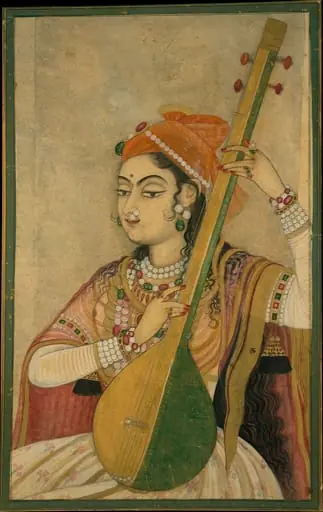 Untitled
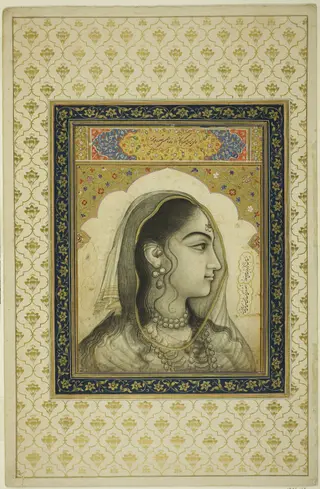 Portrait of a Beauty
 Jewel Portrait of a Young Girl