Artwork
Portrait of Maharaja Savant Singh with Consort, Bani Thani
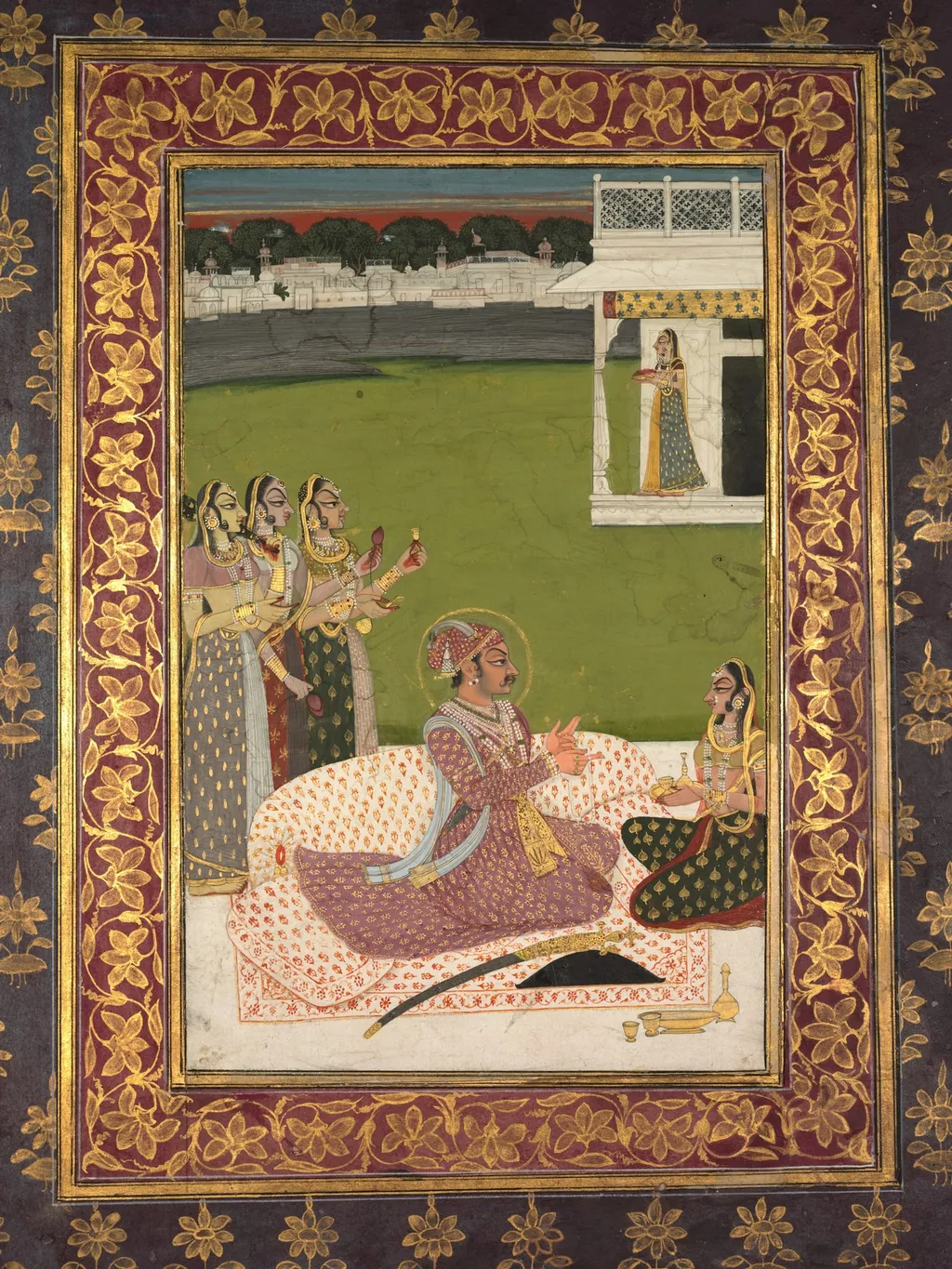
Portrait of Maharaja Savant Singh with Consort, Bani Thani is an unspecified painting by the Baroque artist Nihâl Chand. It dates from 1704 and is held in the collection of the Cleveland Museum of Art. This portrait, attributed to Nihal Chand, dates to the early 18th century and originates from the Kishangarh court in Rajputana.
- Accession no.
- 2001.172
- Credit line
- Gift of Dr. Norman Zaworski
About this work
Overview
This portrait, attributed to Nihal Chand, dates to the early 18th century and originates from the Kishangarh court in Rajputana.
This portrait, attributed to Nihal Chand, dates to the early 18th century and originates from the Kishangarh court in Rajputana. It depicts Maharaja Savant Singh alongside his consort, rendered in the distinctive Bani Thani style. The work stands out among Rajasthani miniatures for its unusually large scale and meticulous detail, reflecting the court’s patronage of a highly stylized aesthetic that merged royal identity with devotional imagery.
Subject & Meaning
The figures are not merely portraits but symbolic representations of Krishna and Radha, aligning the ruler and his consort with divine love. The maharaja’s serene, luminous face suggests spiritual radiance, while the women surrounding him, though present, are rendered with less emphasis, reinforcing the central pairing. This iconography served to elevate the ruler’s status through religious metaphor, common in Kishangarh’s courtly culture.
Technique & Style
Nihal Chand employed fine brushwork and layered pigments to achieve delicate modeling, particularly in the faces and textiles. Gold leaf outlines and intricate patterns adorn clothing and borders, enhancing the opulence. The background features a softly rendered landscape with minimal depth, typical of the Kishangarh style.
The luminous glow around the maharaja’s head is achieved through subtle washes, distinguishing him visually from the more shadowed figures.
History & Provenance
Created during Savant Singh’s reign, the painting was likely produced in the royal atelier under Nihal Chand’s direction. It remained within the Kishangarh royal collection until the 20th century, when it entered public collections. Its survival in good condition reflects its ceremonial importance and the care taken by successive generations to preserve courtly heritage.
Context
The Kishangarh school emerged in the early 1700s as a distinct branch of Rajput painting, influenced by Mughal naturalism but transformed by intense devotional themes. Under Savant Singh’s patronage, artists prioritized idealized beauty and emotional expression over realism. This portrait exemplifies how courtly identity and Vaishnavite devotion were intertwined in regional art during this period.
Legacy
The Bani Thani style, named after Savant Singh’s consort, became emblematic of Kishangarh’s artistic identity. Nihal Chand’s works, including this portrait, set a visual standard for later artists in the region. Though the school’s prominence waned after the 18th century, these paintings remain key references for understanding the fusion of royal portraiture and spiritual symbolism in Indian miniature traditions.
Own this work as a print
Artist & collection
Artist
Nihâl Chand (1710–1782) was an Indian painter and poet who produced some of the best known examples of Rajput painting.

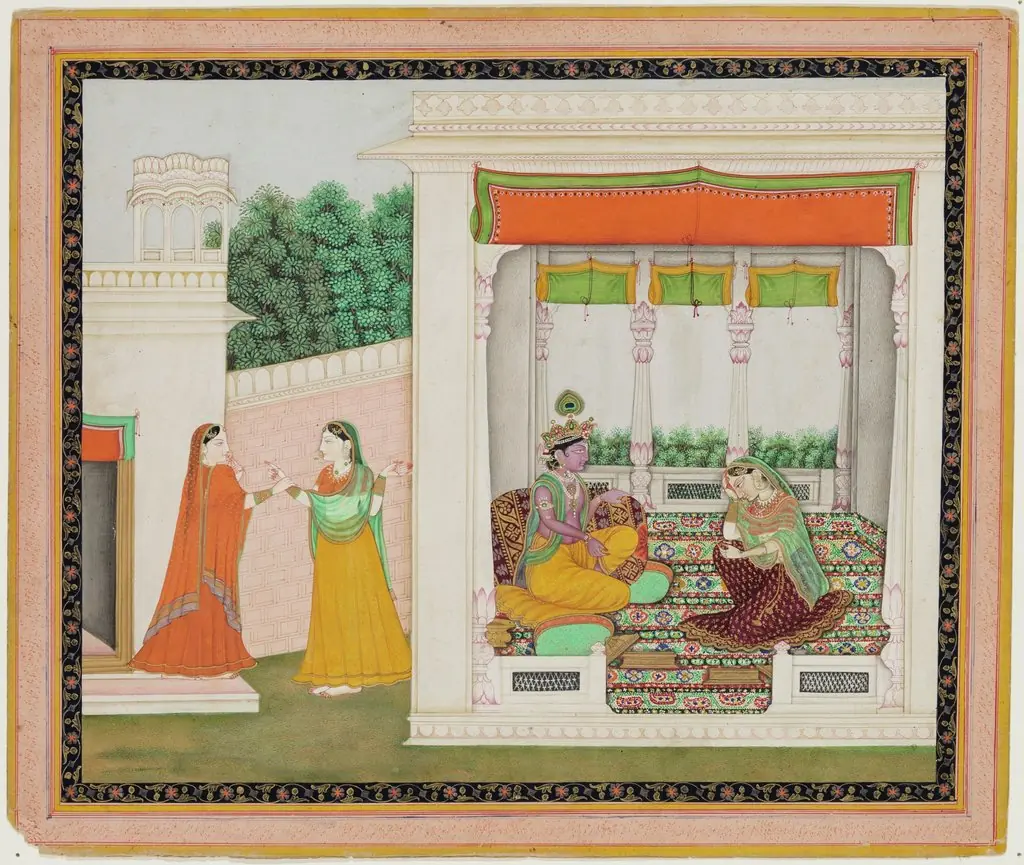 Story of Krishna and Radha
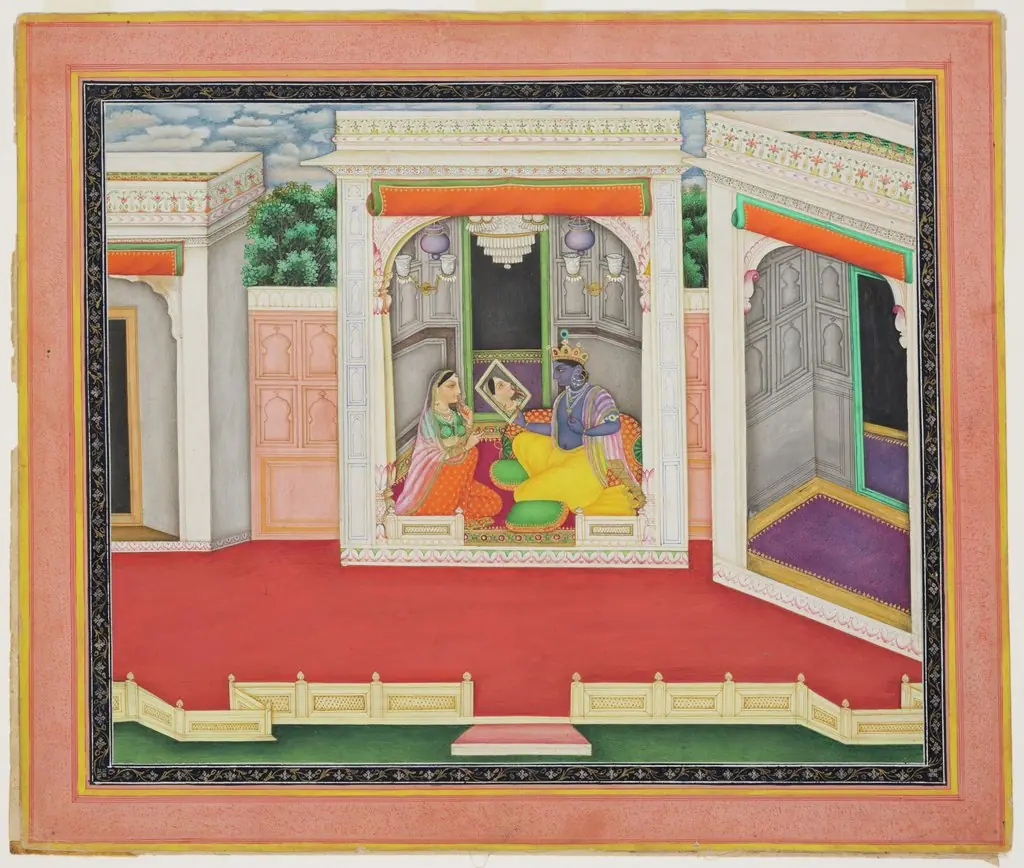 Story of Krishna and Radha
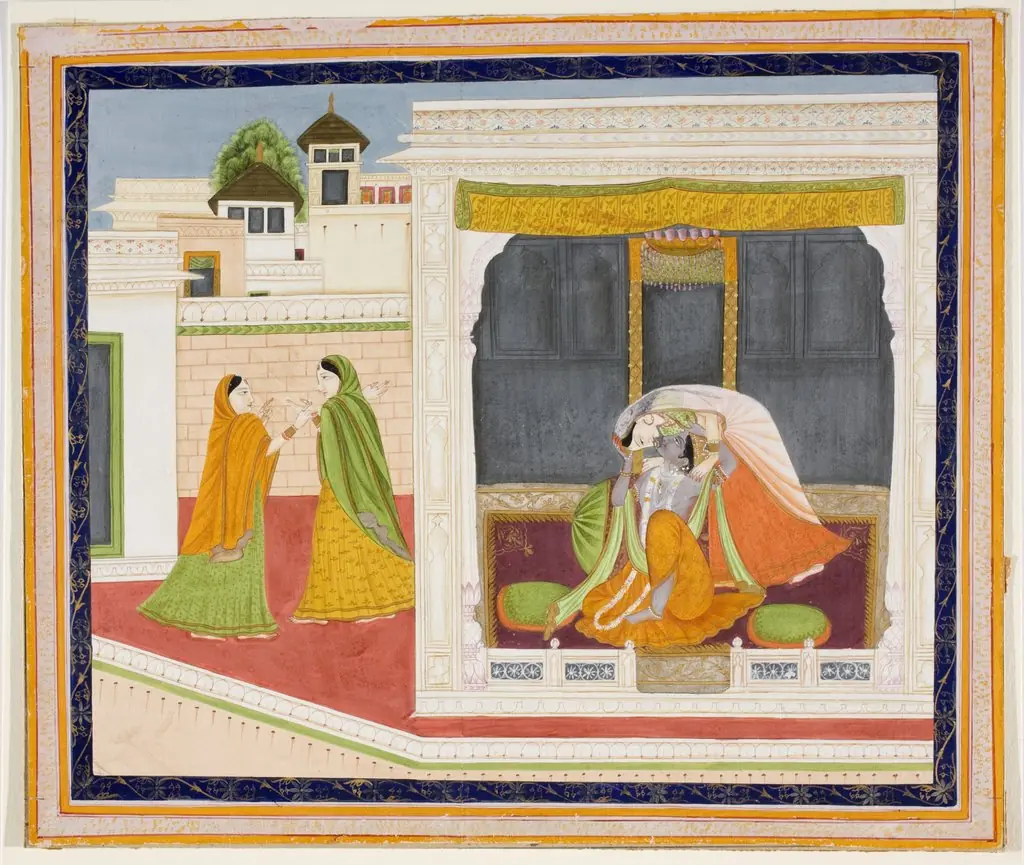 Radha and Krishna in Dalliance
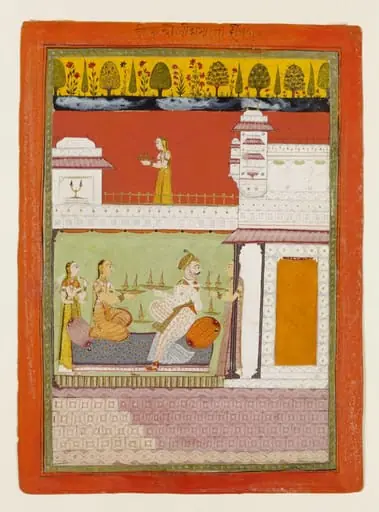 Dipak ragini
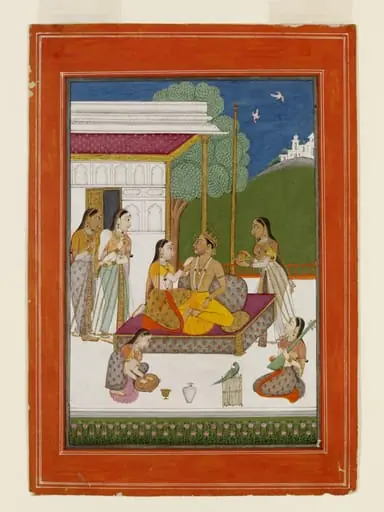 Bhairava Raga
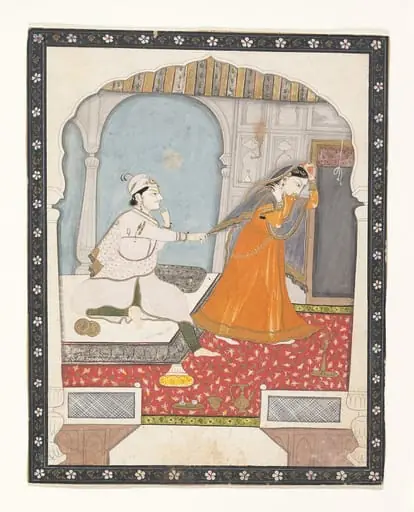 Untitled
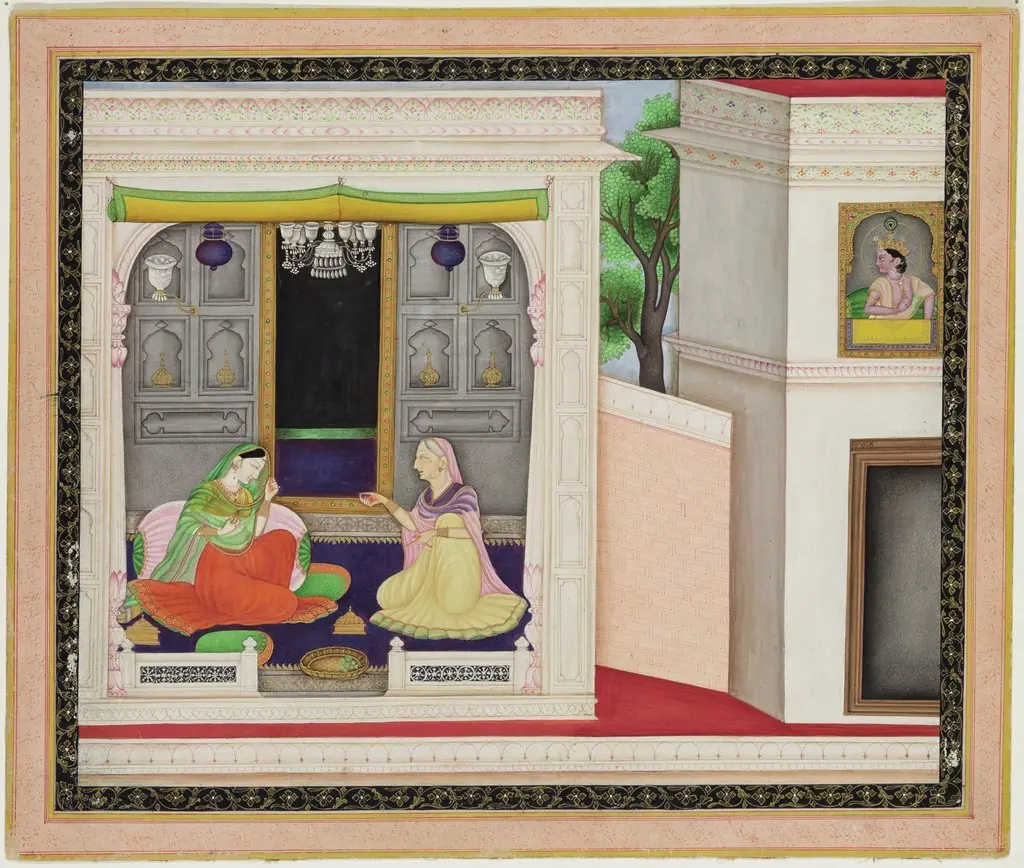 Story of Krishna and Radha
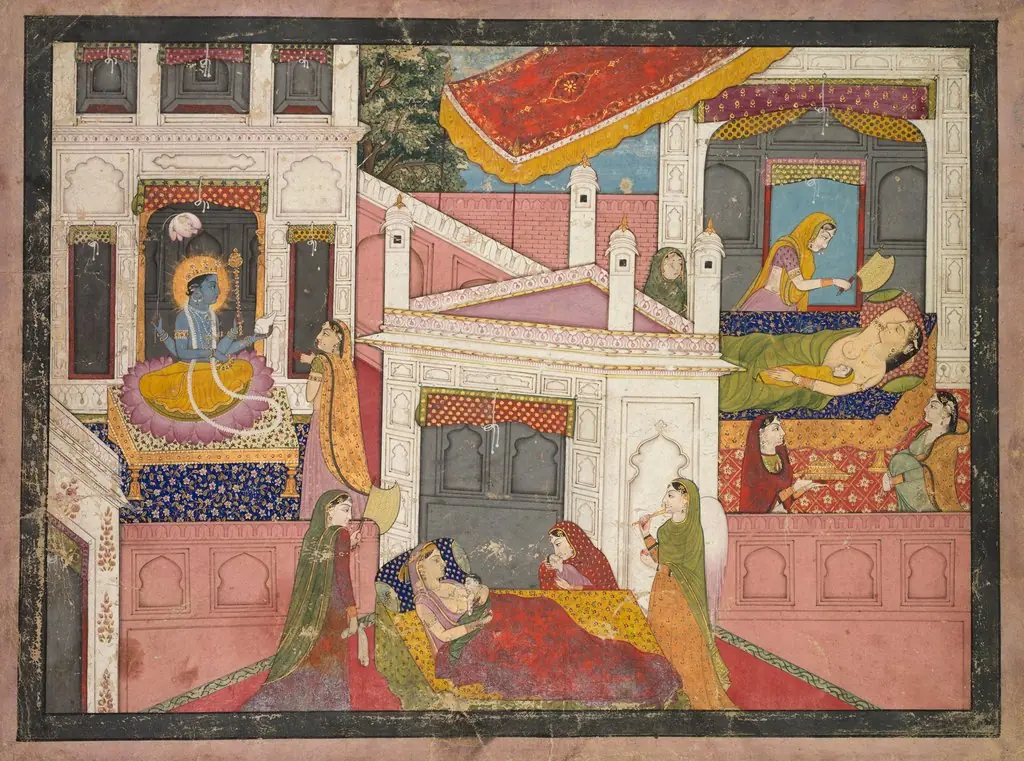 The birth of Rama and his brothers, from Chapter 17 of the Bala Kanda (Book of Childhood) of the Adhyatma Ramayana (Rama's Journey of the Supreme Spirit) from the Brahmanda Purana (Ancient Scripture of the Cosmic Egg)
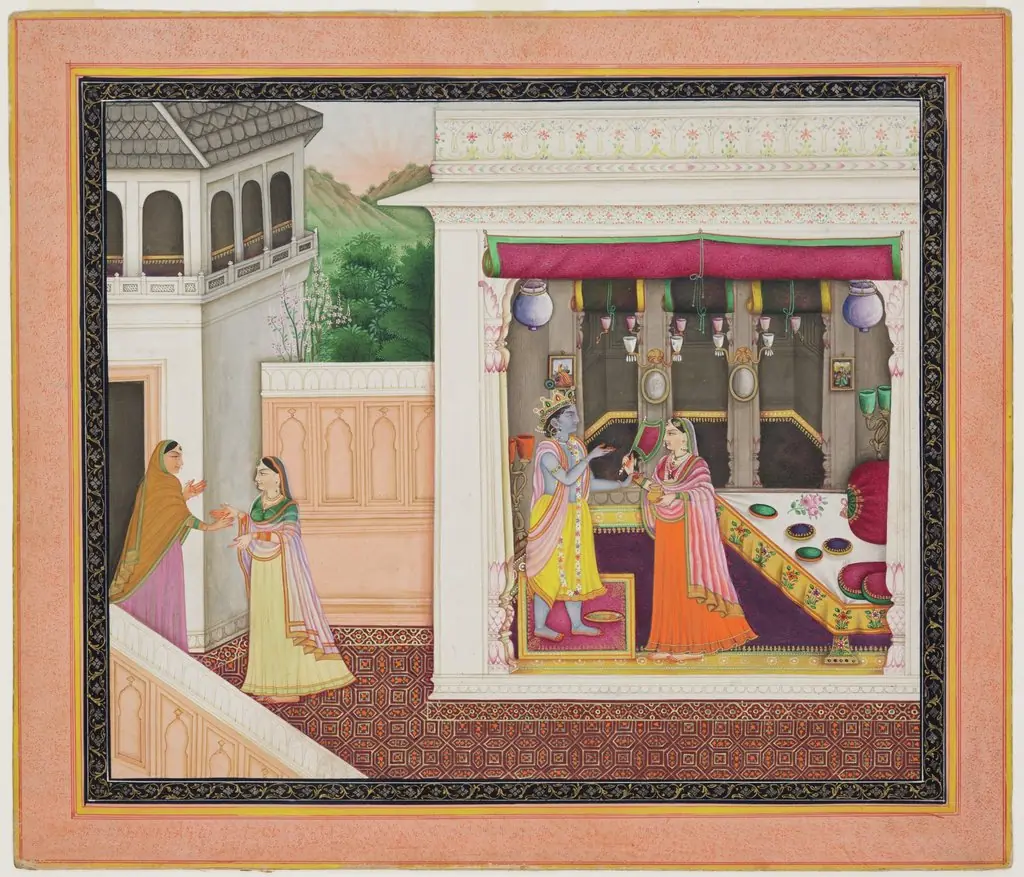 Story of Krishna and Radha
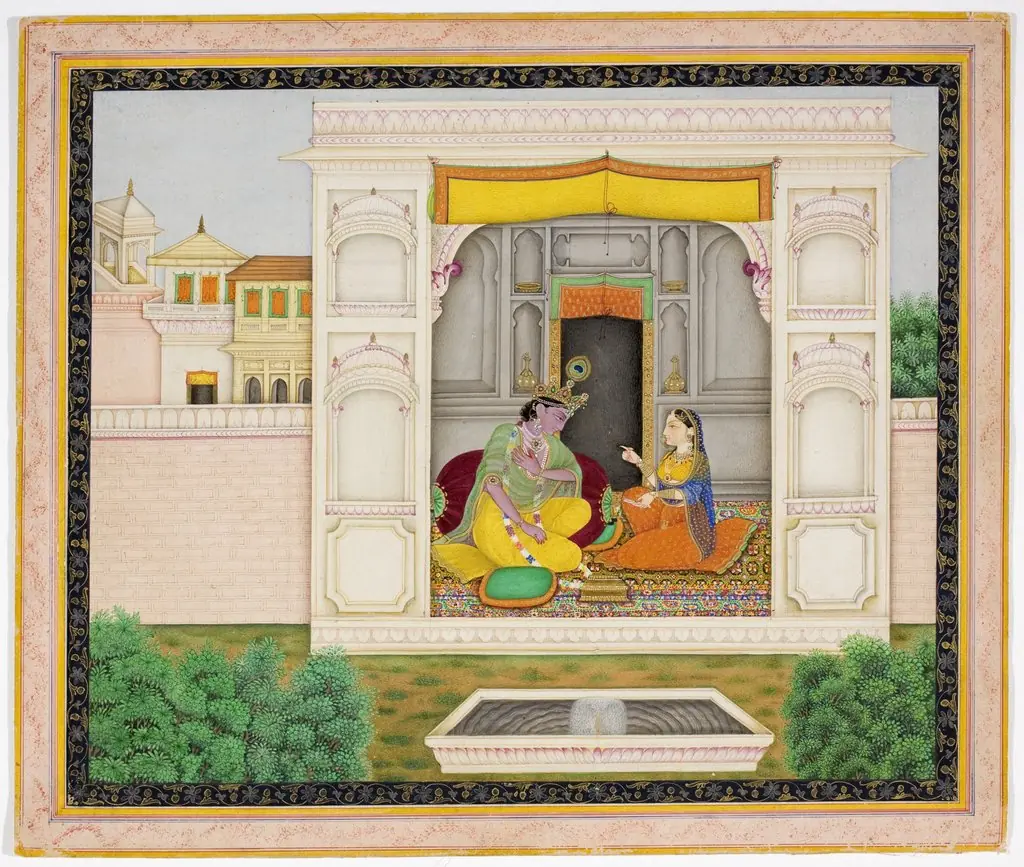 Krishna and Radha in Palace Scene
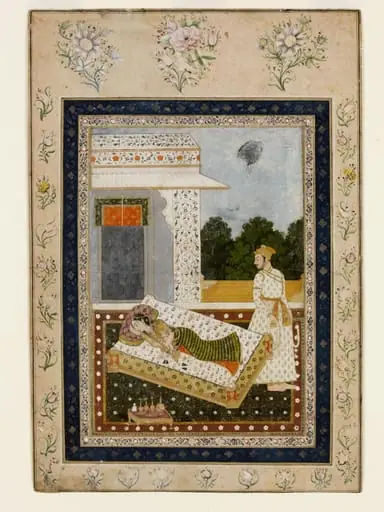 Lalita Ragini