Artwork
A Dredger and Mudhoppers
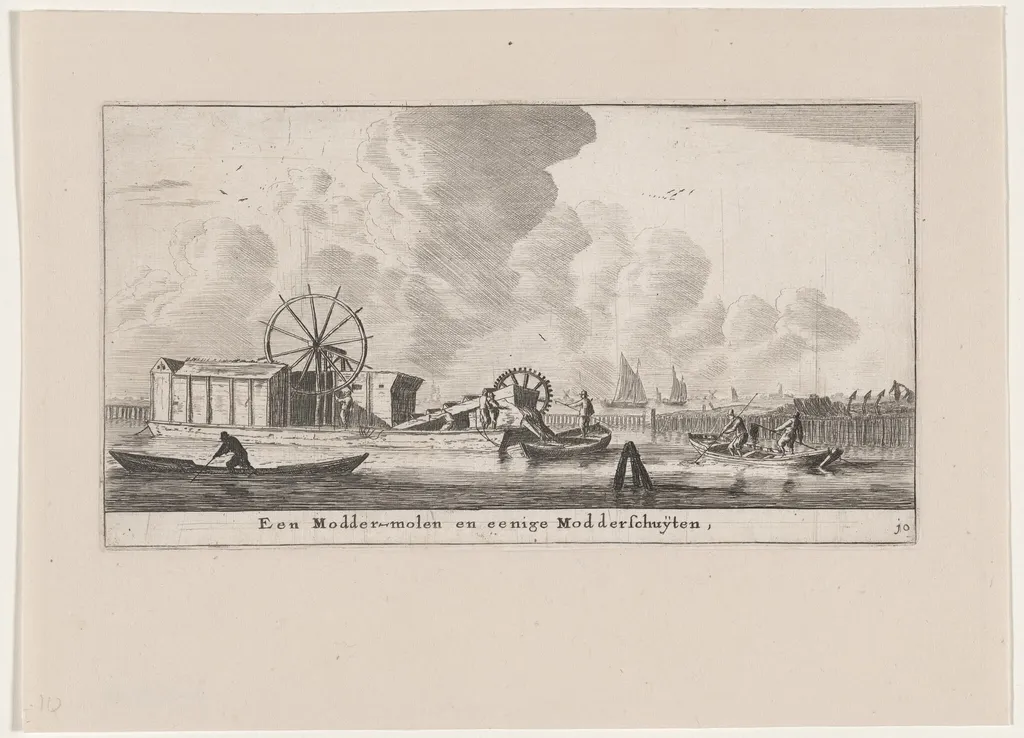
A Dredger and Mudhoppers is an ink print by the Baroque artist Nooms, called Zeeman, Reinier. It dates from 1653 and is held in the collection of the National Gallery of Art. Created around 1653 by Reinier Nooms, known as Zeeman, this etching with drypoint on laid paper depicts a working harbor scene in Amsterdam.
- Inscription
- Inscribed:lower center in plate: Een Modder-molen en eenige Modderschuÿten, / 10
About this work
Overview
Created around 1653 by Reinier Nooms, known as Zeeman, this etching with drypoint on laid paper depicts a working harbor scene in Amsterdam.
Created around 1653 by Reinier Nooms, known as Zeeman, this etching with drypoint on laid paper depicts a working harbor scene in Amsterdam. Nooms, a Dutch artist focused on maritime subjects, used fine, incised lines to render the textures of water, wood, and labor. The print belongs to a series of detailed coastal views that documented the everyday activity of the city’s waterways, distinguishing itself through its unidealized observation of work rather than spectacle.
Subject & Meaning
The scene centers on a dredging vessel and laborers known as mudhoppers, who manually remove silt from the riverbed. Their efforts were essential to maintaining navigable channels in Amsterdam’s expanding port. Nooms presents these workers without heroism or sentiment, capturing their routine labor with quiet precision. The image reflects the practical infrastructure underpinning the city’s commercial life, emphasizing function over narrative.
Technique & Style
Nooms employed etching for the overall composition and drypoint for heightened contrast and texture. The drypoint’s burr creates rich, grainy shadows along the hulls, ropes, and muddy banks, lending a tactile immediacy to the scene. The laid paper’s subtle texture enhances the sense of dampness and grit. Lines are deliberate but unembellished, prioritizing accuracy over dramatic effect, characteristic of Nooms’s documentary approach.
History & Provenance
The print was made during the height of the Dutch Golden Age, when maritime commerce drove artistic interest in port activity. Nooms’s etchings circulated among collectors and fellow artists as reference material. While the specific early ownership of this impression is undocumented, similar works by him appear in major European collections, suggesting broad recognition of his technical precision and subject matter during his lifetime.
Context
Amsterdam’s growth in the mid-17th century relied on constant dredging to keep its canals and harbor deep enough for trade vessels. Nooms’s work aligns with a broader trend among Dutch artists to depict labor and infrastructure with clinical detail. Unlike grand historical scenes, his prints valued the ordinary rhythms of urban life, offering a visual record of the city’s economic underpinnings.
Legacy
Nooms’s etchings, including this one, became models for later artists documenting maritime labor and port architecture. His restrained style influenced the shift toward observational realism in Dutch printmaking. Though not widely celebrated in his time as a painter, his prints endured as authoritative records of 17th-century Dutch waterways, valued for their fidelity to detail and quiet authenticity.
Own this work as a print
Artist & collection

Artist
Reinier Nooms (c. 1623 – 1664), also known as Zeeman or Seeman (Dutch for "sailor"), was a Dutch maritime painter known for his highly detailed paintings and etchings of ships. From the 1650s, Nooms started producing…

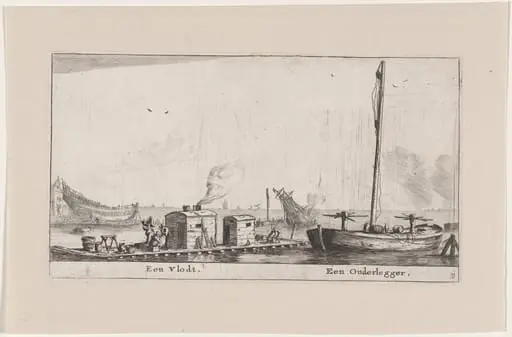 A Raft and a "Onderlegger"
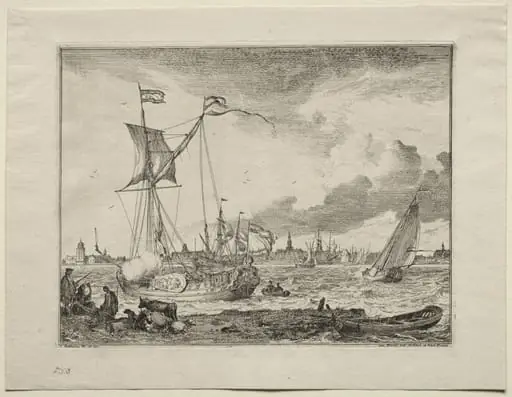 View of Amsterdam with Ships in Foreground
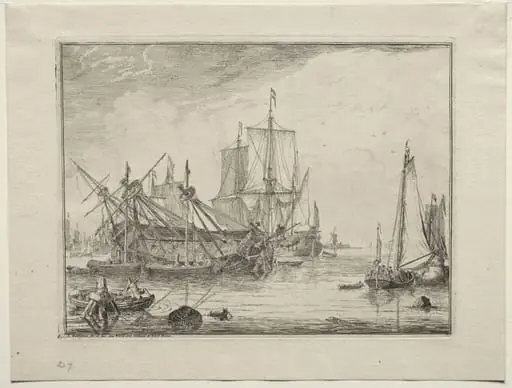 Ships Under Repair
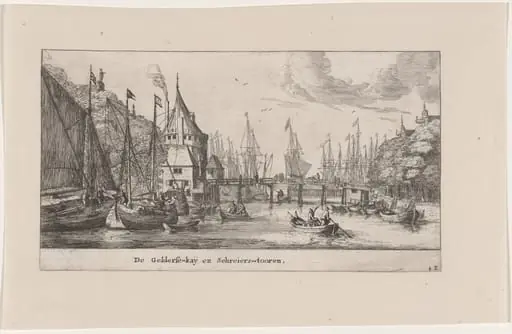 The Gelderse Quay and the Schreiers Tower, Amsterdam
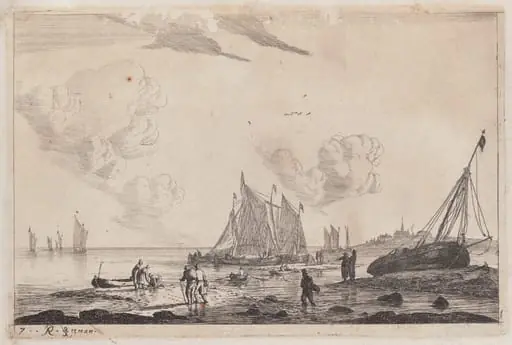 Beach Scene with Ketches and other Fishing Boats
 Winter Scene in the Blockhouses in Amsterdam
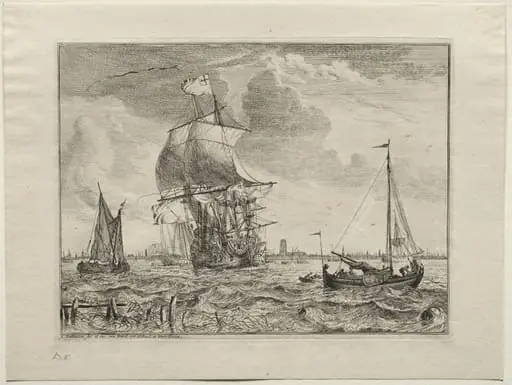 Marine Scene with Amsterdam in the Distance
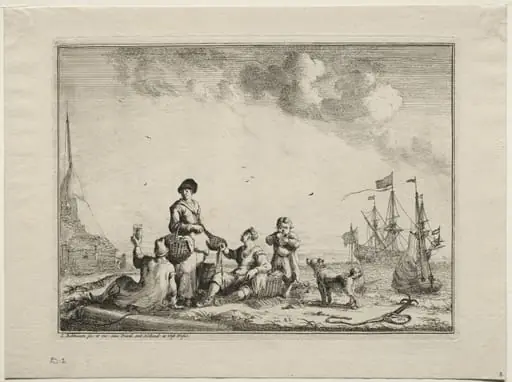 Fish Vender
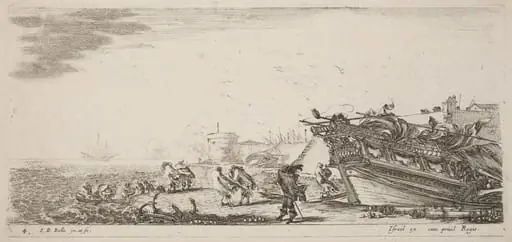 Windy Harbor
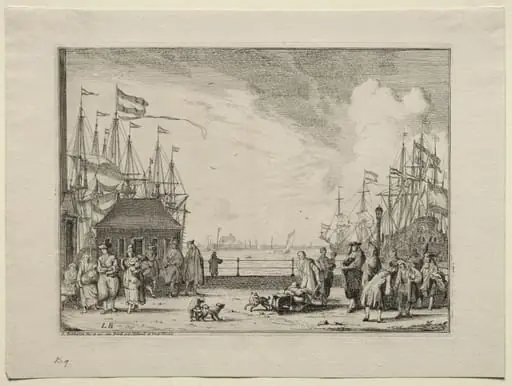 Port at Amsterdam
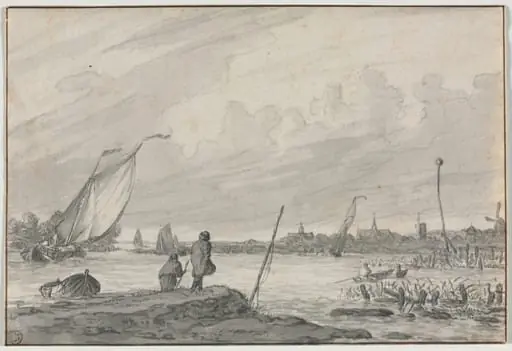 View of Alkmaar with Boats
- The Launch of a Ship