Artwork
三樹坡曉色图|View of the Kamo River from Sanbogi at Dawn
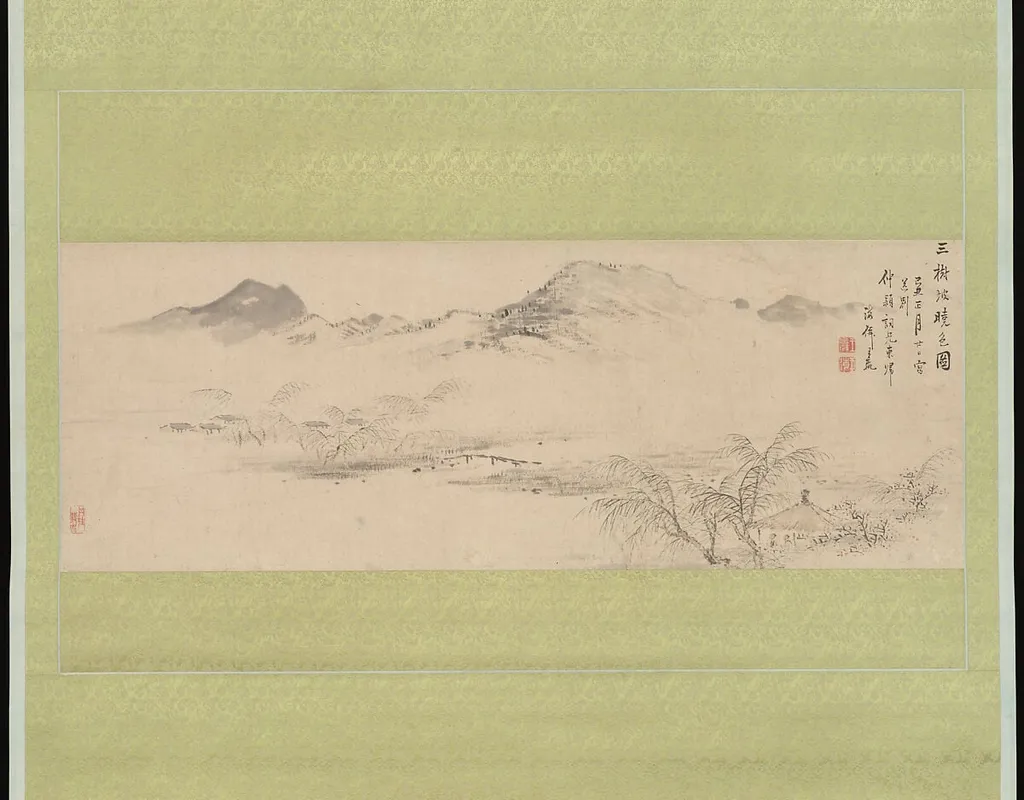
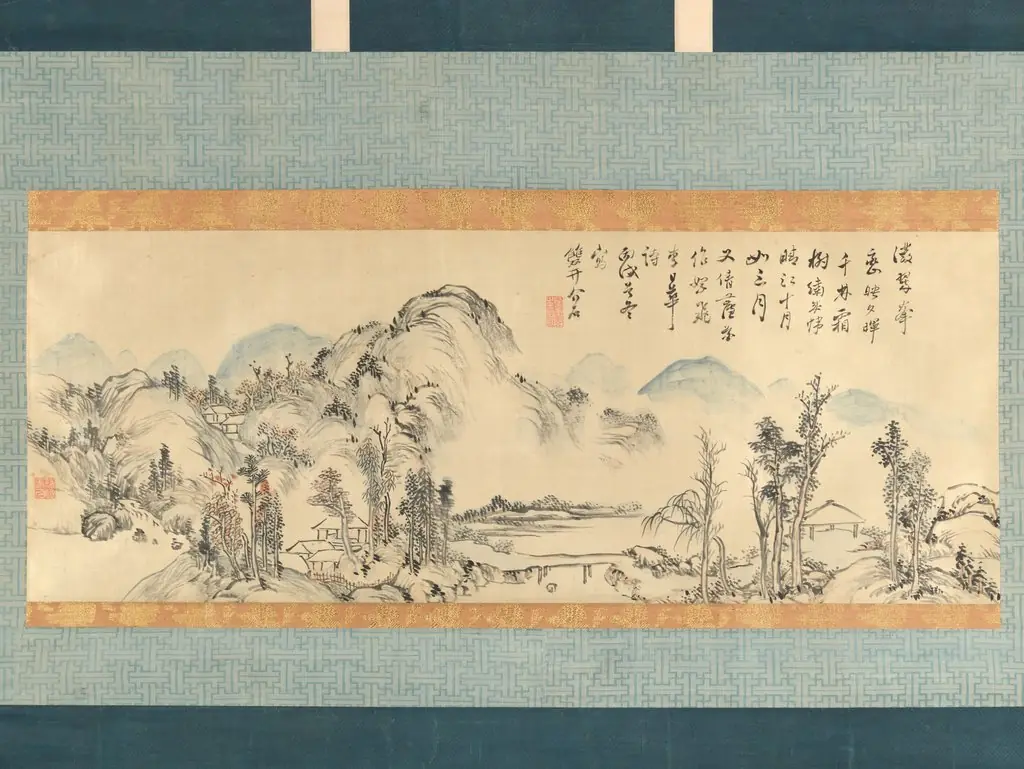
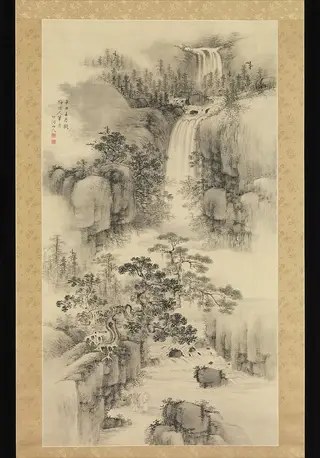
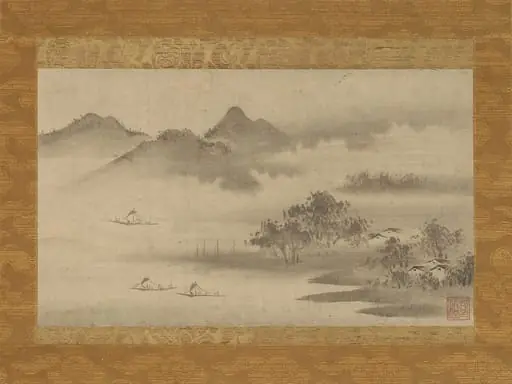
三樹坡曉色图|View of the Kamo River from Sanbogi at Dawn is an ink painting by the Nihonga artist Oda Kaisen. It dates from 1829 and is held in the collection of the Metropolitan Museum of Art.
About this work
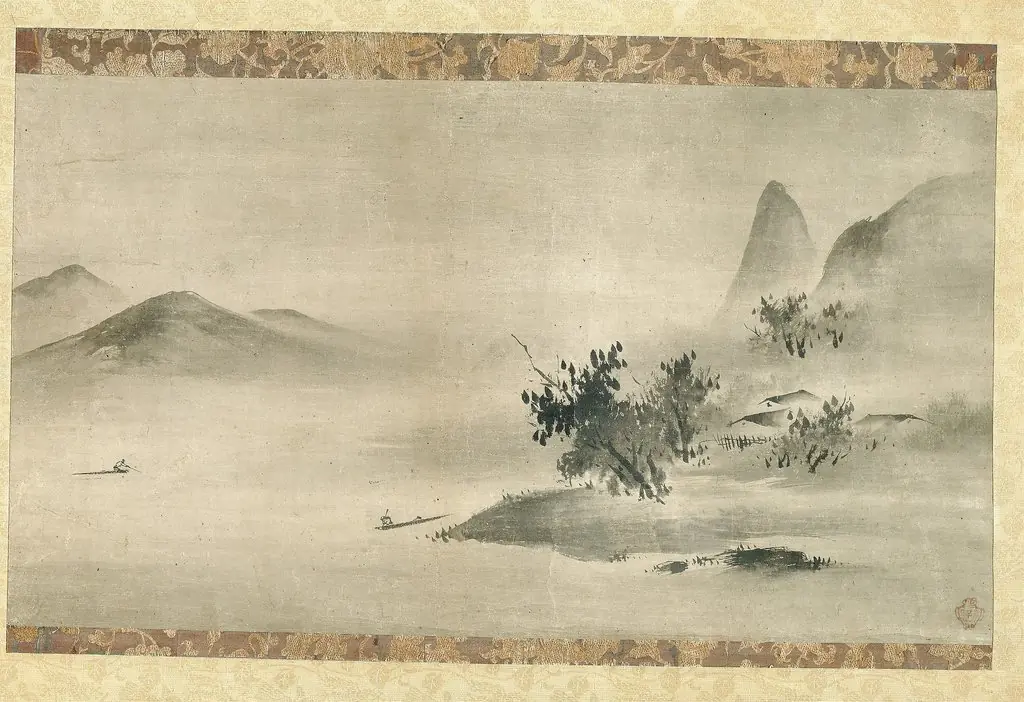
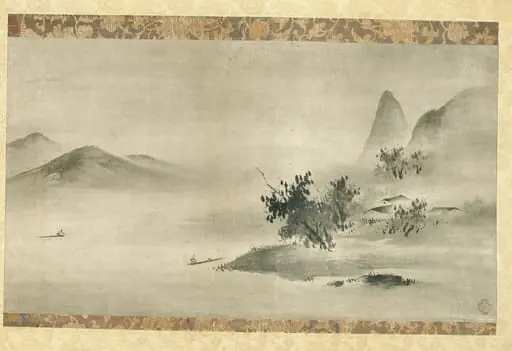
A quiet river winds between misty hills at first light, ink washes bleeding into a soft pink sky. Kaisen painted this scroll in 1829, choosing a real bend in the Kamo River near Kyoto and framing it like a snapshot rather than a grand scene. A single fishing boat is the only sign of life, and everything else holds still.
Subject & Meaning
Classified as a landscape painting, the composition utilizes ink and color on paper to render the natural environment.
Created in 1829 by Oda Kaisen, this hanging scroll depicts a landscape scene featuring mountains. The work's title identifies the specific subject as a view of the Kamo River from Sanbogi at dawn, situating the imagery within a recognizable Japanese topography. Classified as a landscape painting, the composition utilizes ink and color on paper to render the natural environment.
While the available records confirm the depiction of mountains and the river setting, they do not provide further details regarding specific iconographic symbols or deeper allegorical meanings associated with the scene beyond its representation of this particular location at daybreak.
Technique & Style
Created in 1829 by Oda Kaisen, View of the Kamo River from Sanbogi at Dawn is executed as a hanging scroll. The work utilizes ink and color applied to a paper support, a traditional format for Japanese landscape painting. Stylistically, the piece is classified within the landscape genre, depicting mountainous terrain and the Kamo River scene at dawn.
As a work from early 19th-century Japan, it reflects the period's approach to ink and color handling on paper surfaces. The painting is currently held in the collection of the Metropolitan Museum of Art, preserving its original material composition.
History & Provenance
The hanging scroll titled 三樹坡曉色图|View of the Kamo River from Sanbogi at Dawn was painted in 1829 by the Japanese artist Oda Kaisen, who specialized in landscape subjects. Executed in ink and color on paper, the work depicts a mountain landscape and was created in Japan. Following its creation, the scroll entered the collection of the Metropolitan Museum of Art, where it remains on display. The museum’s records confirm its acquisition and ongoing stewardship of the piece within its Japanese painting holdings.
The hanging scroll titled 三樹坡曉色图|View of the Kamo River from Sanbogi at Dawn, painted by Oda Kaisen in 1829, is housed in the collection of the Metropolitan Museum of Art in New York. The work’s accession number is not listed in the available documentation. No exhibition history is recorded in the provided sources.
Its creation is linked to Japan, and it is classified as a landscape painting within the museum’s holdings.
Overview
View of the Kamo River from Sanbogi at Dawn is a hanging scroll executed in 1829 by the Japanese artist Oda Kaisen (1785–1862). The work depicts a specific bend in the Kamo River near Kyoto, capturing the atmospheric conditions of early morning. The composition features a quiet river winding between misty hills, rendered with ink washes that bleed into a soft pink sky to suggest the first light of day.
Painted on paper with ink and color, the piece reflects Kaisen's departure from the prevailing trend of strictly copying Chinese models, which dominated Japanese art of the period. Instead, he focused on a localized, realistic view of the Kyoto landscape, framing the scene with a directness that anticipates later observational approaches. This work stands as a significant example of Kaisen's mature style, demonstrating his ability to blend traditional ink techniques with a distinct sensitivity to the specific topography and light of his native region.
Context
Kaisen produced this work during a period when many Japanese artists continued to emulate established Chinese painting traditions. His choice to depict a recognizable, specific location along the Kamo River, rather than an imagined or generalized landscape, marked a distinct approach. This focus on a particular, observed scene, framed with a sense of directness, diverged from the more monumental or symbolic compositions prevalent at the time.
Artist & collection