Artwork
Ink Landscape
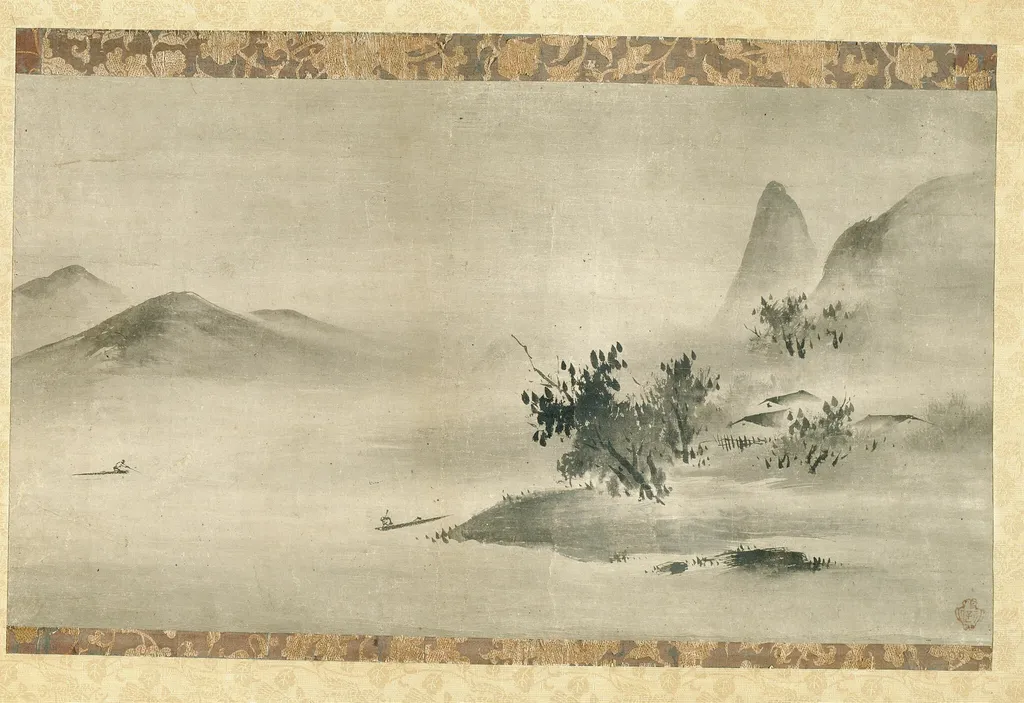
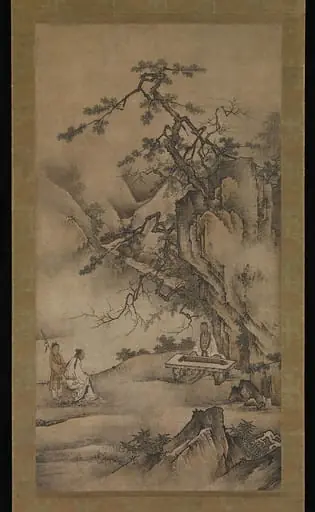
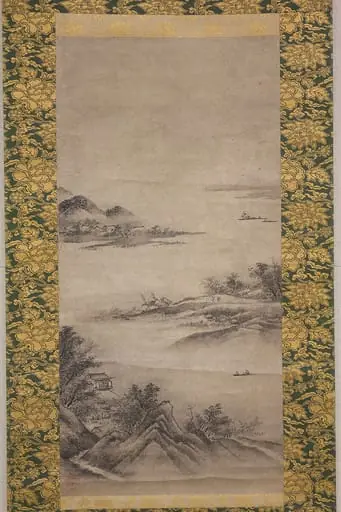
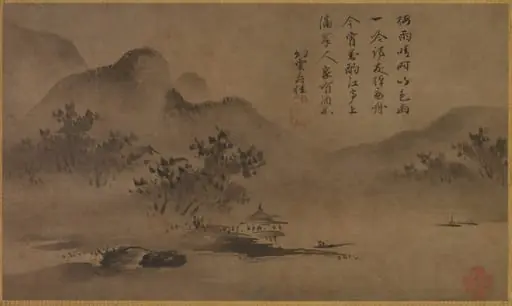
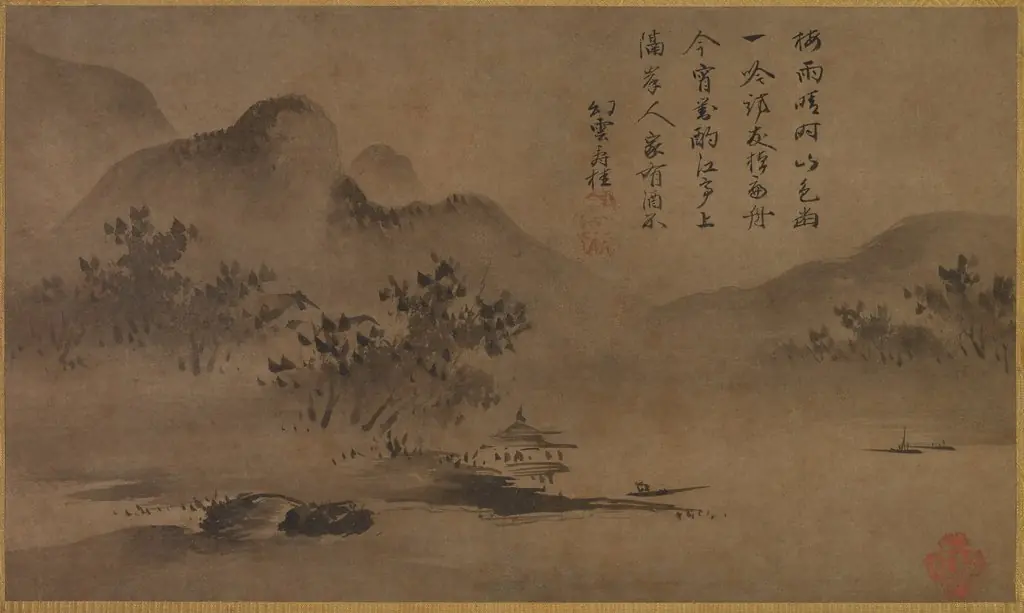
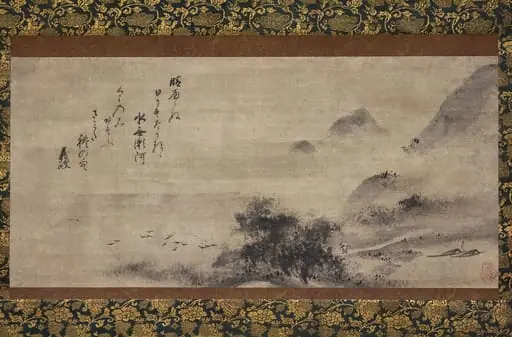
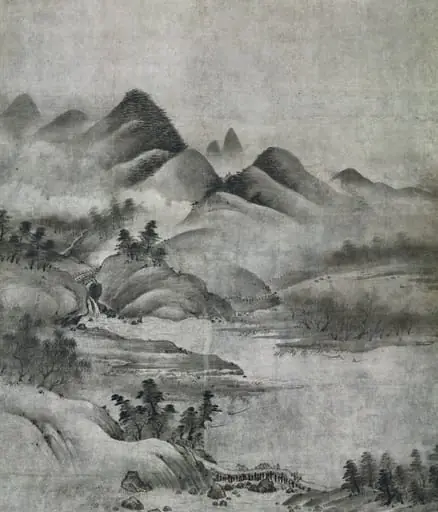
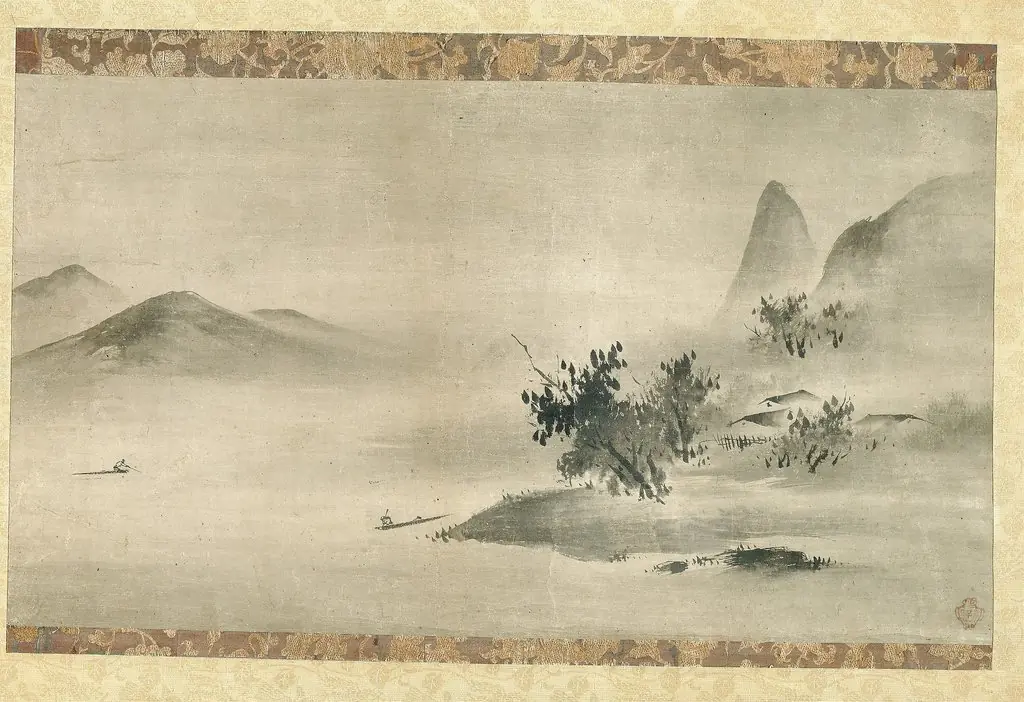
Ink Landscape is an ink painting by the Kanō school artist Kano Motonobu. It dates from 1549 and is held in the collection of the Art Institute of Chicago.
- Accession no.
- 80072
- Credit line
- Kate S. Buckingham Endowment
About this work
Overview
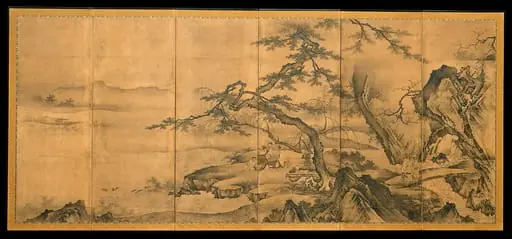
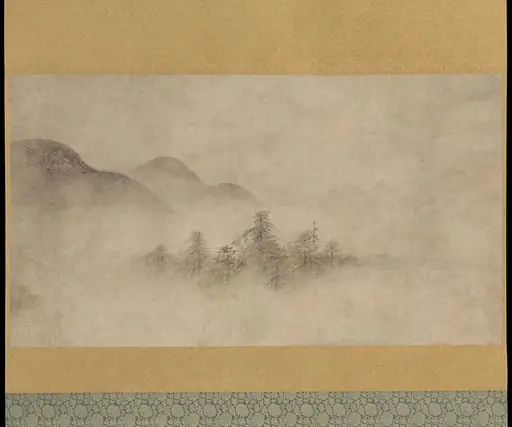
Created in 1549, this hanging scroll by Kano Motonobu is a monochrome ink painting on paper, currently held by the Art Institute of Chicago. Its vertical format invites contemplative viewing, guiding the eye upward through layered natural forms rendered entirely in varying tones of black ink. The composition balances vastness and intimacy, using minimal means to suggest depth and atmosphere.
Subject & Meaning
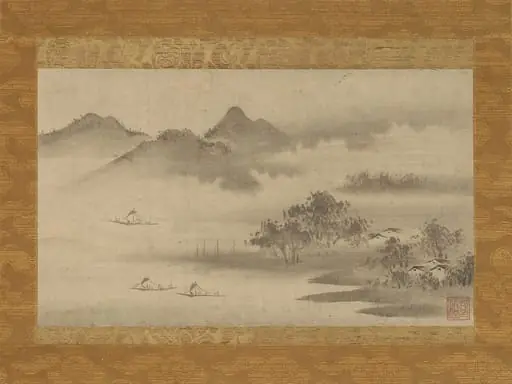
The scene depicts a secluded mountain landscape with towering peaks, dense foliage, and a small temple nestled among the rocks. The temple, barely visible, implies a quiet spiritual retreat, aligning with Zen ideals of solitude and harmony with nature. No figures are present, reinforcing a sense of stillness and timelessness, where human presence is subtle rather than dominant.
Technique & Style
Motonobu employed a range of ink washes and brush pressures to create texture and dimension without color. Thin, wet strokes suggest mist or distant clouds; dry, rapid strokes define rugged cliffs and gnarled trees. The same brushline can evoke both solid rock and atmospheric haze, demonstrating mastery over ink’s fluidity and the expressive potential of controlled spontaneity.
History & Provenance
Commissioned during the Muromachi period, the work reflects the Kano school’s synthesis of Chinese ink traditions with Japanese aesthetic sensibilities. It remained within Japanese collections until entering the Art Institute of Chicago’s holdings in the 20th century, where it is preserved as a key example of early modern Japanese ink painting.
Context
In 16th-century Japan, ink painting flourished among Zen monks and elite patrons as a meditative art form. Motonobu, head of the Kano school, adapted Chinese Song and Yuan dynasty styles to local tastes, emphasizing suggestion over detail. This scroll exemplifies how ink could convey spiritual depth and natural rhythm without reliance on color or realism.
Legacy
The scroll exemplifies the enduring influence of ink monochrome in Japanese art, inspiring later generations to explore abstraction through brush and water. Its economy of means, using only black ink to evoke landscape, mood, and movement, became a foundational model for subsequent artists seeking expressive restraint and poetic implication.
Own this work as a print
Artist & collection