Artwork
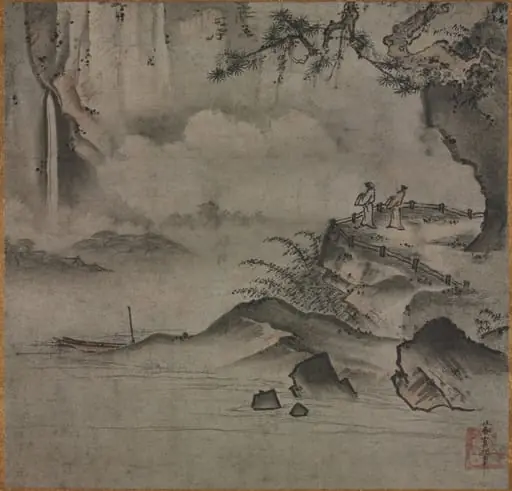
Ink Landscape (Suiboku sansui zu)
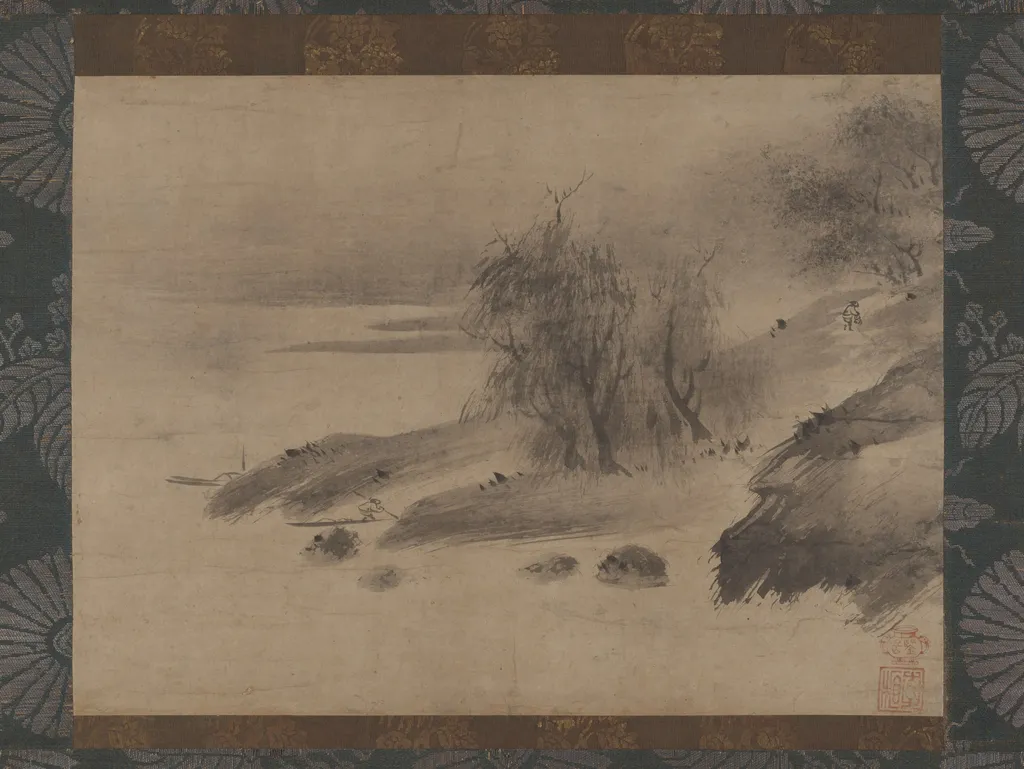
Ink Landscape (Suiboku sansui zu) is an unspecified painting by the Tosa School artist Sōami. It dates from 1516 and is held in the collection of the Metropolitan Museum of Art.
About this work
Overview
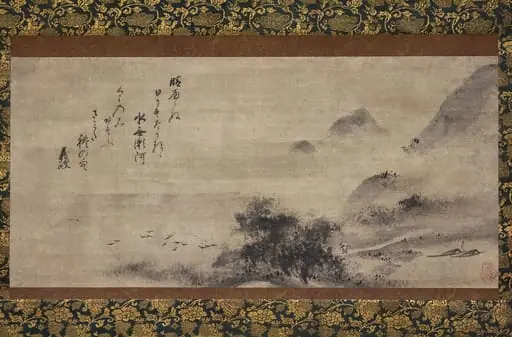
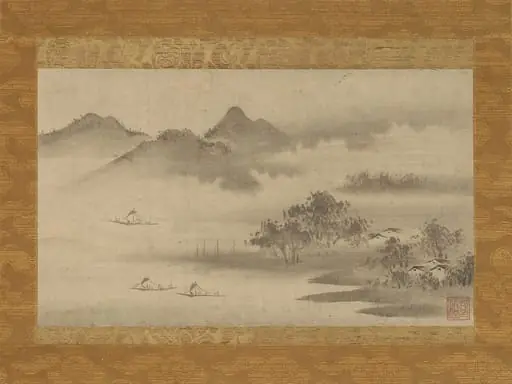
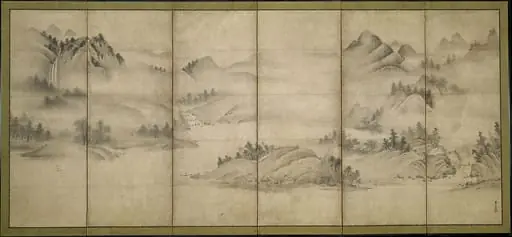
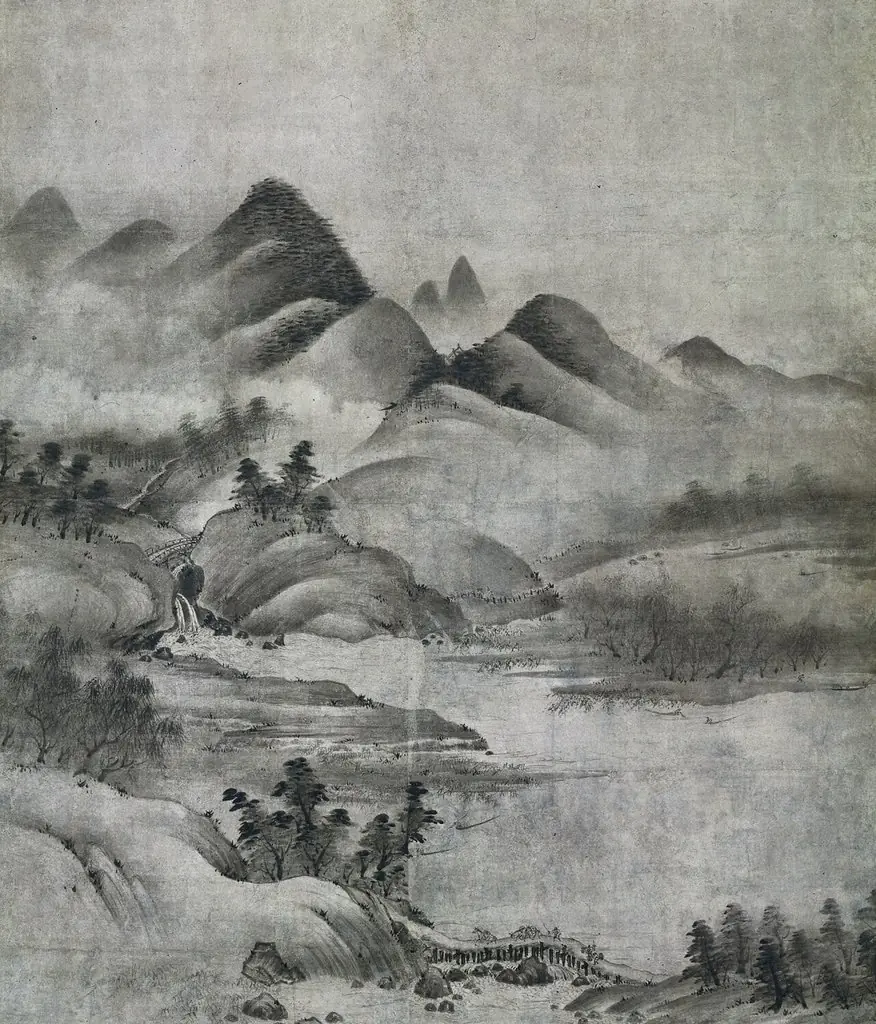
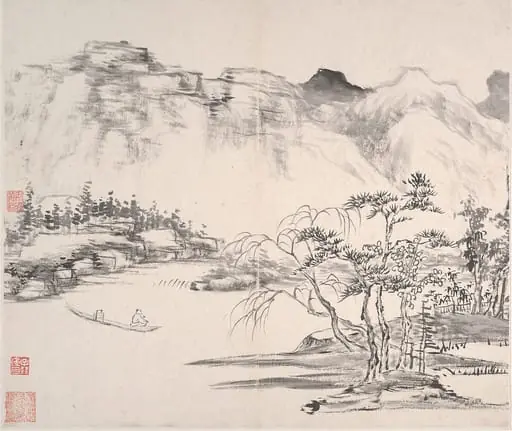
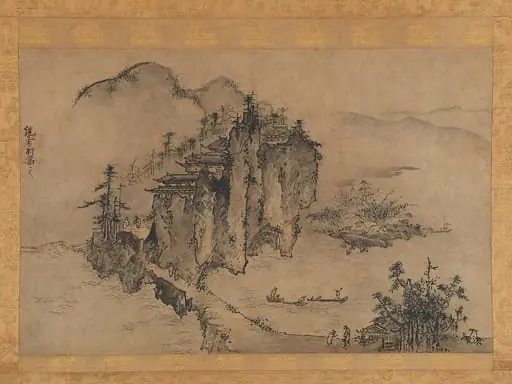
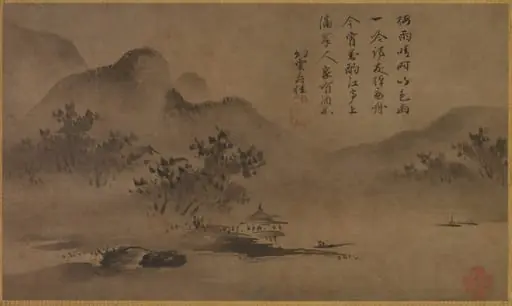
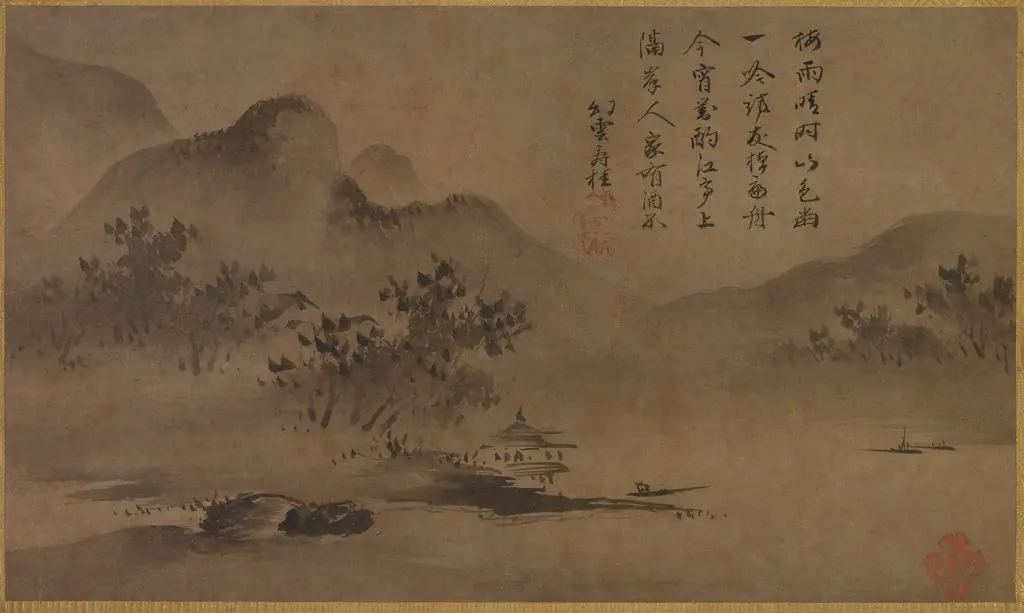
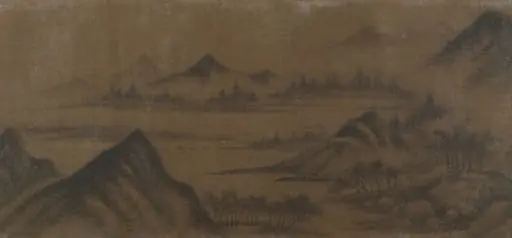
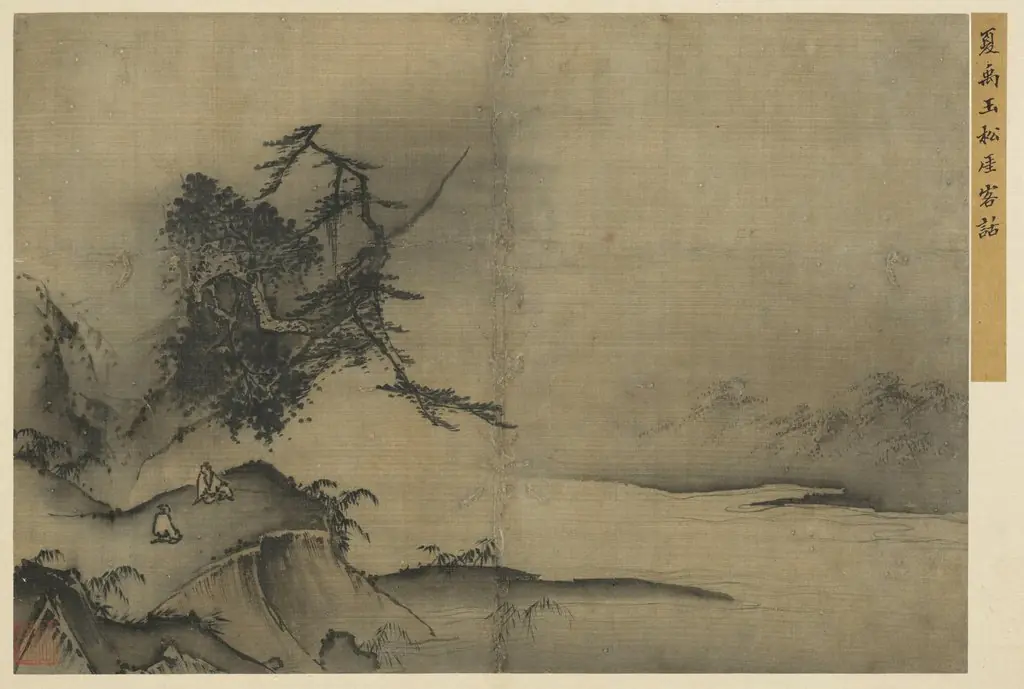
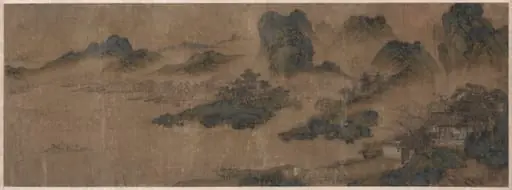
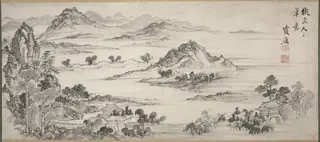
Ink Landscape (Suiboku sansui zu) is a monochrome painting executed in 1516 by the Japanese artist Sōami. The work is part of the collection of the Metropolitan Museum of Art in New York. Rendered entirely in black and gray ink, the composition presents a tranquil natural scene that invites quiet observation.
Subject & Meaning
The picture depicts a quiet countryside vista: a solitary, towering tree occupies the right margin, while a diminutive figure walks along a winding path in the distance. Rocks and a small boat appear in the foreground, suggesting a gentle river or lake. The sparse human presence and expansive landscape convey a mood of contemplation and the transience of travel.
Technique & Style
Sōami employed traditional suiboku, or ink wash, methods, varying brush pressure and dilution to achieve a range of tones from deep black to delicate gray.
Sōami employed traditional suiboku, or ink wash, methods, varying brush pressure and dilution to achieve a range of tones from deep black to delicate gray. Layered washes create atmospheric depth, while crisp brushstrokes define the tree trunk and the figure’s outline. The restrained palette and emphasis on tonal modulation are characteristic of Japanese ink landscape painting of the early sixteenth century.
History & Provenance
Created in the early Momoyama period, the painting entered the Metropolitan Museum of Art’s collection through acquisition in the twentieth century, though earlier ownership records are sparse. Its presence in a major Western museum reflects the growing appreciation of Japanese ink works among European and American collectors during the modern era.
Context
Sōami worked at a time when Chinese-inspired literati painting was being adapted by Japanese artists to express native aesthetic ideals. Ink landscapes served as visual poetry, often accompanying calligraphic verses. This work aligns with that tradition, using minimal detail to evoke a broader sense of nature’s rhythm and the scholar‑artist’s inner world.
Own this work as a print
Artist & collection