Artwork
David with the Head of Goliath
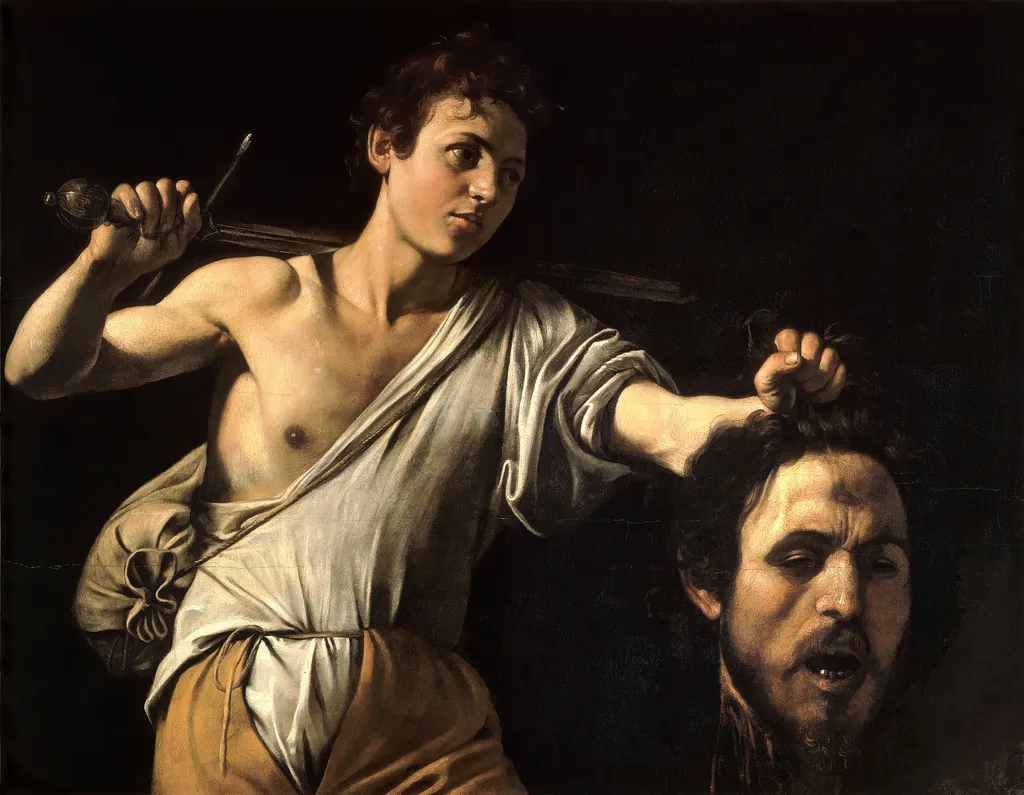
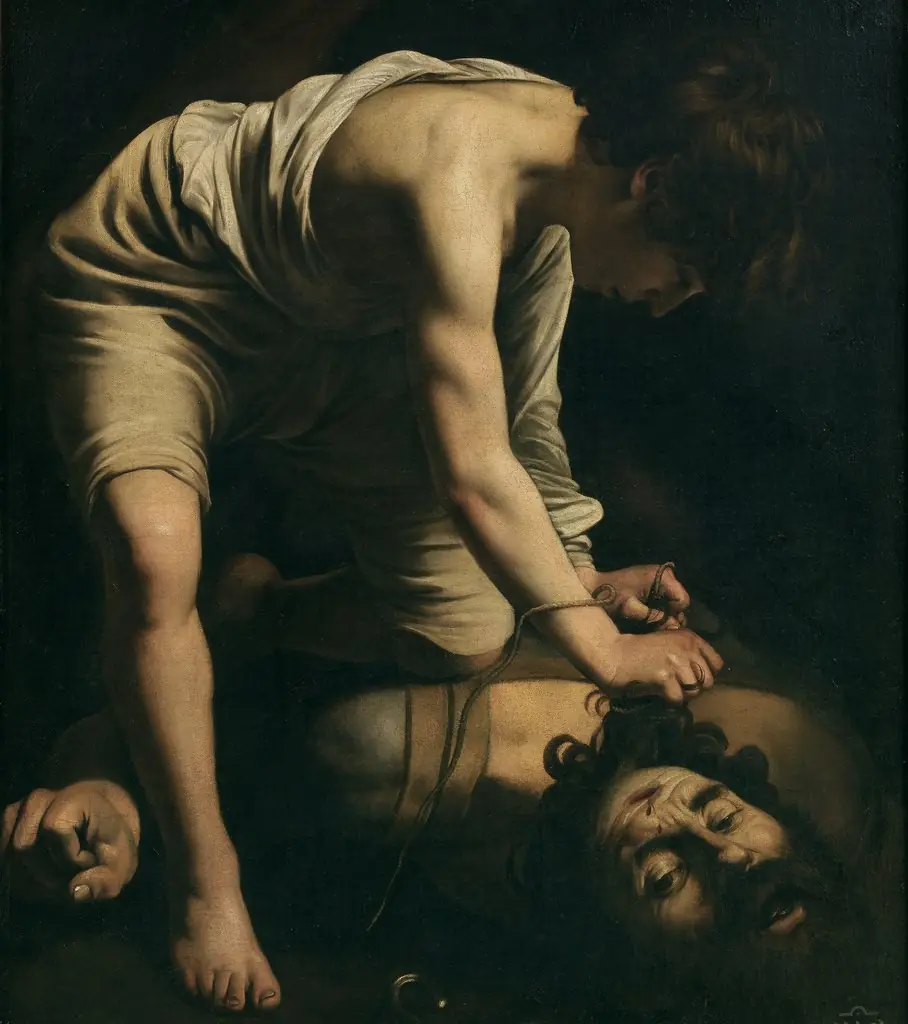
David with the Head of Goliath is an unspecified painting by the Baroque artist Caravaggio. It dates from 1607 and is held in the collection of the Kunsthistorisches Museum.
About this work
Subject & Meaning
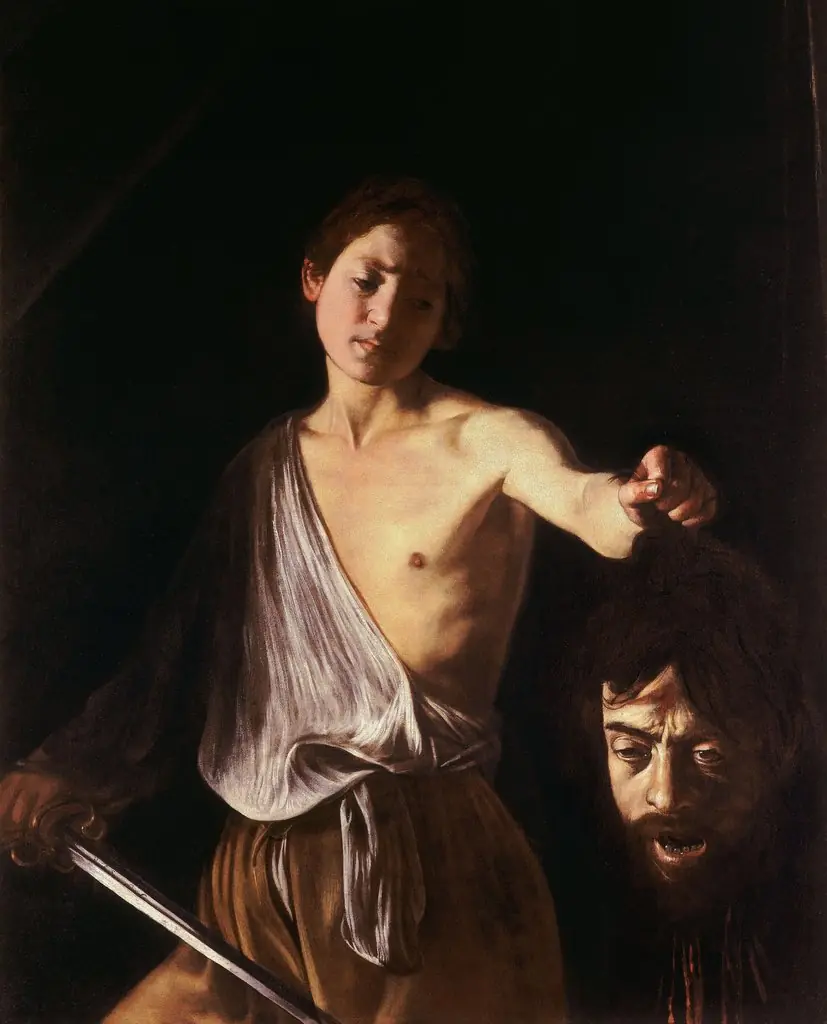
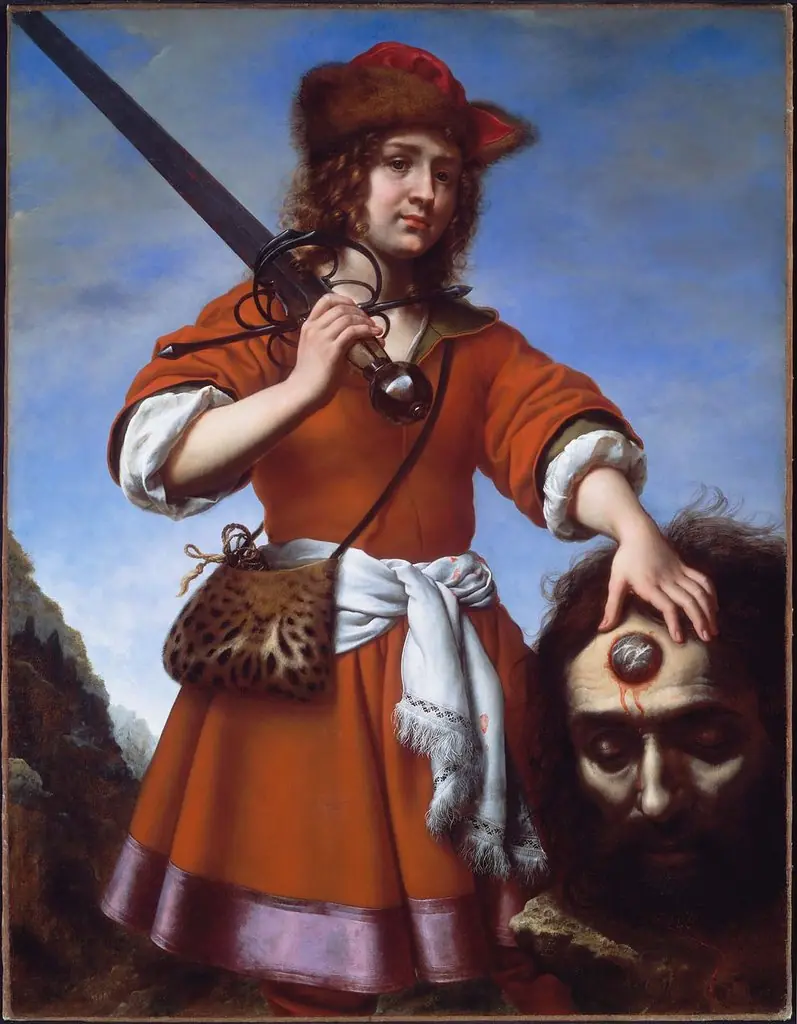
The Vienna version captures David mid-stride, presenting Goliath’s head in his outstretched hand while casually resting the giant’s sword over his shoulder.
Caravaggio’s David with the Head of Goliath depicts the biblical moment recounted in 1 Samuel 17:57, when David returns to King Saul after slaying the Philistine giant Goliath, holding the severed head as proof of his victory. The Vienna version captures David mid-stride, presenting Goliath’s head in his outstretched hand while casually resting the giant’s sword over his shoulder. Unlike the triumphal or heroic portrayals common in earlier art, Caravaggio’s David appears introspective, even melancholic, suggesting a contemplation of the act he has just committed.
The iconography adheres closely to the biblical narrative: David wears a shepherd’s pouch containing the stones used to fell Goliath, and the severed head, marked by a fatal wound, dangles from his grip. The composition thrusts Goliath’s head toward the viewer, implicating them in the scene, possibly as a stand-in for Saul. While the Borghese version (Rome) is often interpreted as a self-portrait of Caravaggio in Goliath’s face, the Vienna painting presents a more generic depiction, though some scholars suggest a subtle self-reference may still exist.
The work symbolizes the victory of faith and divine providence over brute strength, yet Caravaggio’s nuanced portrayal invites reflection on the moral weight of violence and triumph.
Technique & Style
Caravaggio executed this work in oil on a poplar wood panel, an unusual choice for an artist who typically painted on canvas. The panel measures approximately 91 × 116 cm and is about 2.5 cm thick. Its surface is unusually smooth, almost polished, with paint application so thin that brushstrokes are barely visible, lending the image a highly realistic quality.
Scientific analysis, including X-ray fluorescence scanning, has revealed that Caravaggio reused the panel, which had previously borne a Mannerist mythological scene of Venus, Mars, and a putto by another hand; he covered that composition with a thin ochre layer and rotated the panel 90 degrees before painting over it. The figure of David emerges luminously against a deep black background, the smooth paint surface contributing to a sculptural, almost three-dimensional presence. Stylistically, the work is Baroque, marked by Caravaggio's signature chiaroscuro and a focus on psychological introspection: David is rendered not as a triumphant victor but as a melancholic, contemplative youth, while Goliath's severed head is depicted with stark realism, its contorted expression conveying the anguish of death.
History & Provenance
Caravaggio painted David with the Head of Goliath around 1606–1607 on a poplar panel, a technique he used only for this work. The picture was created in Naples and entered the collection of the conte di Villamediana between 1611 and 1617. It later passed to King Charles I of England and entered the imperial Austrian collection in 1667 before arriving at the Kunsthistorisches Museum, where it remains.
The work was not a specific commission but a market painting, executed on a reused panel and documented only through later ownership records.
The painting is held in the collection of the Kunsthistorisches Museum in Vienna. While the museum has historically suggested an early creation date of 1600–1601, most scholars place the work in Naples around 1606 or 1607. The panel measures approximately 91 by 116 cm and is executed in oil on poplar wood, a support reused from an earlier mannerist composition.
Provenance records indicate the work was likely acquired by Juan de Tassis, Count of Villamediana, in Naples between 1611 and 1617. It subsequently entered the collection of King Charles I of England before passing to the Imstenraed collection in Amsterdam. The painting entered imperial ownership in 1667.
In modern times, a cropped version of the image appeared on the cover of Westside Gunn's 2020 album Pray for Paris.
Context
Scholars note the Vienna David with the Head of Goliath as one of three versions Caravaggio painted of the subject, alongside the Borghese and Prado treatments. The work’s date remains contested: the Kunsthistorisches Museum cites 1600/1601, while most specialists place it in the Neapolitan period of 1606–1607.
Critical readings emphasize its psychological complexity. David is shown not in exultant victory but as introspective, his gaze withdrawn and expression burdened, while Goliath’s head, possibly a self-portrait, hangs heavily in David’s grip. The composition’s stark lighting and smooth, polished surface heighten the scene’s immediacy, aligning with Caravaggio’s late style.
Some scholars suggest the model for David was his former assistant Cecco, though no evidence places Cecco with the artist after 1606.
Legacy
The painting's modern legacy extends into contemporary pop culture, notably appearing on the cover art for Westside Gunn's 2020 album Pray for Paris. Designed by fashion figure Virgil Abloh, this adaptation features a cropped view of the work with digitally added chains around David's neck. Art historically, the piece remains a critical reference point for scholars analyzing Caravaggio's repetitive exploration of biblical subjects, often inviting direct comparison with his later, more introspective version housed in the Galleria Borghese.
While the Vienna iteration is frequently characterized by a mood of triumph, its juxtaposition with the Roman variant highlights the artist's evolving psychological treatment of the David and Goliath narrative during his final years.
Overview
This painting, titled David with the Head of Goliath, was created by the Italian artist Caravaggio around 1606-1607. Executed in oil on a poplar wood panel, the work is currently held in the collection of the Kunsthistorisches Museum in Vienna. It represents a significant example of the artist's mature period, showcasing his distinctive approach to biblical narratives through dramatic composition and lighting.
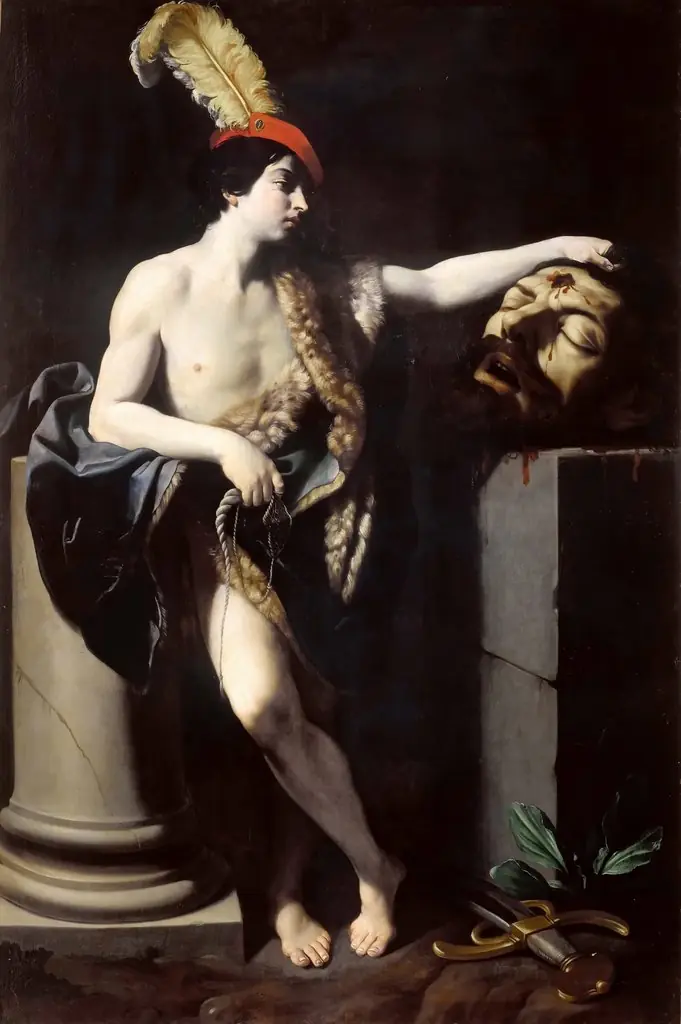
Own this work as a print
Artist & collection
Artist
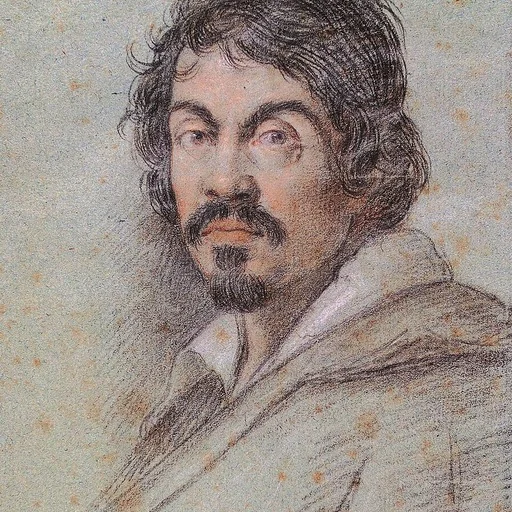
Michelangelo Merisi da Caravaggio (also Michele Angelo Merigi or Amerighi da Caravaggio; 29 September 1571 – 18 July 1610), known mononymously as Caravaggio, was an Italian painter active in Rome for most of his artistic life.

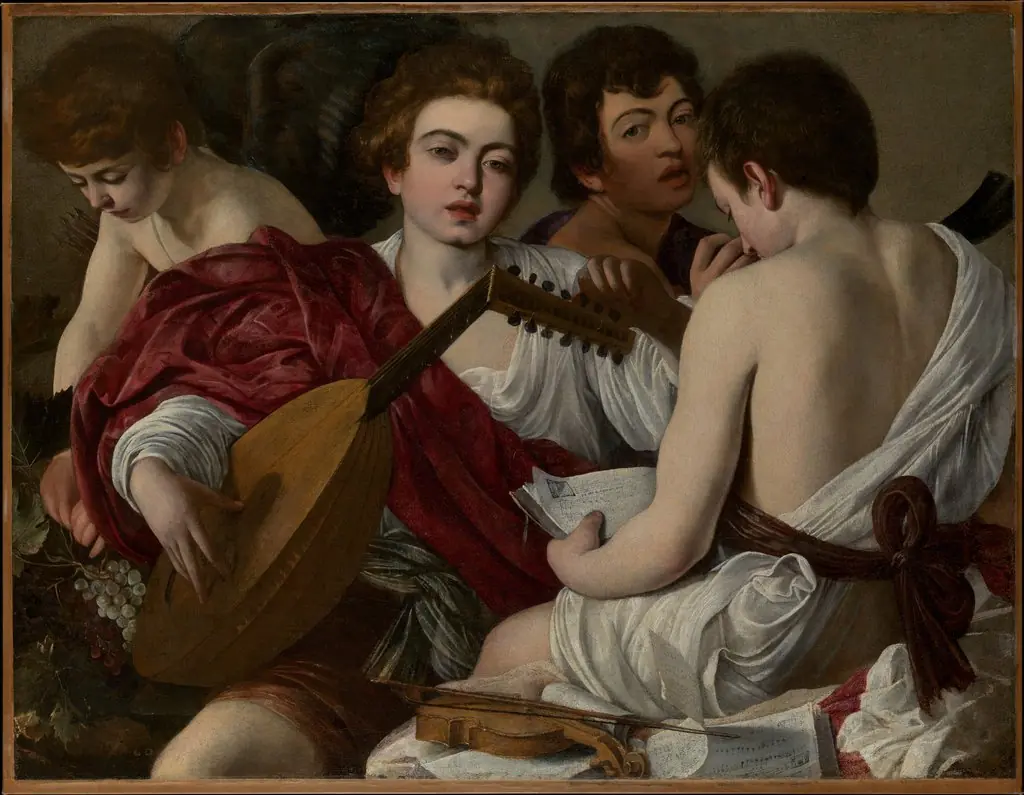
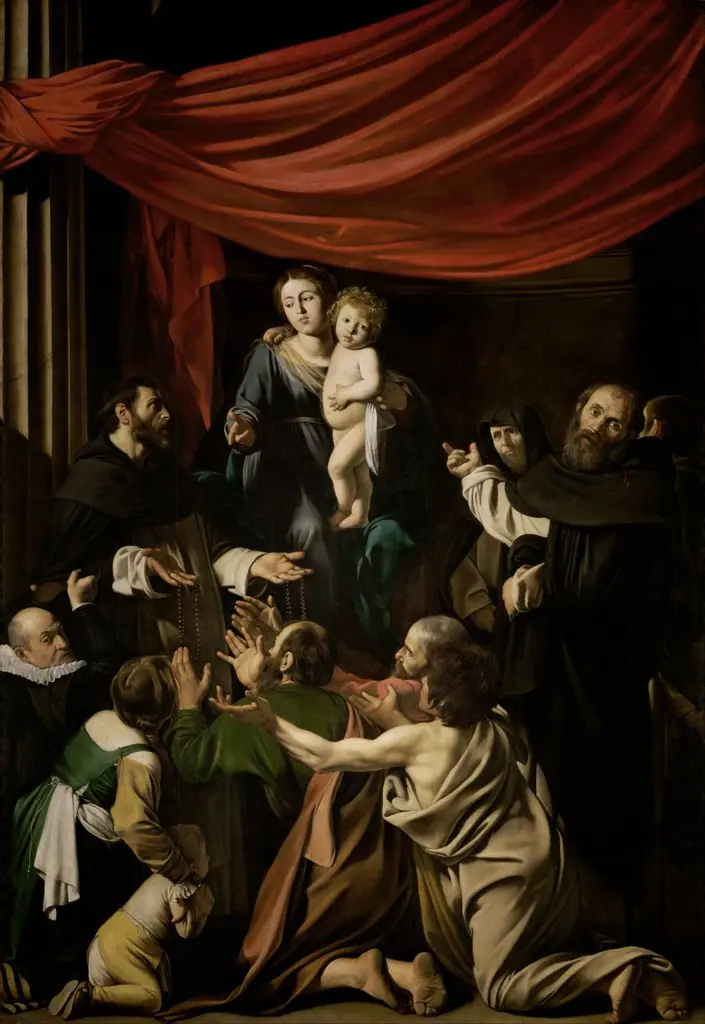
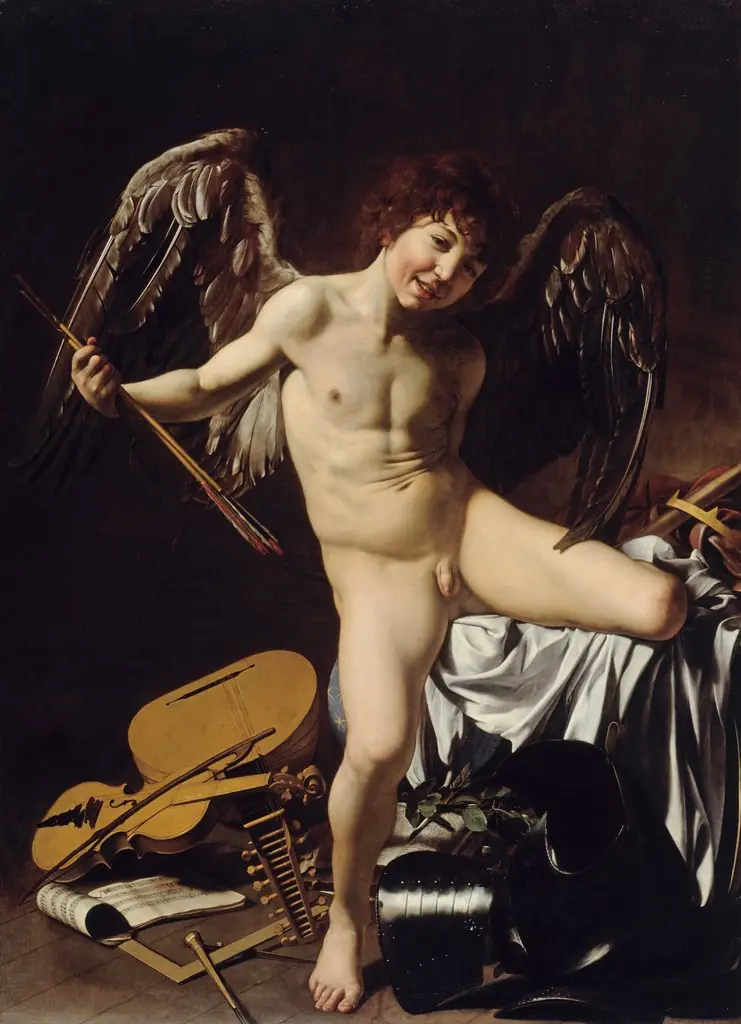
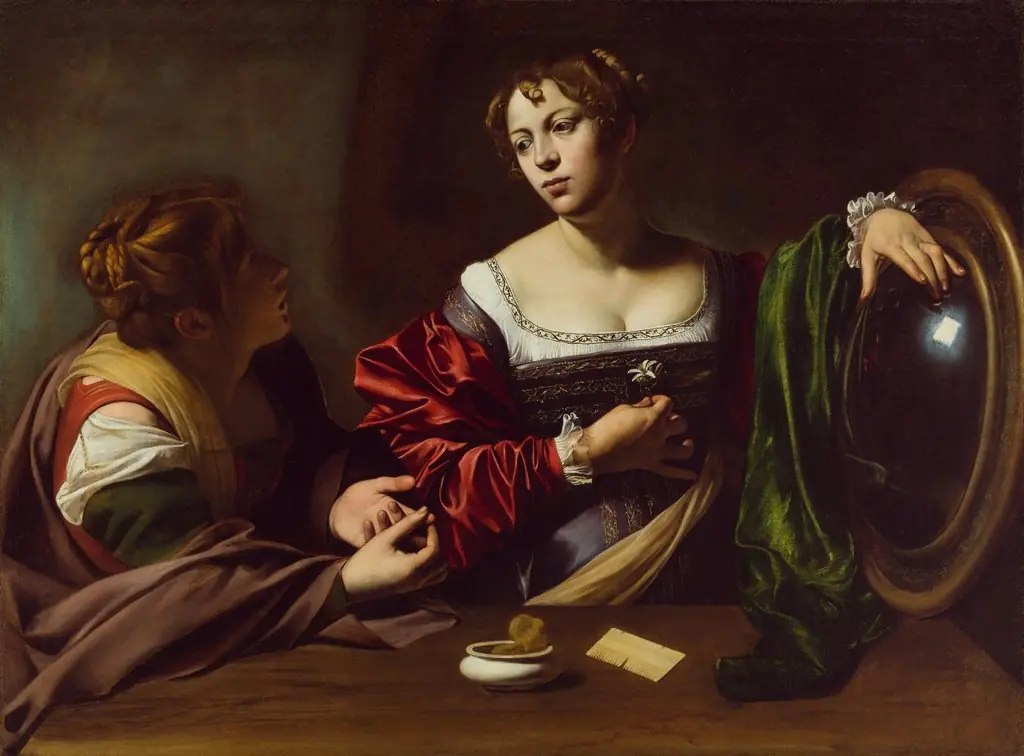
- David with the Head of Goliath
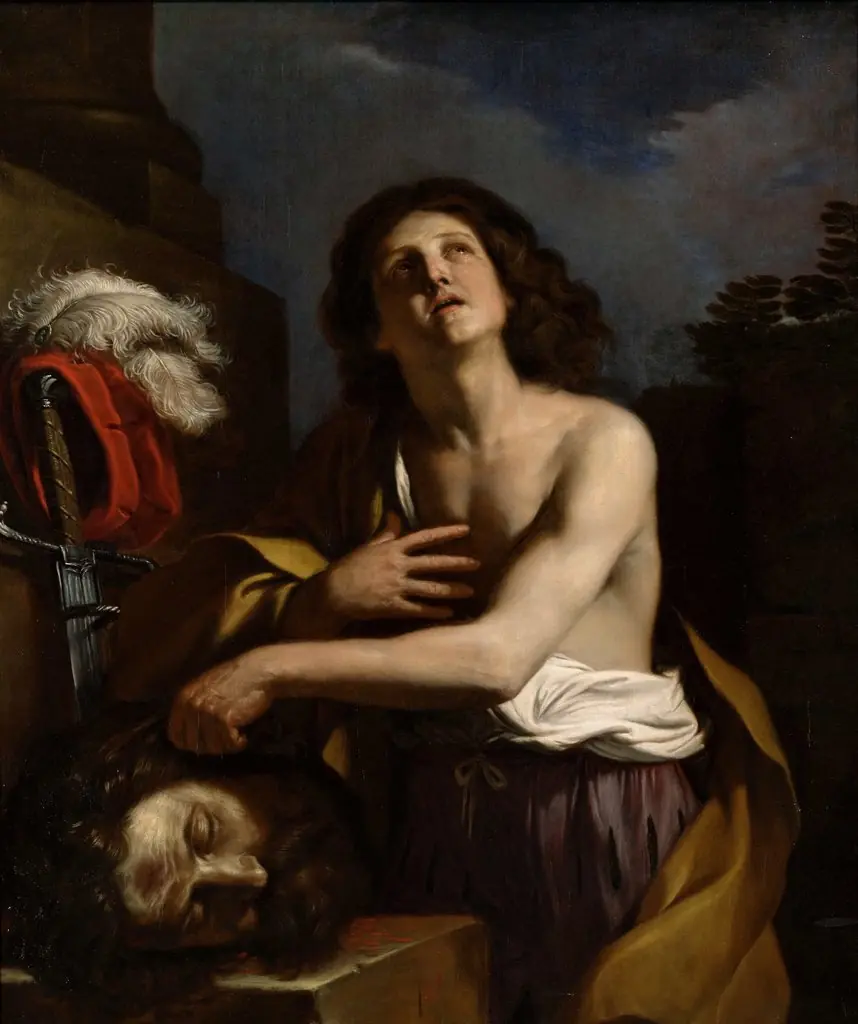 David with the Head of Goliath
 David with the Head of Goliath
 David with the Head of Goliath
 David with Goliath's head
 David with Goliath’s head
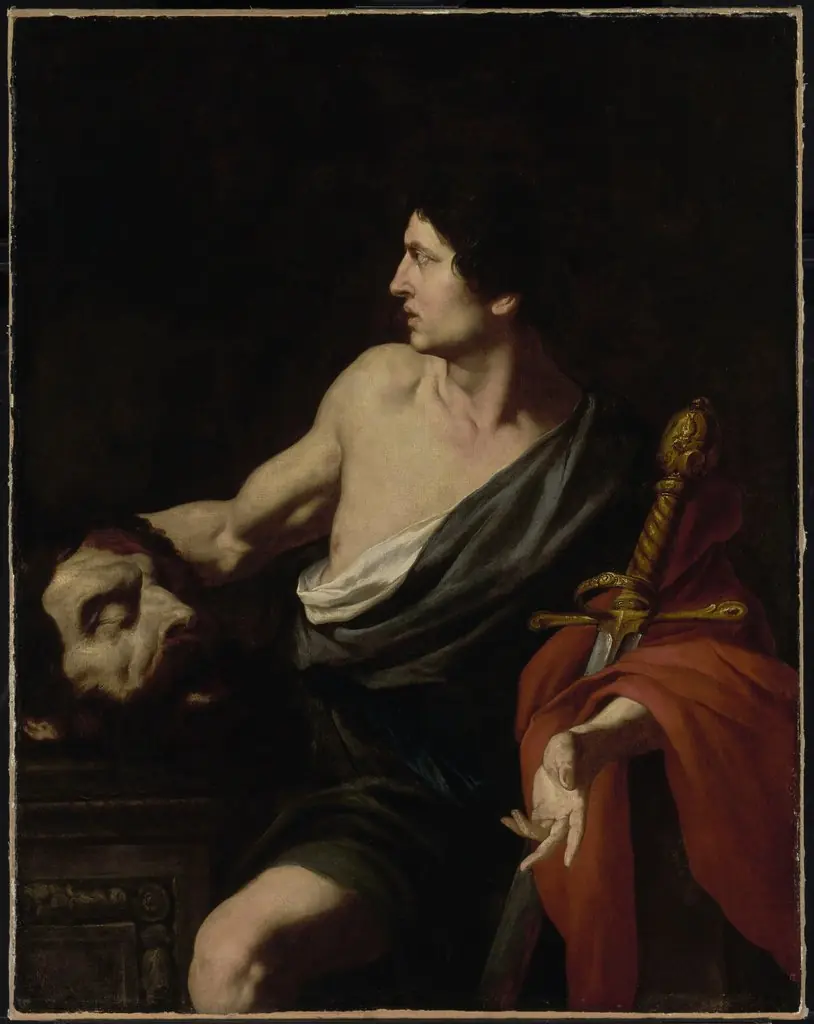 David with the Head of Goliath
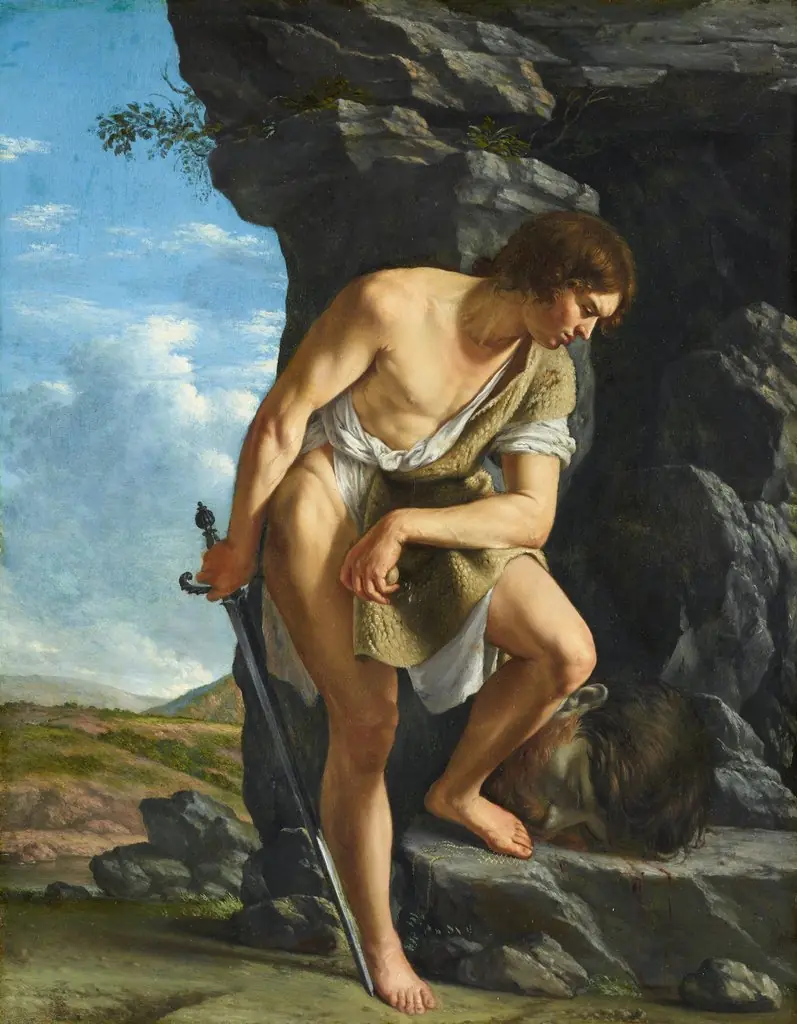 David Contemplating the Head of Goliath
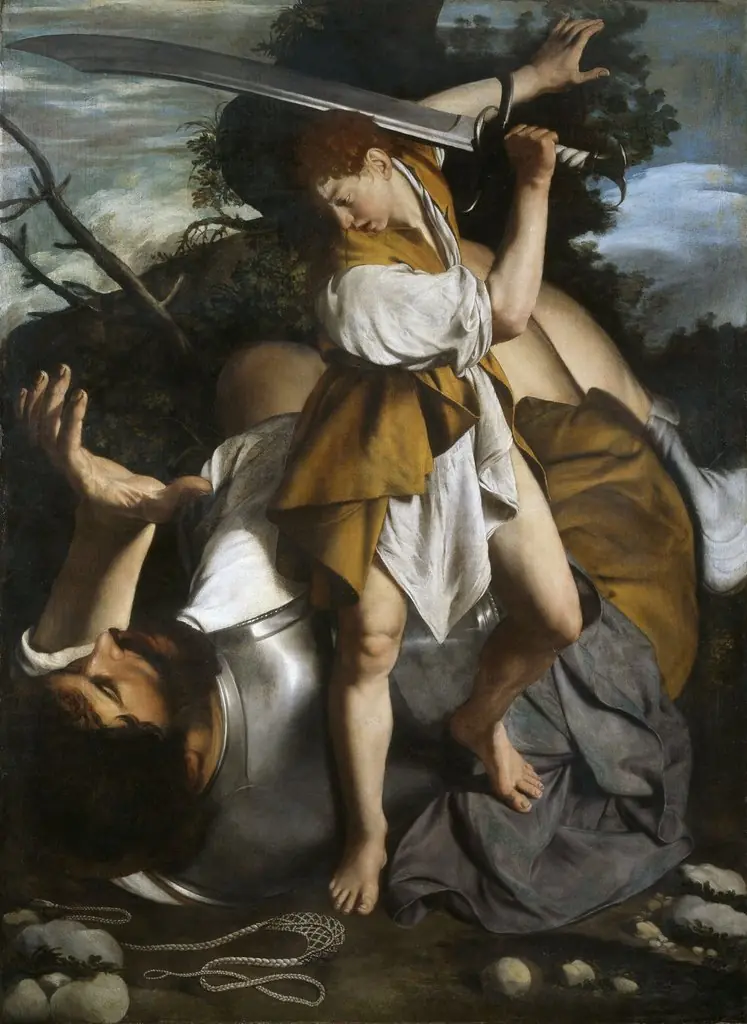 David and Goliath
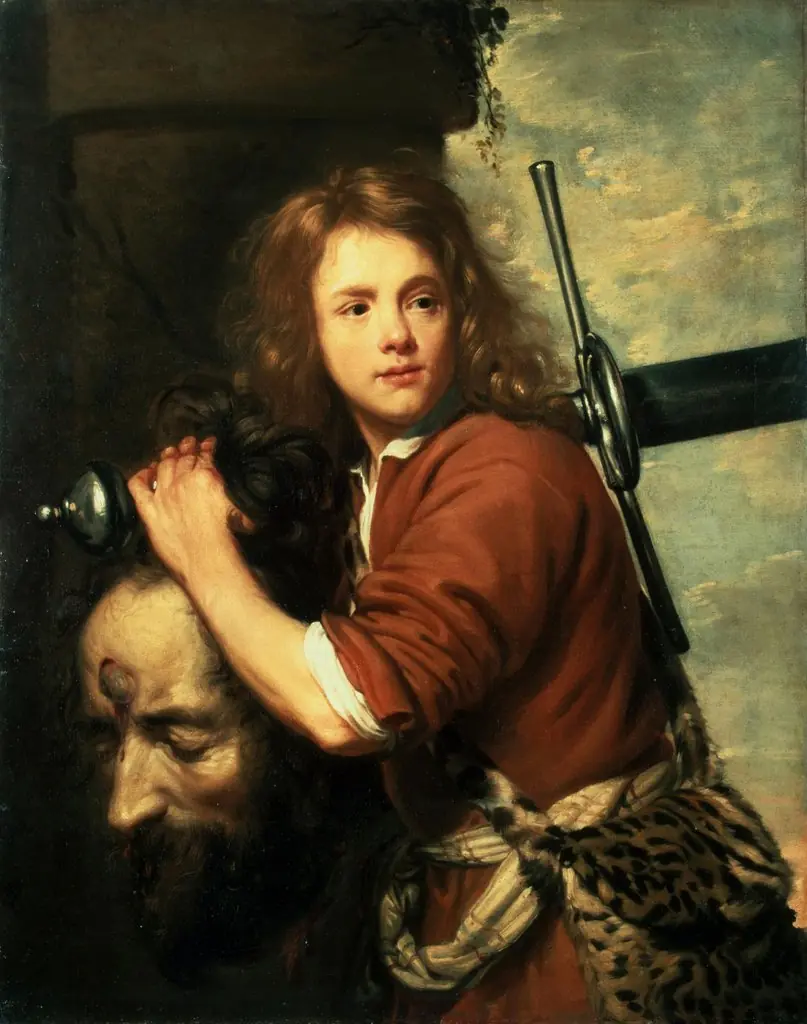 David Bearing the Head of Goliath
 David with the Head of Goliath