Artwork
Death is Near
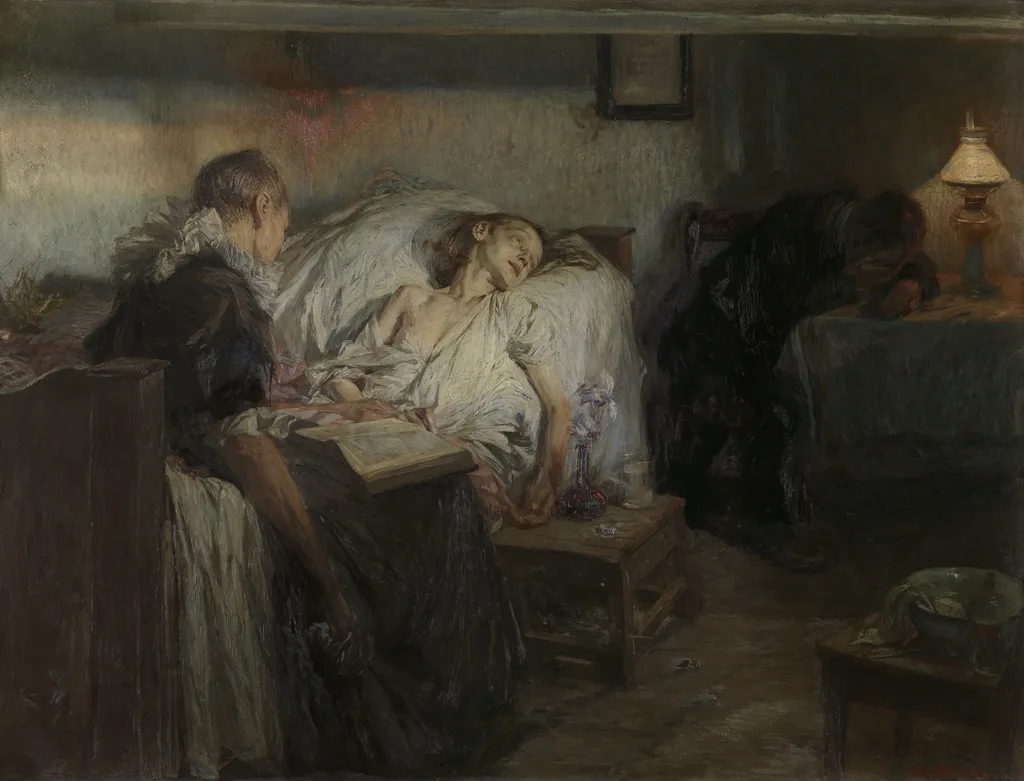
Death is Near is an oil painting by the Symbolist artist Otto Heichert. It dates from 1900 and is held in the collection of the Royal Museum of Fine Arts Antwerp.
About this work
Overview
The painting resides in the Royal Museum of Fine Arts Antwerp, where it stands as a quiet testament to late 19th-century German figurative painting.
Otto Heichert’s 1900 oil painting Death is Near presents a quiet, intimate moment of impending mortality. Executed in the Symbolist tradition, the work avoids literal narrative in favor of emotional resonance. Heichert, trained within the Düsseldorf school, focused on psychological depth rather than dramatic spectacle.
The painting resides in the Royal Museum of Fine Arts Antwerp, where it stands as a quiet testament to late 19th-century German figurative painting.
Subject & Meaning
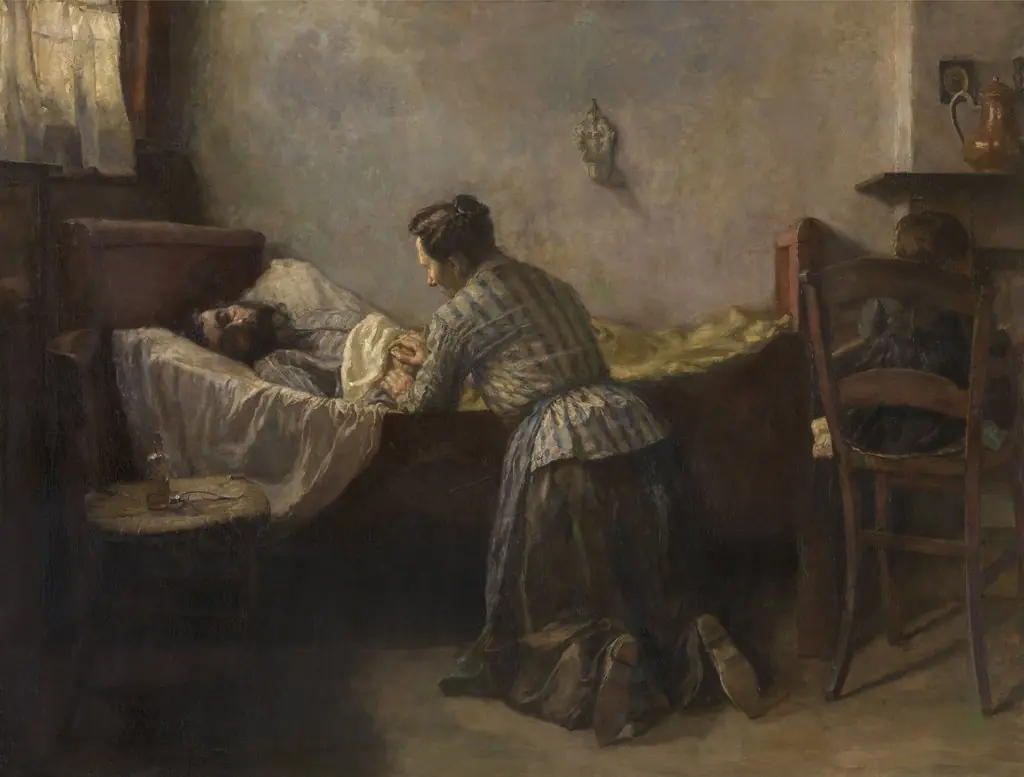
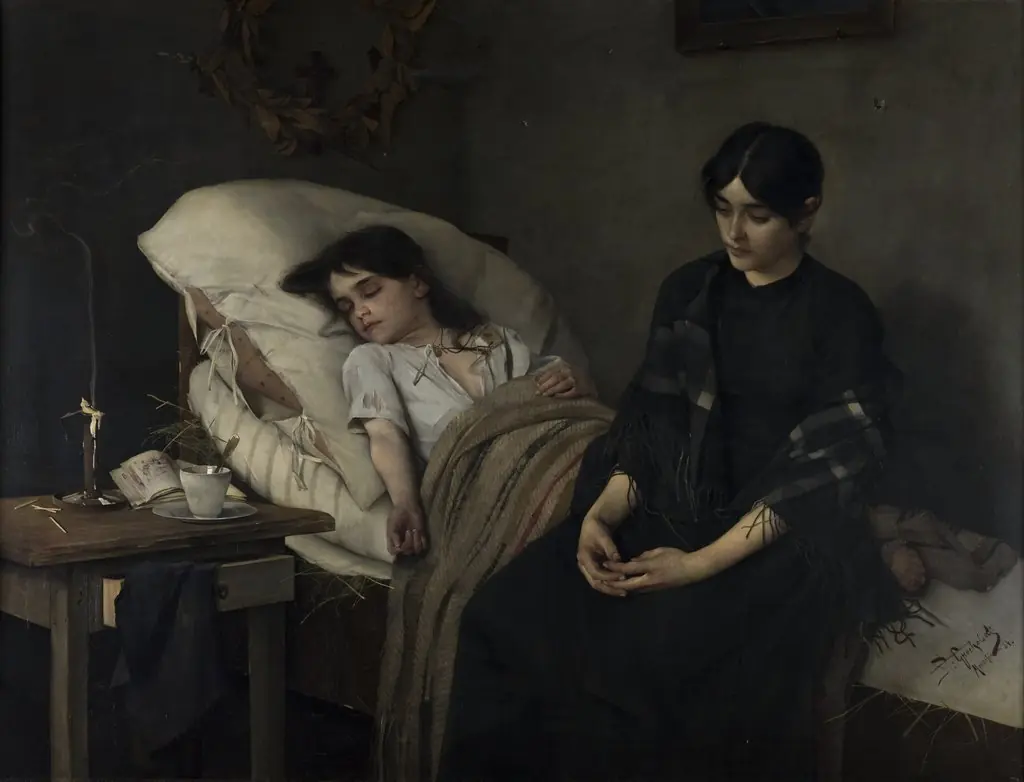
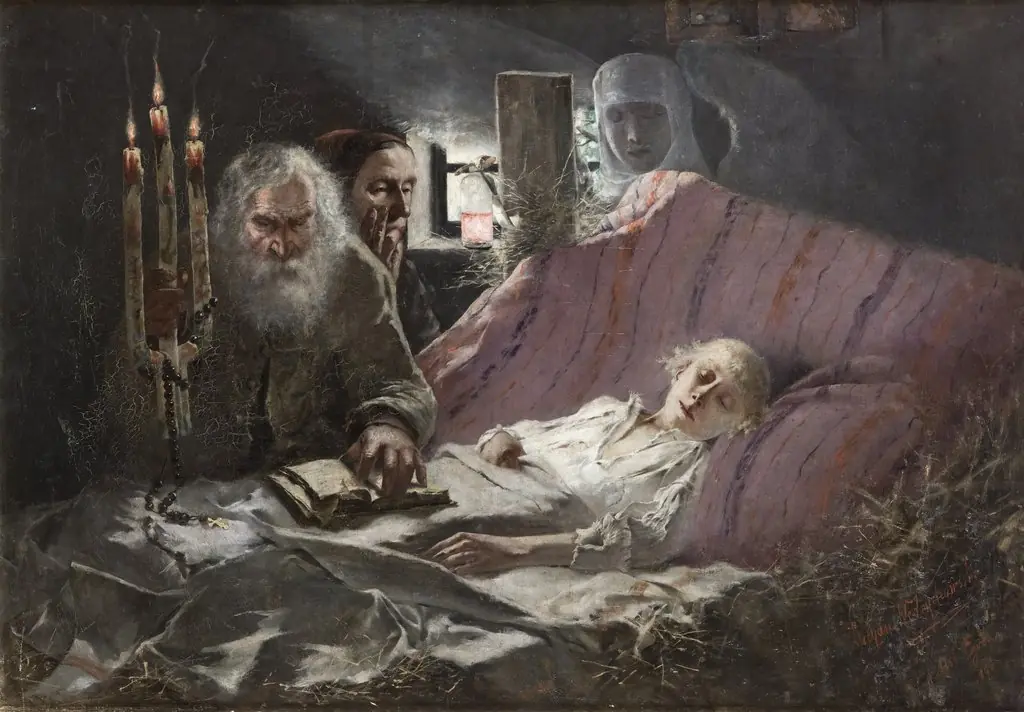
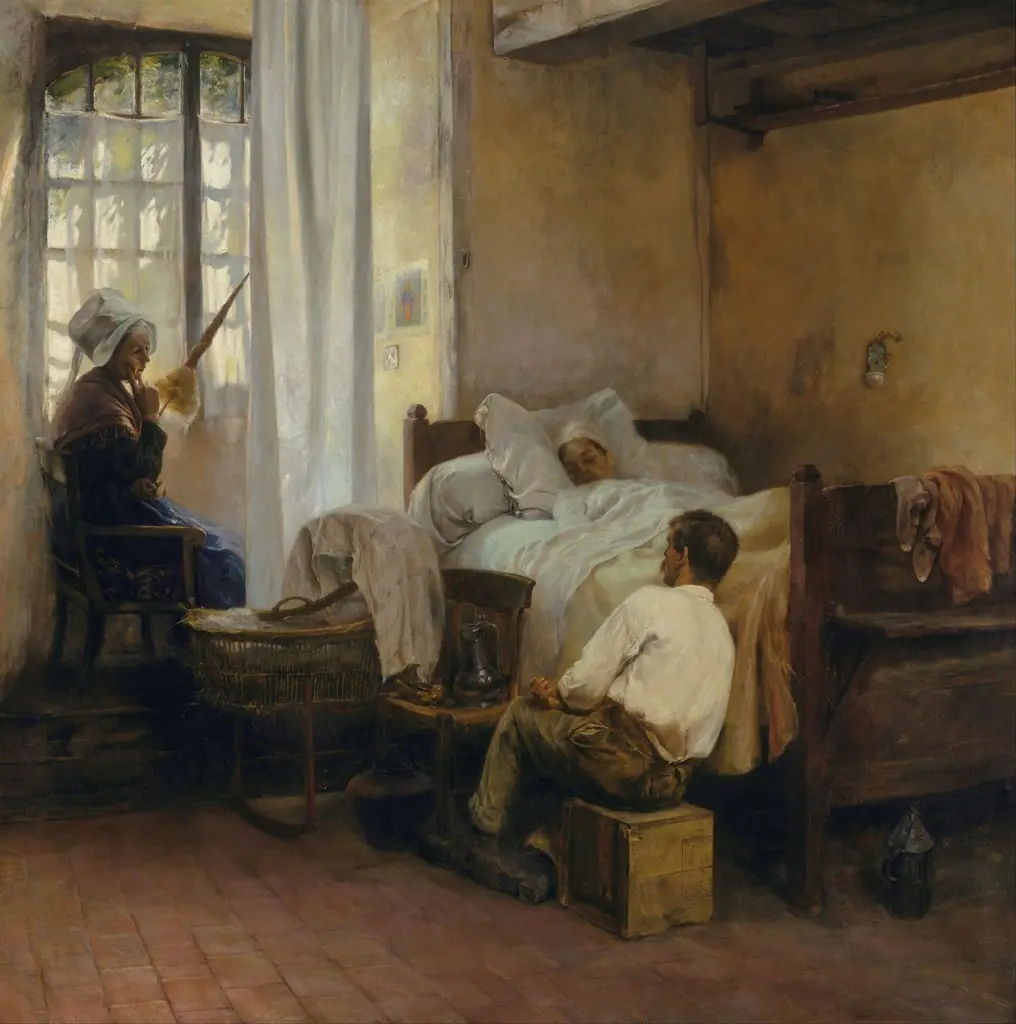
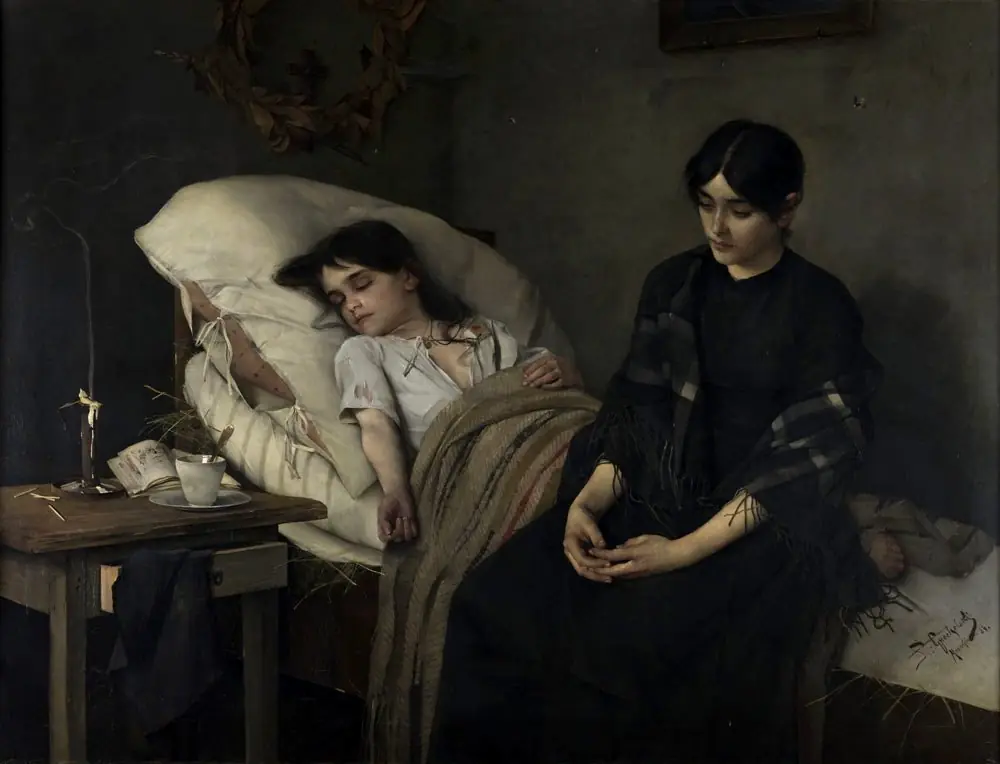
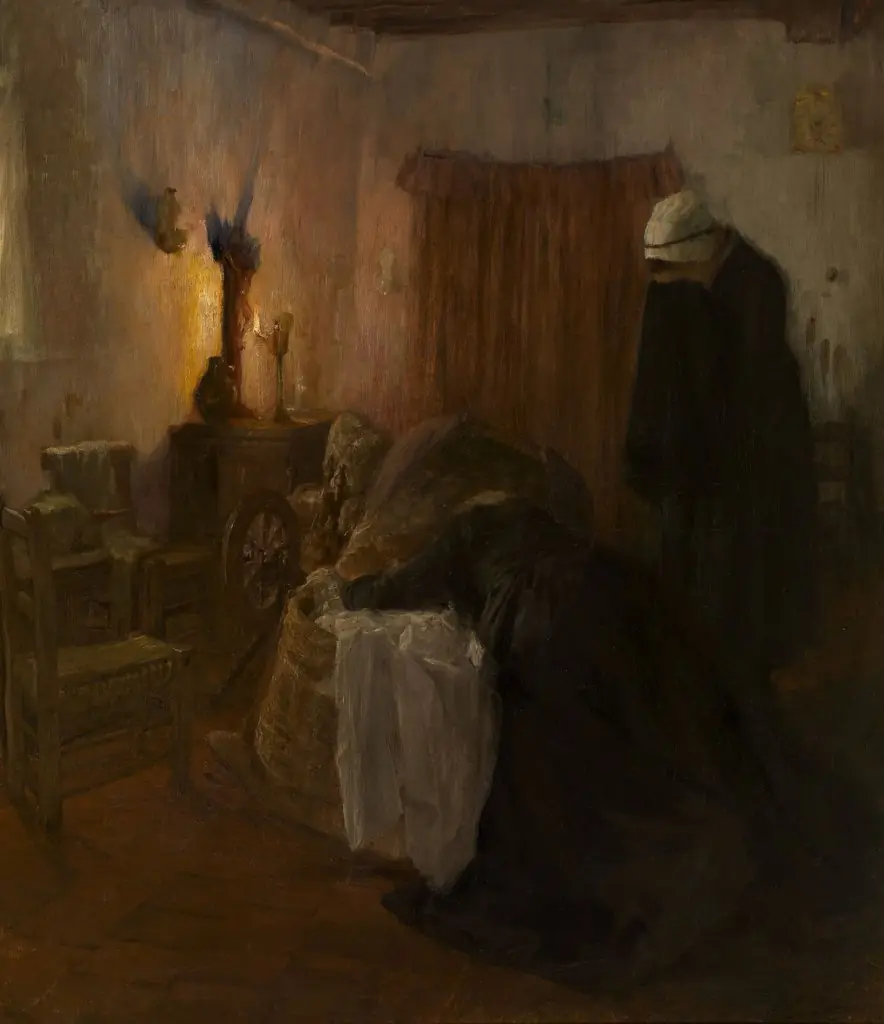
A woman lies motionless on a bed, her head tilted back and mouth slightly open, suggesting the final breath. Two figures in dark garments stand nearby, their postures conveying grief without overt gesture. The scene is not a deathbed in crisis but one of stillness, where the presence of death is felt through absence of movement and sound.
The title underscores inevitability, framing mortality not as an event but as an atmosphere settling over the room.
Technique & Style
Heichert employs chiaroscuro to isolate the central figure in a pool of lamplight, contrasting her pale skin with the deep shadows of the room and the dark clothing of the mourners. The brushwork is restrained, favoring soft transitions over sharp detail, reinforcing the hushed tone. Color is muted, ochres, grays, and deep browns, creating a tactile sense of enclosed space. The style aligns with Symbolist priorities: inner feeling over external realism.
History & Provenance
Painted in 1900, the work emerged during Heichert’s mature period, when he increasingly turned to themes of solitude and transience. It entered the collection of the Royal Museum of Fine Arts Antwerp in the early 20th century, likely through acquisition or donation. No significant exhibition history or public controversy surrounds the piece; its quiet presence has endured without fanfare, reflecting its unassuming yet persistent emotional weight.
Context
In the late 19th century, German art saw a shift from historical grandeur to introspective subjects, influenced by Symbolism’s focus on emotion and the unseen. Heichert’s work aligns with contemporaries who explored illness, aging, and death as universal experiences rather than religious allegories. Unlike macabre Victorian depictions, his approach is restrained, echoing broader cultural movements that sought dignity in private sorrow.
Legacy
Though not widely reproduced or studied, Death is Near remains a quiet example of German Symbolist figuration. It reflects a broader trend in European art where mortality was rendered not as spectacle but as an intimate, domestic reality. The painting’s endurance in a major European collection suggests its resonance as a contemplative object, valued for its emotional restraint rather than its novelty.
Own this work as a print
Artist & collection
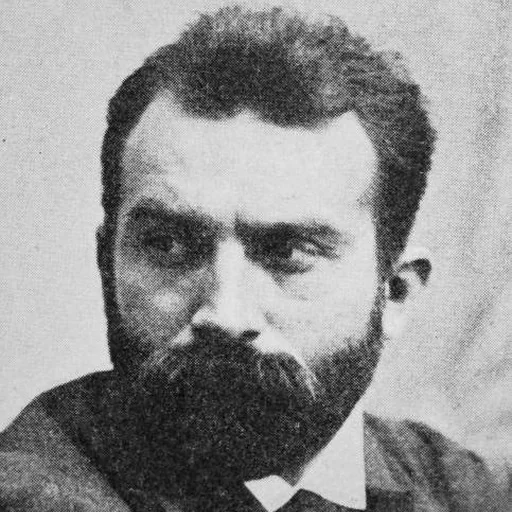
Artist
Otto Theodor Rudolf Heichert (27 February 1868, in Gröningen Priory – 22 March 1946, in Oberschönau, near Berchtesgaden) was a German painter and graphic artist; associated with the Düsseldorfer Malerschule.