Artwork
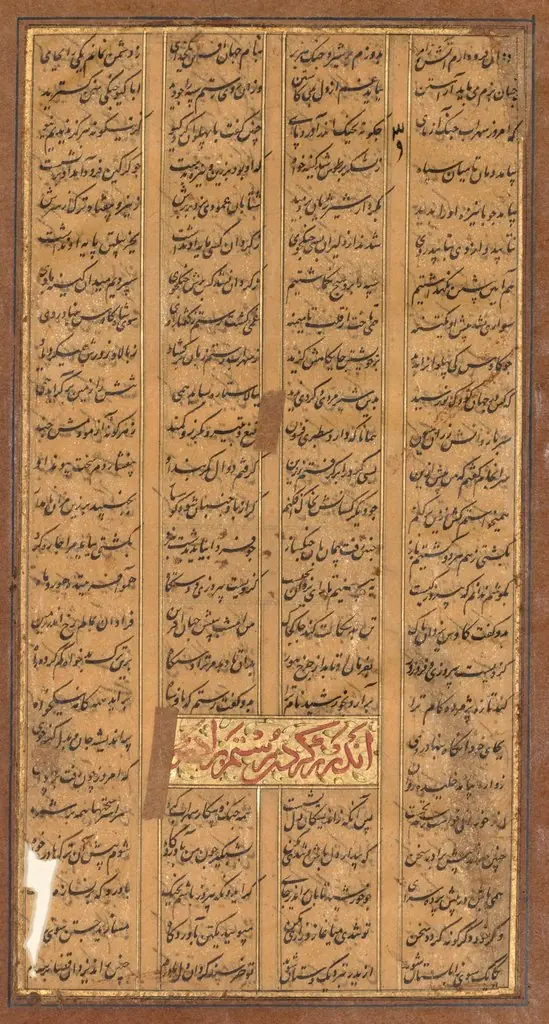
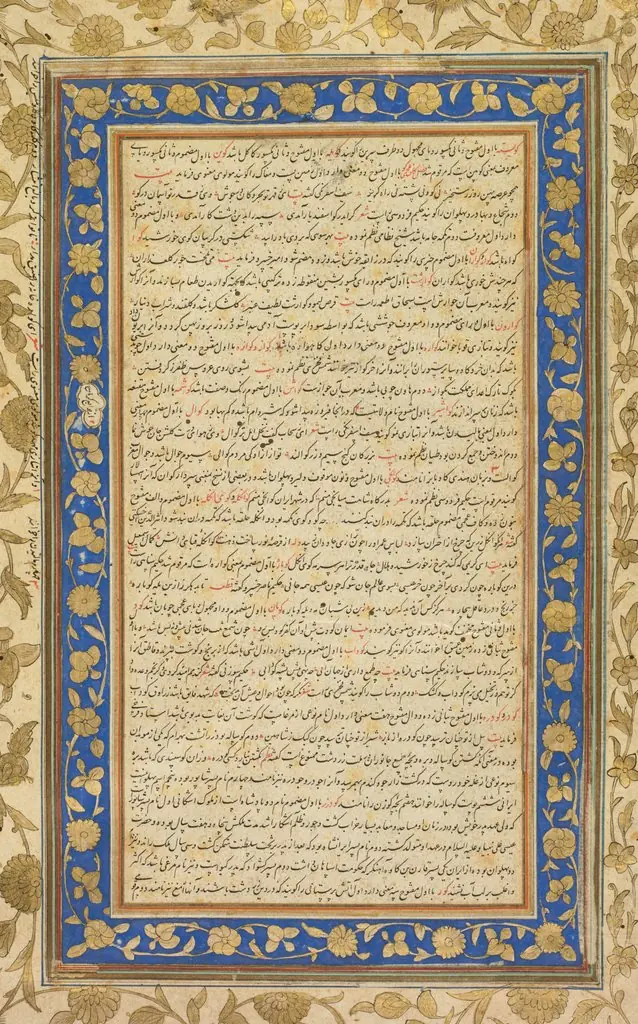
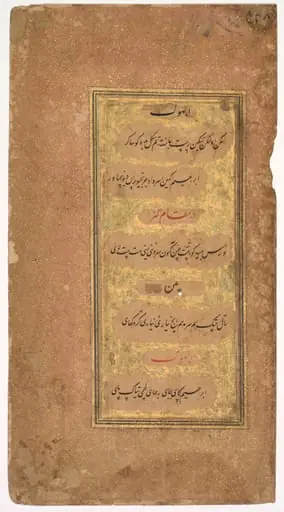
Page from a Panj Ganj (Five Treasures) of Abd al-Rahman Jami (Persian, 1414–1492), with two Persian masnavis: Yusuf va Zulaykha (Joseph and Zulaykha) and Subhat al-abrar (Rosary of the Righteous) (verso)
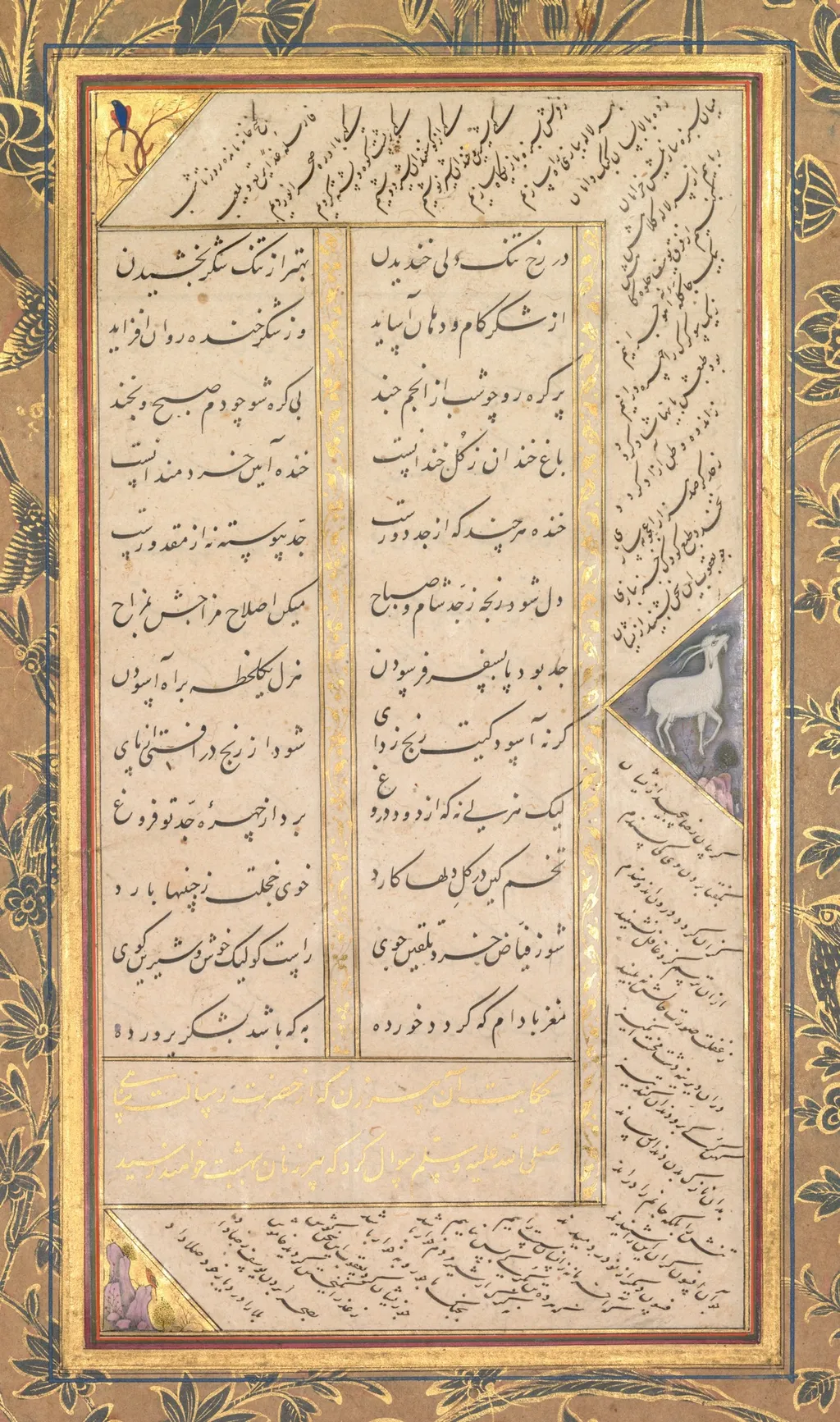
Page from a Panj Ganj (Five Treasures) of Abd al-Rahman Jami (Persian, 1414–1492), with two Persian masnavis: Yusuf va Zulaykha (Joseph and Zulaykha) and Subhat al-abrar (Rosary of the Righteous) (verso) is an unspecified painting. It dates from 1563 and is held in the collection of the Cleveland Museum of Art.
About this work
Subject & Meaning
These stories embody Sufi themes of divine love and moral virtue, aligning with the devotional purpose of the Panj Ganj manuscript.
The page depicts two classical narratives from the Persian Sufi poet Abd al-Rahman Jami: Yusuf va Zulaykha, illustrating the romantic and spiritual tale of Joseph and Zulaykha, and Subhat al-abrar, a didactic masnavi on righteousness. These stories embody Sufi themes of divine love and moral virtue, aligning with the devotional purpose of the Panj Ganj manuscript. The work is part of a 16th-century Indian miniature tradition, reflecting the synthesis of Persian literary heritage and regional artistic practices, as evidenced by its inclusion in the Cleveland Museum of Art's collection and its dated creation in 1563.
History & Provenance
The page is dated to 1563 and is presently housed in the Cleveland Museum of Art under accession number 2013.315.2.b. While one source describes the artist as unknown, another attributes the painting to the Indian artist Mushfiq. No further details about commission, earlier ownership, or creation history are provided in the available sources.
The painting is held by the Cleveland Museum of Art, where it is cataloged under accession number 2013.315.2.b. It was created in 1563 and has been part of the museum's collection since its inception in that year. The work has not been recorded in any major exhibition history according to available documentation.
Overview
This object is an illuminated folio from a Persian anthology known as the Panj Ganj, compiled by the 15th‑century poet‑philosopher Abd al‑Rahman Jami (1414–1492). The page contains excerpts from two masnavis, Yusuf va Zulaykha, a romantic retelling of the Joseph narrative, and Subhat al‑abrar, a devotional work titled “Rosary of the Righteous.” The manuscript sheet is executed on a light‑colored parchment, with text rendered in black ink and highlighted by gold ornamental motifs.
Technique & Style
Calligraphic passages are composed in a flowing Persian script, distinguished by elaborate swashes and tight ligatures. Gold leaf applied to borders and initial letters creates a luminous framework, while miniature depictions of flora and fauna, rendered in fine line work and subtle pigments, frame the text. The overall aesthetic balances textual precision with decorative richness typical of Timurid manuscript production.
Context
Abd al‑Rahman Jami was a prolific writer whose works circulated widely across the Islamic world, influencing poetry, theology, and visual culture. Manuscripts of his masnavis were commonly illuminated to enhance their recitation in elite circles, linking literary content with the visual splendor of courtly patronage.
Legacy
Illuminated pages such as this illustrate the integration of poetic narrative and decorative art that defined Persian manuscript tradition. They continue to inform scholarship on Timurid aesthetics, the transmission of Sufi ideas, and the cross‑regional appreciation of Jami’s oeuvre.
Artist & collection

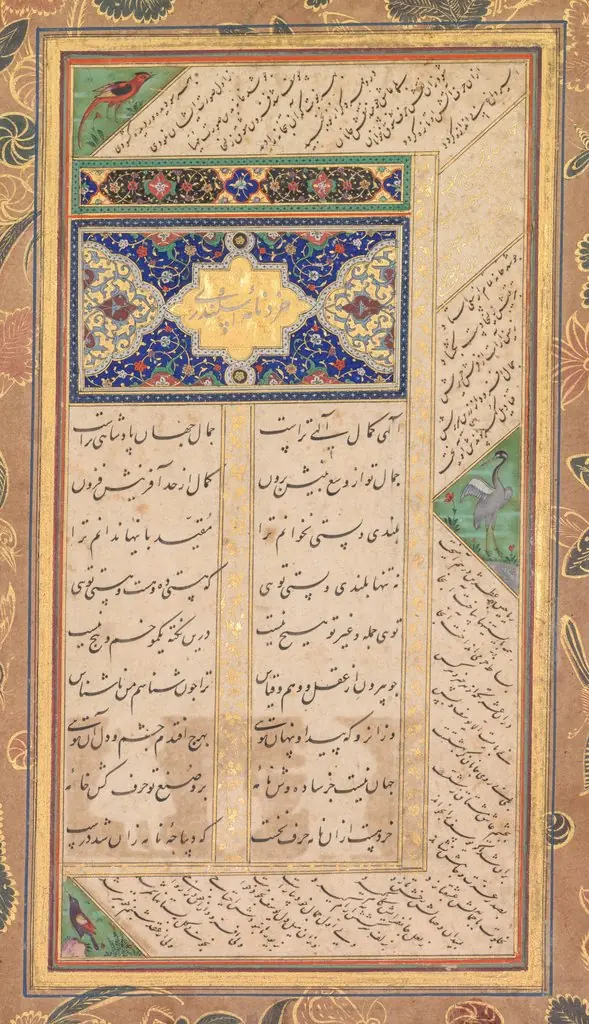
- Illuminated page (verso), from a Panj Ganj (Five Treasures) of Abd al- Rahman Jami (Persian, 1414–1492) with two Persian masnavis: Yusuf va Zulaykha (Joseph and Zulaykha) and Khirad-nama-i Iskandari (Alexander’s Book of Wisdom)
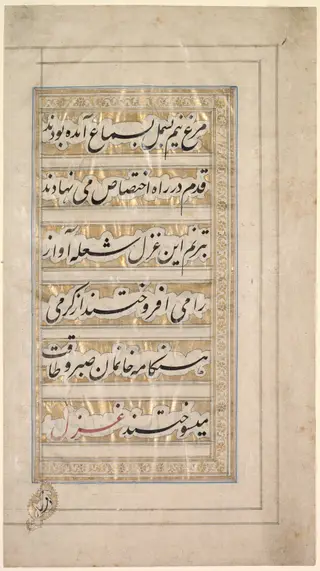
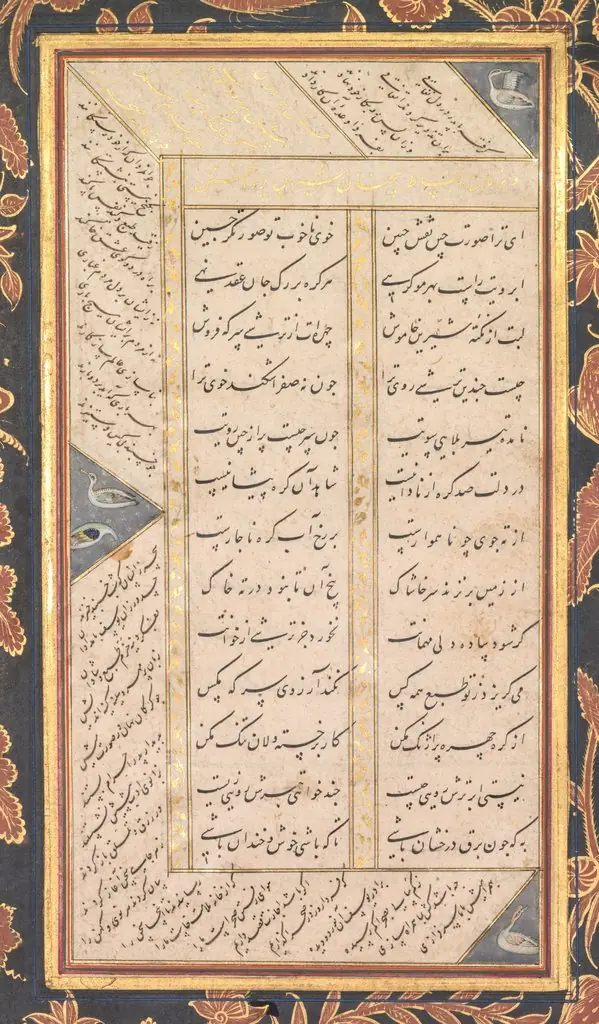 Folio B: Folio from the "Five Treasures" (Panj Ganj) of Jami (recto)
 Page from a Panj Ganj (Five Treasures) of Abd al-Rahman Jami (Persian, 1414–1492), with two Persian
masnavis: Yusuf va Zulaykha (Joseph and Zulaykha) and Subhat al-abrar (Rosary of the Righteous) (verso)
Page from a Panj Ganj (Five Treasures) of Abd al-Rahman Jami (Persian, 1414–1492), with two Persian
masnavis: Yusuf va Zulaykha (Joseph and Zulaykha) and Subhat al-abrar (Rosary of the Righteous) (verso)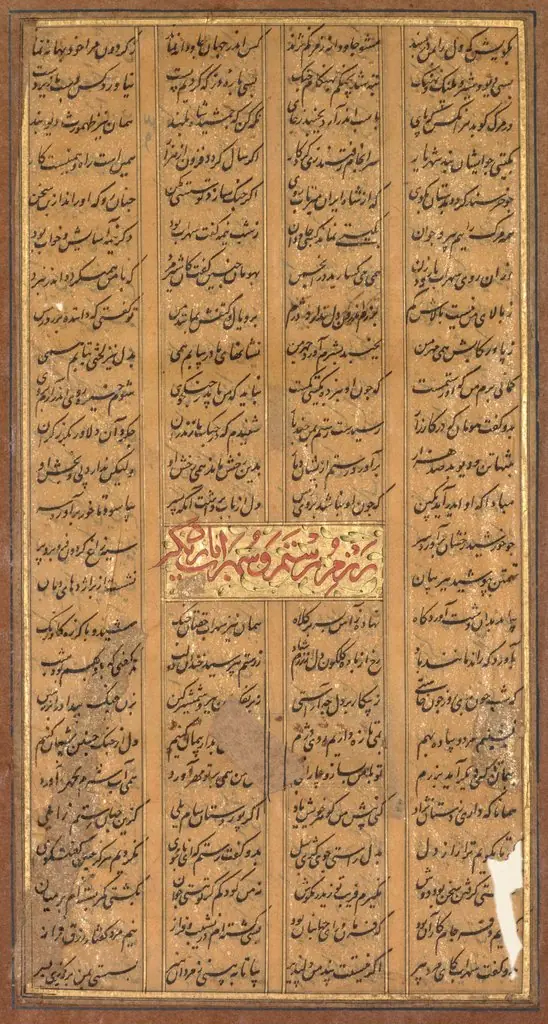 Text of Rustam and Suhrab, from the Shah-nama of Firdausi (Persian, c. 934–1020) (verso)
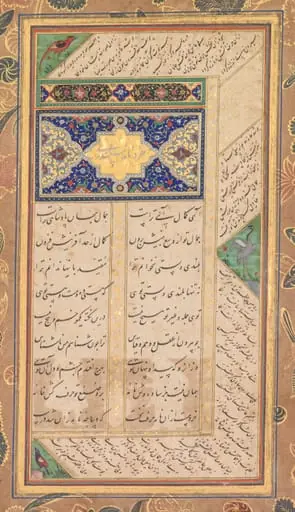 Illuminated page (verso), from a Panj Ganj (Five Treasures) of Abd al- Rahman Jami (Persian, 1414–1492) with two Persian masnavis: Yusuf va Zulaykha (Joseph and Zulaykha) and Khirad-nama-i Iskandari (Alexander’s Book of Wisdom)
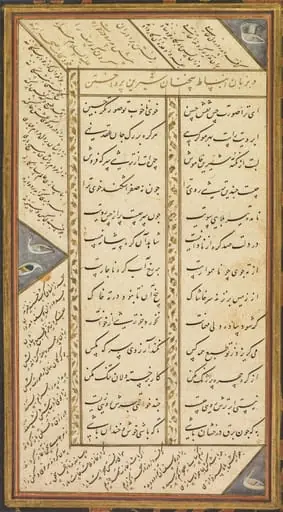 Page from the Panj Ganj (Five Treasures) of Abd al-Rahman Jami (Persian, 1414–1492), with two Persian masnavis (narrative poems): Yusuf va Zulaykha (Joseph and Zulaykha) and Subhat al-abrar (Rosary of the Righteous)
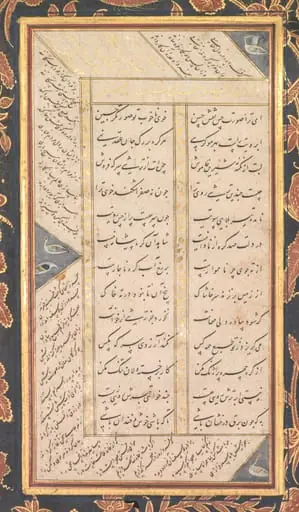 Folio B: Folio from the "Five Treasures" (Panj Ganj) of Jami (recto)
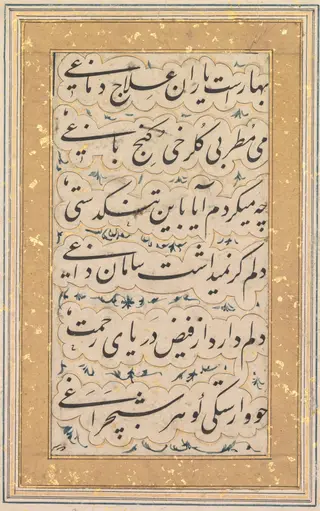
 From Dohras (Songs) 40 and 42 from the Kitab-i Nauras (Book of Nine Essences) of Sultan Ibrahim Adil Shah II of Bijapur (r. 1580–1627); verso: From Dohras (Songs) 40 and 36 from the Kitab-i Nauras of Sultan Ibrahim Adil Shah II