Artwork
The Crucifixion
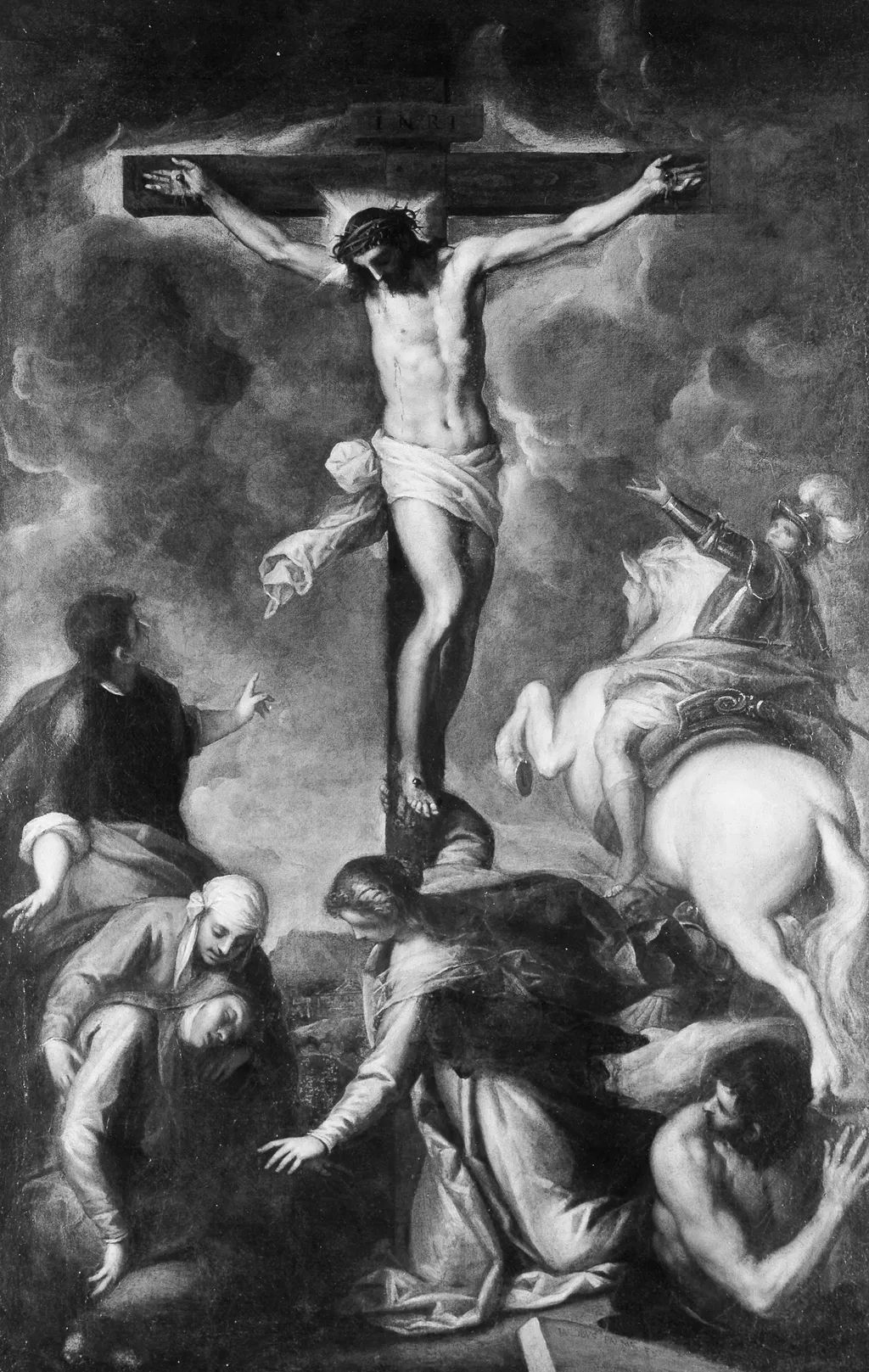
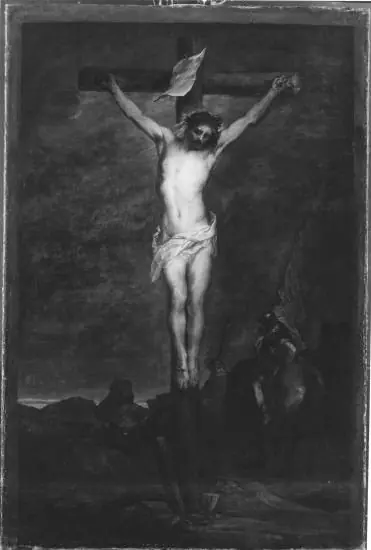
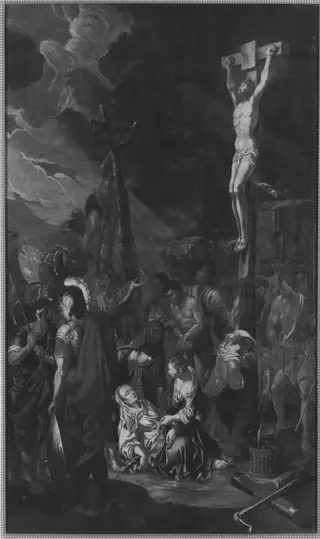
The Crucifixion is an oil painting by the Early Baroque Italian artist Palma il Giovane. It dates from 1598 and is held in the collection of the Metropolitan Museum of Art.
About this work
In 1596, two years after Tintoretto's death, Jacopo Palma the Younger signed this tall Crucifixion "JACOBVS PALMA. F." The canvas stands over two meters high and reached New York through the dealer Italico Brass and the banker Robert Lehman, who gave it to the Metropolitan Museum of Art in 1957.
Subject & Meaning
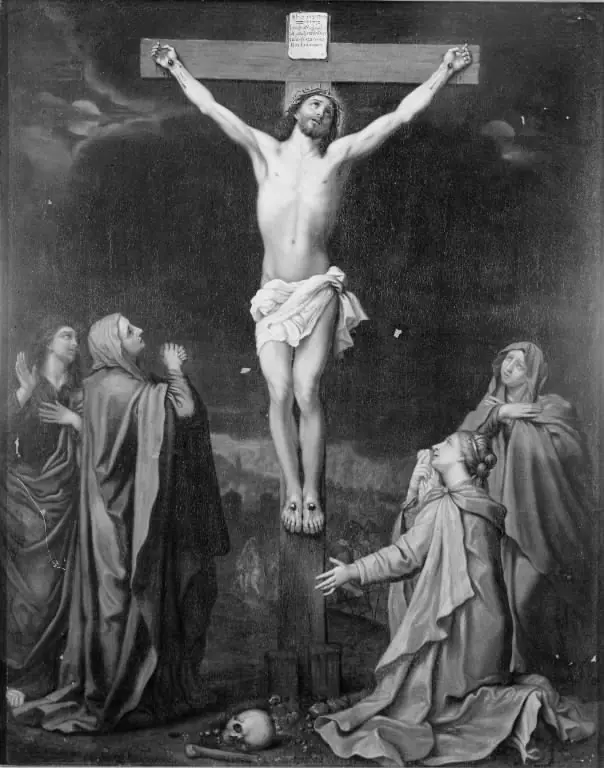
The painting depicts the crucifixion of Jesus Christ, showing Jesus on the cross accompanied by the Virgin Mary, a soldier, a man, and a horse. As a religious work dated 1596 by Palma il Giovane, its subject is the central Christian event of the crucifixion, presenting the narrative of sacrifice and devotion through these figures and the cross.
Technique & Style
It belongs to the religious genre and depicts the crucifixion of Jesus, with secondary figures including Mary, a soldier, and a horse.
The Crucifixion is an oil painting on canvas created in 1596 by Palma il Giovane. The work, measuring 215.9 cm in height and 135.3 cm in width, is executed in oil paint applied to a canvas support, a technique typical of late Renaissance Venetian art. It belongs to the religious genre and depicts the crucifixion of Jesus, with secondary figures including Mary, a soldier, and a horse.
The painting is housed in the Metropolitan Museum of Art, where it remains part of the museum’s collection. Its formal composition centers on the central figure of Christ, arranged to convey narrative clarity and emotional intensity.
History & Provenance
The Crucifixion was executed in 1596 by the Venetian painter Palma il Giovane (Jacopo Palma the Younger) as an oil on canvas measuring approximately 216 × 135 cm. The work depicts the crucifixion of Jesus with accompanying figures and remains a religious painting in the artist’s oeuvre. According to the available records, the canvas entered the collection of the Metropolitan Museum of Art, where it is currently housed. No earlier ownership or commission details are provided in the sources.
Overview
Jacopo Palma the Younger completed The Crucifixion in 1596, an oil painting on canvas measuring 215.9 by 135.3 centimeters. Bearing the artist's signature, this significant work entered the collection of the Metropolitan Museum of Art in 1957. It represents a mature example of Palma's religious art, created during a period when he was Venice's preeminent painter, following the death of Tintoretto.
Context
Executed two years after the death of Tintoretto, The Crucifixion dates from a period when Jacopo Palma the Younger had established himself as Venice's leading painter. He was actively fulfilling numerous commissions for churches both within Venice and internationally, producing a substantial body of religious works that showcased his developed style and devotional focus.
Own this work as a print
Artist & collection
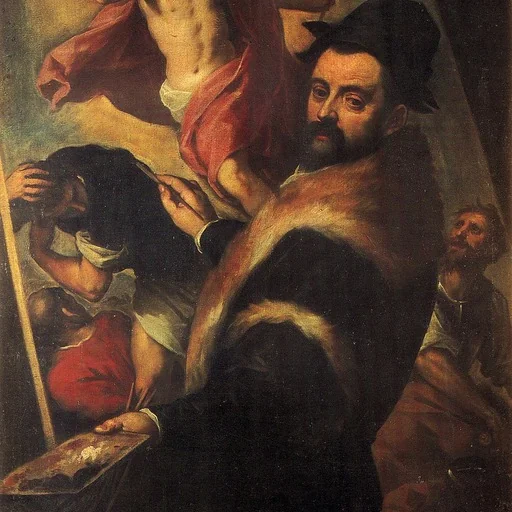
Artist
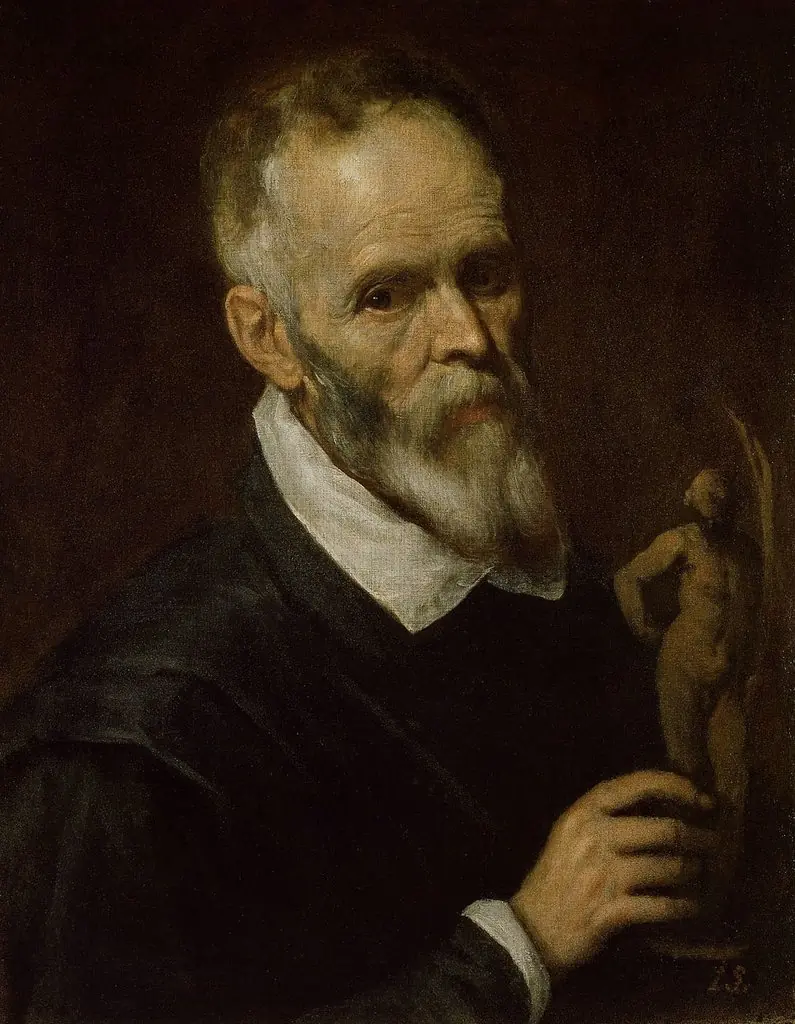
Iacopo Negretti (1548/50 – 14 October 1628), best known as Jacopo or Giacomo Palma il Giovane or simply Palma Giovane ('Young Palma'), was an Italian painter from Venice and a notable exponent of the Venetian school.