Artwork
Dead Christ Supported by Angels
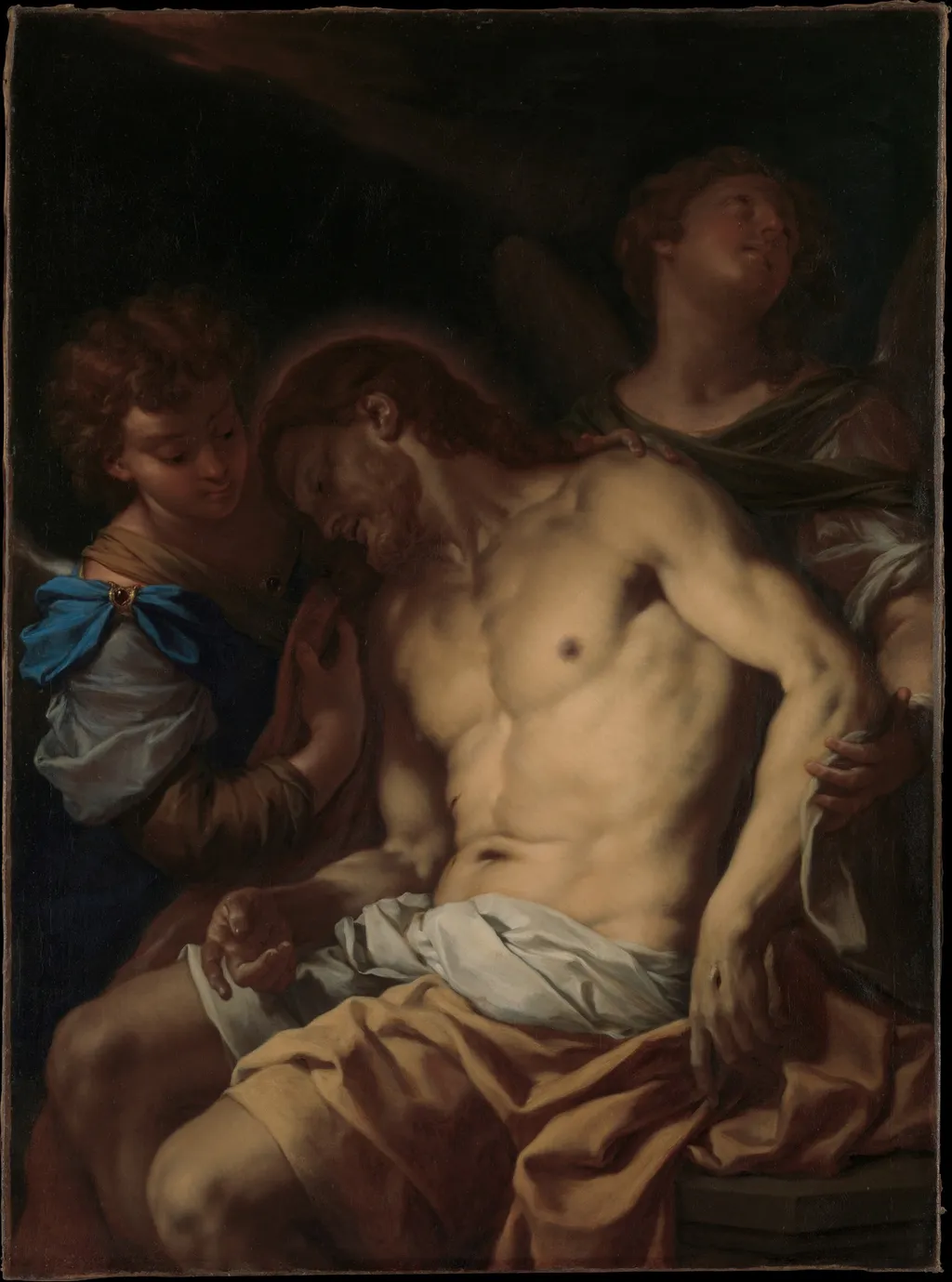
Dead Christ Supported by Angels is an oil painting by the High Baroque Italian artist Francesco Trevisani. It dates from 1710 and is held in the collection of the Metropolitan Museum of Art.
About this work
Subject & Meaning
Francesco Trevisani's 1710 oil painting depicts the deceased body of Christ being supported by angels, a composition central to religious art.
Francesco Trevisani's 1710 oil painting depicts the deceased body of Christ being supported by angels, a composition central to religious art. The work's iconography focuses on the mourning of the Savior immediately following his crucifixion, presenting a somber scene of divine loss. By portraying Christ in a state of death while attended by celestial beings, the piece emphasizes the theological significance of the Passion and the physical reality of the Incarnation.
The inclusion of angels serves to highlight the sacred nature of the event and the reverence due to the fallen figure. This visual narrative, created for a religious context, invites contemplation on sacrifice and redemption through the intimate interaction between the human form of the dead Christ and the spiritual presence of the angels.
History & Provenance
Dead Christ Supported by Angels is an oil-on-canvas religious painting by Francesco Trevisani dated to 1710. The work entered the collection of the Metropolitan Museum of Art, where it is catalogued under accession number 2012.256 and remains held by that institution. The sources do not record a prior ownership chain, commissioning body, or earlier provenance, nor any intermediate custodians between the work's creation and its arrival at the Metropolitan Museum of Art.
The painting Dead Christ Supported by Angels by Francesco Trevisani is held in the collection of the Metropolitan Museum of Art. The work, executed in oil on canvas in 1710, carries the accession number 2012.256. While the available records confirm its current location and inventory designation within the museum, no specific details regarding past exhibitions or a broader exhibition history are provided in the source material.
Context
Francesco Trevisani, an Italian painter active in Rome during the early eighteenth century, produced this oil on canvas depiction of the Dead Christ supported by angels in 1710. The work belongs to the religious genre and exemplifies the devotional emphasis of Trevisani’s oeuvre, which combined Baroque dynamism with a refined colouristic palette. Documentation in the Metropolitan Museum of Art’s catalogue confirms its acquisition, dimensions, and material composition, situating it within the museum’s collection of European religious art.
Scholars have interpreted the composition as a meditation on martyrdom and divine intervention, highlighting Trevisani’s role in disseminating such iconography throughout early modern Italy.
Legacy
Dead Christ Supported By Angels, painted by Francesco Trevisani in 1710, is recorded as a religious oil painting in the Metropolitan Museum of Art. Its inclusion in the museum’s collection and its entry in Wikidata have contributed to a sustained scholarly recognition of the work as an exemplar of early 18th‑century Venetian religious art. The painting’s technical details, oil on canvas, dimensions 130.8 × 97.2 cm, are documented in catalogues, reinforcing its reputation as a significant example of Trevisani’s devotional imagery.
Overview
Francesco Trevisani's Dead Christ Supported by Angels, an oil painting from 1710, exemplifies the High Baroque Italian style within the religious genre. The artwork portrays the deceased Christ, tenderly upheld by angelic figures, a poignant subject frequently explored in Christian art. Housed in The Metropolitan Museum of Art, this piece reflects the artistic sensibilities prevalent during Trevisani's active period, bridging the late Baroque and early Rococo eras.
Technique & Style
Executed in oil, the painting features smooth brushwork that meticulously defines the musculature of Christ's body and the intricate folds of the angels' garments. Trevisani utilized soft, dramatic lighting, a technique akin to chiaroscuro, to make the figures' skin appear luminous against the deep, shadowed background. This approach highlights the emotional intensity and three-dimensionality characteristic of the High Baroque, while also showing a refined elegance.
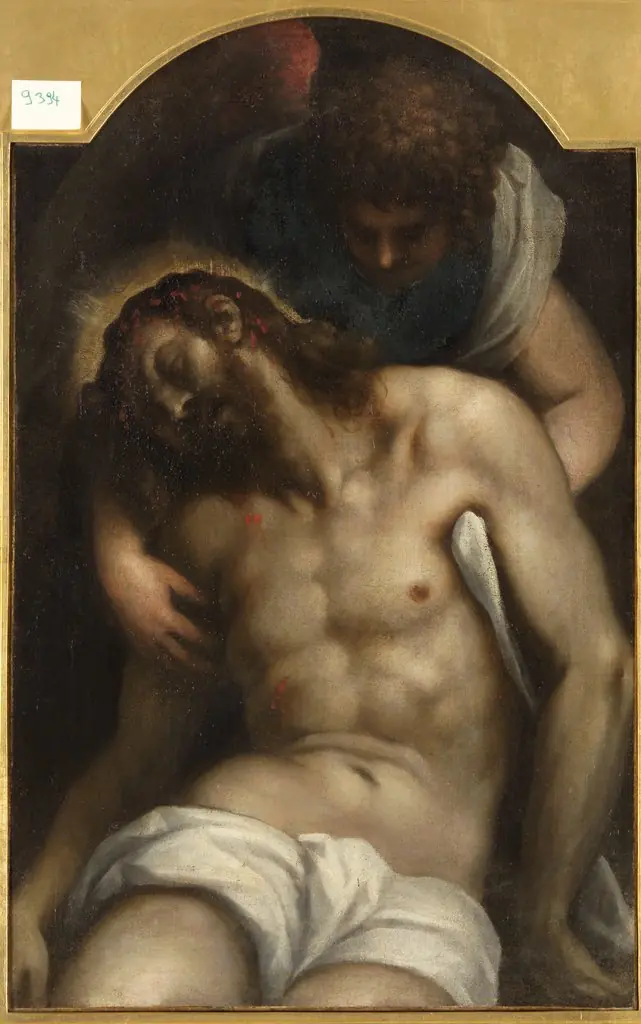
Own this work as a print
Artist & collection
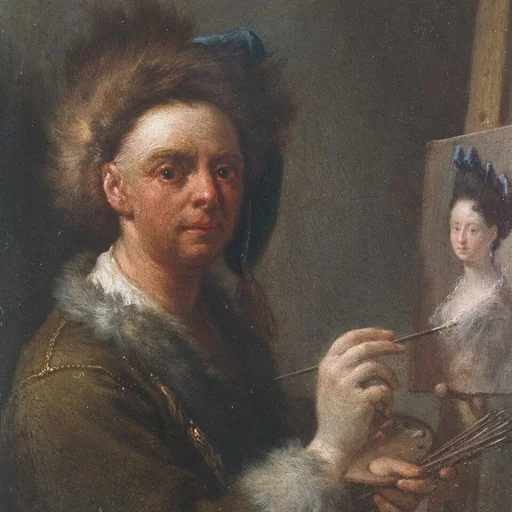
Artist
Francesco Trevisani (April 9, 1656 – July 30, 1746) was an Italian painter, active in the period called either early Rococo or late Baroque (barochetto).

- Dead Christ Supported by an Angel
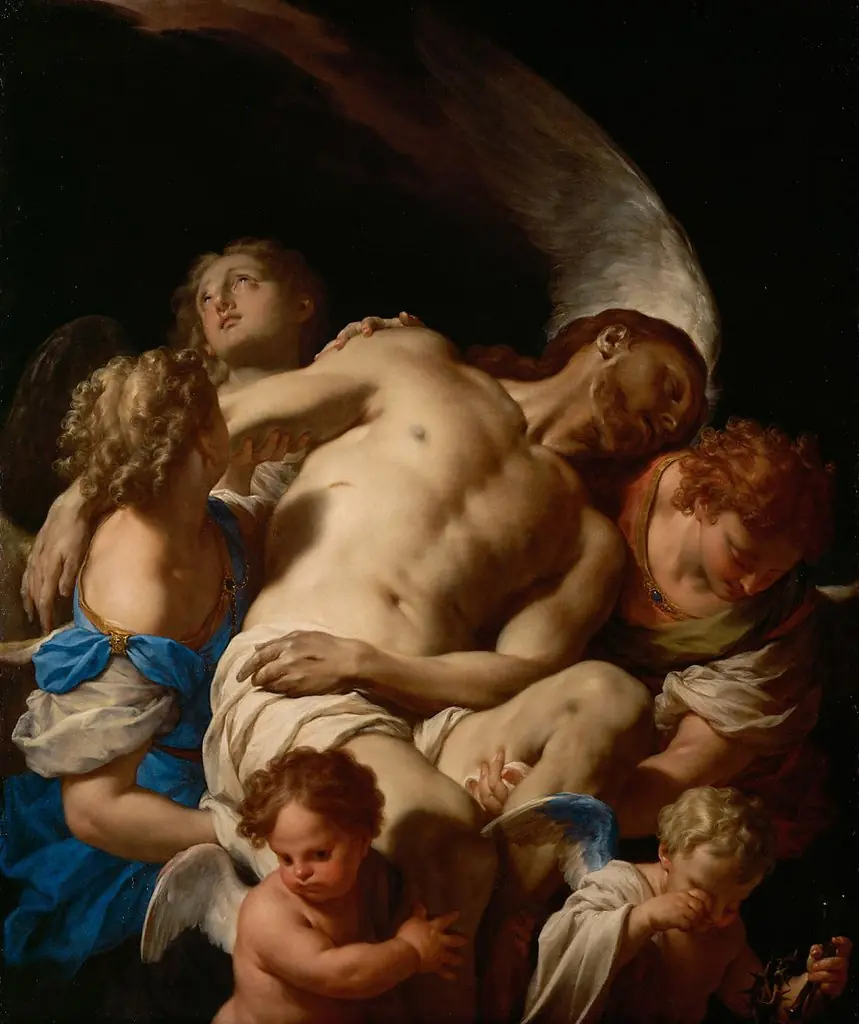 Body of Christ, held by angels
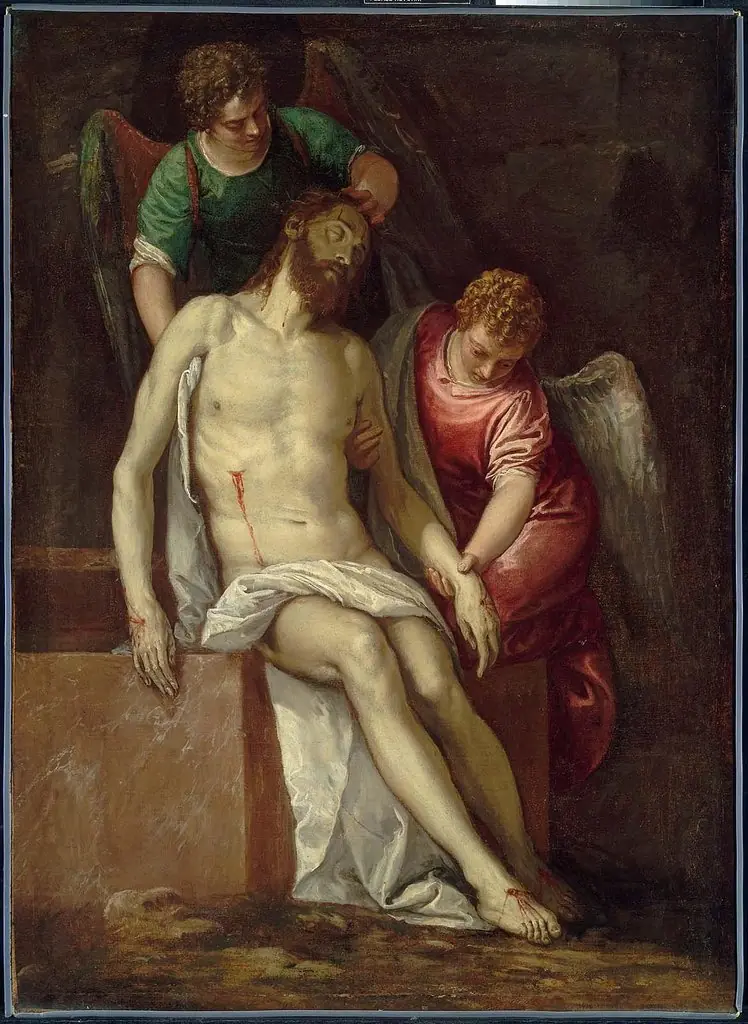 The Dead Christ Supported by Angels
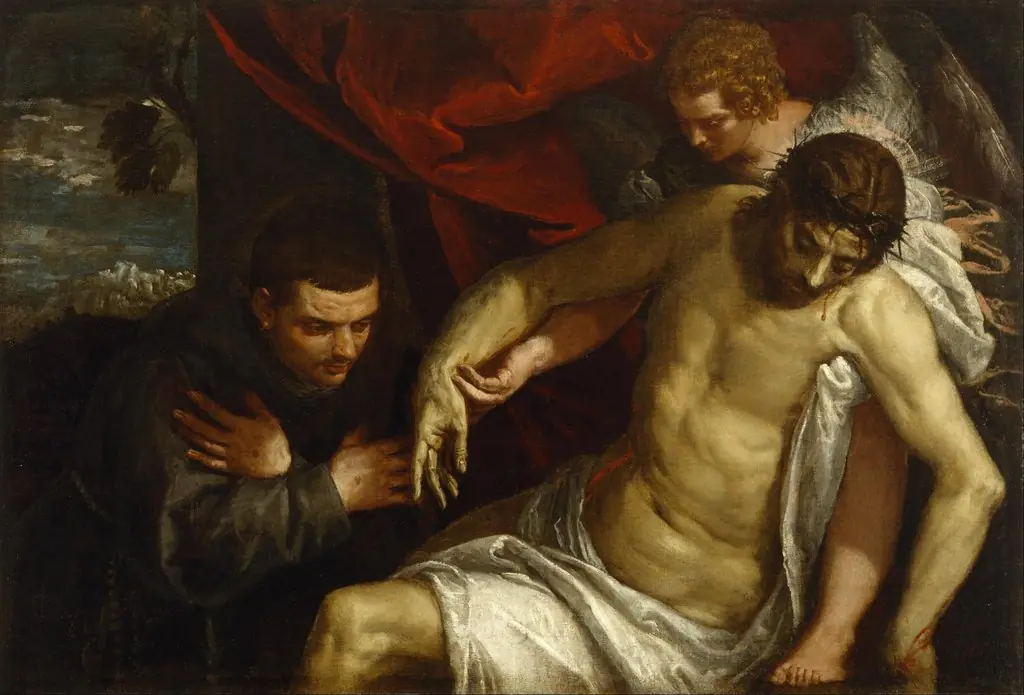 The Dead Christ Supported by an Angel and Adored by a Franciscan
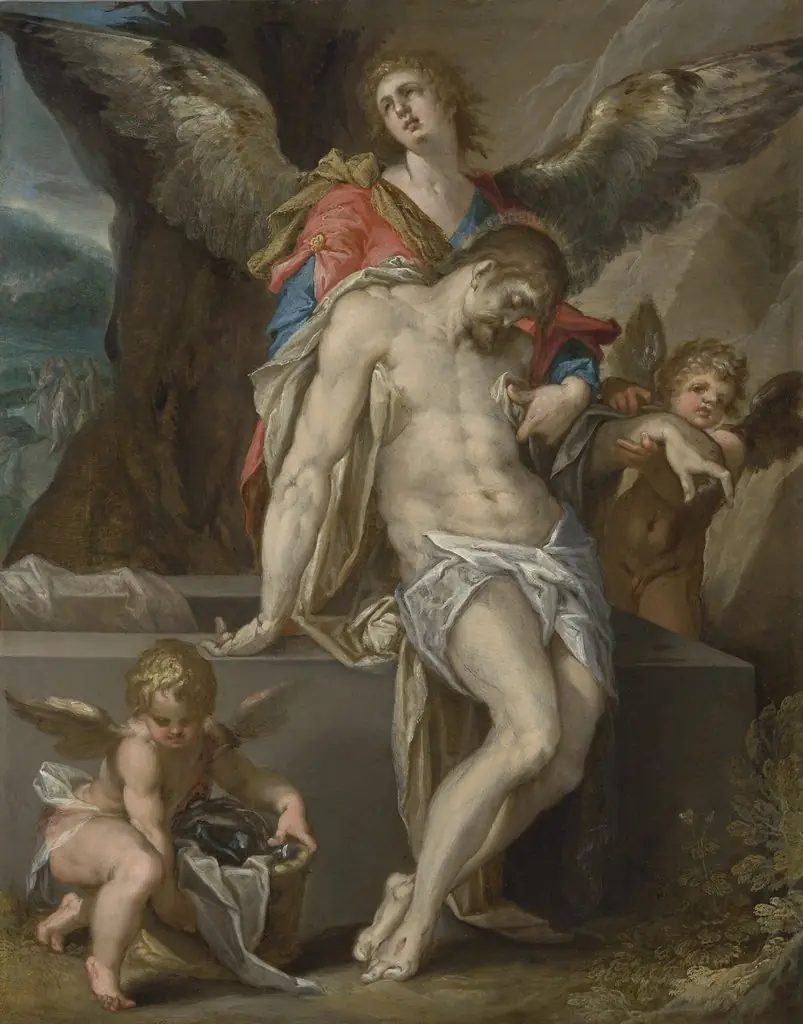 The Body of Christ Supported by Angels
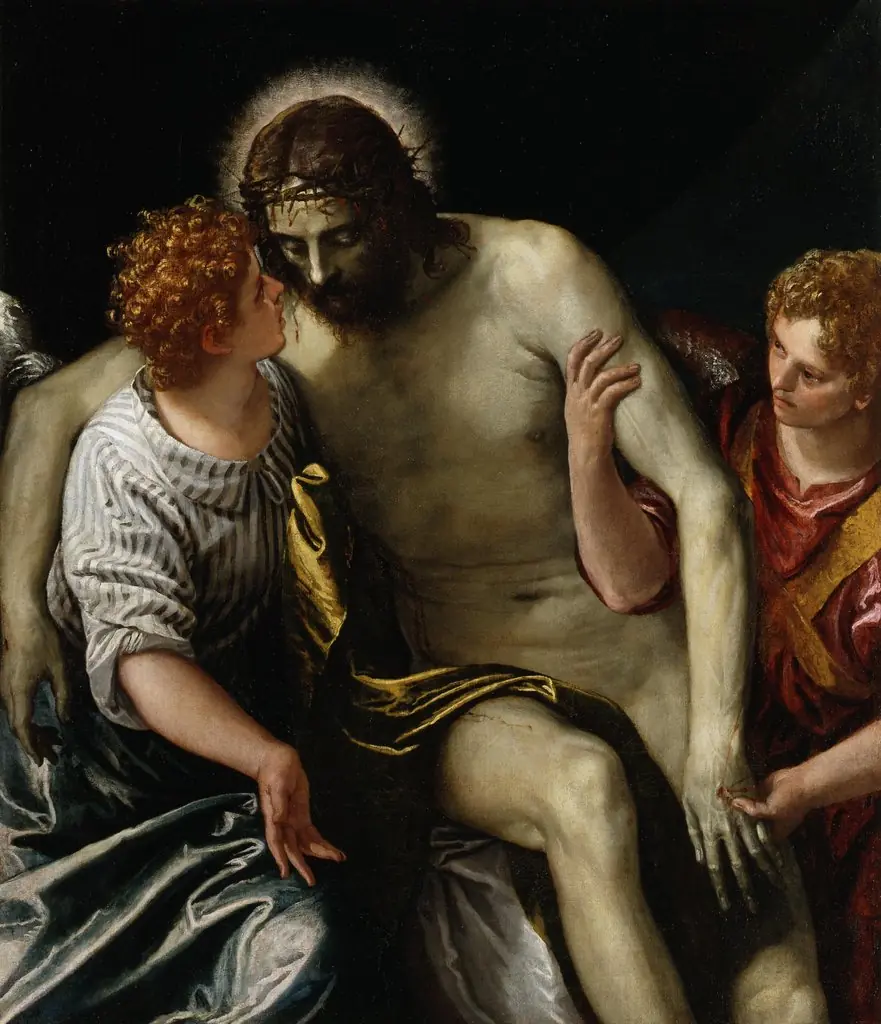 Dead Christ Supported by Two Angels
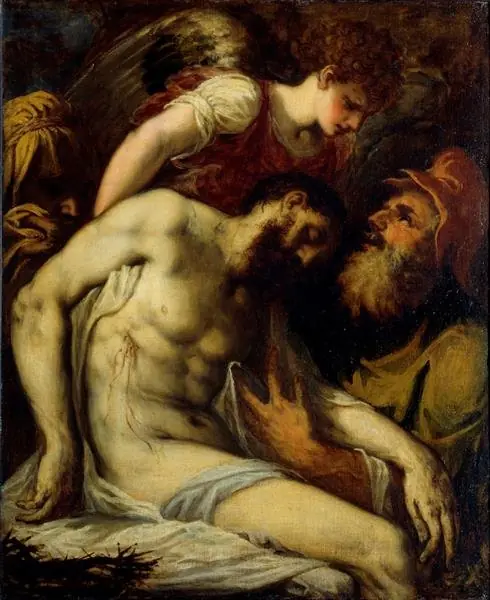 Dead Christ supported by Angels
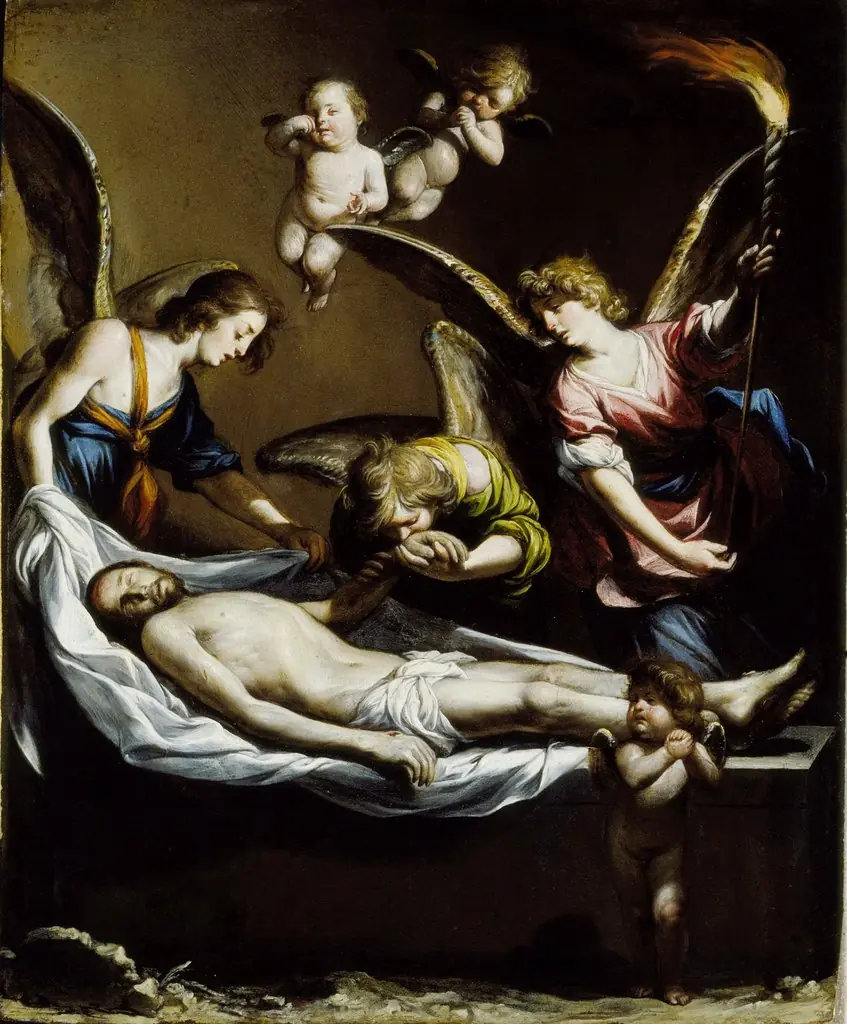 Dead Christ with Lamenting Angels
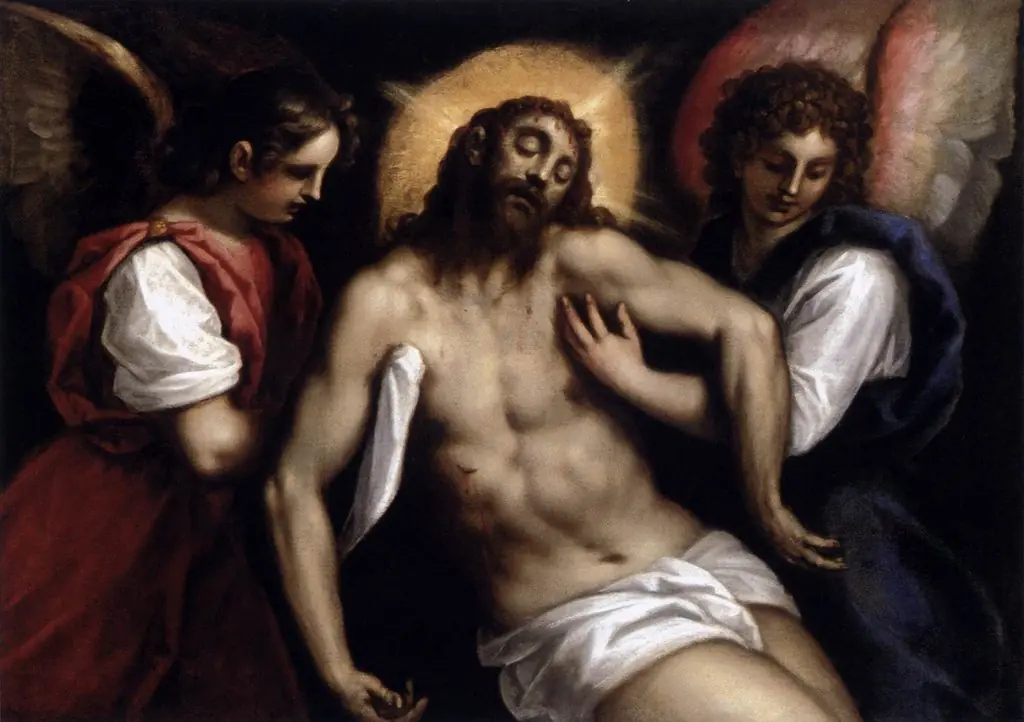 The Dead Christ with Two Angels
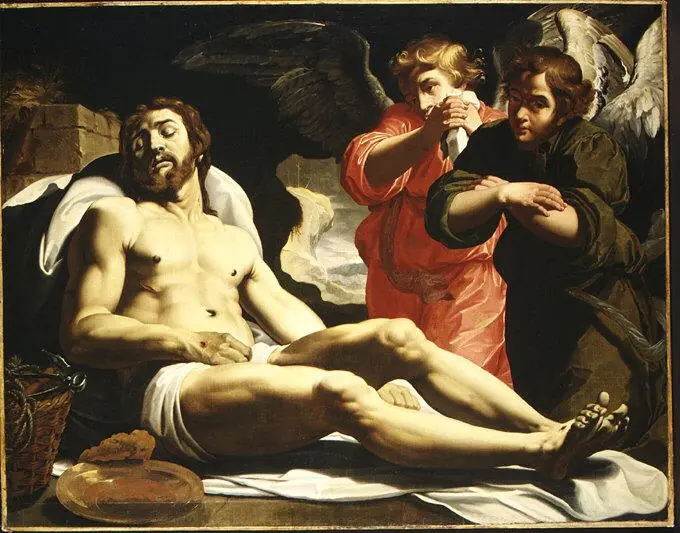 The Dead Christ in the Tomb with Two Angels