Artwork
Untitled
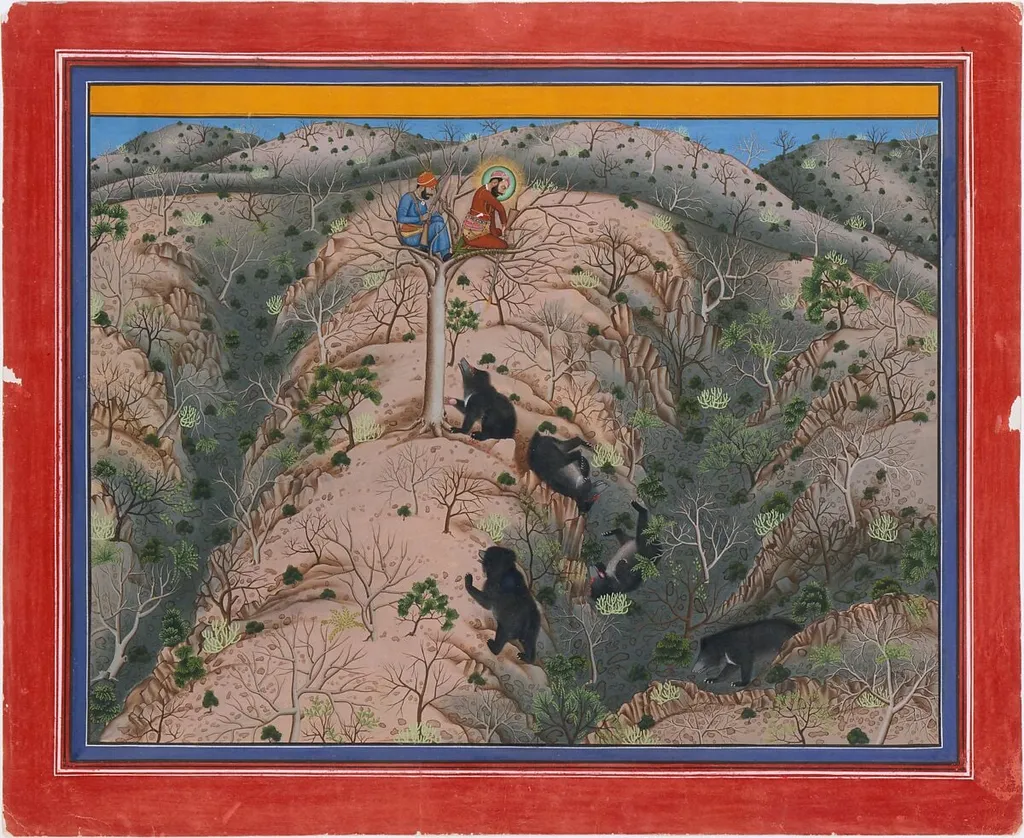
Untitled is a watercolor painting by the Mughal Painting artist Pannalai. It dates from 1917 and is held in the collection of the Metropolitan Museum of Art.
About this work
Subject & Meaning
Executed in ink, opaque watercolor, and gold on paper, the composition focuses on this specific interaction between the human figure and the animal.
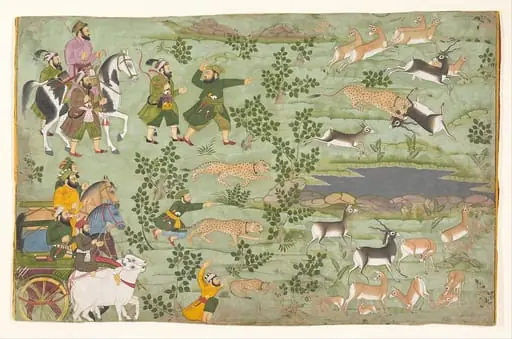
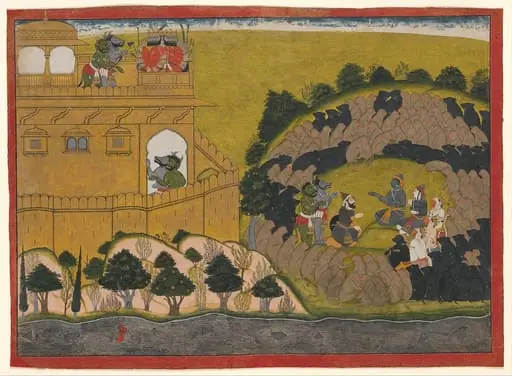
Pannalai's 1917 work, titled Untitled, depicts a narrative scene centered on a man engaged in the act of hunting a bear. Executed in ink, opaque watercolor, and gold on paper, the composition focuses on this specific interaction between the human figure and the animal. While the visual elements are clearly defined as a hunting encounter, the provided sources do not elaborate on deeper symbolic interpretations, specific iconographic traditions, or the broader conceptual meaning the artist intended to convey through this representation.
Technique & Style
This work is executed in ink and opaque watercolor with gold on paper, a combination characteristic of South Asian miniature painting traditions. The composition measures 55.6 by 45.6 centimeters. The handling combines linear ink work with opaque watercolor washes and the application of gold, producing a layered surface with both drawn and painted elements.
The support is paper, suited to the delicate application of pigment and metallic accents. The imagery depicts a man hunting a bear.
History & Provenance
Untitled, painted in 1917 by Pannalai, is executed in ink, opaque watercolor, and gold on paper and portrays a man hunting a bear. The composition measures 55.6 cm by 45.6 cm. The work entered the collection of the Metropolitan Museum of Art, establishing its current ownership after creation by the artist. Its dating is confirmed by the 1917 inception recorded in the museum’s catalogue.
While the specific inventory or accession number is not provided in the available records, the sources do not contain information regarding the work's exhibition history or specific display locations within the museum.
Context
Untitled (1917) by Pannalai is an ink, opaque watercolor, and gold on paper painting that portrays a man hunting a bear, a motif recorded in both the artist’s catalog and the Metropolitan Museum of Art’s collection database. The work is classified as a painting and is part of the museum’s holdings, indicating its acceptance into a major institutional context. Its depiction of wilderness and human-animal interaction reflects early twentieth‑century figurative interests, positioning it within broader discussions of narrative symbolism in modern art.
Overview
Created around 1917 by the artist Pannalai, this untitled work is a page from a royal hunting album originating in Rajasthan, India. Executed in ink, opaque watercolor, and gold on paper, the composition depicts a man on horseback accompanied by two bears and a pack of dogs within a flat, golden field. The artist employs a distinct Rajput aesthetic, utilizing a two-dimensional perspective that eliminates atmospheric depth in favor of a stylized, decorative plane.
The extensive use of gold leaf and layered pigments creates a luminous surface, emphasizing the regal context of the subject matter. Unlike dynamic European hunting scenes, the figures are frozen in a state of suspended animation; there is no depiction of blood, violence, or active pursuit. This stillness transforms the scene from a record of a hunt into a formalized tableau of courtly life and power.
The work reflects the continuation of traditional Mughal and Rajput manuscript painting techniques into the early 20th century, serving as a document of aristocratic leisure and artistic patronage in Rajasthan during the British colonial period.
Artist & collection
Artist
Pannalai worked from a small studio in Jaipur, painting in ink, gold, and watercolor on paper. Her 1917 Untitled piece shows the steady hand and the liquid light that locals remembered her for.

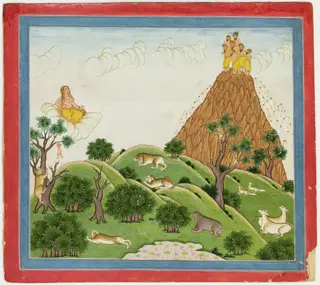
- Illustrations to Life of Dhurva Maharaj: #22 Dhurva reaches the mountain of gold where 7 sacred Rishis who are called the Seven Stars receive him
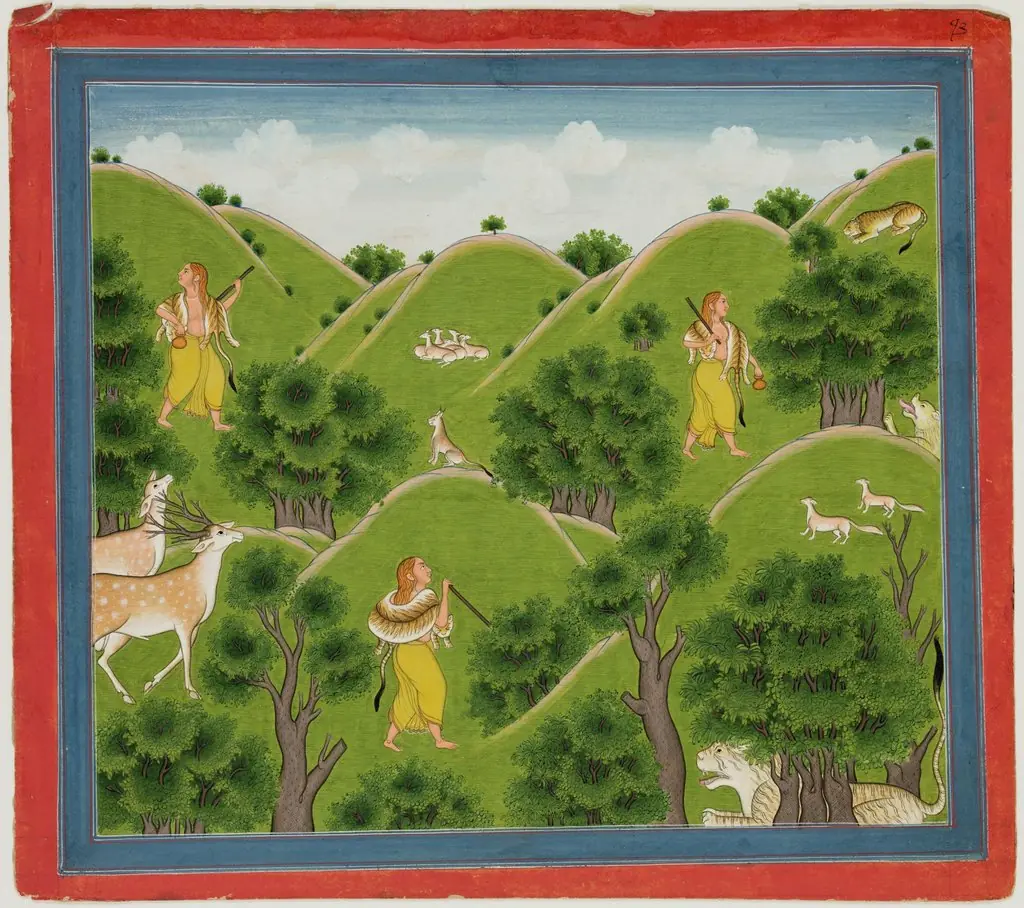 Illustrations to Life of Dhurva Maharaj: #11 Dhurva travels from place to place in Rishi garb
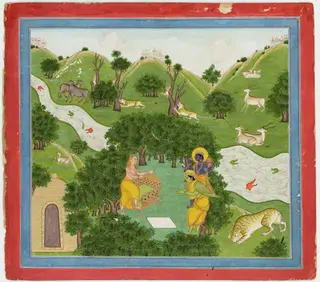 Illustrations to Life of Dhurva Maharaj: #20 God gives Dhurva his throne upon which he can fly anywhere
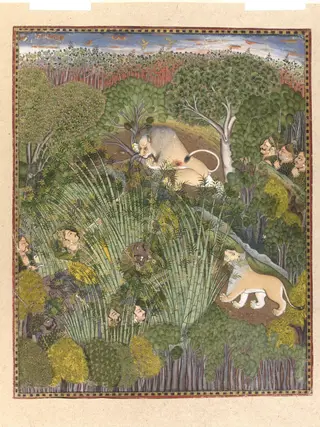 Raja Durjan Sal of Kota
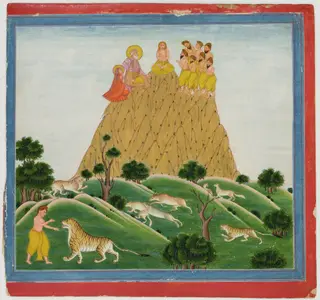 Illustrations to Life of Dhurva Maharaj: #23 Dhurva sits on the golden mountain in concentration and meets his parents and the 7 Rishis
 Untitled
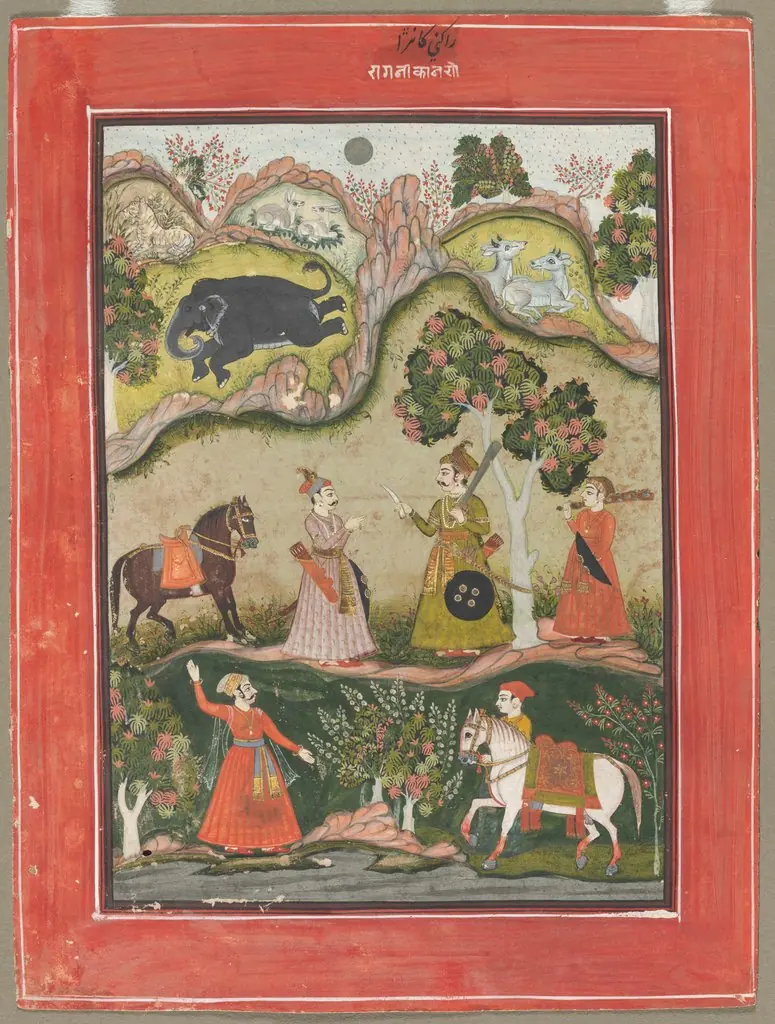 Kanhara Ragini: Song of Inspiration to Krishna for Killing the Elephant Demon, from the Ragamala Series
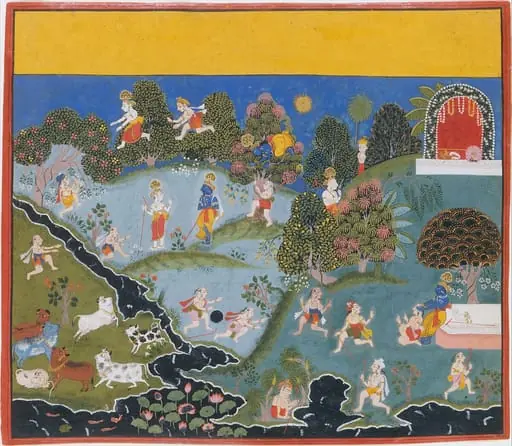 Untitled
 Cow Worship
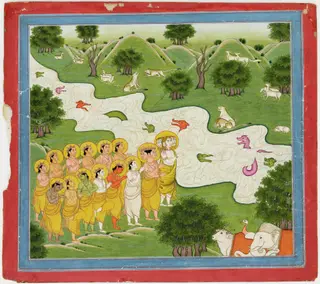 Illustrations to Life of Dhurva Maharaj: #16 All of them go to Dhurva hoping to break his concentration, and to deter him in his mission of seeing God
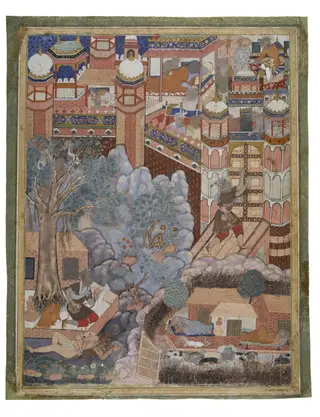 Basu beheads Namadpush and enters Acre Castle
 Untitled