Artwork
The Union of Earth and Water (Antwerp and the Scheldt)
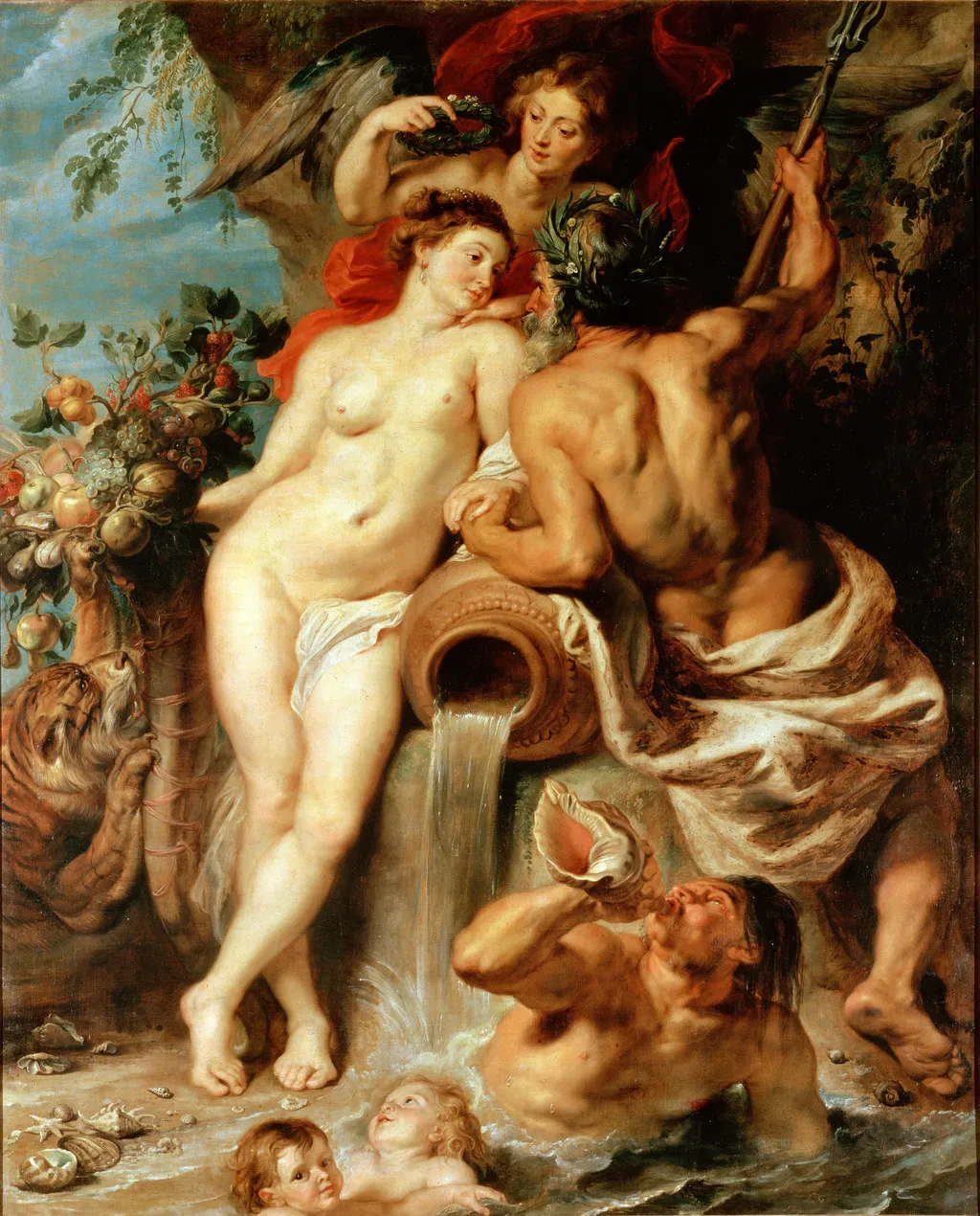
The Union of Earth and Water (Antwerp and the Scheldt) is an oil painting by the Flemish Baroque painting artist Peter Paul Rubens. It dates from 1618 and is held in the collection of the Hermitage Museum.
About this work
Peter Paul Rubens painted this around 1618 to voice a political hope: reopening the Scheldt to Antwerp, blocked by the Dutch.
Cybele sits with her cornucopia of fruit while Neptune, trident in hand, pours water from an urn beside her. Peter Paul Rubens painted this around 1618 to voice a political hope: reopening the Scheldt to Antwerp, blocked by the Dutch. Winged Victoria crowns the pair and a Triton sounds his conch below. The work hangs in Saint Petersburg's Hermitage, acquired around 1798 from Rome's Chigi Collection.
Subject & Meaning
The work is an allegorical painting personifying Earth as Cybele holding a cornucopia and Water as the river god of the Scheldt, crowned by Victoria as the goddess of victory. Their union is heralded by a Triton blowing a conch. This iconography symbolizes fertility, wealth, and prosperity, specifically referencing the city of Antwerp and the Scheldt River, whose mouth was blockaded by the Dutch in Rubens' time, depriving Flanders of sea access.
Thus the painting expresses a political and economic desire for the union of land and water to restore trade and abundance. The pyramidal composition and balanced forms reflect influences from the late Italian Renaissance, especially Venetian artists.
Technique & Style
Painted in oil on canvas, the work measures 222.5 × 180.5 cm. Executed in the Baroque style, it displays a pyramidal composition with strong symmetry and balanced forms, reflecting the influence of late Italian Renaissance painting, particularly that of Venetian artists. The allegorical subject is conveyed through a classical, monumental arrangement of figures.
History & Provenance
Peter Paul Rubens executed this Baroque allegory in 1618, possibly with the collaboration of Frans Snyders, who may have contributed elements such as the animals or still-life details. The painting was held in the Chigi Collection in Rome before being acquired for the Hermitage Museum in Saint Petersburg between 1798 and 1800, where it now hangs in the Rubens Hall. No specific commission or patron is documented, but the work clearly allegorizes Antwerp's dependence on the Scheldt River, reflecting contemporary political and economic concerns.
Legacy
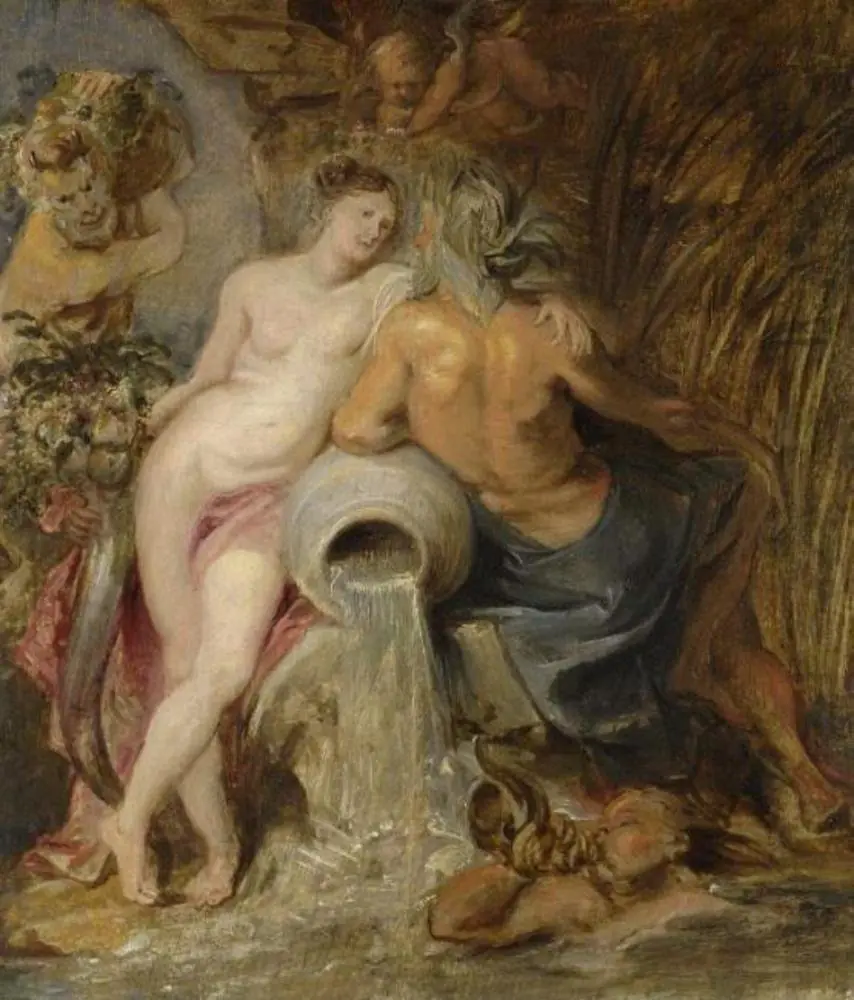
The painting's legacy includes a smaller workshop copy, which was owned by Russian businessman Vladimir Logvinenko and moved from London to Moscow in 2004 after a change in Russian import duties. The original work resides in the Rubens Hall of the Hermitage Museum in Saint Petersburg, having entered the museum from the Chigi Collection in Rome between 1798 and 1800. The enduring display in a major museum and the existence of period copies attest to the painting's continued significance as an allegory of Antwerp's prosperity.
Overview
Peter Paul Rubens's oil painting, The Union of Earth and Water, created around 1618, is a prominent example of Flemish Baroque art. This large-scale canvas symbolically depicts the harmonious convergence of land and sea through mythological figures. It subtly expresses a political aspiration for the prosperity of Antwerp, then hindered by the blocked Scheldt River. The work is currently housed in the Hermitage Museum in Saint Petersburg.
Context
The artwork carries significant political undertones, reflecting the challenging circumstances faced by Antwerp during Rubens's era. The Dutch Republic had effectively blocked the mouth of the Scheldt River, severing Flanders' crucial access to the sea. This act severely impacted Antwerp's trade and prosperity.
Rubens's depiction of the "union" thus functions as a visual petition or hope for the river's reopening, symbolizing a return to the city's former economic vitality and abundance.
Own this work as a print
Artist & collection
Artist
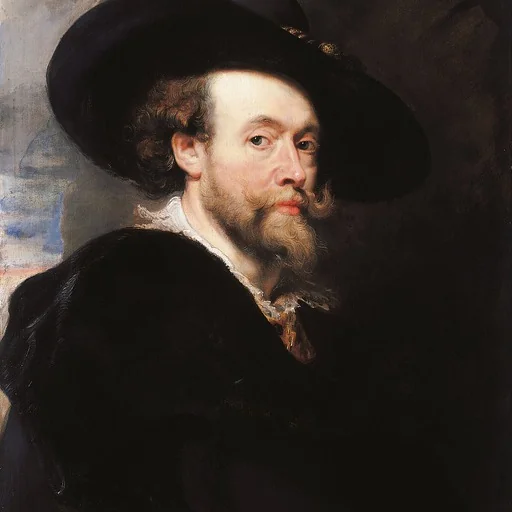
Sir Peter Paul Rubens ( ROO-bənz; Dutch:; 28 June 1577 – 30 May 1640) was a Flemish artist and diplomat.