Artwork
Adoración de los Reyes Magos
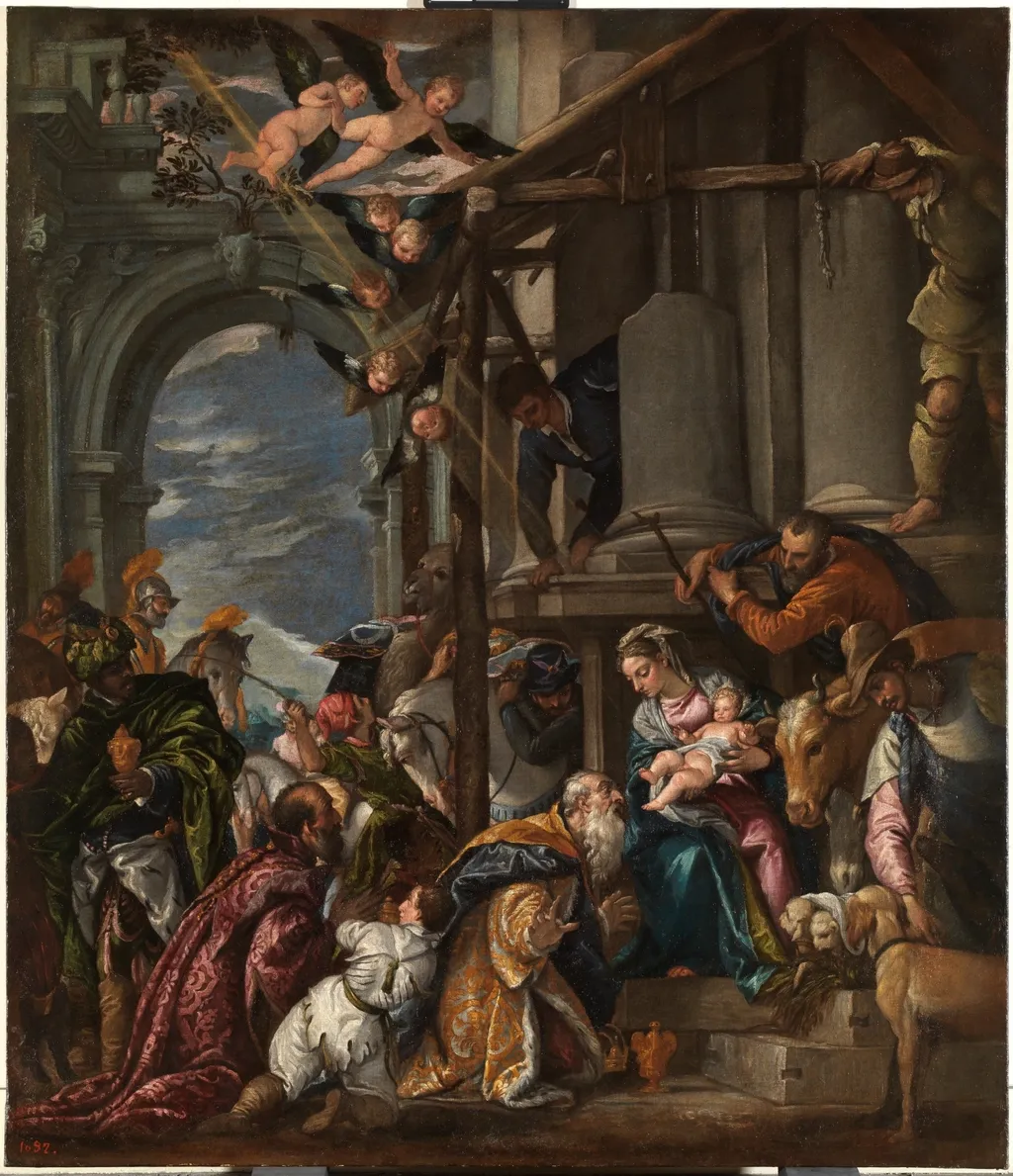
Adoración de los Reyes Magos is an oil painting by the Early Baroque Italian artist Paolo Veronese. It is held in the collection of the Museo del Prado.
About this work
Subject & Meaning
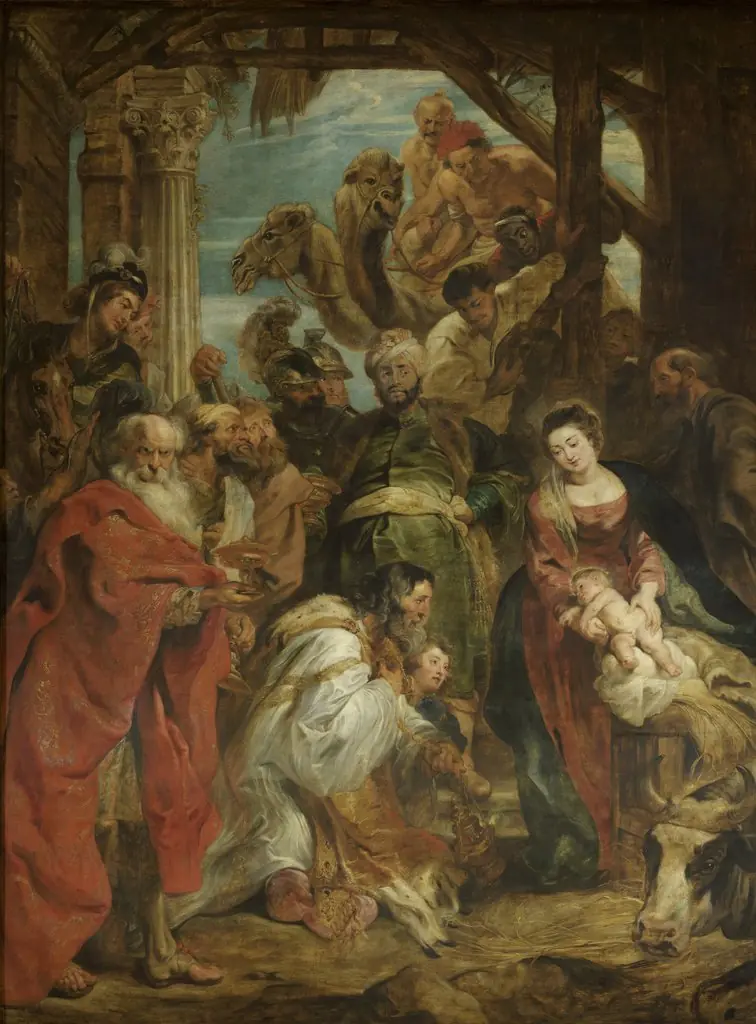
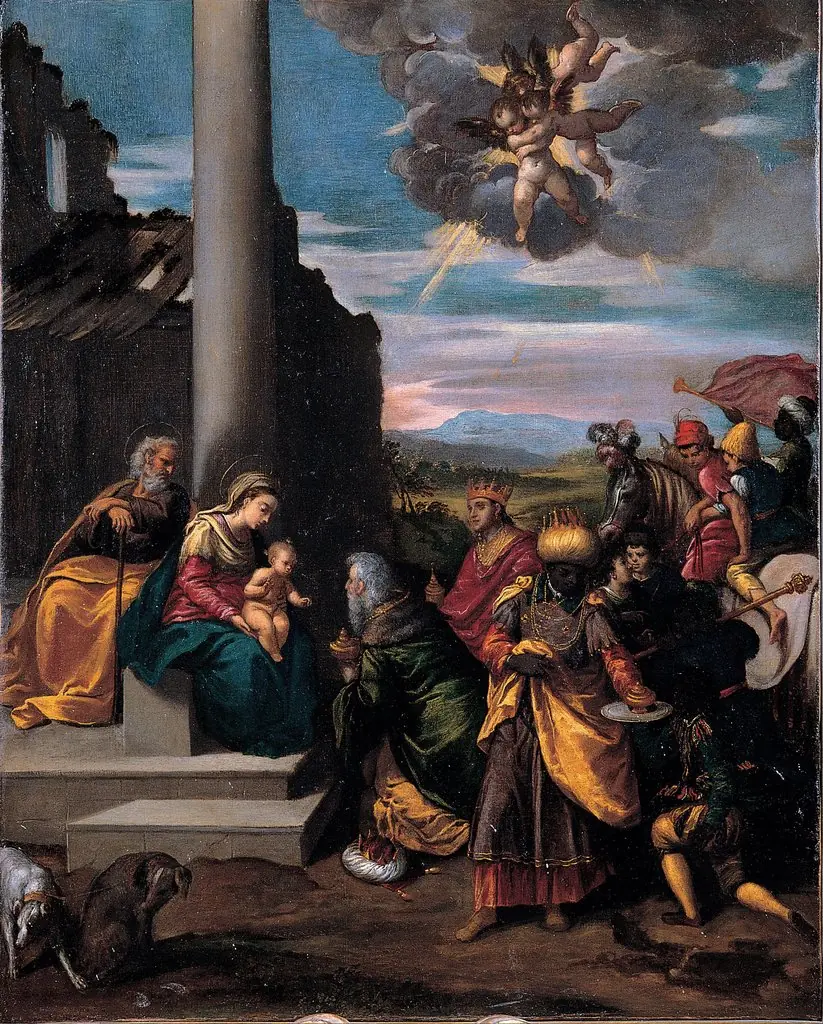
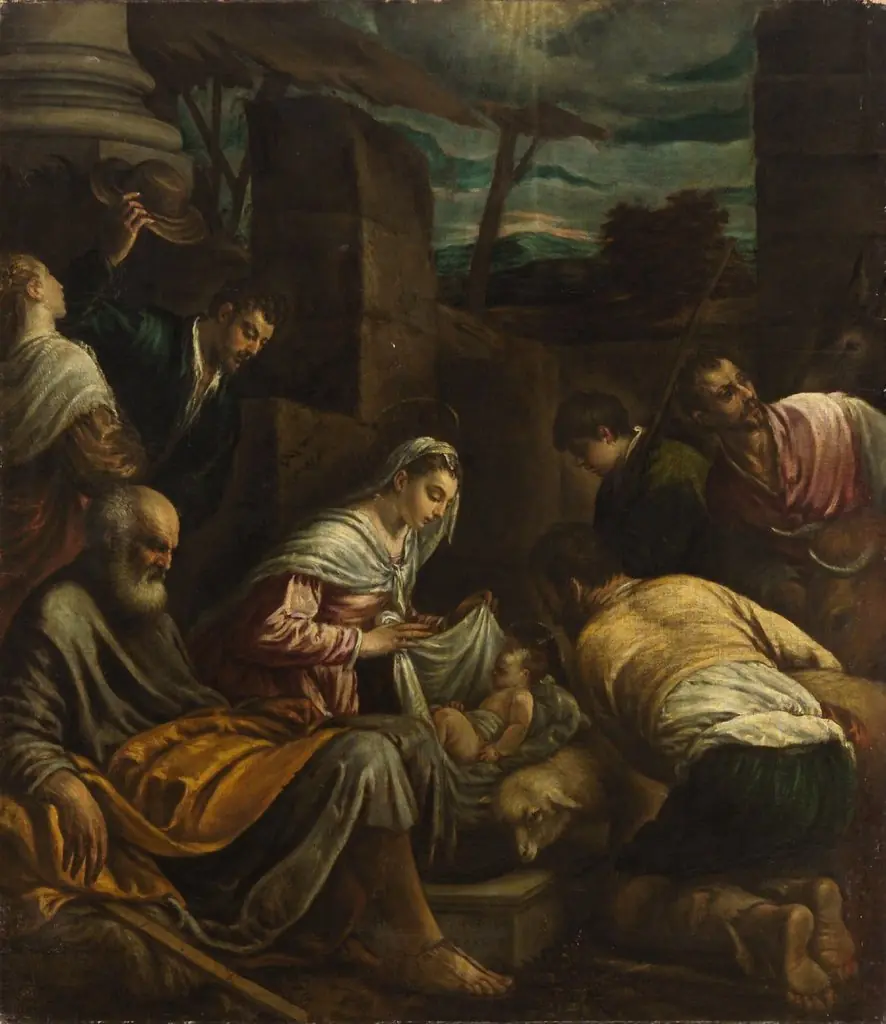
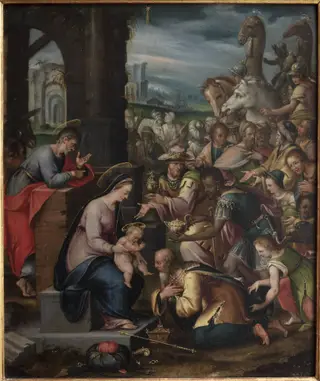
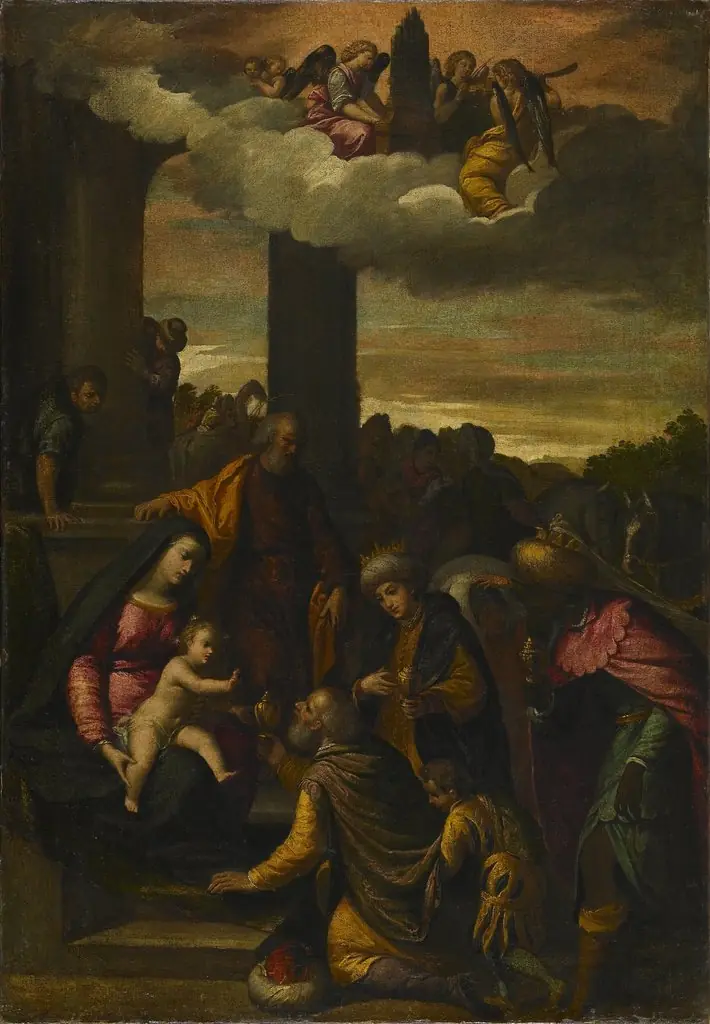
The painting depicts the Adoration of the Magi, a religious scene from the New Testament in which the Biblical Magi present gifts to the Christ Child.
The painting depicts the Adoration of the Magi, a religious scene from the New Testament in which the Biblical Magi present gifts to the Christ Child. As a work of religious art, the composition centers on the encounter between the infant Jesus and the three kings, illustrating their act of homage and recognition of his divinity. The subject matter is explicitly identified as the adoration of the Magi, focusing on the narrative moment of worship and the symbolic offering of gifts that signifies the recognition of Christ's kingship by the Gentiles.
Technique & Style
The work is executed in oil on canvas, measuring 160 cm in height by 138 cm in width. It depicts the adoration of the Magi, featuring the Christ Child surrounded by the Biblical Magi. The painting was created in 1601 by Paolo Veronese in collaboration with Paolo Farinati, employing oil paint as the primary medium.
Its formal qualities reflect the religious genre characteristic of early 17th-century Venetian art, with compositional balance and rich coloration typical of the period.
History & Provenance
The painting Adoración de los Reyes Magos was created in 1601. While internal records attribute the work solely to Paolo Veronese, other documentation identifies it as a collaborative effort involving both Veronese and Paolo Farinati. Executed in oil on canvas, the piece depicts the Biblical Magi adoring the Christ Child.
The work is currently held in the collection of the Museo del Prado, where it remains part of the institution's holdings of religious art.
The Adoración de los Reyes Magos is held in the collection of the Museo del Prado, as recorded in the work's Wikidata entry, which lists the museum as both its collection and its location. No specific inventory or accession number is provided in the available sources, and no exhibition history is documented in the material supplied.
Overview
Paolo Veronese’s Adoración de los Reyes Magos, executed in oil in 1601, presents a crowded interior scene of the biblical adoration. The composition fills a dimly lit space with figures, animals and floating cherubs, rendered in a palette of muted golds, reds and deep shadows. The work is part of the Museo del Prado’s collection.
Context
The work belongs to a series of large‑scale religious compositions that Veronese produced for Venetian patrons. Its subject, the adoration of the Magi, was a popular motif in Counter‑Reformation art, allowing the artist to combine devotional narrative with opulent visual splendor.
Own this work as a print
Artist & collection
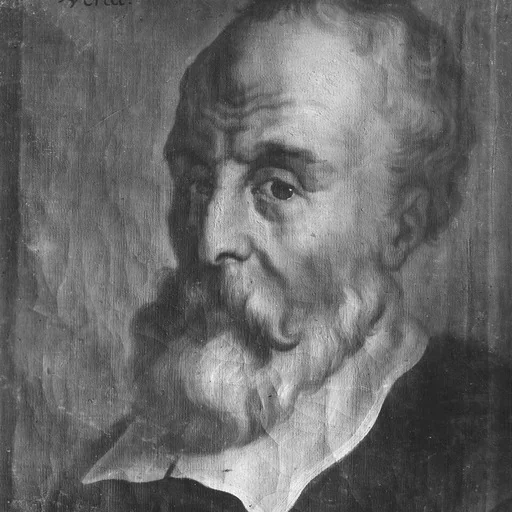
Artist
Paolo Caliari (1528 – 19 April 1588), known as Paolo Veronese ( VERR-ə-NAY-zay, -zee, US also -see; Italian: ), was an Italian Renaissance painter based in Venice, known for extremely large history paintings of…