Artwork
Lucretia
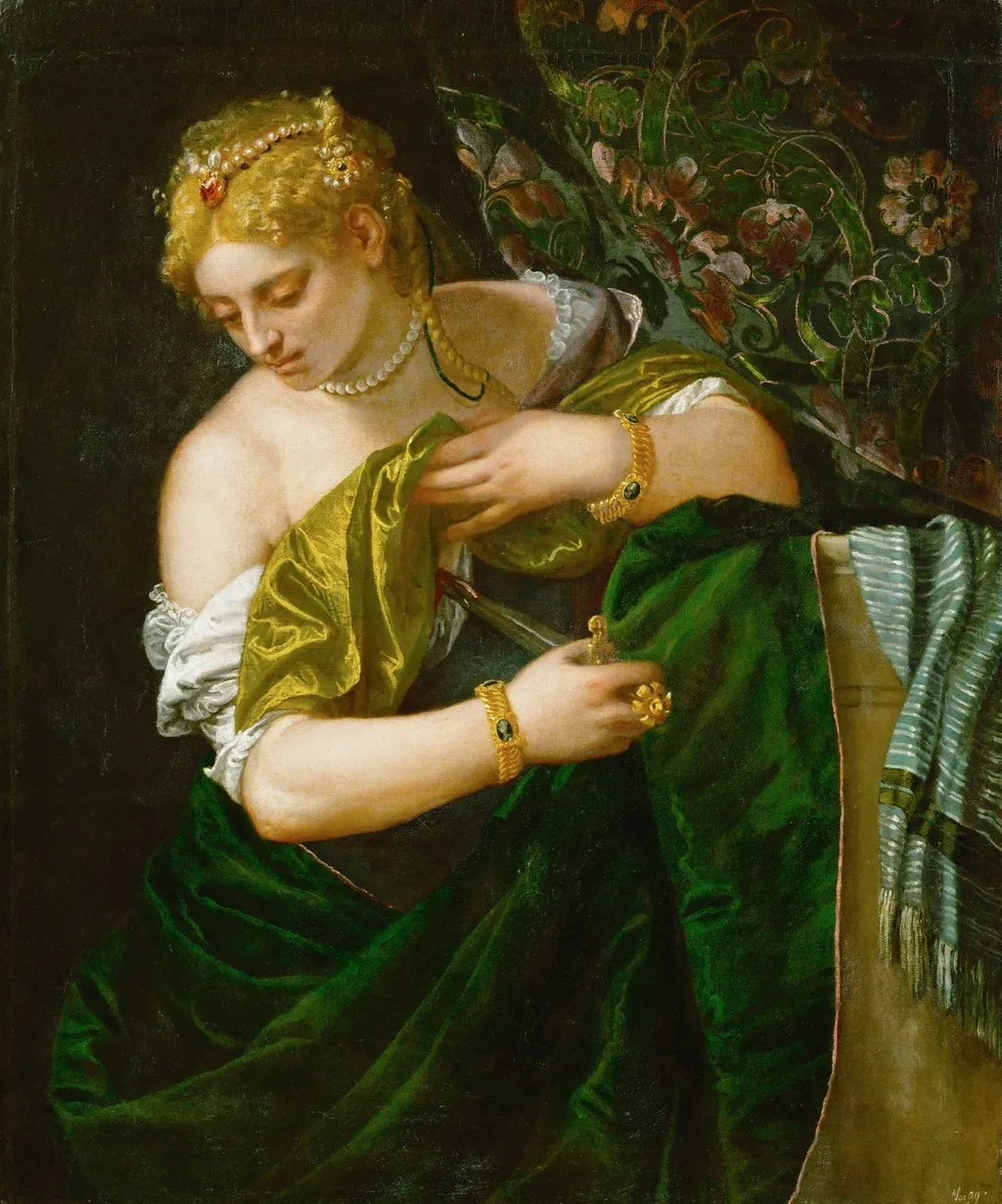
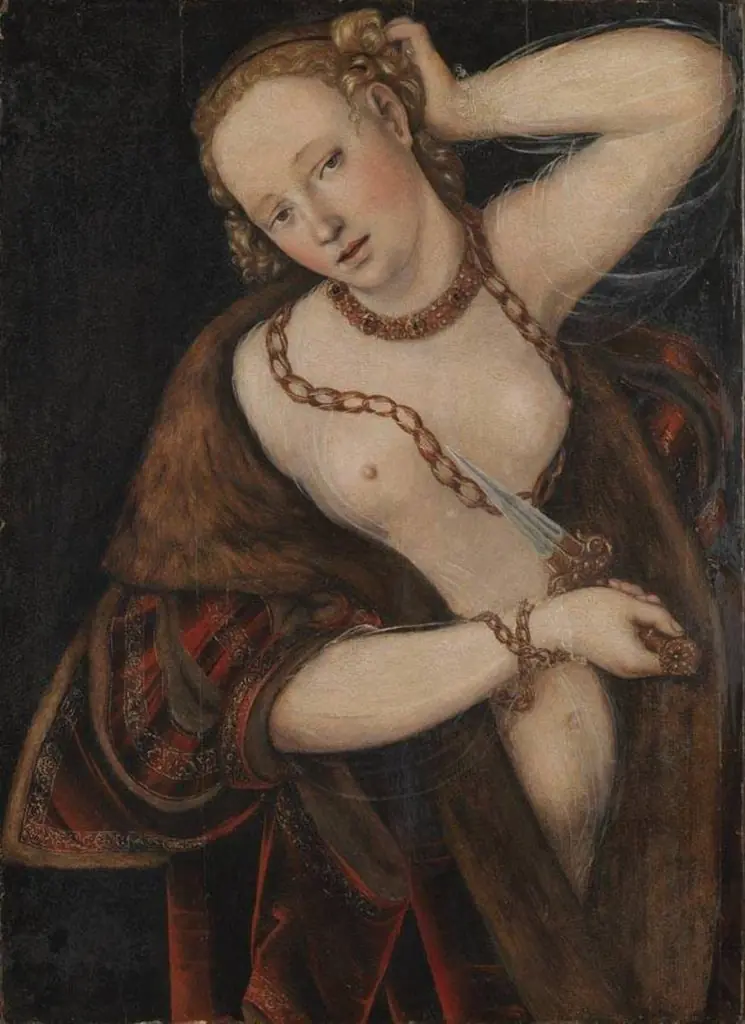
Lucretia is an oil painting by the Mannerist artist Paolo Veronese. It is held in the collection of the Kunsthistorisches Museum.
About this work
Subject & Meaning
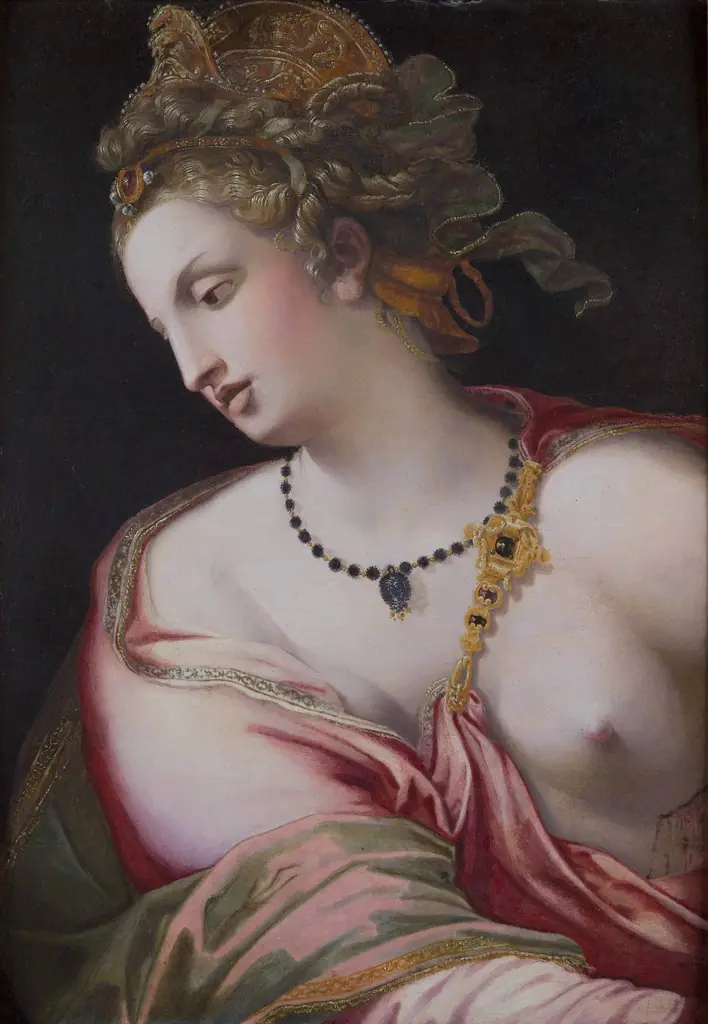
The canvas portrays Lucretia in the instant she pierces her breast with a dagger, a moment that follows her rape by Sextus Tarquinius, the son of the king, as recorded in the museum description and contemporary accounts. Veronese renders her with blond, waist‑length hair, a pearl necklace, bracelet, ruby‑set jewelry, and rich drapery, highlighting meticulous attention to dress and adornment. The composition belongs to the Mannerist style and functions as a history painting, emphasizing the tragic sacrifice made to preserve personal and familial honor.
The work, housed in the Kunsthistorisches Museum in Vienna, has inspired later artists such as Titian, Rembrandt, and Raphael, who likewise treated the Lucretia narrative.
Technique & Style
Formal qualities include the precise depiction of luxurious elements such as pearl necklaces, ruby jewelry, and intricate drapery that cloaks the figure.
Paolo Veronese's Lucretia is executed in oil paint on a canvas support, a medium characteristic of Venetian painting traditions. The work, dated variously between 1580 and 1585, exemplifies Mannerist style through its meticulous attention to surface detail and textural rendering. Formal qualities include the precise depiction of luxurious elements such as pearl necklaces, ruby jewelry, and intricate drapery that cloaks the figure.
The handling of the oil medium allows for the clear articulation of the subject's blond, waist-length hair and the stark visual contrast of blood against the dress. While the composition focuses on the dramatic moment of suicide, the stylistic approach emphasizes the richness of materials and the careful arrangement of accessories like bracelets and pigtails, distinguishing it through its elaborate decorative focus rather than purely psychological intensity.
History & Provenance
Paolo Veronese's oil-on-canvas painting Lucretia was created during the late 1580s, with scholarly consensus placing its inception between approximately 1580 and 1585. Specific estimates vary, with some sources citing a range of 1580 to 1583, while others narrow the date to 1584–1585 or suggest a completion around 1585. The work depicts the historical figure Lucretia in the moment of her suicide.
Currently, the painting resides in the collection of the Kunsthistorisches Museum in Vienna, Austria. The sources do not provide specific details regarding the original patron, the commissioning circumstances, or the intermediate ownership chain prior to its arrival at the museum.
Paolo Veronese's oil-on-canvas painting Lucretia is held in the collection of the Kunsthistorisches Museum in Vienna, Austria. While internal records and some sources date the work to 1580, other references suggest a creation period extending between 1580 and 1585, or specifically 1584 to 1585. The artwork is cataloged within the museum's holdings, with external resources linking directly to the institution's official database.
Despite mentions of the painting's detailed execution and its thematic connection to other Renaissance depictions of the subject, the provided sources do not list specific inventory numbers, accession codes, or a chronological history of exhibitions where the work has been displayed.
Context
Veronese's Lucretia belongs to a long tradition of paintings devoted to the Roman heroine's suicide, a subject treated by major figures including Titian, Rembrandt, and Raphael, whose own versions of the theme are noted as comparators. The work is catalogued within the Mannerist movement and exemplifies the Venetian late-Cinquecento interest in richly detailed history painting. Sources characterize the canvas as distinguished above all by its meticulous attention to detail, from the drapery enveloping the figure to the jewelry adorning her, qualities consistent with Veronese's mature decorative sensibility.
Held in the Kunsthistorisches Museum in Vienna, the painting has been referenced in standard surveys of Western painting masters, situating it within the broader canon of Italian Renaissance and Mannerist history painting.
Overview
Paolo Veronese's oil painting Lucretia, created around 1580-1583, depicts the tragic Roman heroine in the moments before her death. This Venetian work, now housed in the Kunsthistorisches Museum in Vienna, captures the dramatic climax of her story, emphasizing her resolve. The canvas showcases the artist's characteristic attention to detail and rich color palette.
Own this work as a print
Artist & collection
Artist
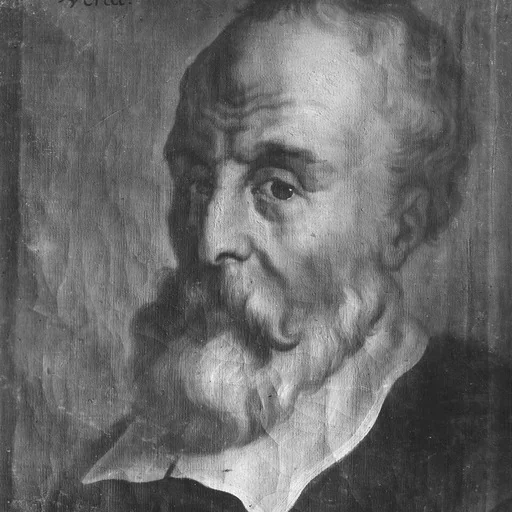
Paolo Caliari (1528 – 19 April 1588), known as Paolo Veronese ( VERR-ə-NAY-zay, -zee, US also -see; Italian: ), was an Italian Renaissance painter based in Venice, known for extremely large history paintings of…