Artwork
Venus and Adonis
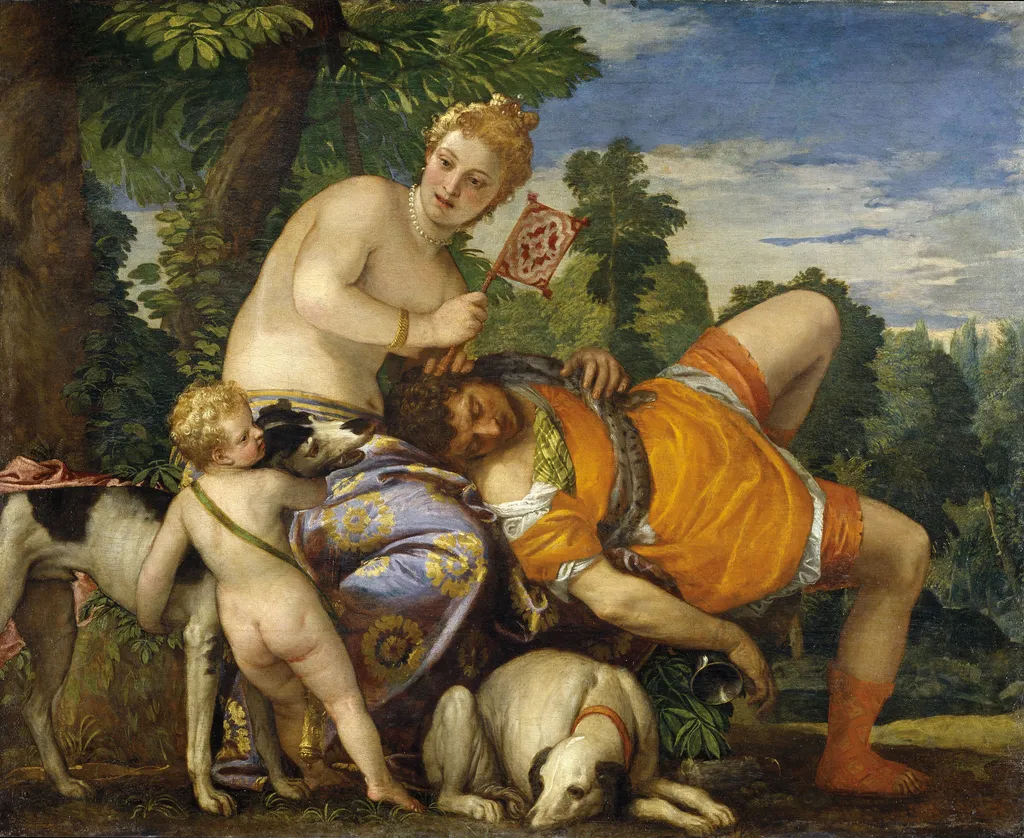
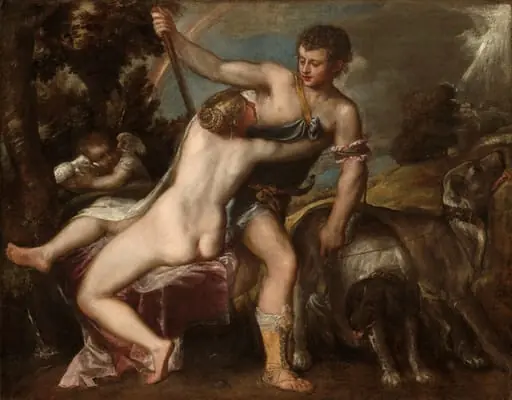
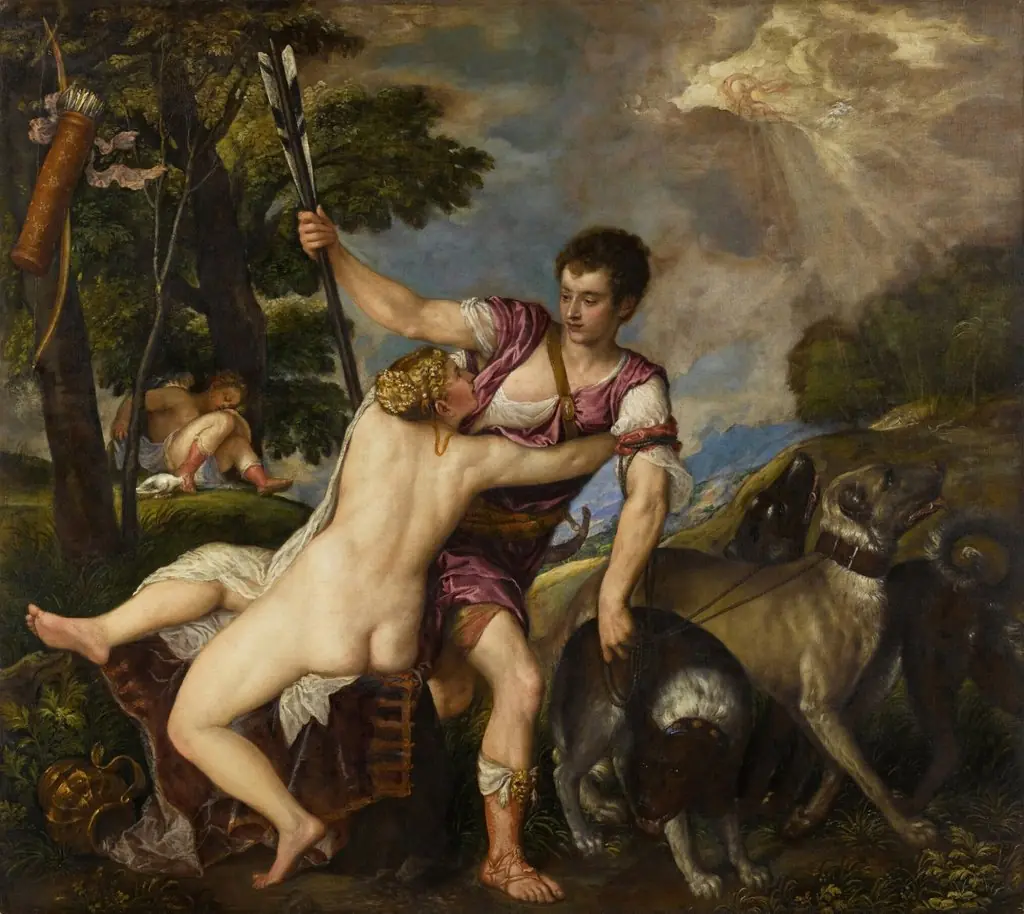
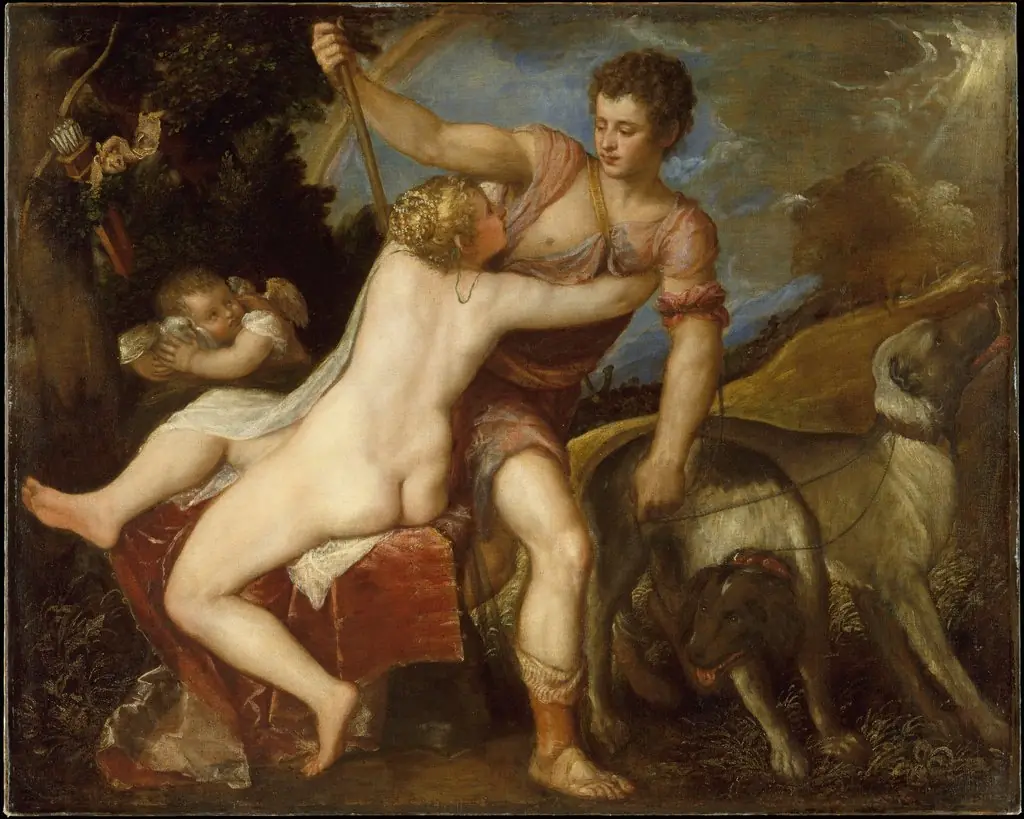
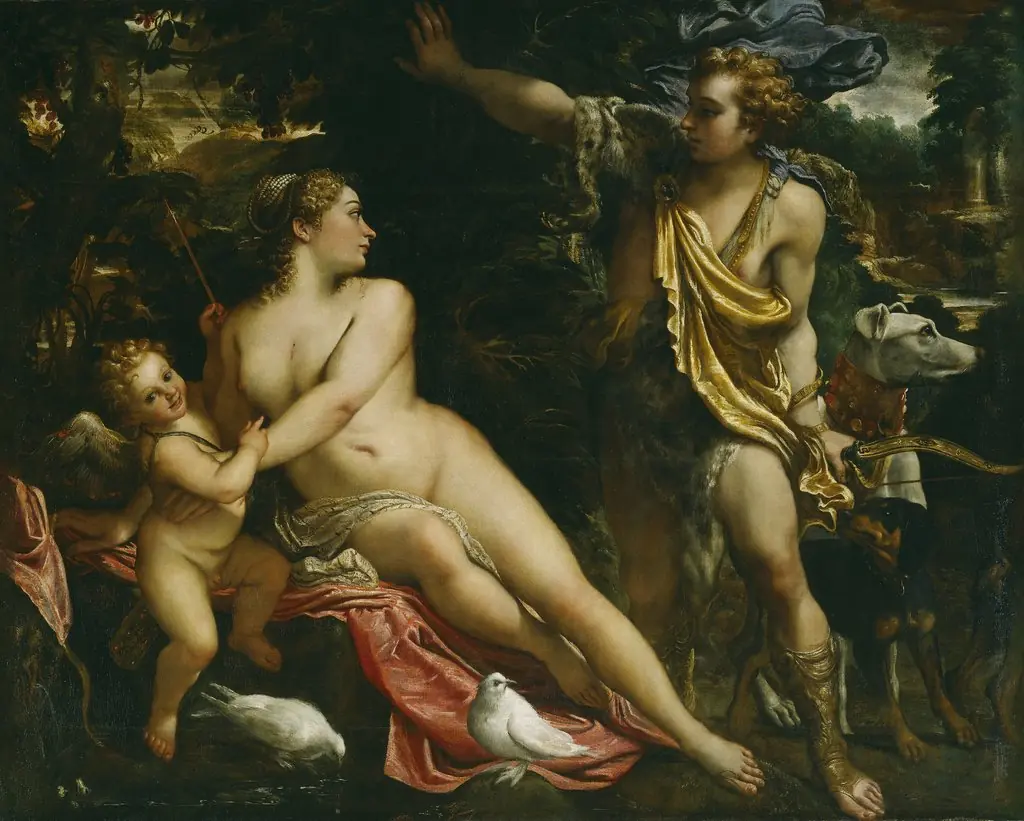
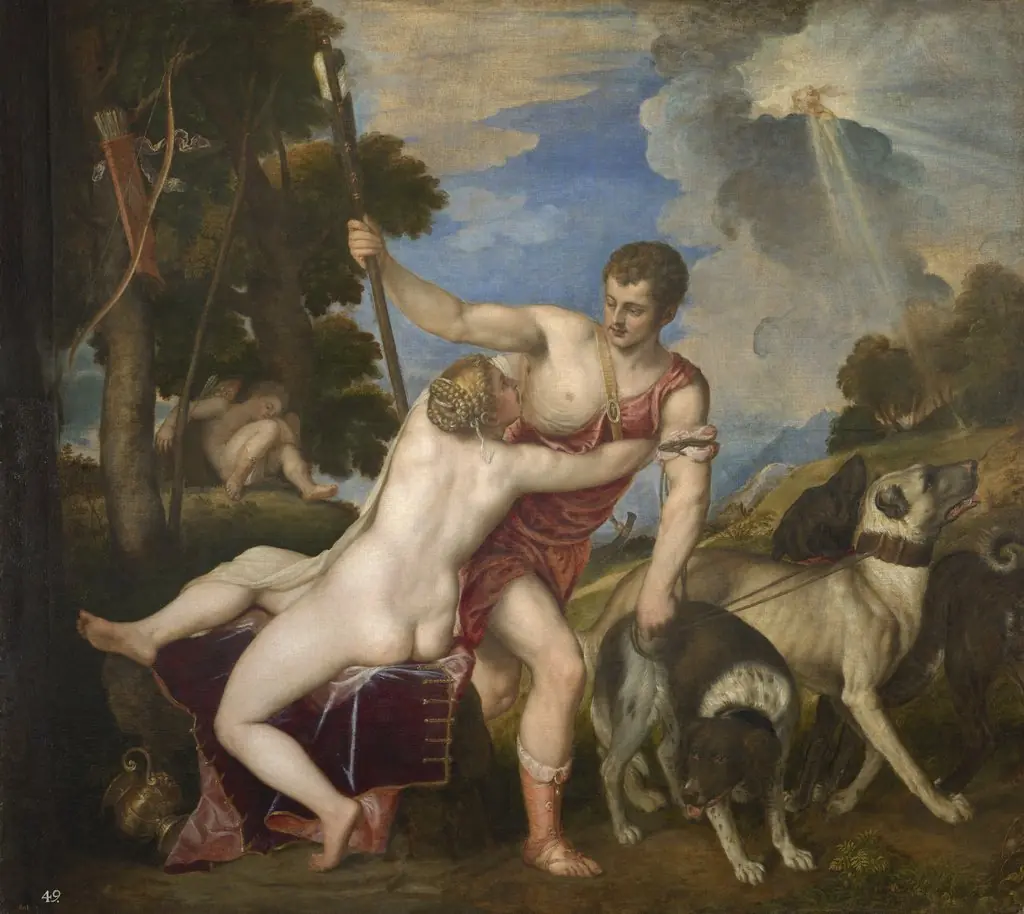
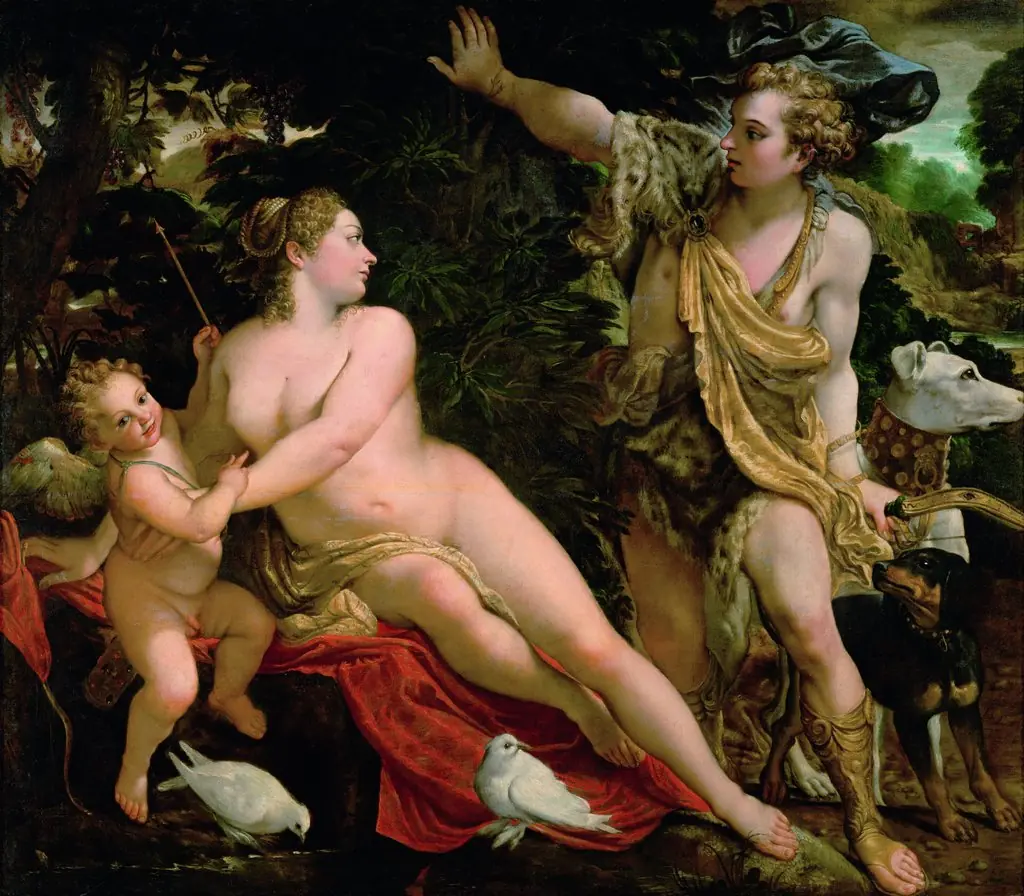
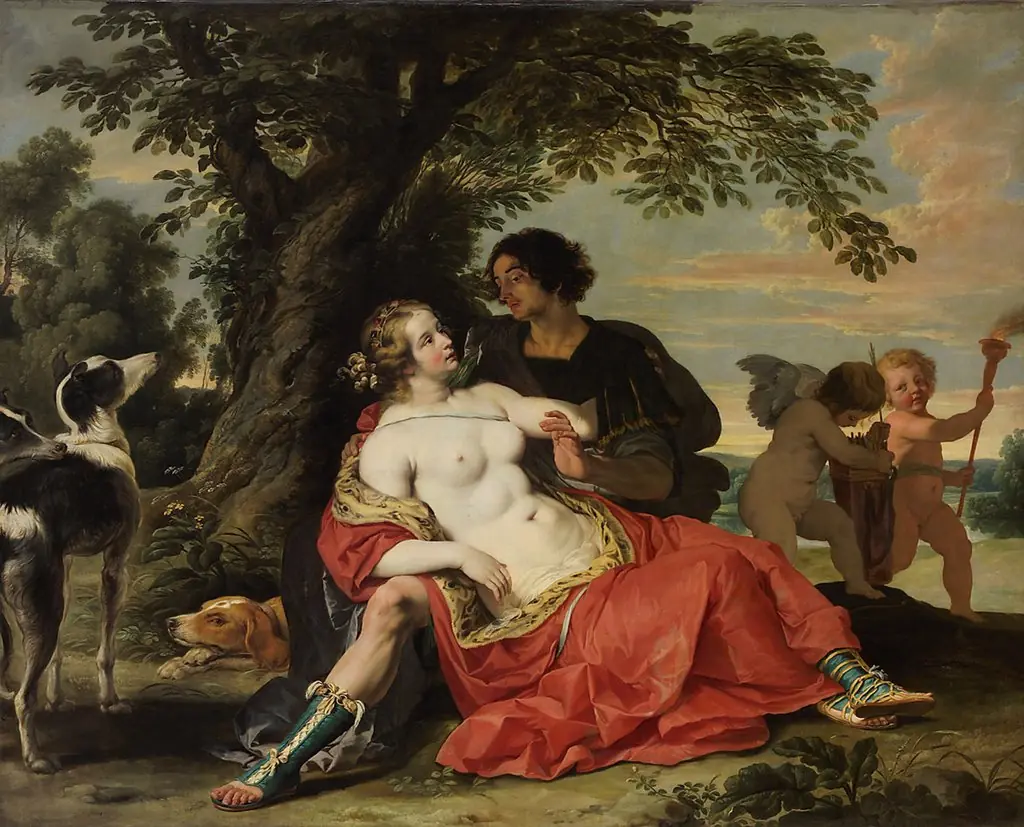
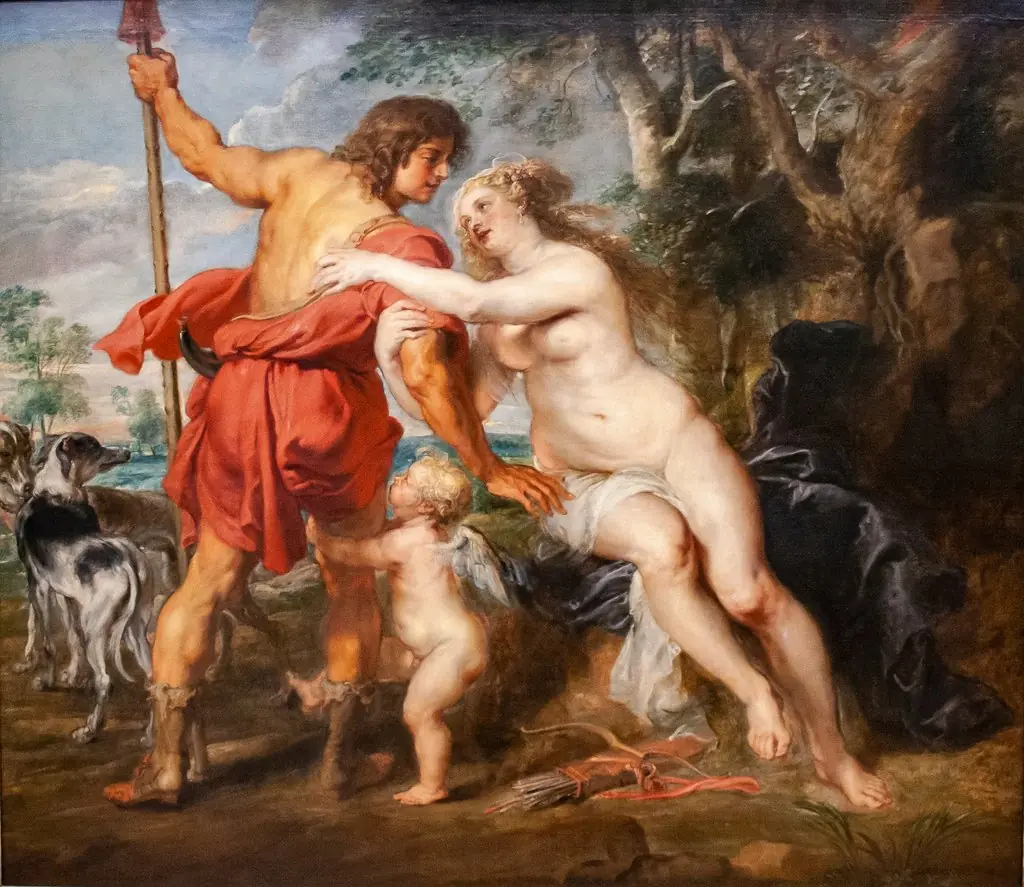
Venus and Adonis is an oil painting by the Mannerist artist Paolo Veronese. It is held in the collection of the Museo del Prado.
About this work
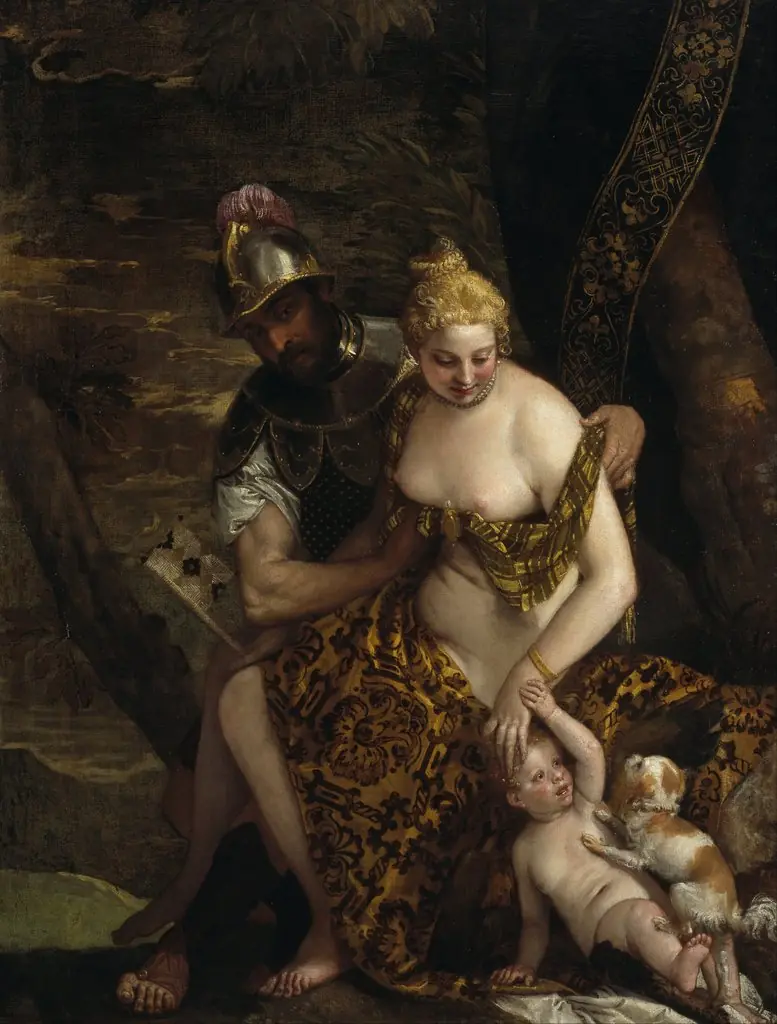
Adonis sleeps in Venus's lap beneath a green-tinged sky while Cupid restrains a restless hound, the goddess's face shadowed by foreknowledge of the fatal hunt.
Adonis sleeps in Venus's lap beneath a green-tinged sky while Cupid restrains a restless hound, the goddess's face shadowed by foreknowledge of the fatal hunt. Paolo Veronese painted it around 1580. After Diego Velázquez bought it in Italy between 1649 and 1651, it entered the Spanish royal collection, and it now hangs in Madrid's Museo del Prado, its vivid orange minium and realgar still declaring Veronese's chromatic daring.
Subject & Meaning
The painting illustrates an episode from Ovid's Metamorphoses, depicting the hunter Adonis asleep in Venus's lap moments before his fatal hunt. Venus, seized by a premonition of his death, caresses his hair while gazing at Cupid, who restrains a greyhound eager to join the hunt. This gesture symbolizes her attempt to delay the inevitable tragedy.
The sleeping Adonis, in foreshortened red robes, contrasts with Venus's illuminated form, underscoring the tension between love and fate. The lush landscape and low viewpoint, suggesting the work was intended for an elevated placement, frame the three figures. The scene captures the poignant instant before Venus's prophecy is fulfilled, emphasizing the mythological theme of doomed love and the futility of resisting destiny.
Technique & Style
Executed in oil on canvas, the painting measures 162 × 191 cm and originally included an 18th-century addition of 50 cm to the upper border, which was removed during a 1988 restoration that returned the work to its original horizontal format. Stylistically Mannerist, the composition employs a low viewpoint suggesting the canvas was intended for high placement. Veronese uses strong color contrasts: Adonis's red garments offset Venus's pale skin, and the shadowed male figure is set against the illuminated goddess.
The lush green landscape and vivid blue sky frame the figures, while Cupid, modeled on a Hellenistic sculpture, restrains a hunting dog. The handling emphasizes decorative elegance and narrative clarity characteristic of Veronese's late period.
History & Provenance
Paolo Veronese painted Venus and Adonis around 1580–1590, likely as a pendant to Cephalus and Procris. The work was acquired for the Spanish royal collection by Diego Velázquez during his second stay in Italy (1649–1651) on behalf of Philip IV. It was certainly part of the collection by 1666, when it was recorded in the Mid-day Gallery of the Alcázar of Madrid.
After the Alcázar fire in 1734, the painting was moved to the New Royal Palace of Madrid, where it remained until the collection was transferred to the Museo del Prado. An 18th-century addition of 50 cm to the upper border was removed during a 1988 restoration, returning the canvas to its original horizontal format. The painting is held in the Museo del Prado, Madrid.
Overview
This oil painting, created by the Italian artist Paolo Veronese in the early 1580s, depicts the mythological figures Venus and Adonis. The work is currently housed in the Museo del Prado in Madrid. It captures a poignant moment from the classical narrative, showcasing Veronese's characteristic approach to color and composition within the late Mannerist tradition.
Own this work as a print
Artist & collection
Artist
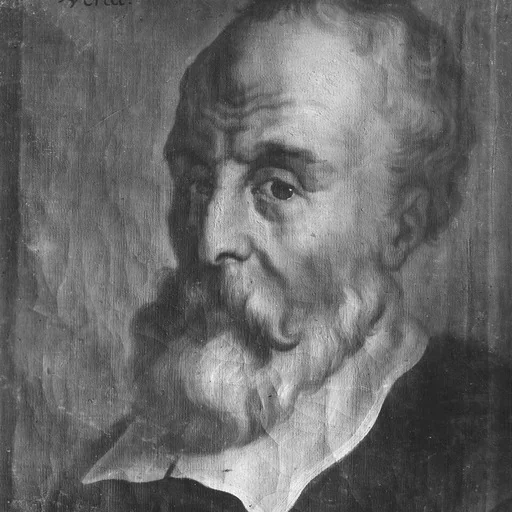
Paolo Caliari (1528 – 19 April 1588), known as Paolo Veronese ( VERR-ə-NAY-zay, -zee, US also -see; Italian: ), was an Italian Renaissance painter based in Venice, known for extremely large history paintings of…