Artwork
Annunciation
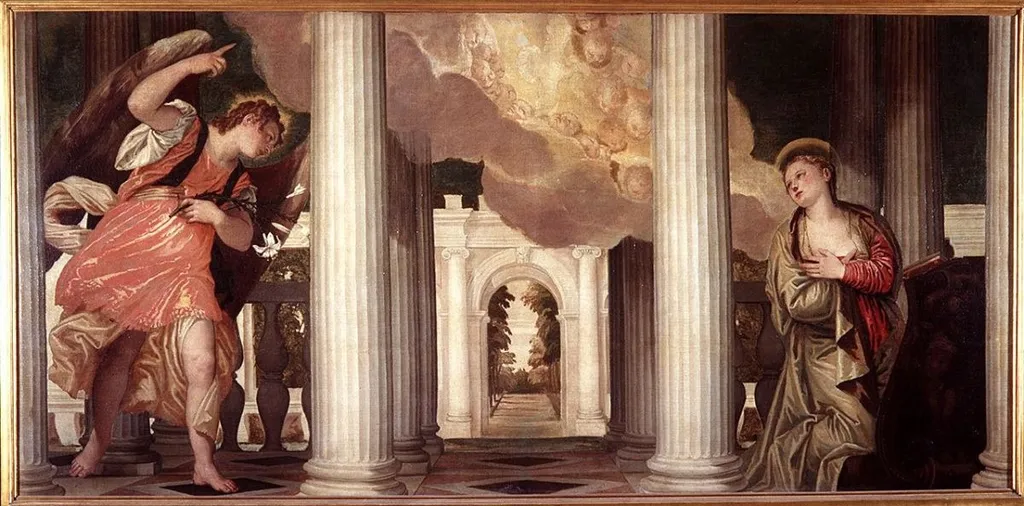
Annunciation is an oil painting by the Mannerist artist Paolo Veronese. It dates from 1556 and is held in the collection of the Uffizi Gallery.
About this work
Overview
While its attribution was historically debated, scholarship now largely accepts it as a work by Veronese from the mid-1550s.
Annunciation is a religious oil painting on canvas by the Venetian artist Paolo Veronese. Created around 1556, the work measures 143 by 291 centimeters and is held in the Uffizi Gallery in Florence. The painting depicts the biblical Annunciation and is notable for its horizontal format, monumental Palladian architecture, and the dramatic use of light that divides the composition into distinct spatial zones. While its attribution was historically debated, scholarship now largely accepts it as a work by Veronese from the mid-1550s.
Subject & Meaning
The painting illustrates the Annunciation, capturing the moment the Angel Gabriel announces to the Virgin Mary that she will conceive the Son of God. Gabriel occupies the left zone, striding forward with clothes billowing from his recent flight, his right index finger pointing to heaven while his left arm holds a white lily, a symbol of Mary's purity. Mary occupies the right zone, turning from her reading desk in a theatrical gesture, crossing her arms over her chest in a sign of humility. Between them, an architectural vista recedes through arches toward a distant garden, representing the hortus conclusus, or enclosed garden, another symbol of Mary's virginity. A luminous cloud of cherubs bridges the three zones, with the dove of the Holy Spirit descending at the center.
Technique & Style
Executed in oil on canvas, the work demonstrates the hallmarks of the Venetian school through its warm palette of pinks, golds, and creams set against deeper shadows. The composition is divided by tall fluted columns that create a solemn, rhythmic spatial scanning, contrasting the vertical architectural elements with the horizontal format. Successive planes of light and shadow accentuate the deep perspective. Light falls dramatically from the upper center, illuminating the central sky and the two principal figures while leaving the foreground and edges in deeper shadow. Veronese applied smooth brushwork with careful modeling to the drapery folds and architectural detail, giving the angel's rose-colored drapery elegant, iridescent reflections. The floor features a geometric patterned marble, enhancing the Palladian setting.
History & Provenance
In 1654, Paolo del Sera, an agent and intermediary operating in Venice for Cardinal Leopoldo de' Medici, purchased the painting alongside The Martyrdom of Saint Justina. The works were subsequently transported to Florence, entering the Medici collections. The painting remains in Florence and is currently housed in the Uffizi Gallery. Differences in scholarly dating exist, with some Italian sources placing the work around 1570 to 1575, though the broader consensus aligns its creation with the mid-1550s.
Context
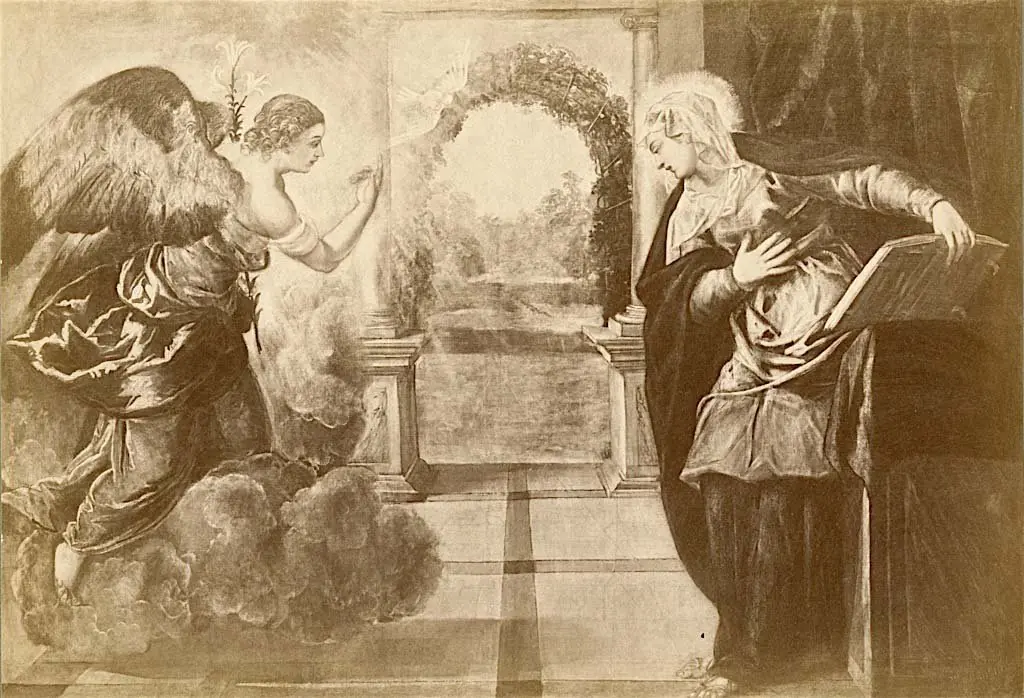
The attribution of the Annunciation has a complex critical history. Giovanni Morelli was the first to reject Veronese's authorship, proposing Giovanni Battista Zelotti instead, a view later supported by Adolfo Venturi and Arslan. Arslan initially argued the painting was a collaboration between Veronese and Zelotti. Conversely, scholars like Fiocco defended Veronese's sole authorship, with Fiocco considering it an early work. Rodolfo Pallucchini solidified the current consensus by associating the painting with Veronese's Coronation of Saint Sebastian from 1555, a dating now accepted by the majority of art historians.
Artist & collection
Artist
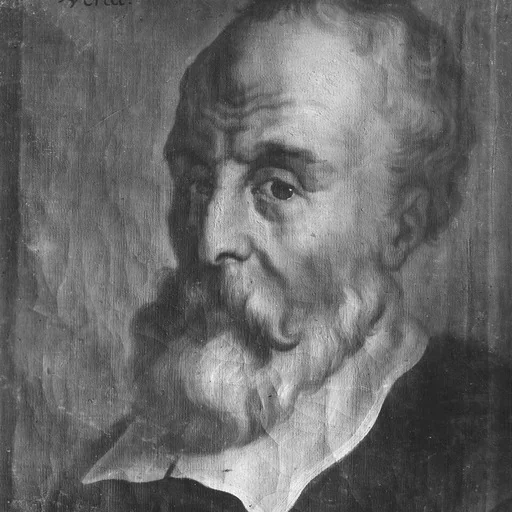
Paolo Caliari (1528 – 19 April 1588), known as Paolo Veronese ( VERR-ə-NAY-zay, -zee, US also -see; Italian: ), was an Italian Renaissance painter based in Venice, known for extremely large history paintings of…


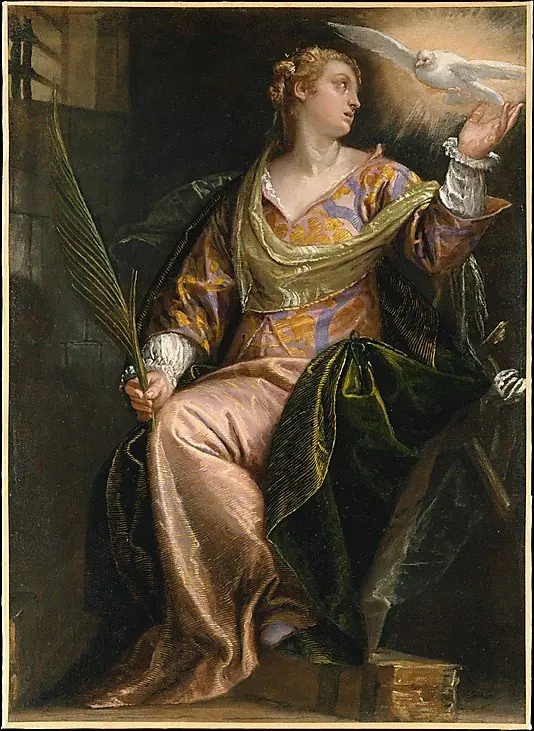
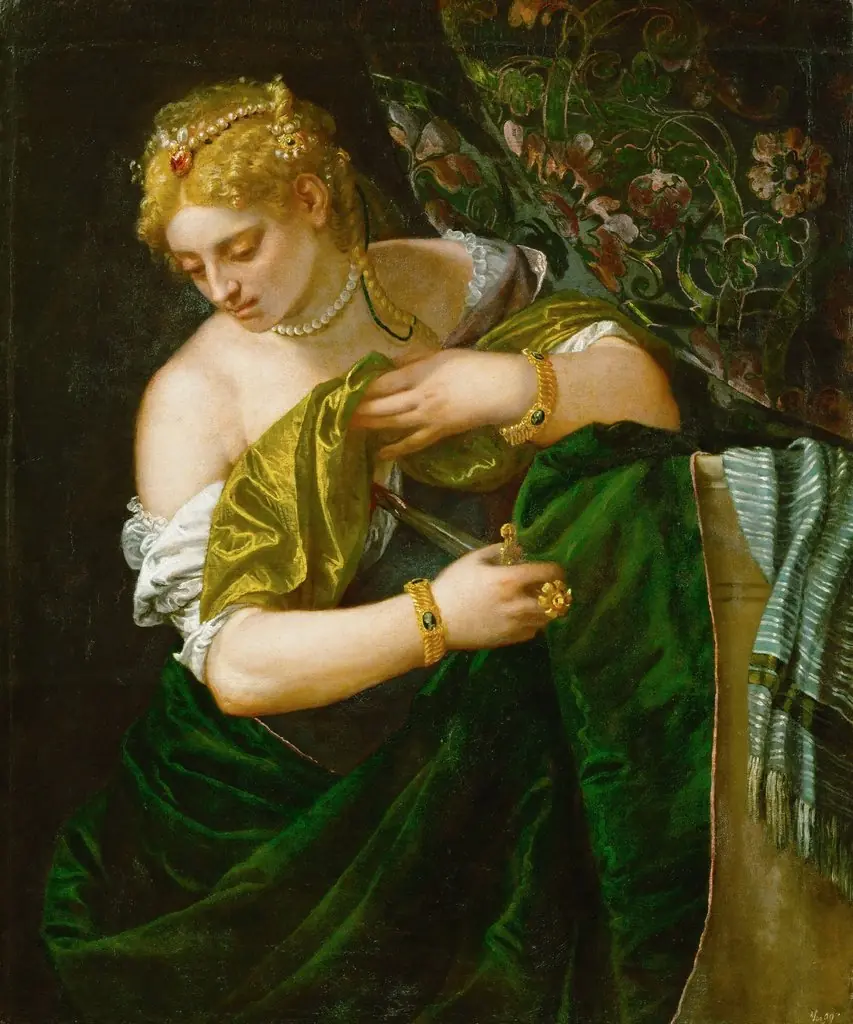
- Verkündigung Mariae
 Corinthian Balustraded Colonnade with Figures (from upper section of staircase hall, 44 Grovesnor Square, London)
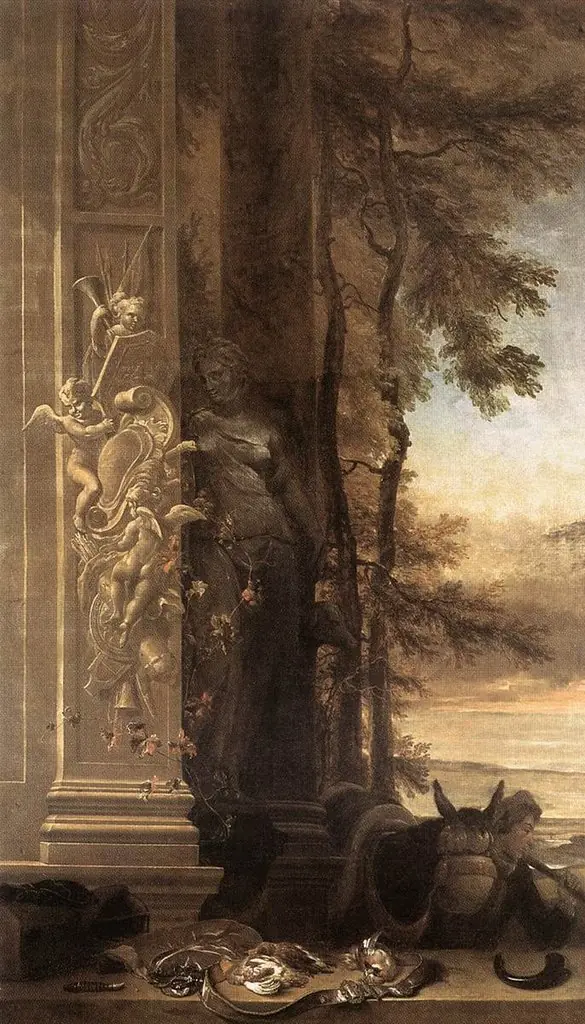 Game Still-Life with Statue of Diana
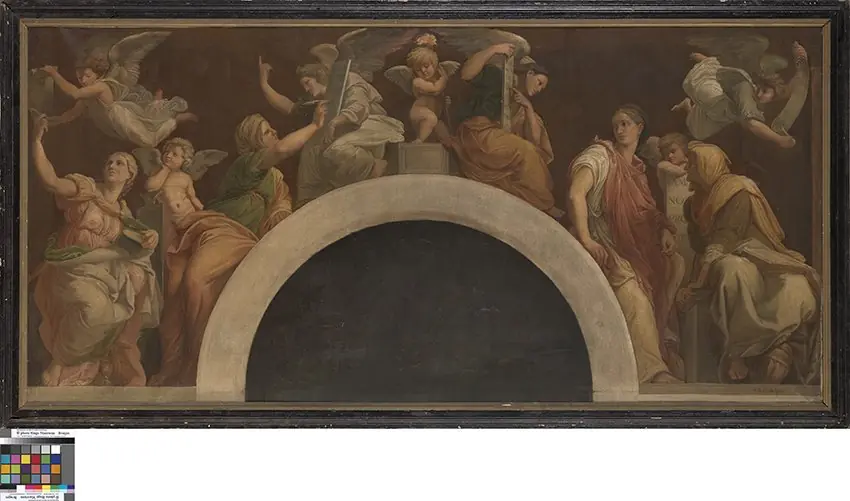 Allegorie
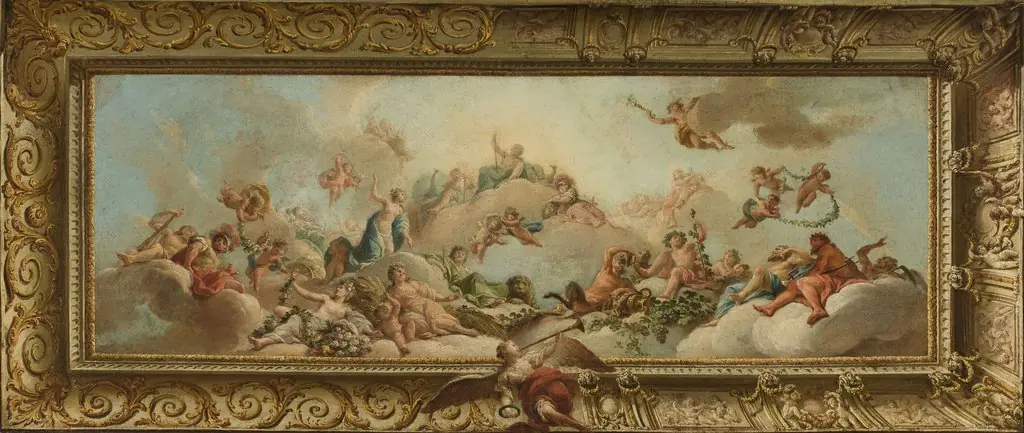 Greeting of Venus at Mount Olympus
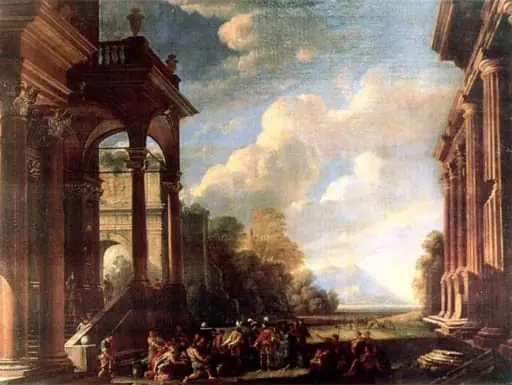 Abraham și Melhisedec
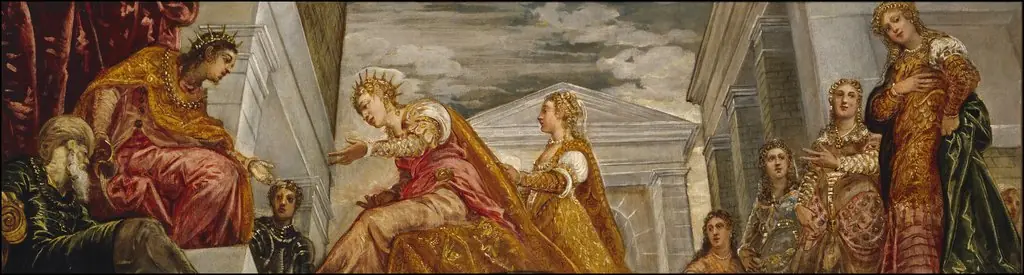 The Queen of Sheba and Solomon
 Elevation for Wall Decoration
 Fântână arteziană cu obeliscuri; pandant: Sală cu coloane
 The Annunciation
 Fantasy architecture with steps and columns
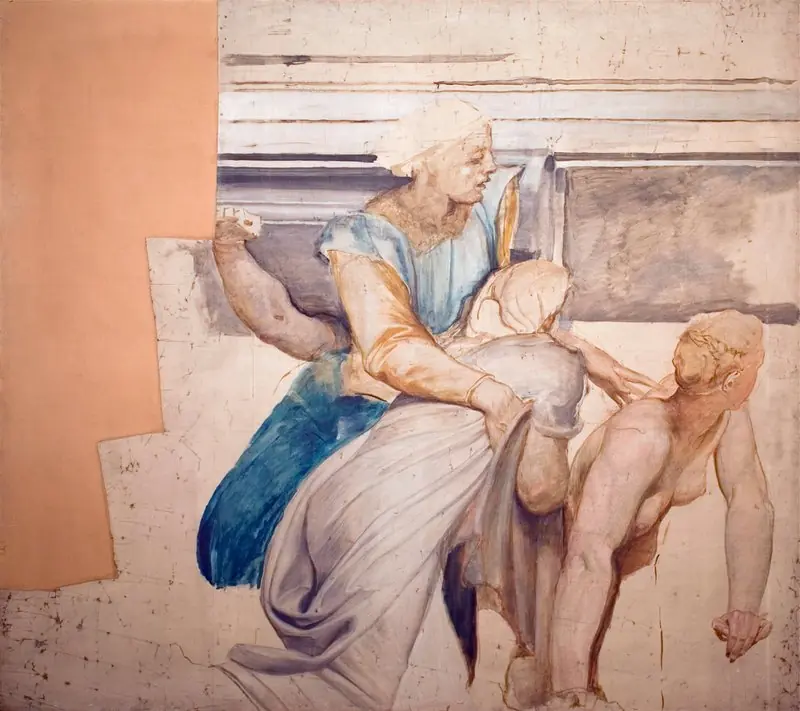 Figure Group (cartoon for the south wall, left centre of the ceiling cove, Dining Room, Dorchester House)