Artwork
The Queen of Sheba and Solomon
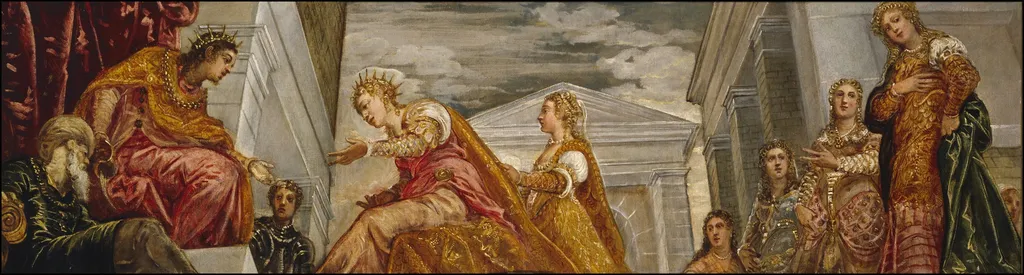
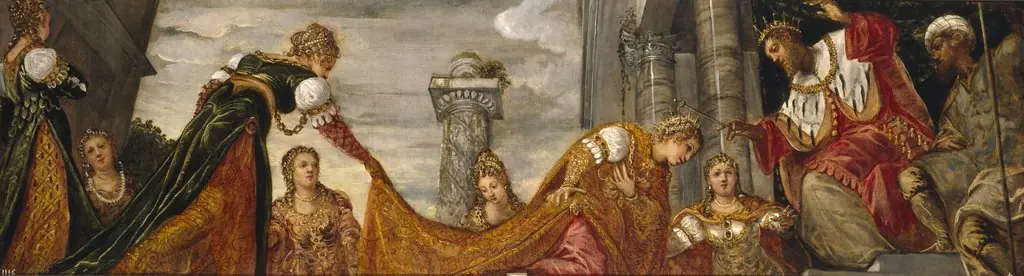
The Queen of Sheba and Solomon is an oil painting by the Mannerist artist Jacopo Tintoretto. It dates from 1555 and is held in the collection of the Museo del Prado.
About this work
Subject & Meaning
The composition is distinguished by the inclusion of a gemstone as a specific depicted element, which serves as a focal point for the scene's iconography.
Jacopo Tintoretto's 1555 oil painting depicts the biblical encounter between the Queen of Sheba and King Solomon, a narrative traditionally categorized within religious art. The composition is distinguished by the inclusion of a gemstone as a specific depicted element, which serves as a focal point for the scene's iconography. While the specific allegorical interpretation of the gem is not detailed in the available records, its presence within the narrative of the Queen's visit to Solomon suggests a symbolic function related to the themes of wisdom, wealth, or divine judgment central to the story.
The work represents a Venetian Renaissance engagement with scriptural history, emphasizing the grandeur of the meeting through the artist's characteristic style.
Technique & Style
Executed in 1555, this work is an oil painting on canvas. The composition is characterized by an exceptionally wide horizontal format, measuring 58 cm in height and 205 cm in width. This elongated support accommodates a complex religious narrative depicting the meeting of Solomon and the Queen of Sheba, with specific attention given to the rendering of gemstones within the scene.
The application of oil paint allows for the rich textural details associated with Tintoretto's style during this period.
History & Provenance
Jacopo Tintoretto created the oil-on-canvas painting The Queen of Sheba and Solomon in 1555. The work depicts a religious narrative featuring gemstones and measures 58 cm in height by 205 cm in width. Its early ownership chain includes Elisabeth Farnese, followed by King Charles III of Spain, and later Ferdinand VII of Spain. The painting is currently held in the collection of the Museo del Prado in Madrid.
The painting is held in the collection of the Museo del Prado in Madrid. Its ownership history includes Elisabeth Farnese, followed by Charles III of Spain and Ferdinand VII of Spain.
The work was created in 1555 and measures 58 cm in height by 205 cm in width. The provided sources do not list specific inventory numbers or details regarding its exhibition history.
Legacy
Tintoretto's depiction of the meeting between the Queen of Sheba and King Solomon, painted in 1555, has remained a point of scholarly focus for its dramatic composition and rich coloration. The work entered the Spanish royal collection in the mid-eighteenth century through the patronage of Empress Elisabeth Farnese, later passing to Charles III and Ferdinand VII, and is now housed in the Museo del Prado. Its representation of a biblical narrative influenced subsequent interpretations of the Queen of Sheba in European art, particularly in discussions of gender and political symbolism during the Baroque period.
Contemporary assessments continue to cite the painting as an example of Tintoretto's mastery of narrative scale and chiaroscuro, reinforcing its standing in art-historical discourse.
Overview
Jacopo Tintoretto’s oil painting The Queen of Sheba and Solomon, executed in 1555, presents a richly appointed interior where the legendary queen meets the Israelite king. The work is part of the Museo del Prado’s collection in Madrid and belongs to the religious genre, though its composition draws on secular courtly imagery.
Context
Created during the height of the Italian Mannerist movement, the painting illustrates Tintorettio’s departure from the balanced harmony of High Renaissance masters toward more theatrical, emotionally charged scenes. Its lavish costumes and architectural setting echo contemporary Venetian court culture, linking biblical narrative with the patronage tastes of the period.
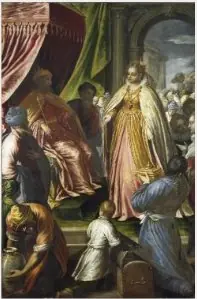
Artist & collection
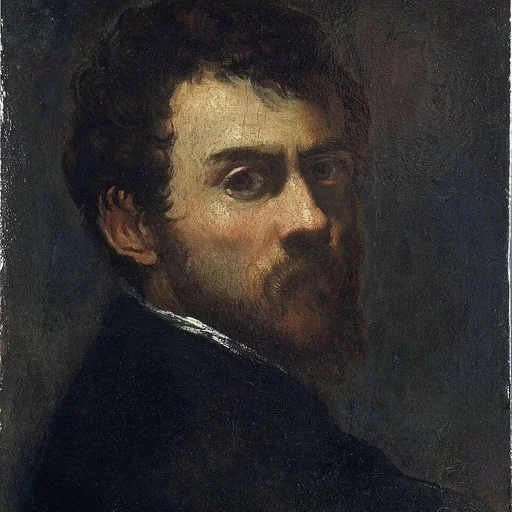
Artist
Jacopo Robusti (late September or early October 1518 – 31 May 1594), best known as Tintoretto ( TIN-tə-RET-oh; Italian:; Venetian: ), was an Italian Renaissance painter of the Venetian school.

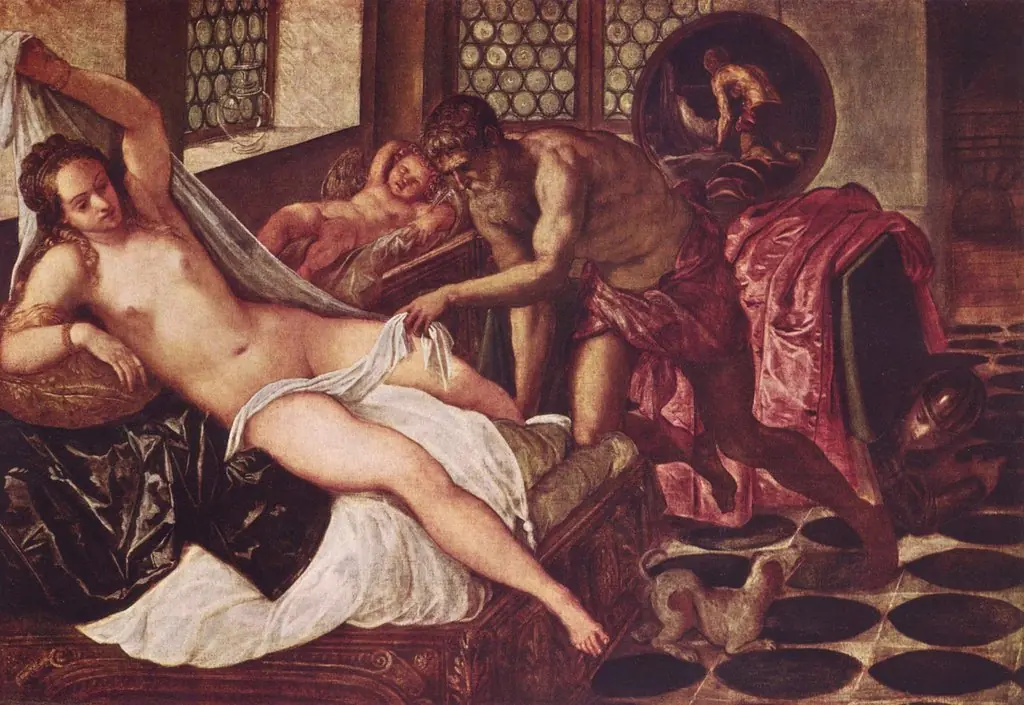
 Esther and Ahasuerus
 Königin von Saba vor Salomon
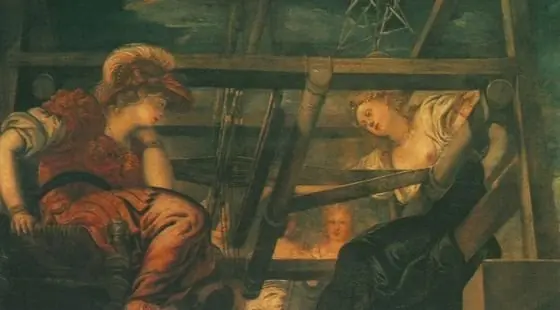 Arachne challenges Minerva in a weaving contest
 The Apotheosis of Saint Charles Borromeo
 Chronos răpind pe Amor lui Venus
 Prinssi Meleager kieltäytyy taistelemasta maan vihollisia vastaan, kopio Jonas Åkerströmin mukaan
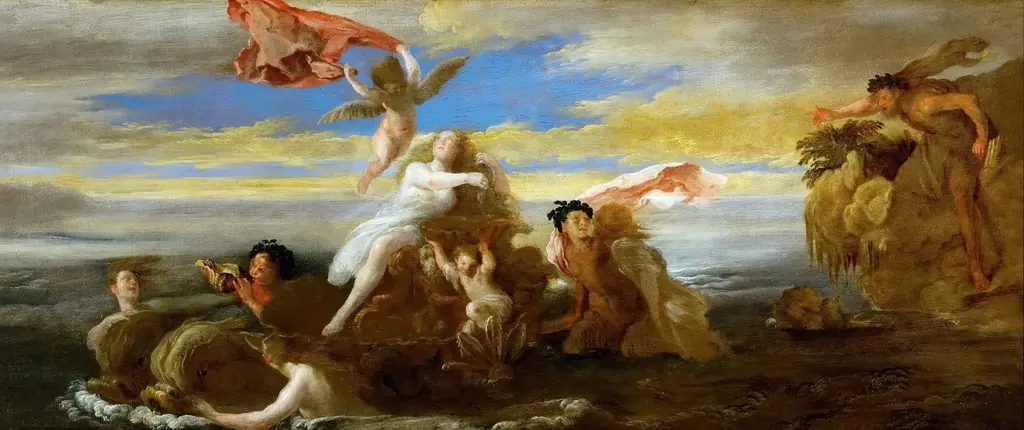 Galatea and Polyphem
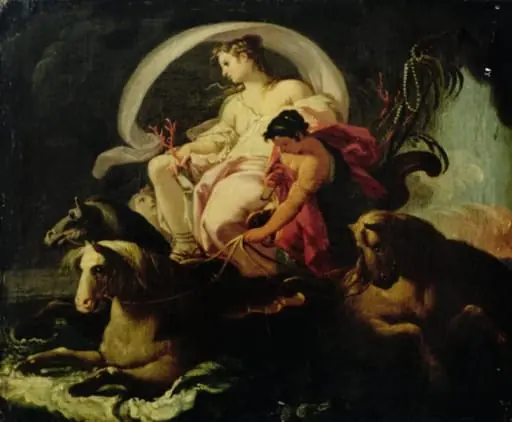 Amfitrita (copie)
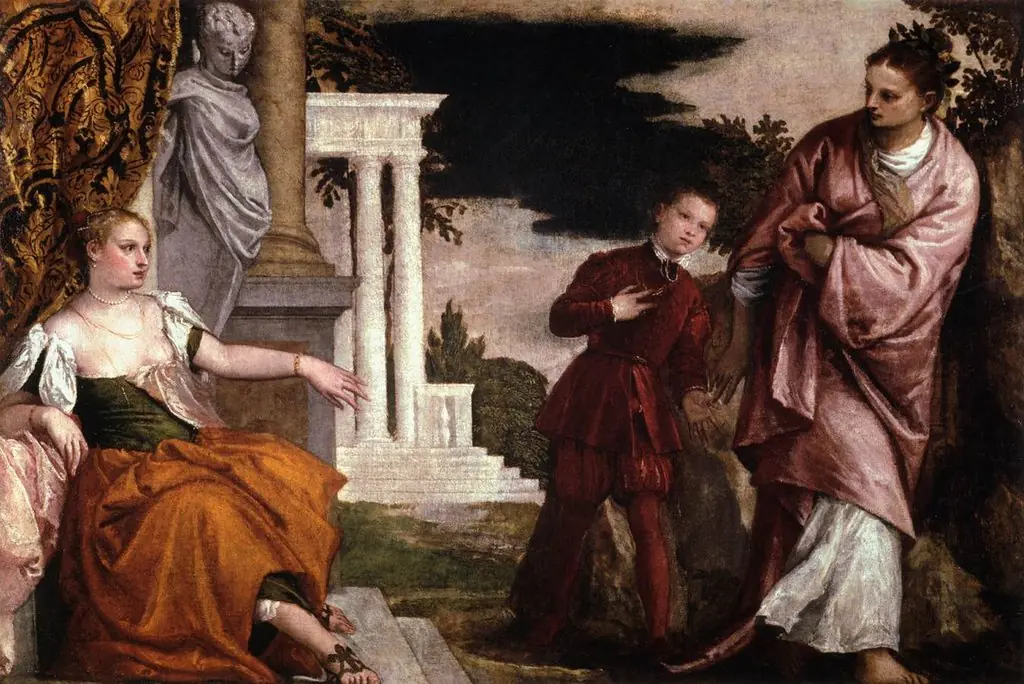 Young Man between Vice and Virtue
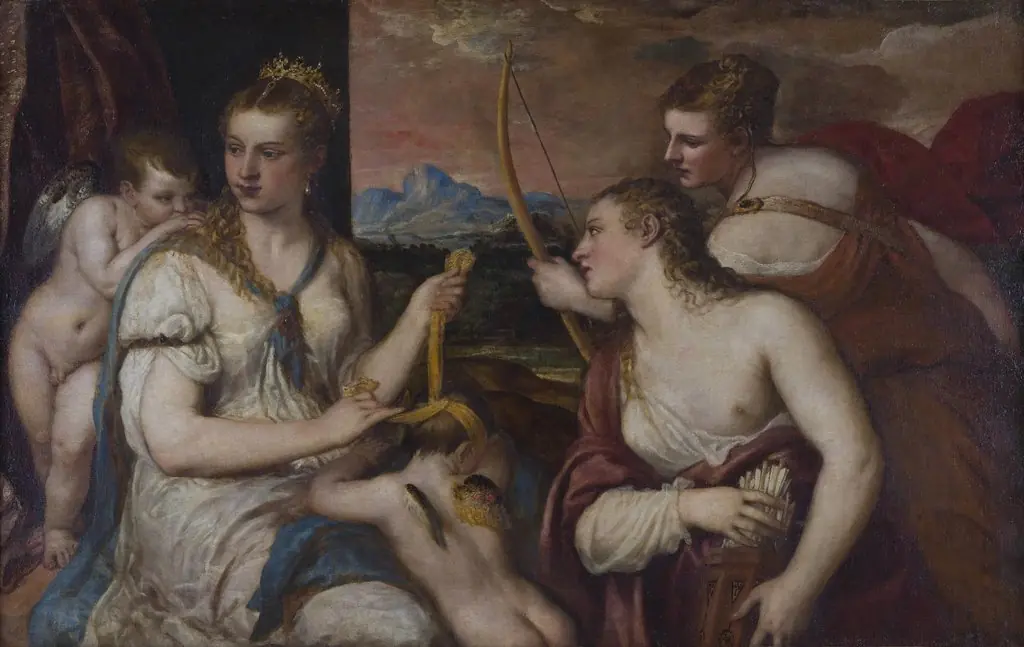 Venus Blindfolding Cupid
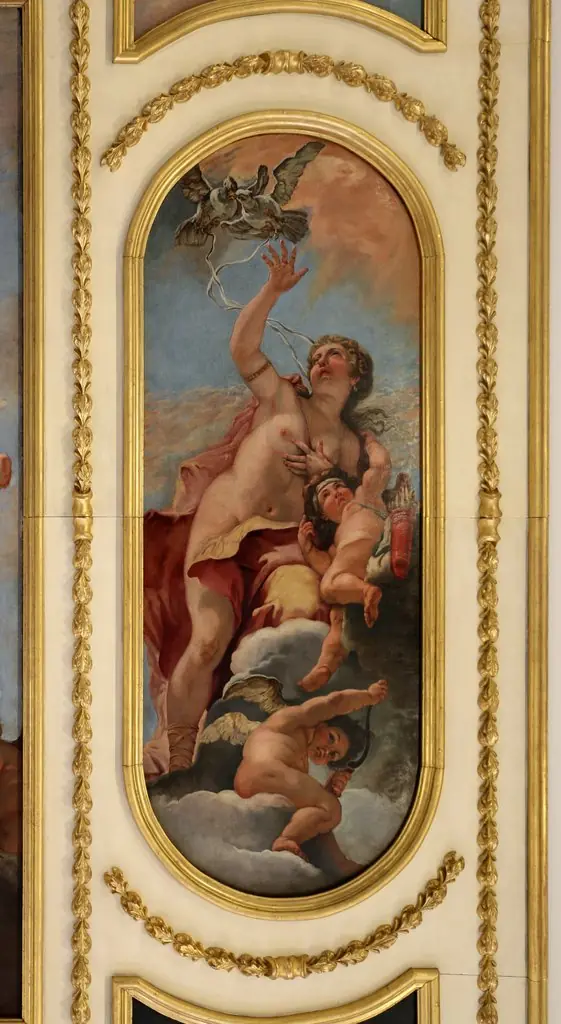 Venus und Cupido
- The Visit of the Queen of Sheba to Solomon