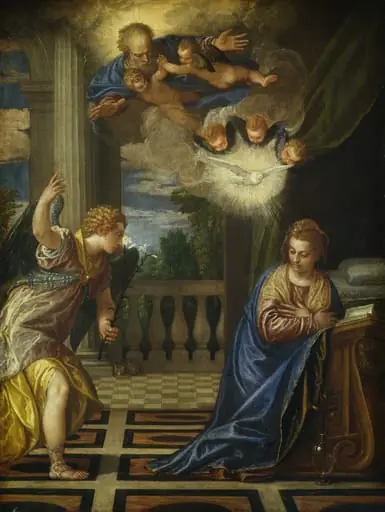
Artwork
The Annunciation
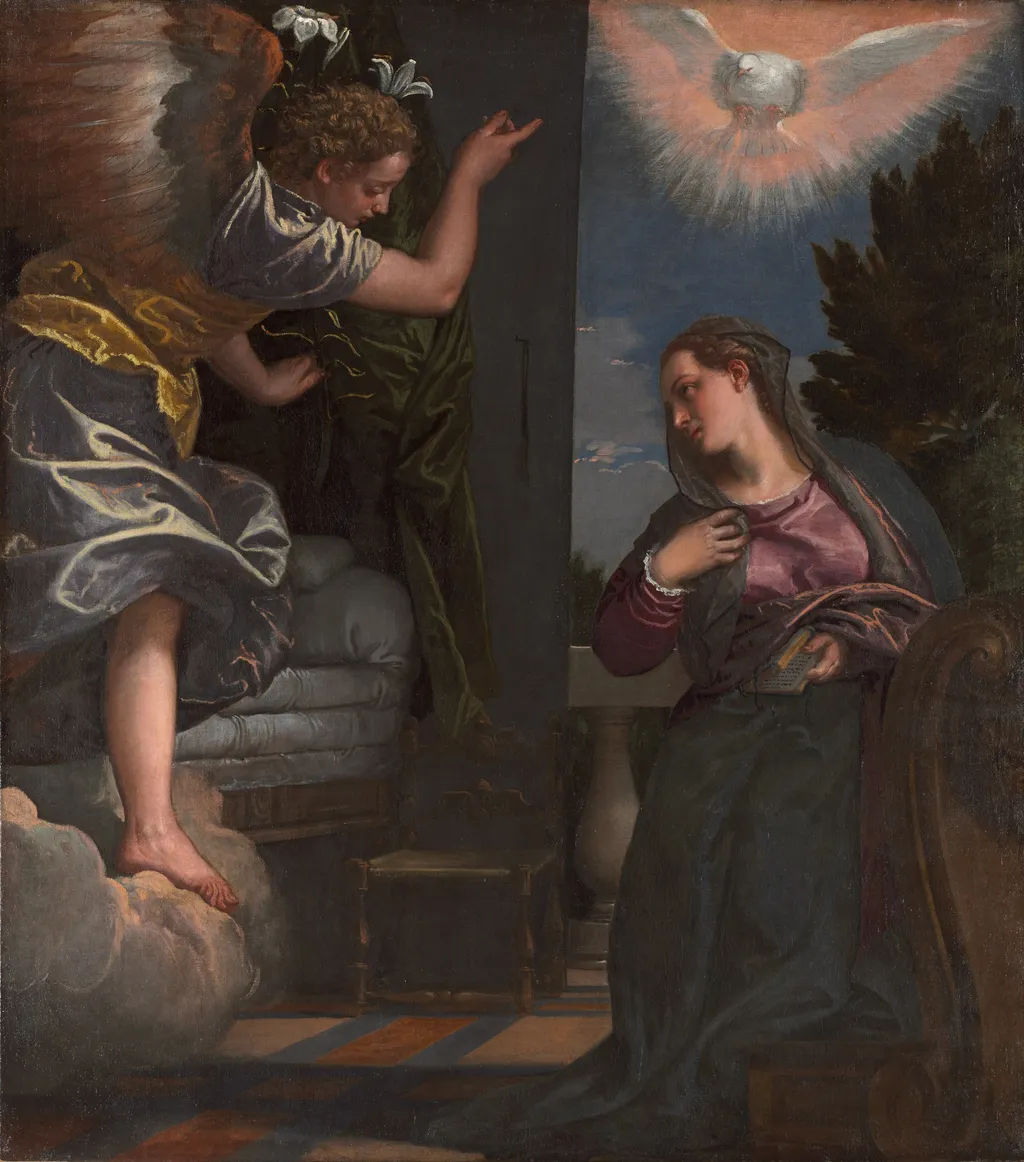
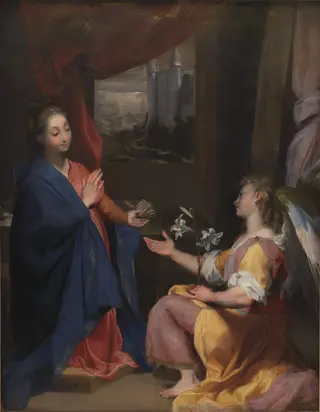
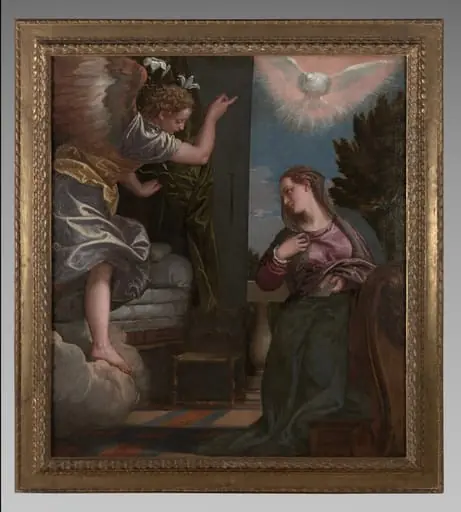
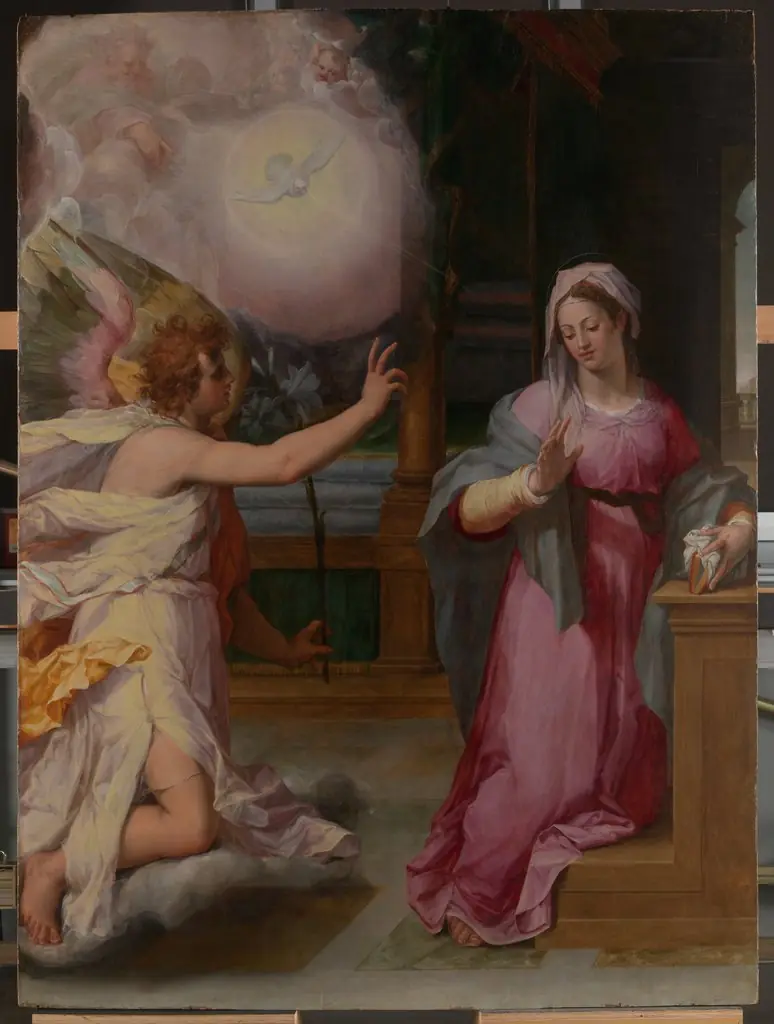
The Annunciation is an oil painting by the Mannerist artist Paolo Veronese. It is held in the collection of the Cleveland Museum of Art.
About this work
Subject & Meaning
The painting serves as a visual meditation on humility and obedience, core virtues associated with Mary's acceptance of her role in the salvation story.
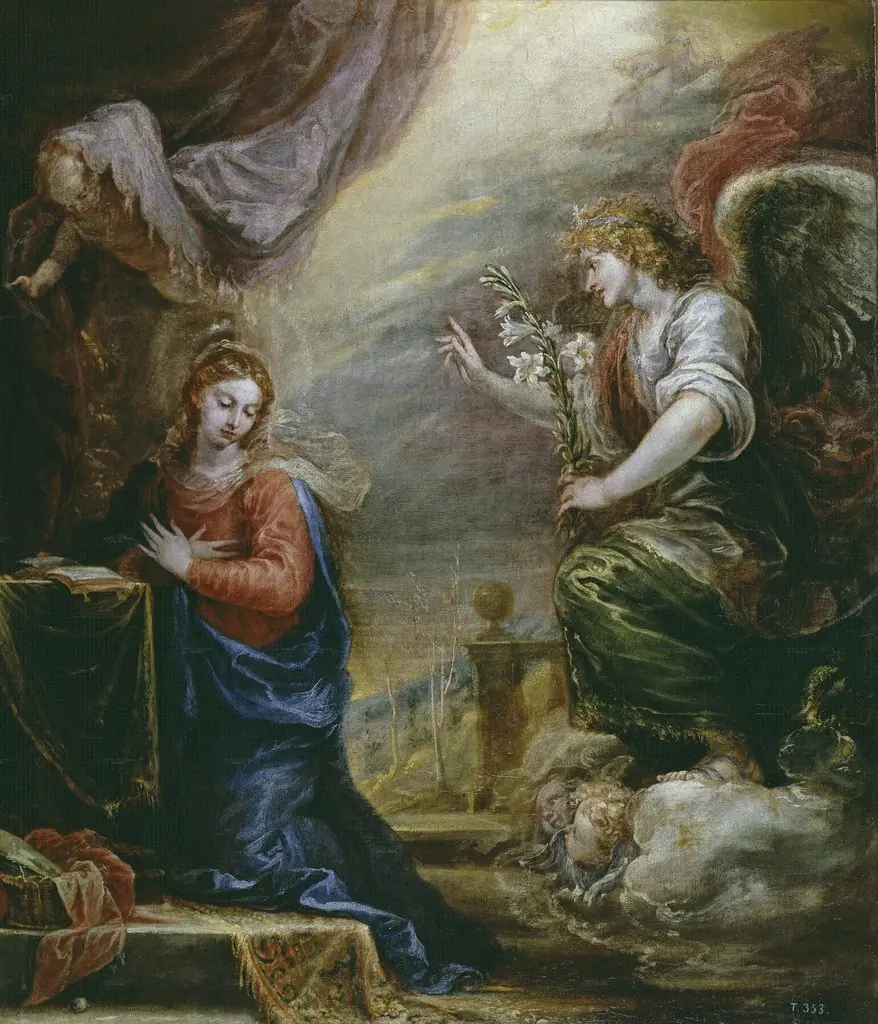
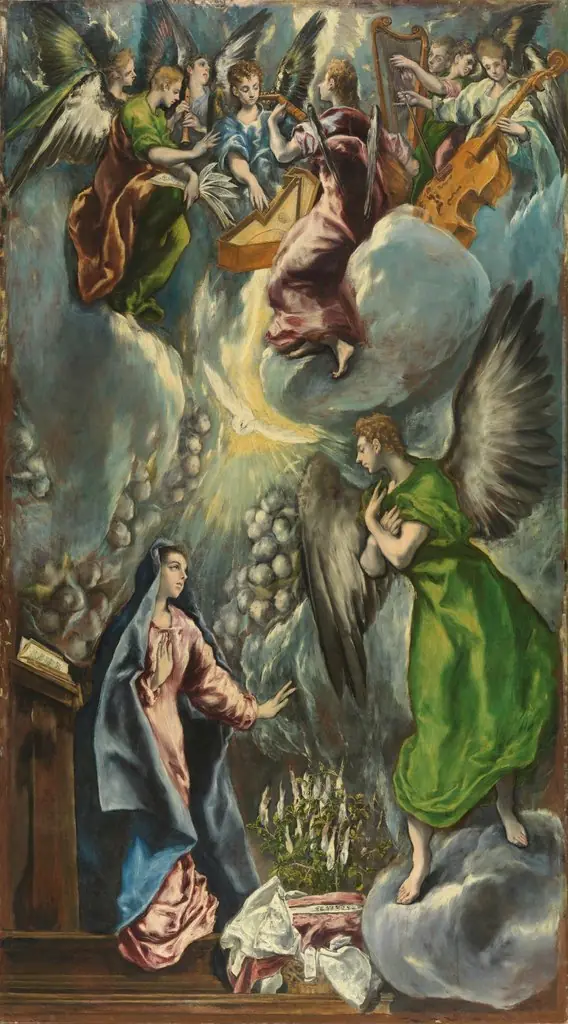
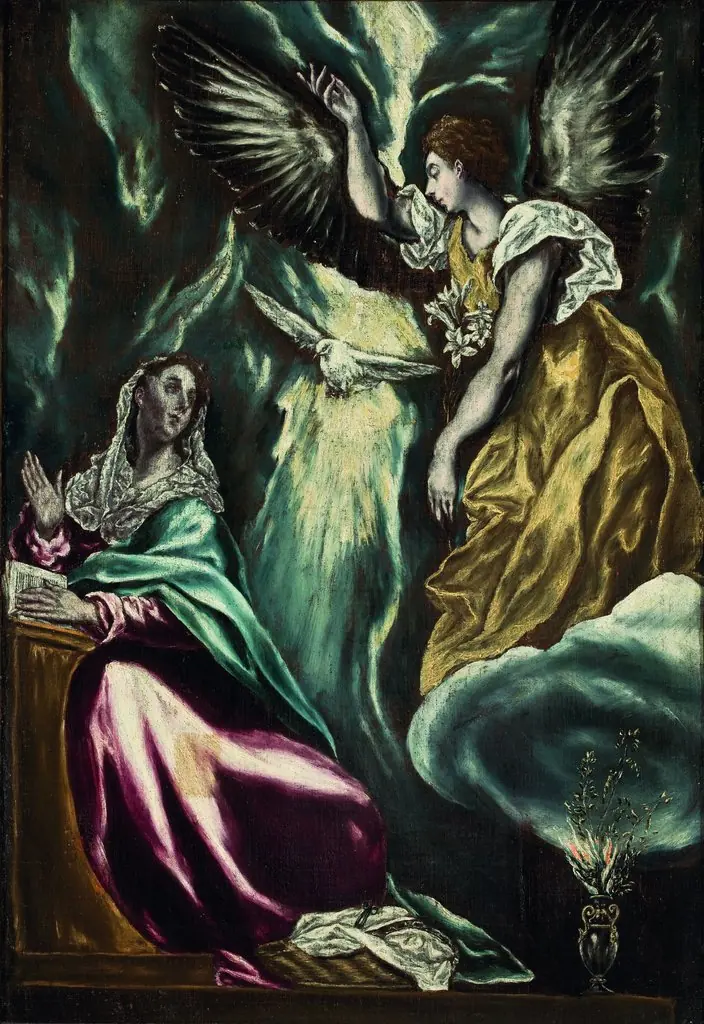
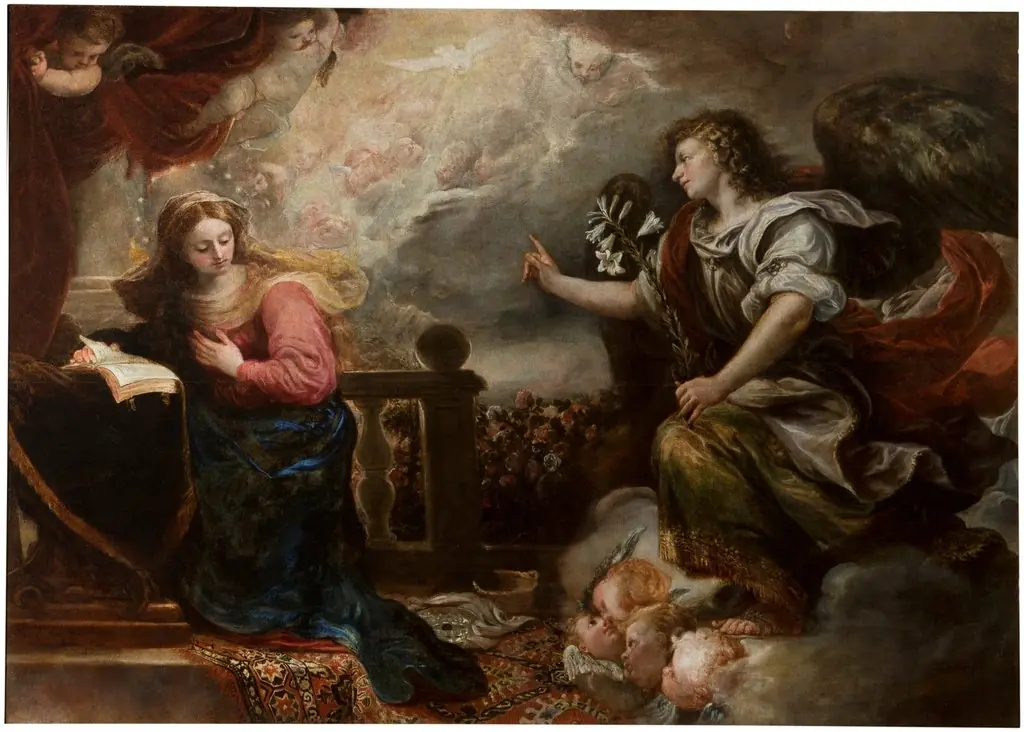
Paolo Veronese's 1580 oil painting, The Annunciation, depicts the biblical episode where the Archangel Gabriel announces to the Virgin Mary that she will conceive the Son of God. As a work of religious art, the piece illustrates the central moment of the Incarnation, a foundational event in Christian theology. The composition focuses on the interaction between the divine messenger and the Virgin, capturing the instant of divine intervention in human history.
While specific symbolic details within the Cleveland Museum of Art's holding are not elaborated in the provided records, the work's classification as religious art and its main subject designation confirm its representation of this pivotal scriptural narrative. The painting serves as a visual meditation on humility and obedience, core virtues associated with Mary's acceptance of her role in the salvation story.
Technique & Style
The Annunciation is executed in oil paint on canvas, a medium consistent with Veronese's mature Venetian practice. The work measures 150.0 cm in height by 133.4 cm in width, producing a vertical format suited to the religious subject. Produced in Italy in 1580, the painting is classified within the religious genre and is held in the Cleveland Museum of Art, having previously been owned by Leopold Koppel.
The canvas support and oil medium are documented through the museum's cataloguing of the work as a workshop piece.
History & Provenance
The Annunciation by Paolo Veronese was created in 1580, executed in oil paint on canvas in Italy. The work was once owned by Leopold Koppel before entering the collection of the Cleveland Museum of Art, where it is classified as a workshop piece under accession number 1950.251. The painting measures 150.0 cm in height by 133.4 cm in width.
Its religious subject matter, depicting the Annunciation, aligns with Veronese's broader devotional output during this late period of his career.
The Annunciation by Paolo Veronese is held in the collection of the Cleveland Museum of Art. The work, dated to 1580, carries the accession number 1950.251. Prior to its acquisition by the museum, the painting was owned by Leopold Koppel.
The provided sources confirm the work's location and inventory details but do not list specific past exhibitions or loan history.
Overview
Paolo Veronese's The Annunciation, an oil painting from approximately 1590, captures a pivotal moment in Christian tradition. This work by the prominent Venetian artist depicts the angel Gabriel's divine message to the Virgin Mary, informing her of her impending role as the mother of God. Rendered in the Mannerist style, the painting is now housed in the collection of the Cleveland Museum of Art.
Context
Paolo Veronese was a preeminent figure in 16th-century Venetian art, contributing significantly to the Late Renaissance alongside contemporaries such as Titian and Tintoretto. This trio collectively shaped the distinctive visual language of Venetian painting during the period. Veronese was particularly acclaimed for his expansive religious and mythological compositions, often employing a rich and luminous color scheme that became a hallmark of his artistic output.
Own this work as a print
Artist & collection
Artist
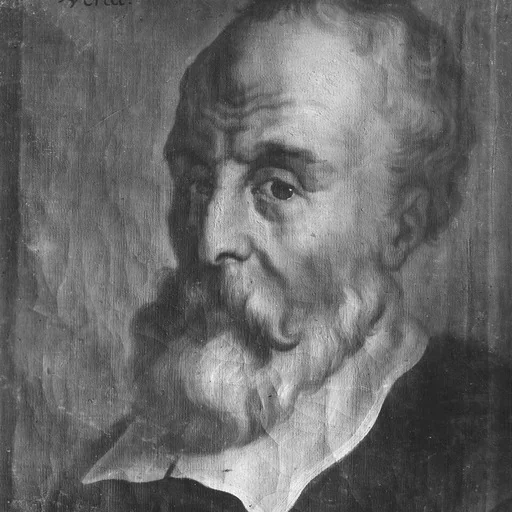
Paolo Caliari (1528 – 19 April 1588), known as Paolo Veronese ( VERR-ə-NAY-zay, -zee, US also -see; Italian: ), was an Italian Renaissance painter based in Venice, known for extremely large history paintings of…