Artwork
The Holy Family with the young St John the Baptist and St George
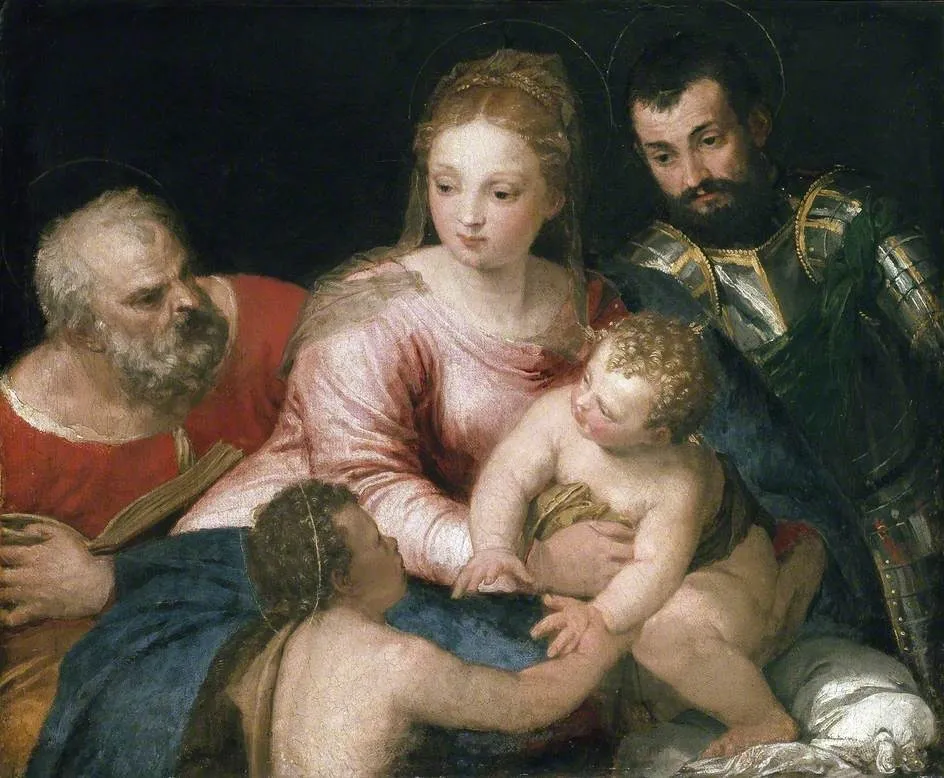
The Holy Family with the young St John the Baptist and St George is an oil painting by the Mannerist artist Paolo Veronese. It dates from 1568 and is held in the collection of the Ashmolean Museum.
About this work
Overview
The Holy Family with the young St John the Baptist and St George is a painting created by Paolo Veronese around 1568. It is an oil-on-canvas work characteristic of the Mannerist style, known for its elegant and refined composition.
Subject & Meaning
The painting depicts a scene with five figures: the Virgin Mary, holding the Christ child, is surrounded by Saint Joseph, Saint George, and the young Saint John the Baptist. The arrangement of the figures creates a sense of intimacy and familial connection.
Technique & Style
Veronese's use of color and light draws attention to the central figures. The Virgin's pink dress is set against a dark background, while the Christ child's skin is rendered in soft, gentle tones. The artist's handling of chiaroscuro, a technique using strong contrasts between light and dark, adds depth to the composition.
Artist & collection
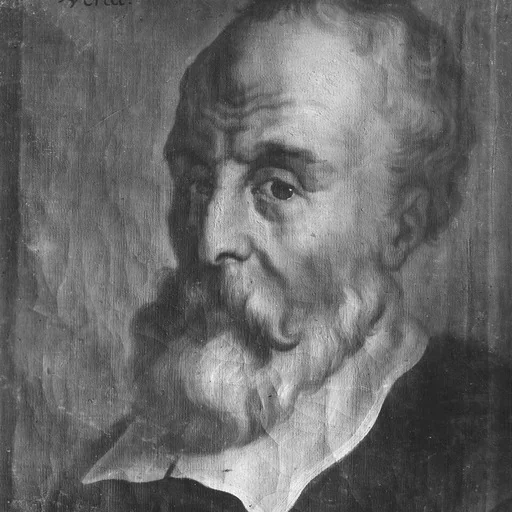
Artist
Paolo Caliari (1528 – 19 April 1588), known as Paolo Veronese ( VERR-ə-NAY-zay, -zee, US also -see; Italian: ), was an Italian Renaissance painter based in Venice, known for extremely large history paintings of…