Artwork
The Resurrection of Christ
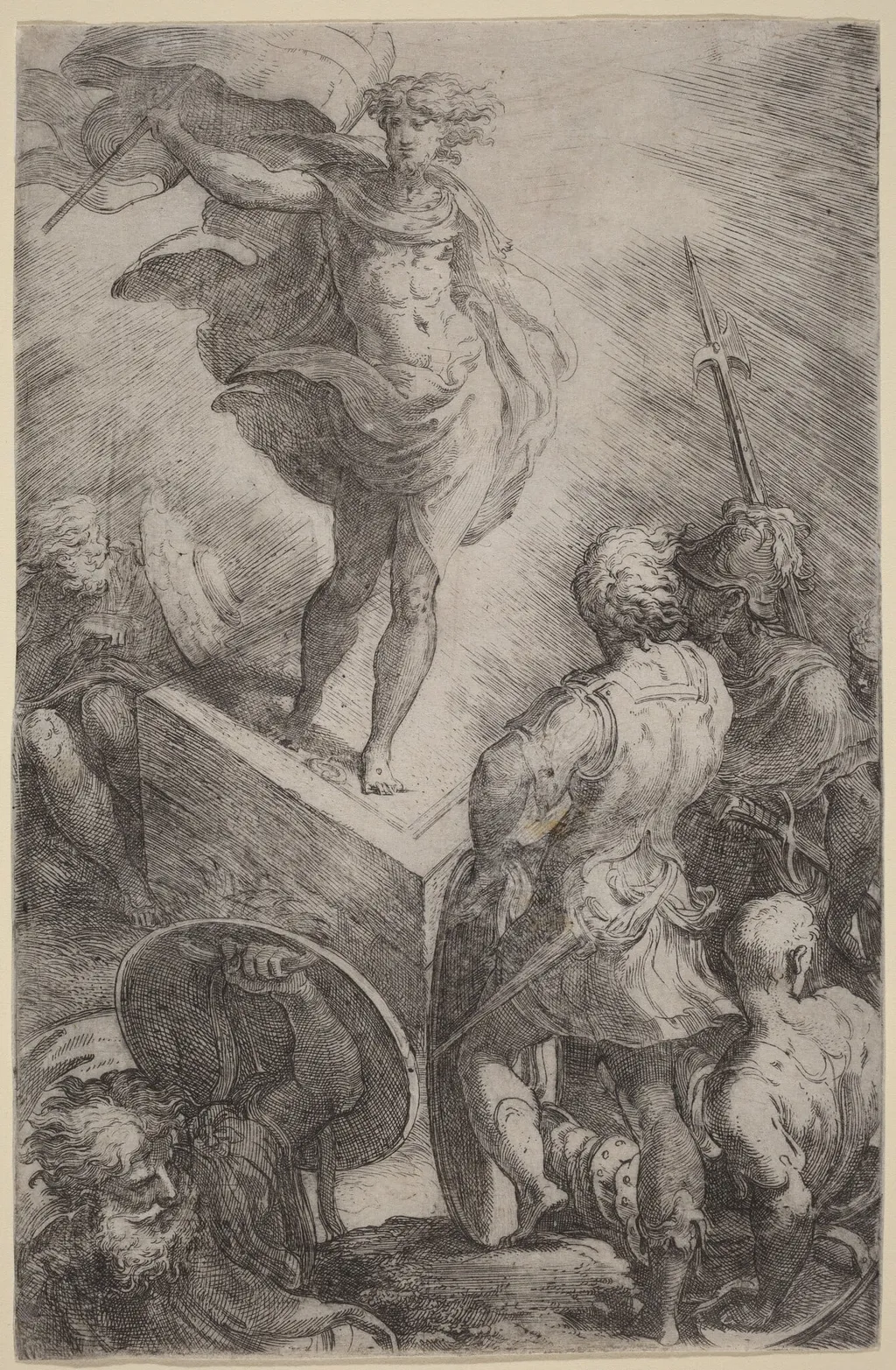
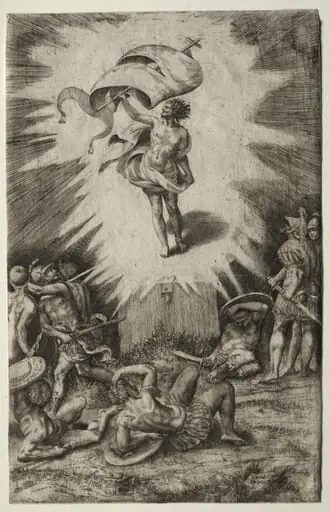
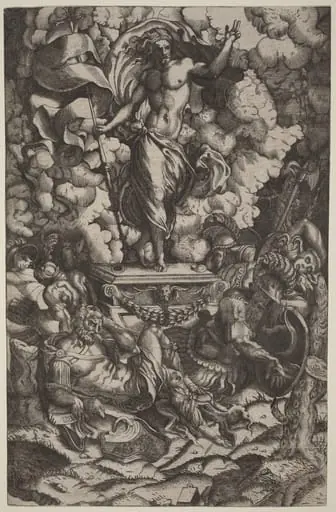
The Resurrection of Christ is an ink print by the Renaissance artist Parmigianino. It dates from 1528 and is held in the collection of the National Gallery of Art.
- Inscription
- Inscribed:on verso in graphite: original fine and delicate / 2nd state formerly belonged to the Abbe Moralles given / in exchange from the Royal Collection in Paris
About this work
Overview
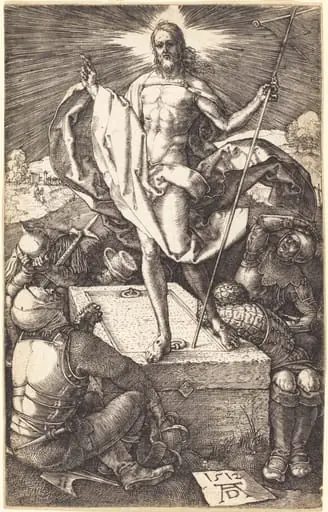
The composition is dominated by a stark contrast between illuminated figures and a deep, shadowy background, heightening the dramatic impact of the scene.
Created circa 1528, this print by the Italian artist Parmigianino portrays the biblical moment of Christ’s resurrection. Executed in both etching and engraving on laid paper, the work belongs to the religious genre and exemplifies the experimental tendencies of early 16th‑century Mannerism. The composition is dominated by a stark contrast between illuminated figures and a deep, shadowy background, heightening the dramatic impact of the scene.
Subject & Meaning
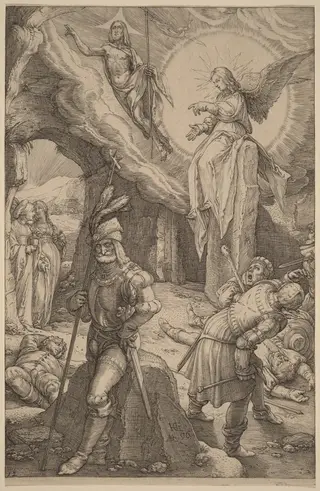
The central figure of the resurrected Christ stands upon a raised platform, his robe flowing and a flag in his right hand while a sword rests in his left. Surrounding him are Roman soldiers rendered in varied poses: some gaze upward toward the divine figure, others turn away, suggesting a mixture of awe, uncertainty, and denial in response to the miraculous event.
Technique & Style
Parmigian intently combined the line work of engraving with the tonal possibilities of etching, allowing for delicate gradations of light and shadow across the laid paper surface. The elongated proportions of the figures and the elegant, almost exaggerated gestures reflect the artist’s Mannerist sensibility, while the chiaroscuro treatment intensifies the sense of three‑dimensional space within the flat medium.
History & Provenance
The print emerged during Parmigianino’s productive period while he was active in artistic centers such as Florence, Rome, and Parma. Though the original paper matrix has changed hands over the centuries, the work remains documented in several major European collections, attesting to its continued scholarly interest and its role in tracing the development of printmaking in the Renaissance.
Context
At a time when artists were exploring new ways to convey religious narratives, Parmigianino’s approach merged classical elegance with heightened emotional expression. The Resurrection of Christ reflects broader Mannerist concerns with artificiality and complex composition, positioning the work alongside contemporary prints that sought to reinterpret canonical subjects through innovative visual strategies.
Own this work as a print
Artist & collection

Artist
Girolamo Francesco Maria Mazzola (11 January 1503 – 24 August 1540), also known as Francesco Mazzola or, more commonly, as Parmigianino (UK: US: Italian:; "the little one from Parma"), was an Italian Mannerist painter…