Artwork
Still Life with Apples
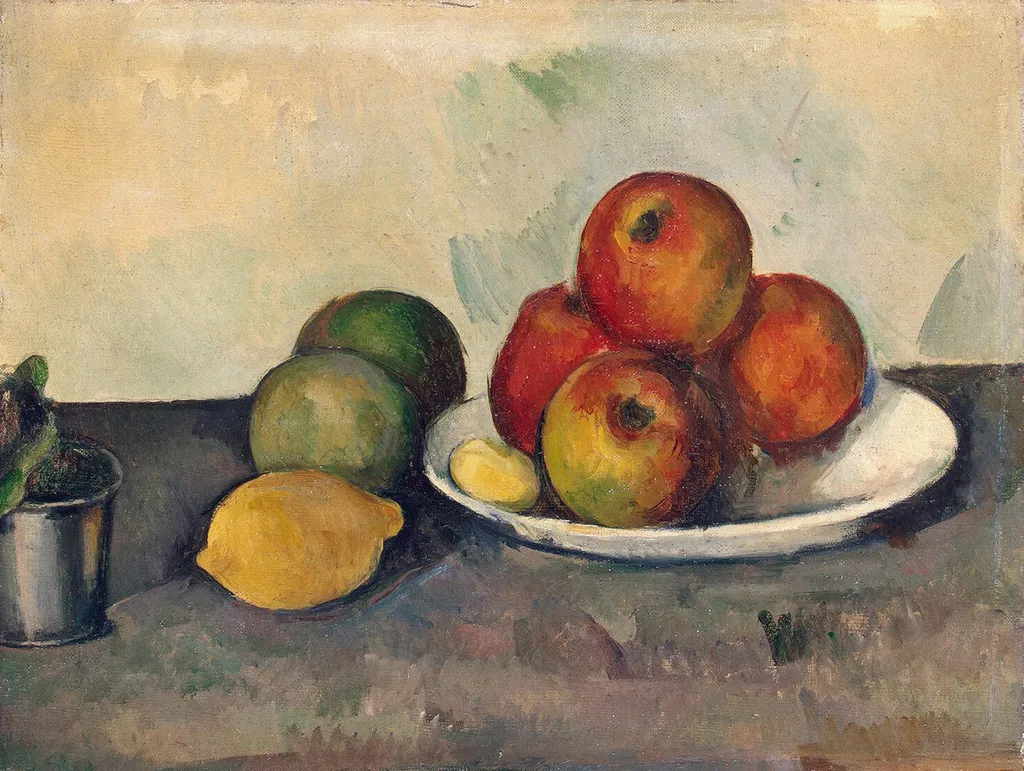
Still Life with Apples is an oil painting by the Post-Impressionist artist Paul Cézanne. It dates from 1896 and is held in the collection of the Hermitage Museum.
About this work
Subject & Meaning
To the left, a small cylindrical metal box partially covered by a green leaf contrasts with the rounded forms of the fruit and plate.
The composition features red apples in a white plate and two green apples positioned behind a lemon, establishing a dominant red and green color scheme against a blue background. To the left, a small cylindrical metal box partially covered by a green leaf contrasts with the rounded forms of the fruit and plate. This unique metallic object appears in Cézanne's oeuvre only in this work.
The painting represents an investigation of geometric forms and tonal contrasts, aligning with the period's synthetism. Reflecting Cézanne's well-known artistic philosophy, the work reduces natural forms into fundamental shapes; as he stated, everything in nature relates to the sphere, the cylinder, and the cone. The dominant red-green palette also pays homage to the still-life traditions of Delacroix, whom Cézanne greatly admired.
Technique & Style
Painted in 1896, this oil-on-canvas still life measures 35.2 × 46.2 cm. The composition arranges red apples on a white plate, two green apples behind a lemon, and a small cylindrical metal box partially covered by a green leaf at the left, all against a blue background. Cézanne employs a red-and-green tonal scheme that recalls the still lifes of Delacroix, whom he admired.
The handling reveals the artist's formal investigations during this period. The rounded forms of fruit and dish contrast with the geometric cylinder of the box, an object unique in his oeuvre and used here for the only time. This juxtaposition reflects Cézanne's pursuit of underlying geometric structure in nature, aligning with what Émile Bernard recorded as the artist's principle that all natural forms relate to "the sphere, the cylinder and the cone."
The synthesis of color contrasts and simplified forms connects the work to the synthetist tendencies of its era.
History & Provenance
This painting was acquired by Otto Krebs in Munich from the Hugo Perls gallery. It was transferred in 1947 to Soviet occupation authorities in Germany as war reparations, then moved to the Hermitage Museum in Leningrad (now Saint Petersburg) and first exhibited publicly there in 1995.
Still Life with Apples is held in the collection of the Hermitage Museum in Saint Petersburg, where it bears the inventory number 3KP 558. The painting entered the museum's holdings in 1947 as war reparations transferred by Soviet occupation authorities from Germany, having previously been acquired by Otto Krebs at the Hugo Perls gallery in Munich.
Although the work arrived at the Hermitage in the late 1940s, it remained in storage and was not presented to the public until 1995.
Context
The painting was acquired by Otto Krebs in Munich from the Hugo Perls gallery and transferred to the Hermitage in 1947 under Soviet occupation as war reparations. It entered public view for the first time in 1995. Scholars note its role in Cézanne’s exploration of geometric form, with Émile Bernard recording the artist’s emphasis on reducing natural objects to basic shapes such as spheres, cones, and cylinders.
The work’s composition, featuring red apples on a white plate contrasted with green apples and a lemon against a blue background, reflects Cézanne’s engagement with color contrasts found in Delacroix’s still lifes. A cylindrical metal box partially covered by a green leaf appears here for the first and last time in Cézanne’s oeuvre, underscoring the painting’s experimental approach to structure and tonal contrast.
Overview
Created in 1896, this oil painting by Paul Cézanne presents a modest still‑life arrangement. A white plate holds three red apples, a green pear and two yellow lemons, accompanied by a small metal pitcher with a sprig of foliage. The composition rests against a plain, pale wall and a dark tabletop edge, emphasizing the objects themselves.
Own this work as a print
Artist & collection

Artist
Paul Cézanne ( say-ZAN, UK also siz-AN, US also say-ZAHN; French: ; Occitan: Pau Cesana; 19 January 1839 – 22 October 1906) was a French Post-Impressionist painter whose work introduced new modes of representation,…

 Harlequin
 The Card Players
 Mont Sainte-Victoire and the Viaduct of the Arc River Valley
 Still Life with Milk Jug and Fruit
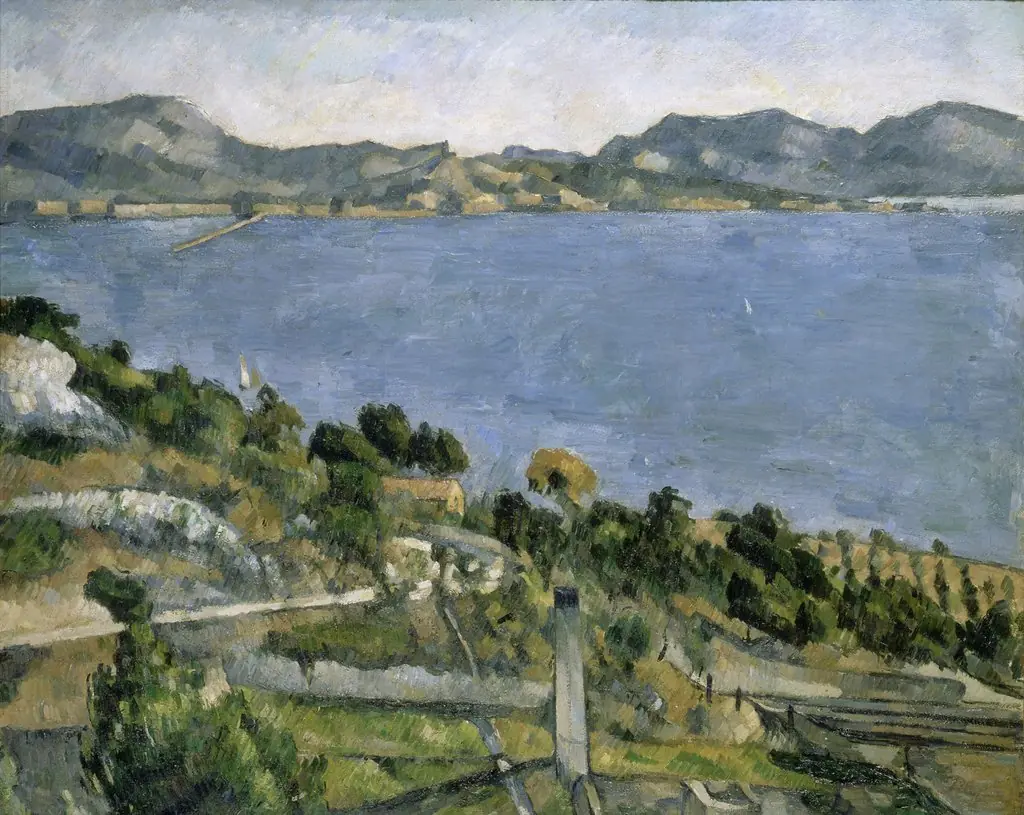 Le Golfe de Marseille vu de l'Estaque (The Gulf of Marseille Seen from L'Estaque)
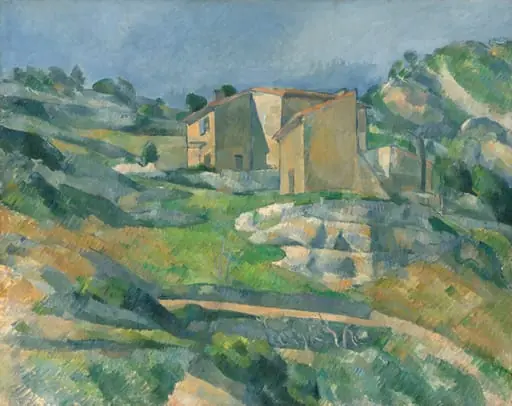 Houses in Provence: The Riaux Valley near L'Estaque
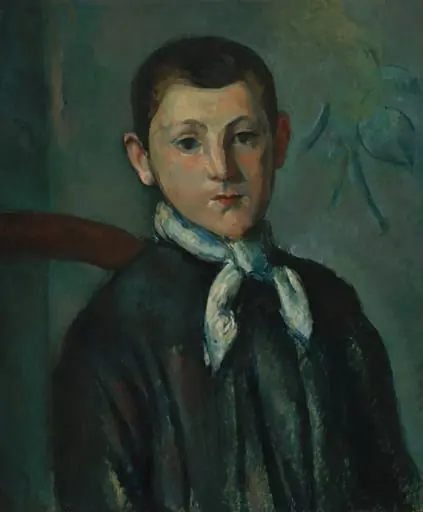 Louis Guillaume
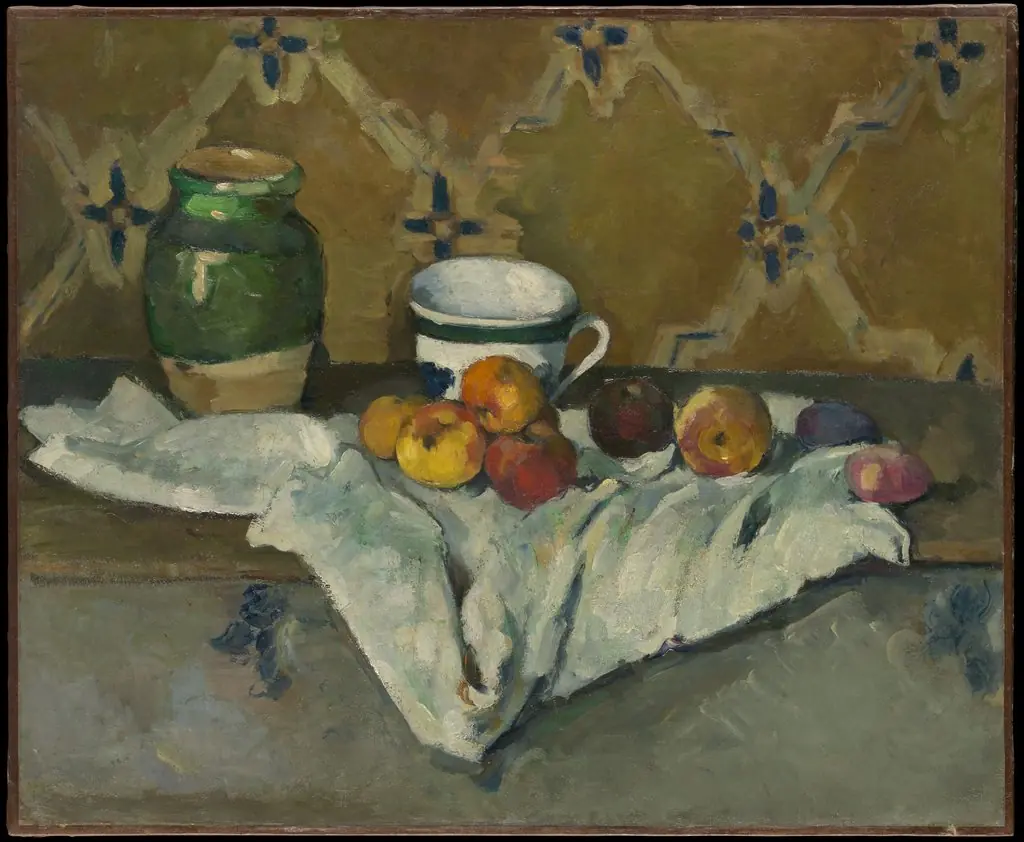 Still Life with Jar, Cup, and Apples