Artwork
Louis Guillaume
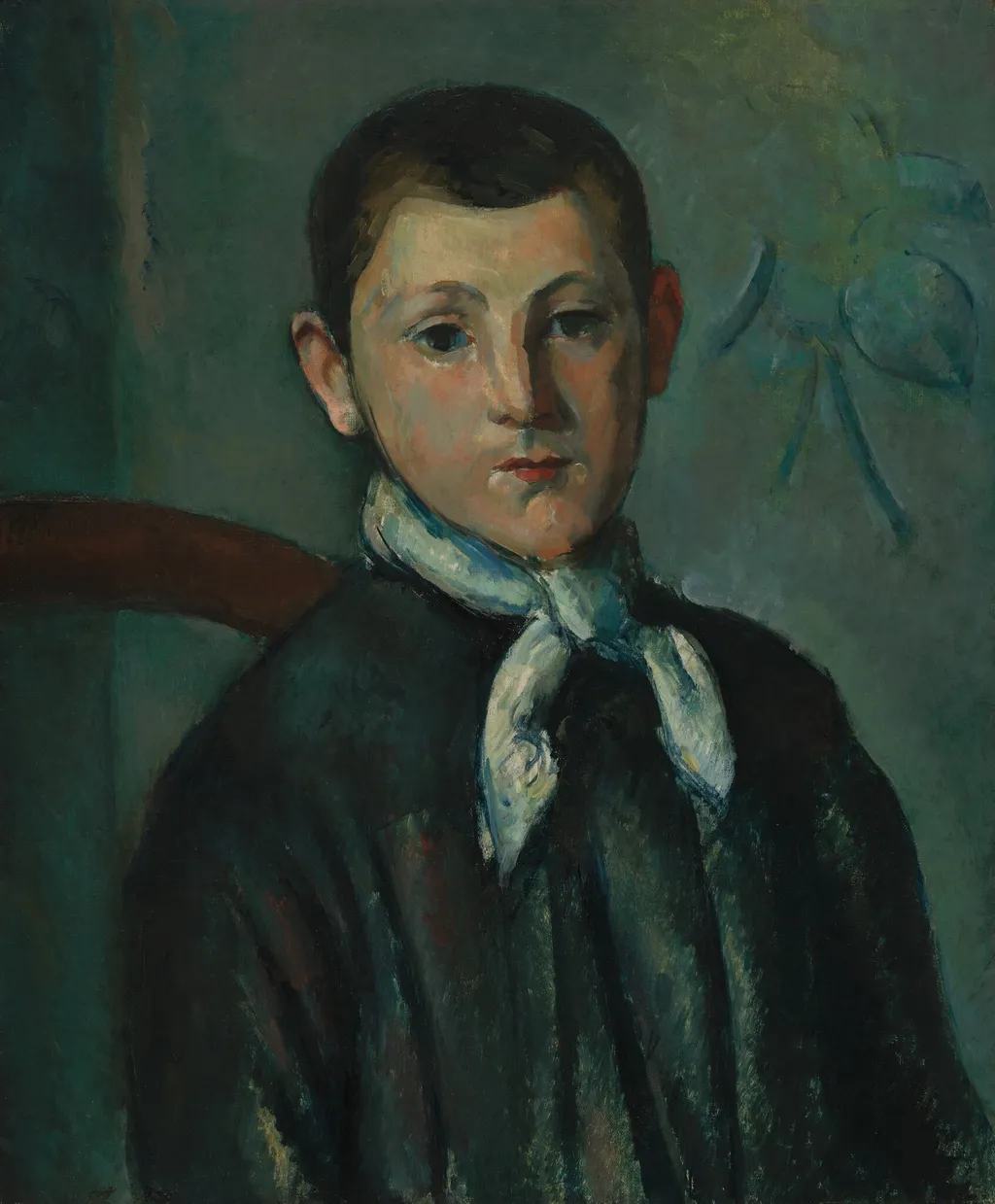
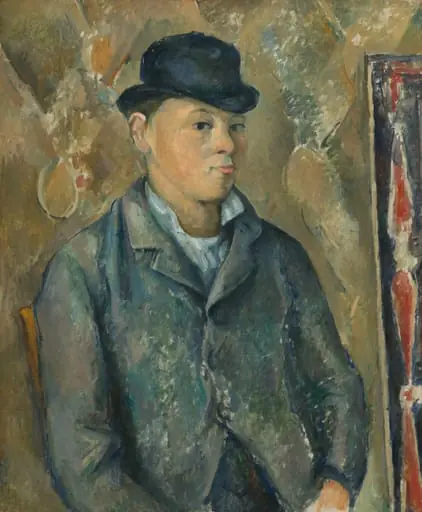
Louis Guillaume is an oil painting by the Impressionist artist Paul Cézanne. It dates from 1884 and is held in the collection of the National Gallery of Art.
About this work
Subject & Meaning
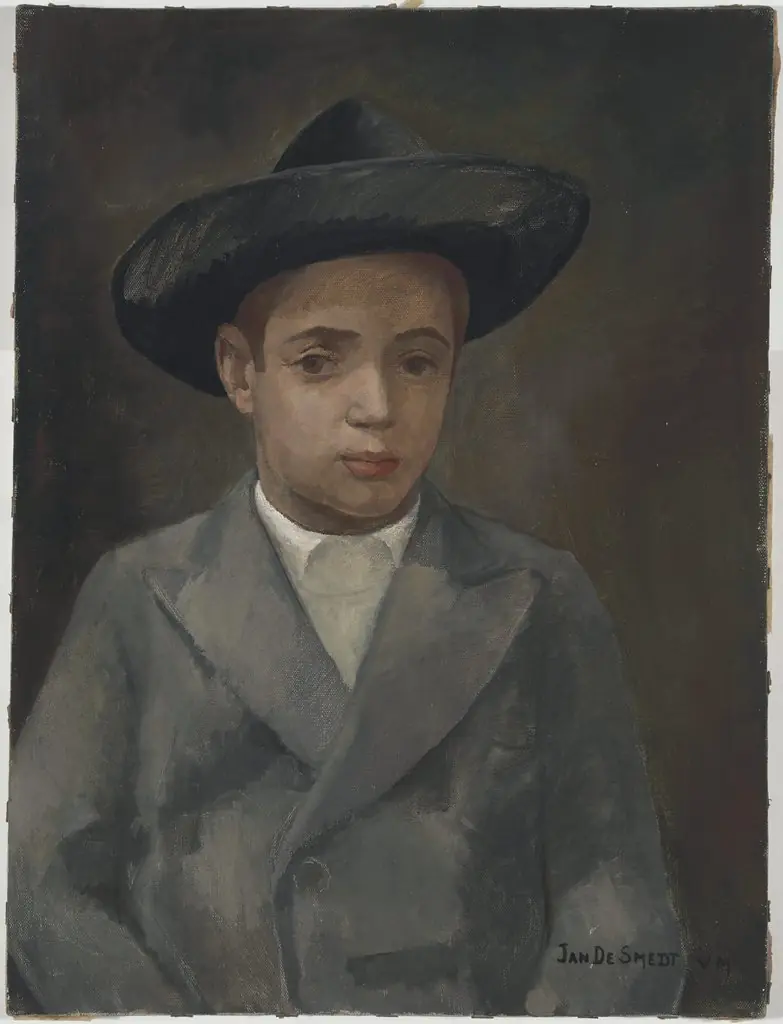
Louis Guillaume, the son of Cézanne’s friends and childhood companion of the artist’s son, is shown seated on a chair, his figure rendered as a boy in a black schoolboy’s blouse with a white cravat. The portrait presents an expressionless, almost vacant face, with black hollow eyes and a lifeless body, emphasizing a cool detachment that critics compare to the treatment of apples in Cézanne’s still‑lifes. Subdued greys, whites and dark greens create a sombre tone, while subtle highlights on the cheeks and the delicate folds of the cravat suggest both the “abyss between human beings” and a faint hope of connection.
The composition, noted for its sculptural solidity and vertical lines, anticipates Matisse and reflects Cézanne’s blend of portraiture with still‑life formalism.
History & Provenance
The painting was exhibited in Dale's New York collection before its donation and has remained on permanent display at the National Gallery of Art since 1963.
Louis Guillaume was painted by Paul Cézanne in 1882 as an oil on canvas portrait of the son of friends of the artist, who was himself a childhood friend of Cézanne's son Paul. By 1906 the work had entered the stock of the Parisian dealer Ambroise Vollard (1866–1939), as recorded in Vollard's stock book entries cited in John Rewald's catalogue raisonné (no. 421). Around 1904–1907 Vollard sold the painting to the Florentine collector Egisto Fabbri (1866–1933).
It subsequently passed through the London, New York, and Paris galleries of Wildenstein & Co., from which it was purchased on 14 December 1927 by the New York banker and collector Chester Dale (1882–1962), as documented by a bill of sale preserved in the NGA Gallery Archives. Upon Dale's death the painting entered the National Gallery of Art in Washington, D.C. as a 1963 bequest, where it remains in the permanent collection.
The work, Paul Cézanne's Portrait of Louis Guillaume (c. 1882), is part of the National Gallery of Art's collection in Washington, D.C. It entered the museum by bequest from Chester Dale in 1963, having previously been owned by the dealer Ambroise Vollard, sold to Florentine collector Egisto Fabbri around 1904‑1907, and acquired from Vollard in 1927 by Dale. The painting was exhibited in Dale's New York collection before its donation and has remained on permanent display at the National Gallery of Art since 1963. Its current inventory is listed under the museum's accession records as a 1963 bequest, and it continues to be shown in the gallery's post‑Impressionist galleries.
Context
Scholars characterize this 1882 portrait as formally ahead of its time, noting its reduction of the head and body into simple, solid shapes that prefigure Henri Matisse's later developments. The work exhibits a cool detachment, with critics observing that Cézanne rendered the subject's head akin to a still-life object, specifically an apple. Meyer Schapiro described the figure's heavy-lidded eyes as lacking spiritual light, belonging instead to a world of shadow.
Despite this austerity and the uncommunicative, immobile presentation, the painting contains subtle signs of connection through delicately rendered tones in the cheeks and clothing folds. The composition, utilizing low-key greys, whites, and dark greens, has been compared to the Spanish School. Art historically, the piece represents a complex abstraction within Post-Impressionism, balancing an apparent abyss between human beings with hopeful ornamental details.
Legacy
The 1882 portrait of Louis Guillaume, held in the National Gallery of Art, became a touchstone for Cézanne’s evolving abstraction. After being stocked by Ambroise Vollard in 1906 and acquired from Florentine collector Egisto Fabbri in 1907, the work entered the collection of Chester Dale, who bequeathed it to the National Gallery of Art in 1963. Critics such as Meyer Schapiro highlighted its detached, sculptural rendering, noting the “abyss between human beings” that the painting conveys.
Its formal simplification of head and body anticipated the compositional strategies later adopted by Henri Matisse, who cited Cézanne’s treatment of the sitter as a model for his own explorations. The painting’s permanent display underscores its role in shaping the legacy of Cézanne’s portraiture.
Overview
Painted in 1884, 'Louis Guillaume' is an oil-on-canvas portrait by Paul Cézanne depicting the sitter seated in a wooden chair against a dark, indistinct background. The subject, a close friend of the artist, is shown in a three-quarter view, dressed in simple, dark clothing that contrasts with the lighter tones of his face and hands. Cézanne employs a restrained palette dominated by earthy browns, ochres, and muted greens, applying paint in distinct, rhythmic brushstrokes that build form through color modulation rather than traditional chiaroscuro.
The composition is tightly framed, focusing attention on the sitter's direct, steady gaze and the structural solidity of his figure. Created during a pivotal period in Cézanne's career as he moved away from Impressionism toward a more analytical approach to form, this work exemplifies his interest in capturing the psychological presence of the sitter alongside the geometric underpinnings of the composition. It is one of several portraits Cézanne made of Louis Guillaume, reflecting their enduring personal connection and the artist's sustained exploration of portraiture as a means to investigate the relationship between the human figure and the surrounding space.
Technique & Style
Cézanne rendered this portrait using oil paints on canvas, applying simple colors to evoke a quiet and introspective mood. The composition focuses on the seated figure, whose direct posture and gaze are central. The artist's approach to color and form in this piece reflects a deliberate simplification, characteristic of his evolving style during this period, aiming to convey the subject's presence without elaborate detail.
Own this work as a print
Artist & collection

Artist
Paul Cézanne ( say-ZAN, UK also siz-AN, US also say-ZAHN; French: ; Occitan: Pau Cesana; 19 January 1839 – 22 October 1906) was a French Post-Impressionist painter whose work introduced new modes of representation,…

 Harlequin
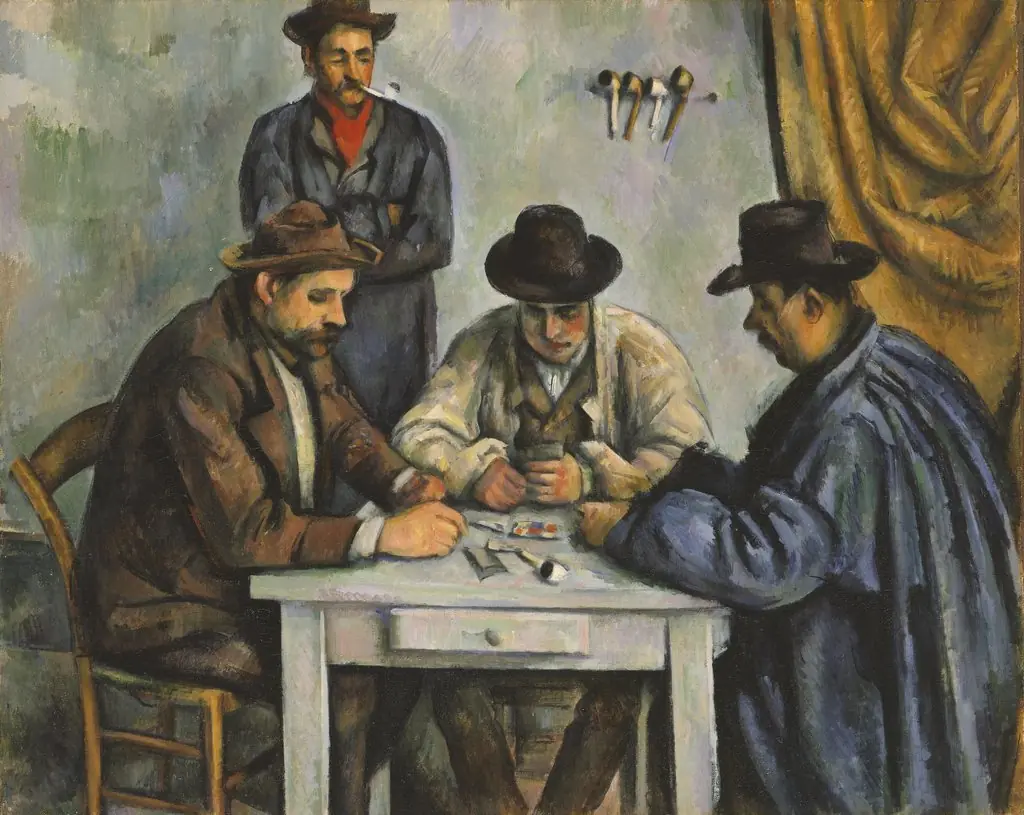 The Card Players
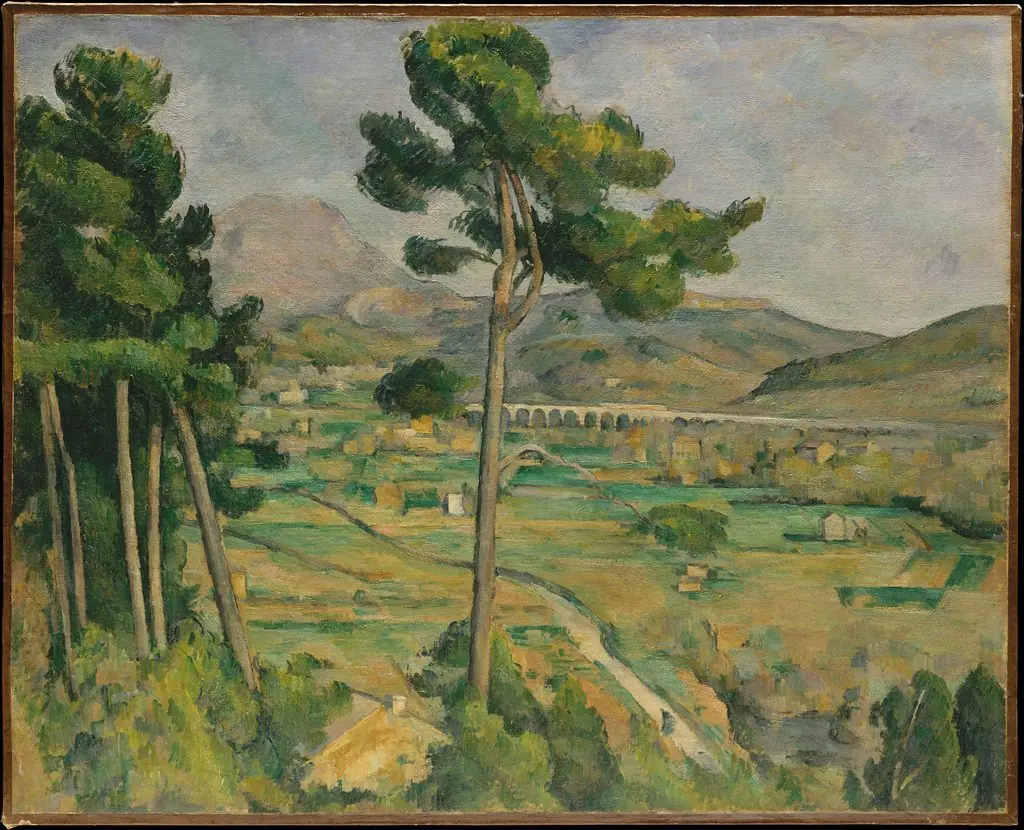 Mont Sainte-Victoire and the Viaduct of the Arc River Valley
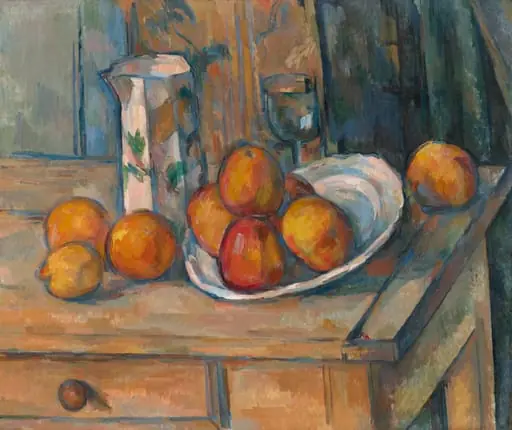 Still Life with Milk Jug and Fruit
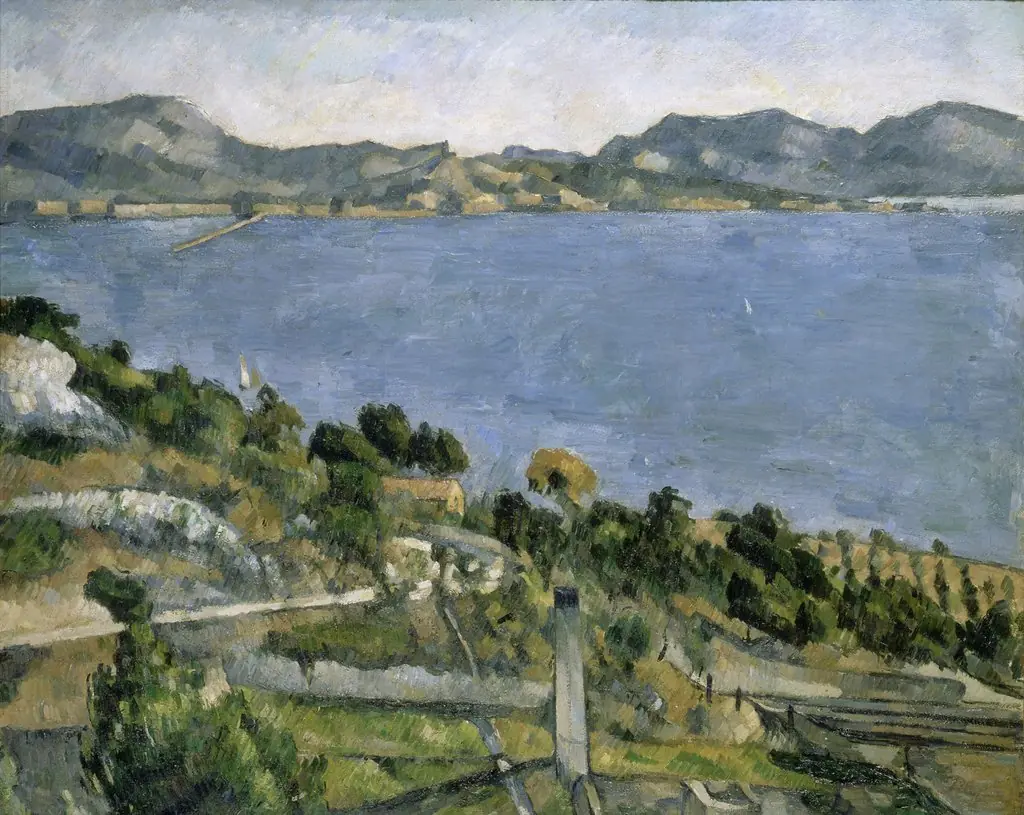 Le Golfe de Marseille vu de l'Estaque (The Gulf of Marseille Seen from L'Estaque)
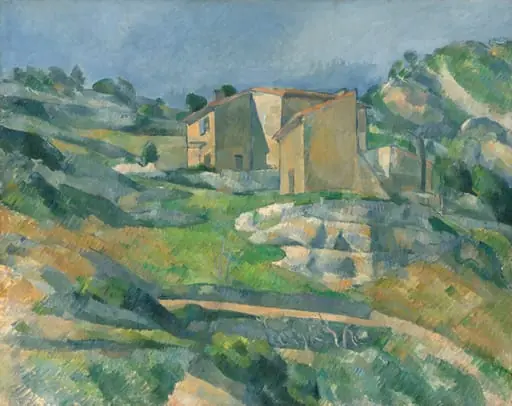 Houses in Provence: The Riaux Valley near L'Estaque
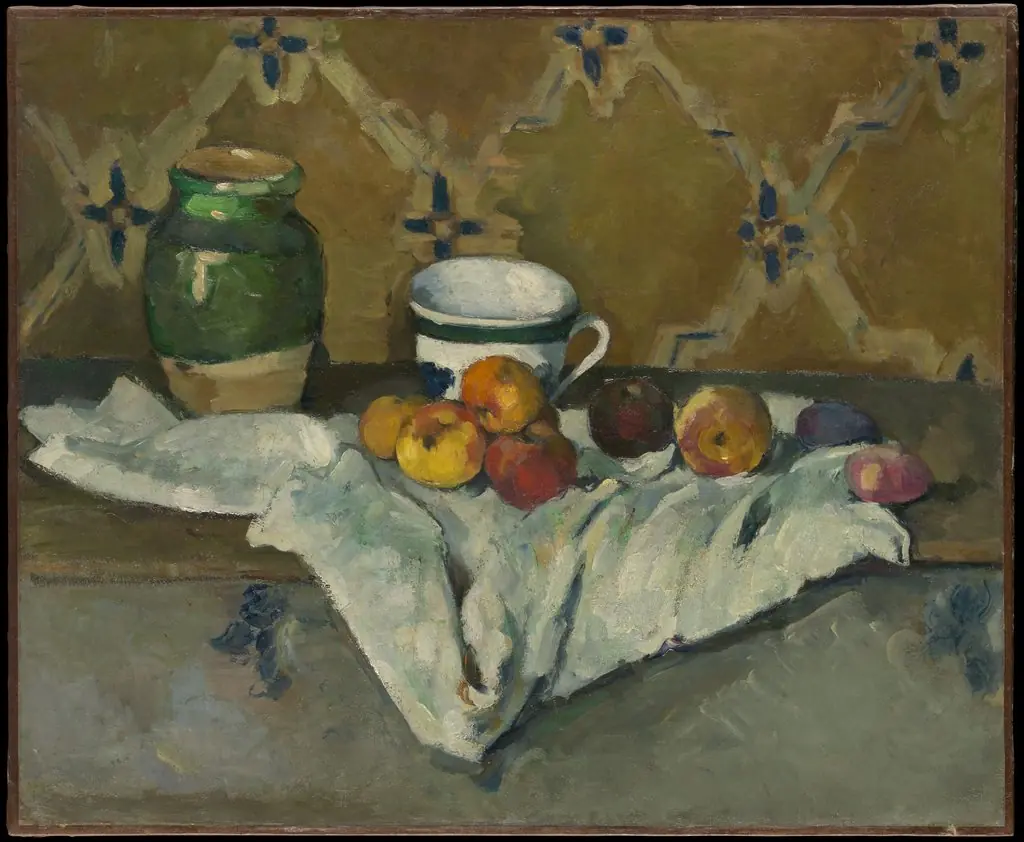 Still Life with Jar, Cup, and Apples
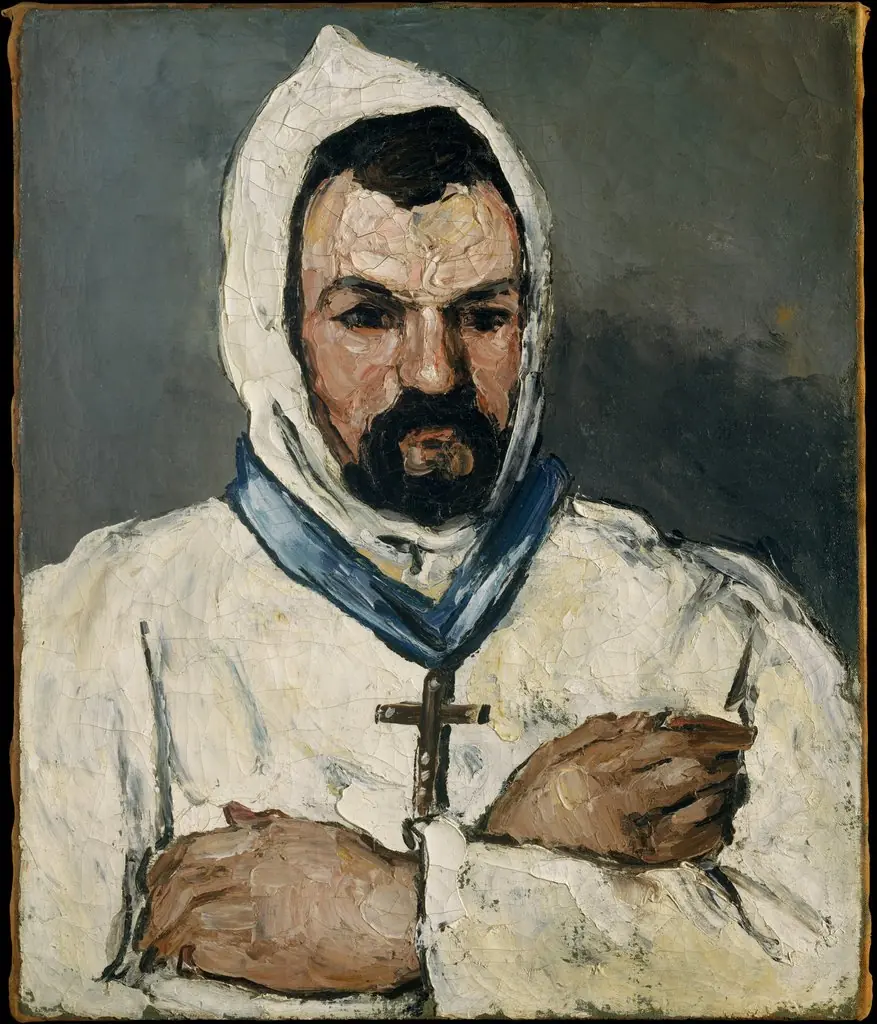 Portrait d'un moine (Monk's Portrait)