Artwork
Houses in Provence: The Riaux Valley near L'Estaque
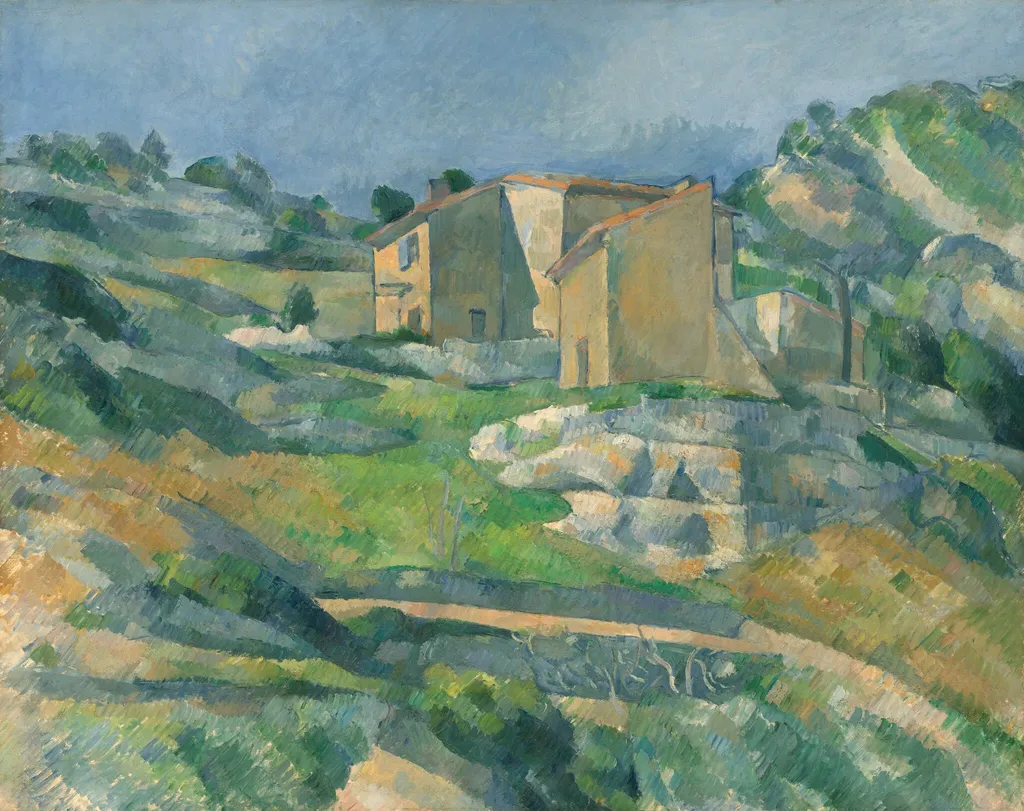
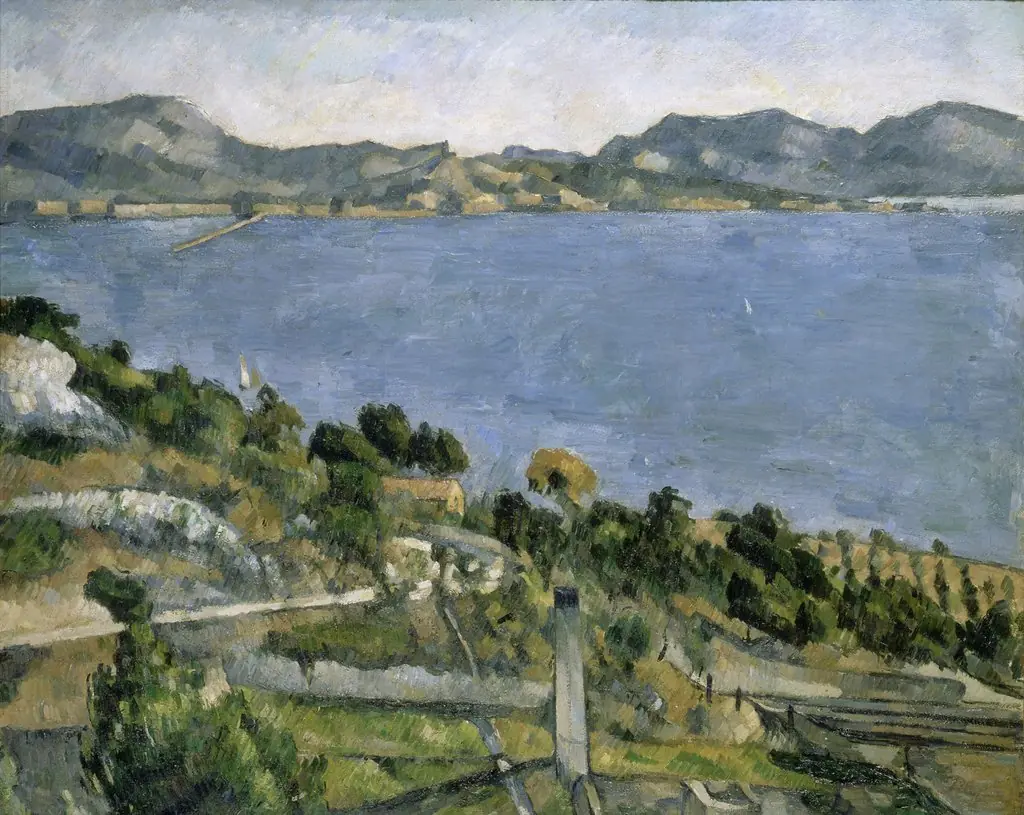
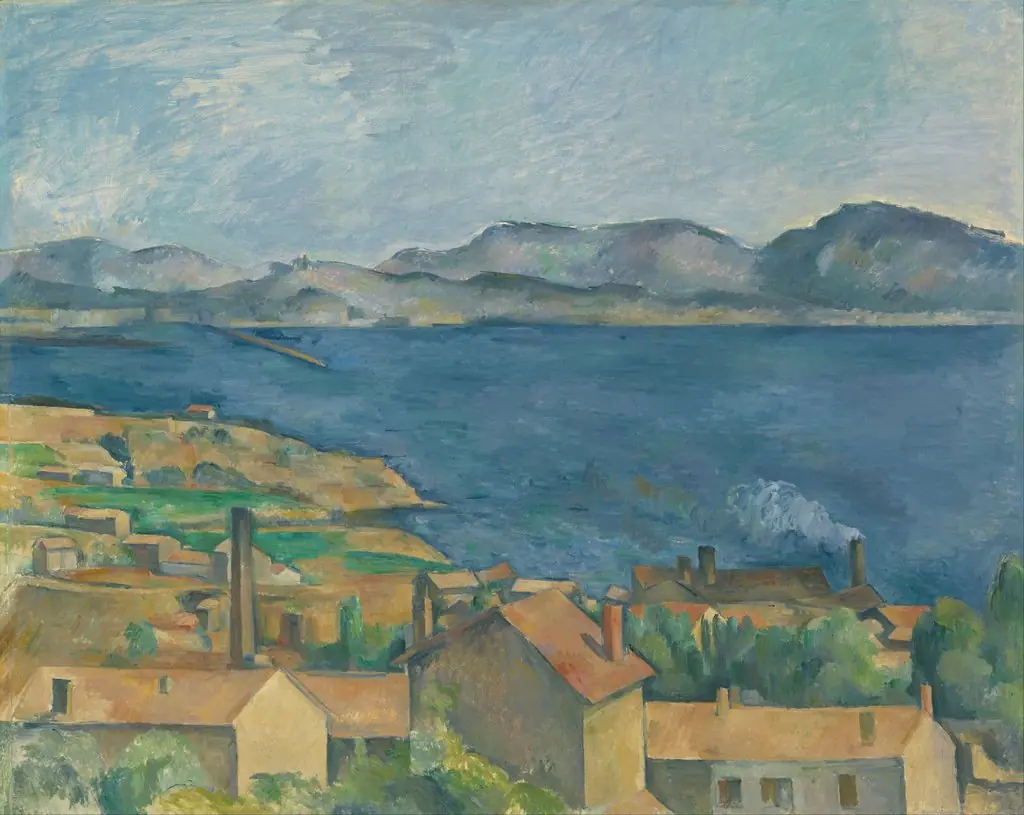
Houses in Provence: The Riaux Valley near L'Estaque is an oil painting by the Impressionist artist Paul Cézanne. It dates from 1883 and is held in the collection of the National Gallery of Art.
About this work
Technique & Style
The formal composition emphasizes geometric simplification of natural forms and a balanced arrangement of architectural and natural elements.
The painting is executed in oil on canvas, a medium typical of Cézanne’s mature landscape practice, and is supported by a rectangular canvas of dimensions 65 cm by 81.3 cm. The work belongs to the landscape genre and portrays a house, a tree, and a mountain in the Riaux Valley near L'Estaque, reflecting Cézanne’s interest in structured spatial relationships and the modulation of color through layered brushwork. The formal composition emphasizes geometric simplification of natural forms and a balanced arrangement of architectural and natural elements. No specific information regarding the current condition or handling history is recorded in the documented provenance.
History & Provenance
The oil on canvas landscape Houses in Provence: The Riaux Valley near L'Estaque was painted by Paul Cézanne in 1883. Its early ownership passed from Ambroise Vollard, who obtained the work from Egisto Fabbri by 1920, to the dealer Paul Rosenberg et Cie. around 1928. By circa 1930 the painting was owned by art dealer Marius de Zayas and his wife Virginia Harrison, later inheriting to Virginia after Zayas's death.
It was sold at Parke‑Bernet Galleries in New York on 14 October 1965 (lot 92) to Paul Mellon, who subsequently gifted the work to the National Gallery of Art in Washington, D.C., in 1973. No record of a specific commission is documented in the provenance.
Overview
Painted in 1883, Houses in Provence: The Riaux Valley near L'Estaque depicts a cluster of rustic dwellings nestled within a rugged valley landscape near the village of L'Estaque in southern France. Executed in oil on canvas, the work is characterized by Cezanne's distinctive approach to structure and form, where the houses and surrounding foliage are rendered through distinct, directional brushstrokes that build volume rather than merely describing surface detail. The composition organizes the scene into interlocking planes of color, utilizing a palette of earthy ochres, greens, and blues to articulate the spatial relationships between the architecture, the vegetation, and the distant mountains.
This period marks a pivotal moment in Cezanne's career, as he moved away from the fleeting effects of Impressionism toward a more solid, architectural conception of nature. By treating natural forms as cylinders, spheres, and cones, the artist sought to achieve a sense of permanence and order within the landscape. The painting exemplifies his ongoing investigation into how color modulation can create depth and structure without relying on traditional linear perspective or chiaroscuro, laying the conceptual groundwork for the development of Cubism in the early twentieth century.
Subject & Meaning
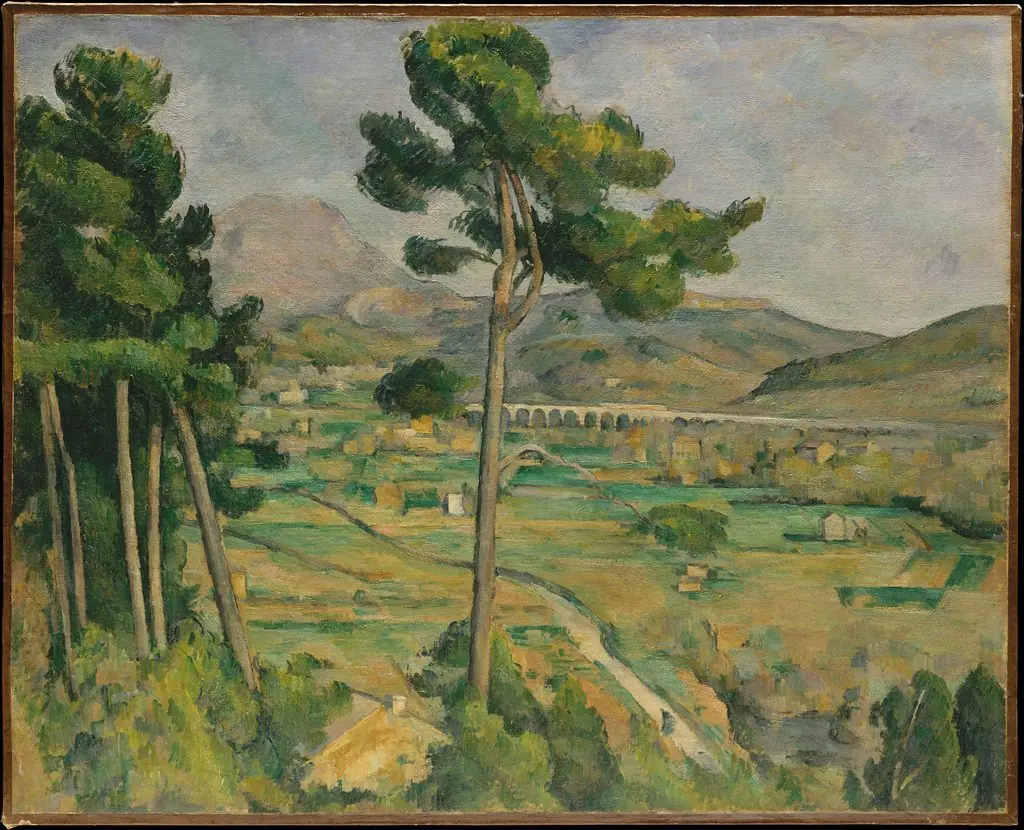
The painting presents a tranquil view of the Riaux Valley, featuring dwellings nestled among trees, with a mountain rising in the background. Despite the apparent simplicity of its subject matter, the composition allowed the artist to concentrate on fundamental visual problems. The focus remains on the structural elements of the landscape rather than narrative content.
Own this work as a print
Artist & collection

Artist
Paul Cézanne ( say-ZAN, UK also siz-AN, US also say-ZAHN; French: ; Occitan: Pau Cesana; 19 January 1839 – 22 October 1906) was a French Post-Impressionist painter whose work introduced new modes of representation,…