Artwork
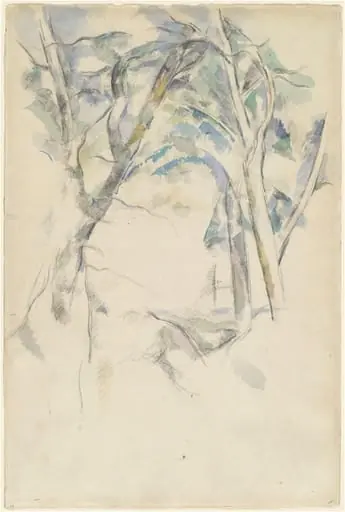
Footpath in the Woods
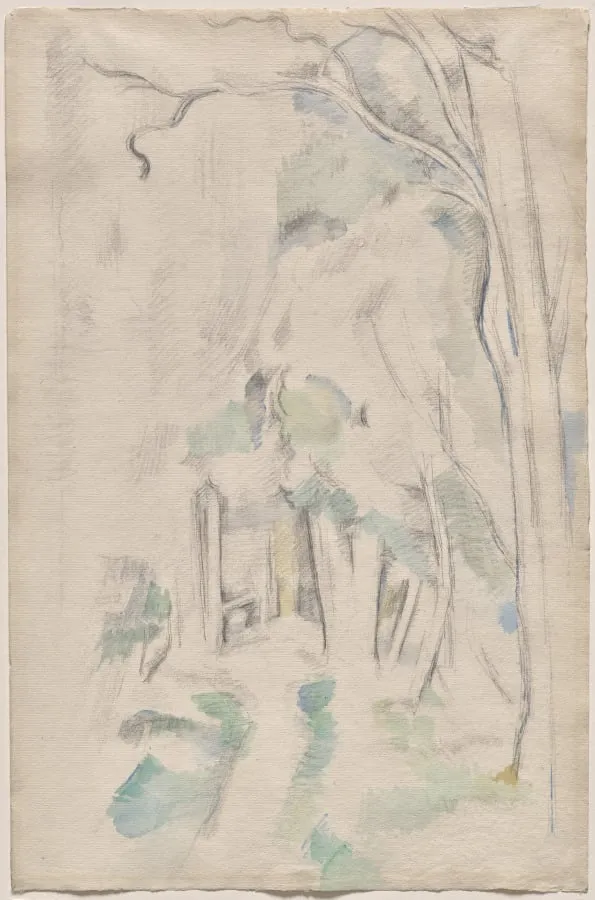
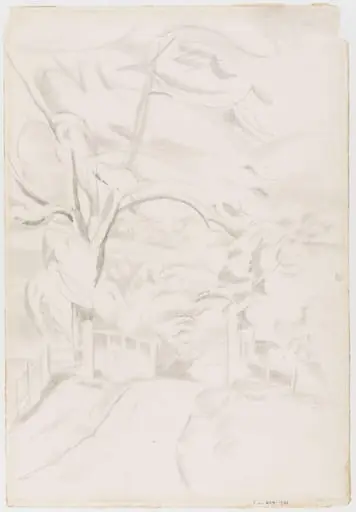
Footpath in the Woods is a drawing by the Impressionist artist Paul Cézanne. It dates from 1883 and is held in the collection of the Cleveland Museum of Art.
- Accession no.
- 2021.165
- Credit line
- Leonard C. Hanna Jr. Fund
About this work
Overview
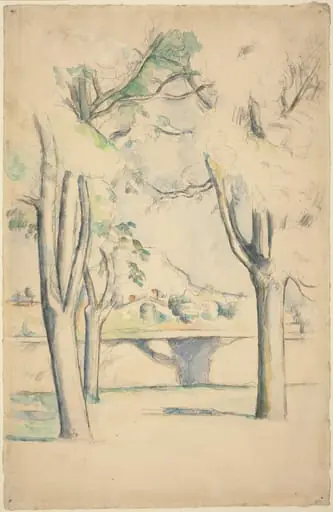
Footpath in the Woods is a drawing by Paul Cézanne, created using a combination of graphite and watercolor on paper. The work depicts a serene landscape scene.
Subject & Meaning
The drawing shows a winding path through tall chestnut trees at the Jas de Bouffan, Cézanne's family estate near Aix-en-Provence. Cézanne favored timeless subjects like landscape, using the natural setting to explore composition and structure.
Technique & Style
Cézanne employed a range of techniques, including graphite lines and muted watercolor washes, alongside leaving areas of the paper blank to convey sunlight and depth. His methodical, constructive approach to mark-making built a cohesive, three-dimensional representation of the woods.
Context
Watercolor was a medium Cézanne used throughout his career for experimentation and developing new ideas, allowing him to explore different techniques and effects.
Artist & collection

Artist
Paul Cézanne ( say-ZAN, UK also siz-AN, US also say-ZAHN; French: ; Occitan: Pau Cesana; 19 January 1839 – 22 October 1906) was a French Post-Impressionist painter whose work introduced new modes of representation,…

 Harlequin
 The Card Players
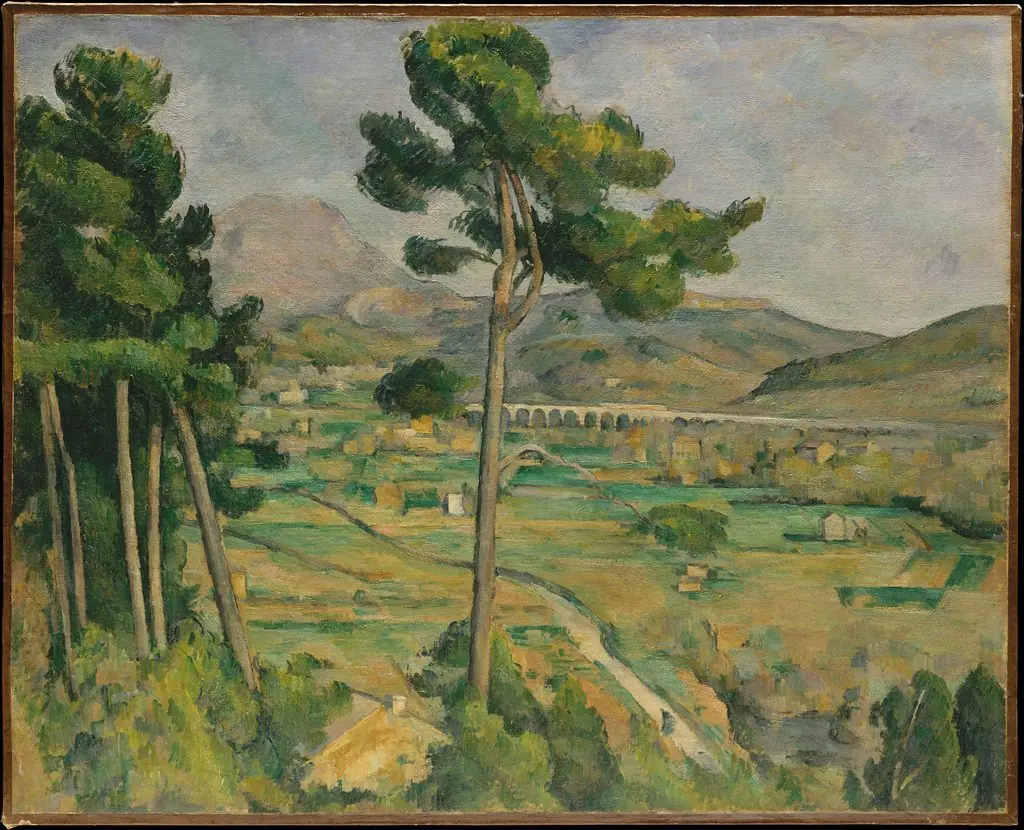 Mont Sainte-Victoire and the Viaduct of the Arc River Valley
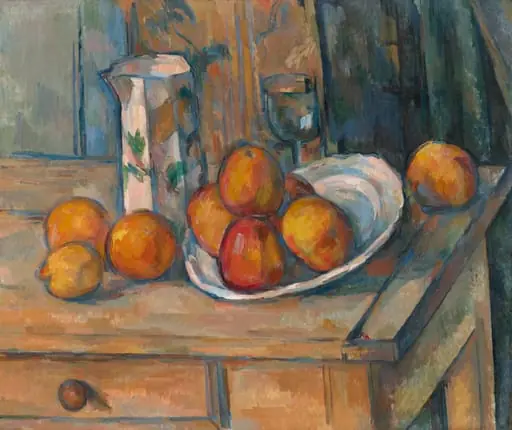 Still Life with Milk Jug and Fruit
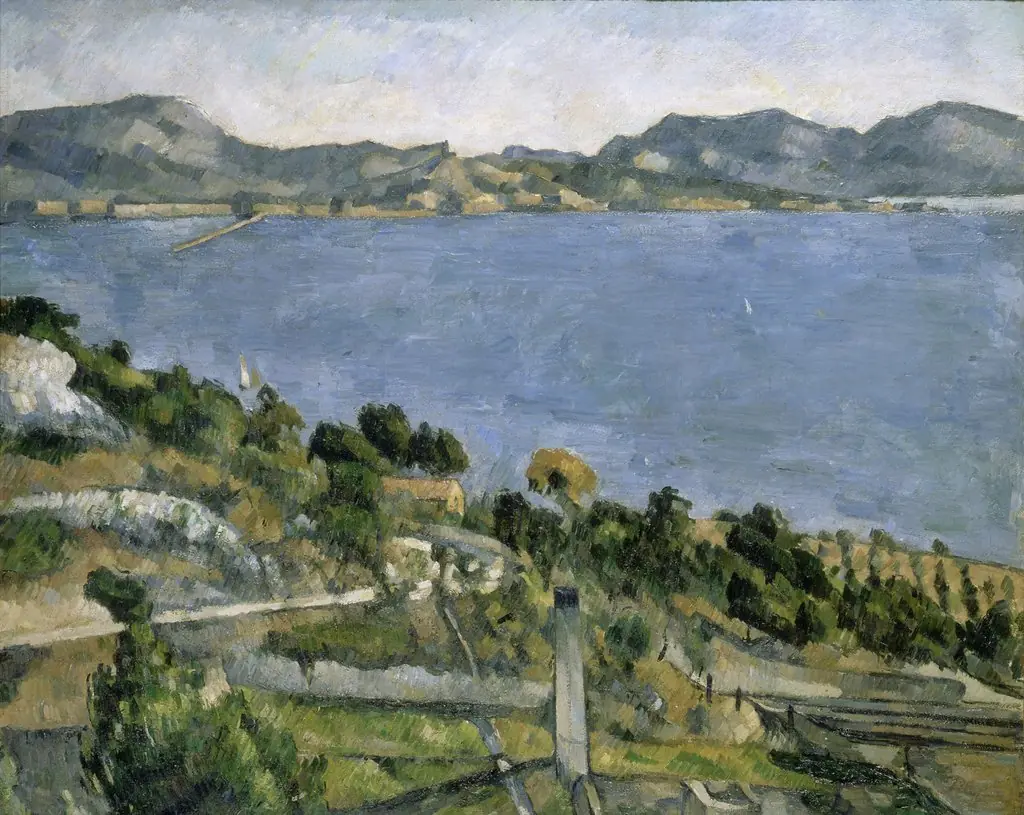 Le Golfe de Marseille vu de l'Estaque (The Gulf of Marseille Seen from L'Estaque)
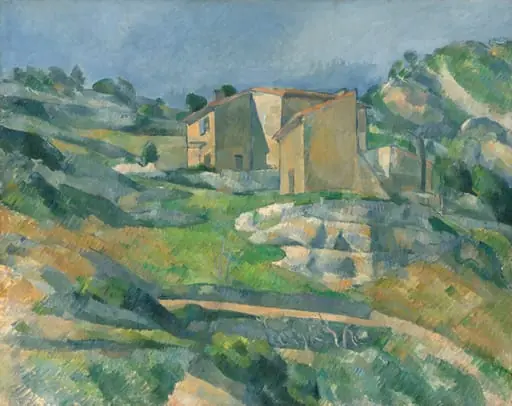 Houses in Provence: The Riaux Valley near L'Estaque
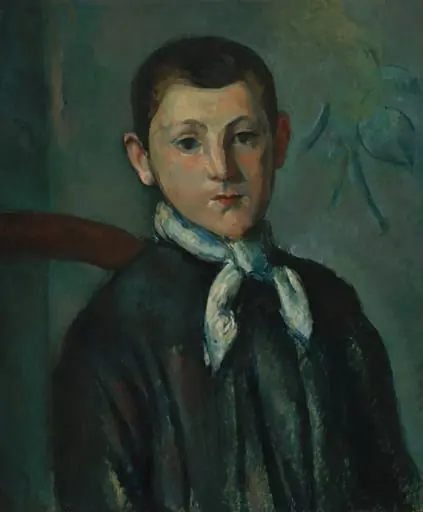 Louis Guillaume
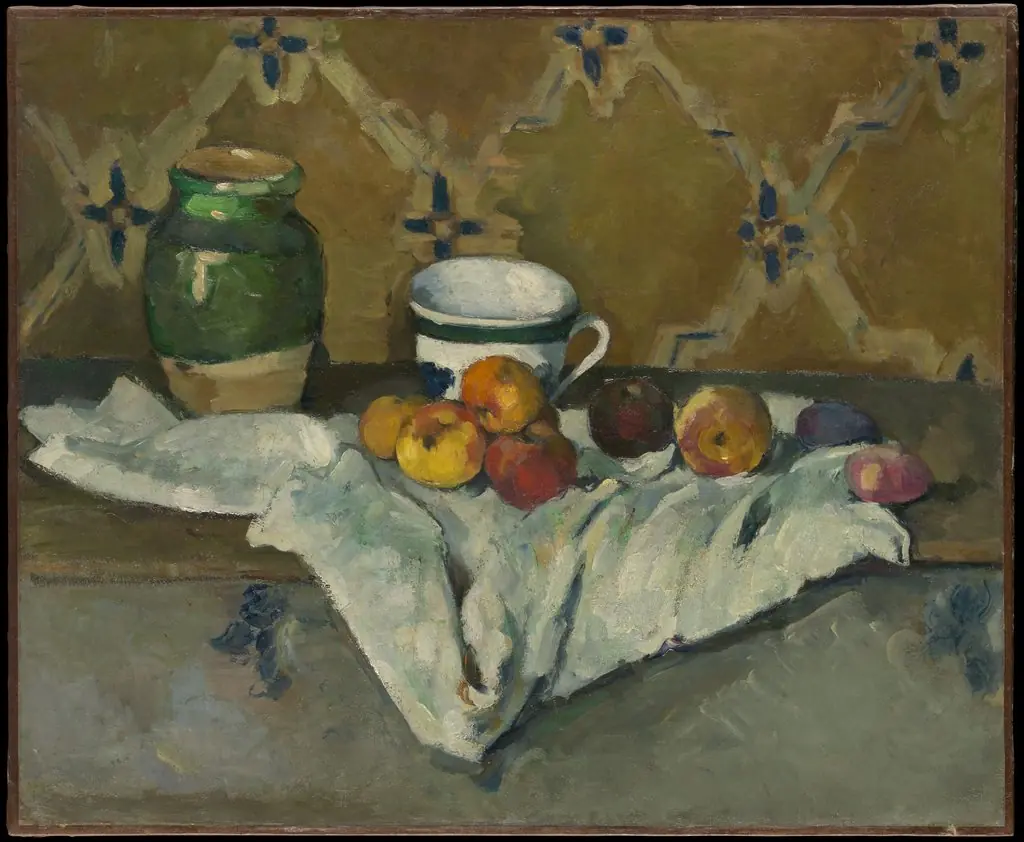 Still Life with Jar, Cup, and Apples
![The Little Bridge [recto], by Paul Cézanne](https://artifactworldgallery.com/img/paul-cezanne--the-little-bridge-recto--f3c8e2d05f6dc79e-w320.webp)