Artwork
Fighting Dogs
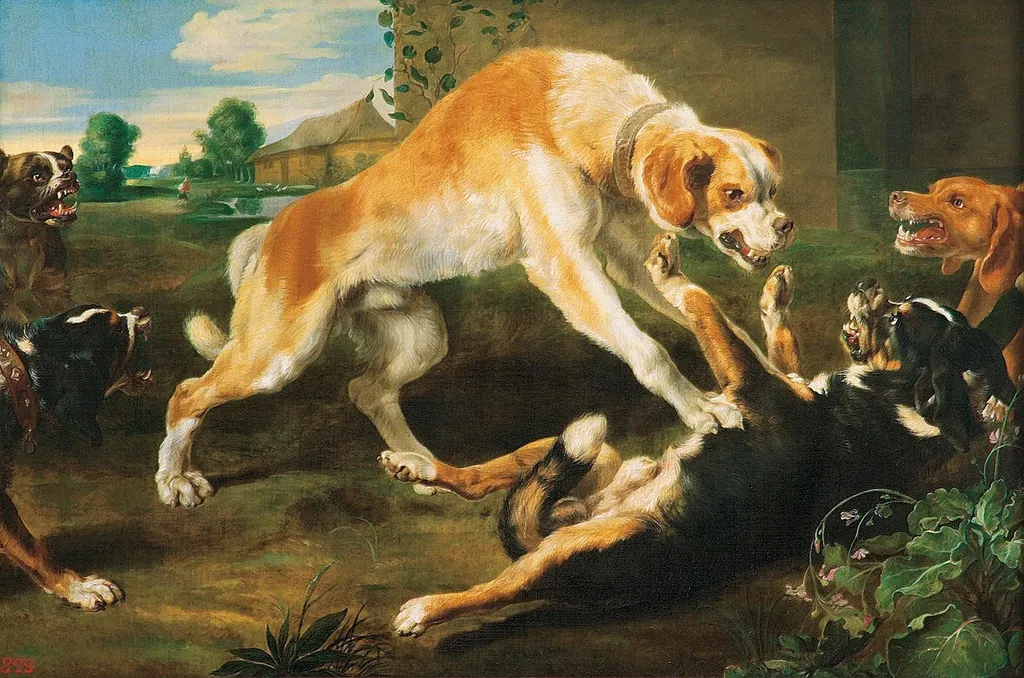
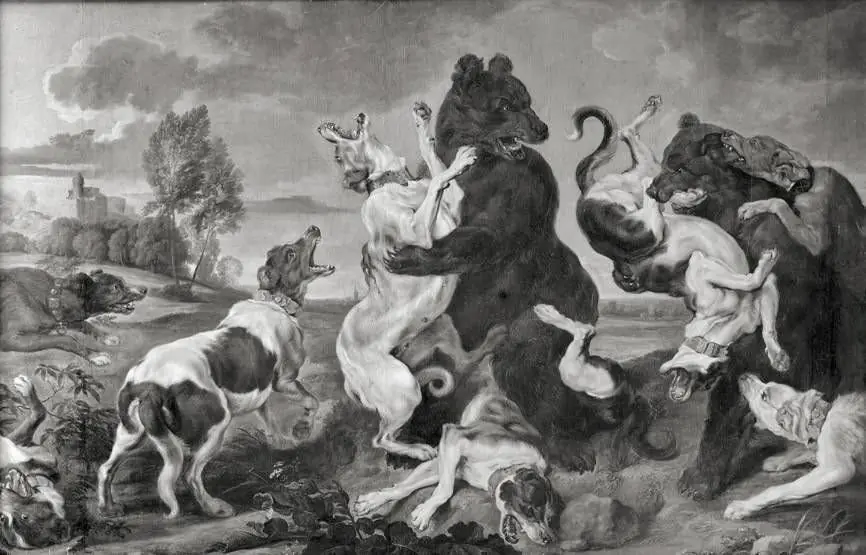
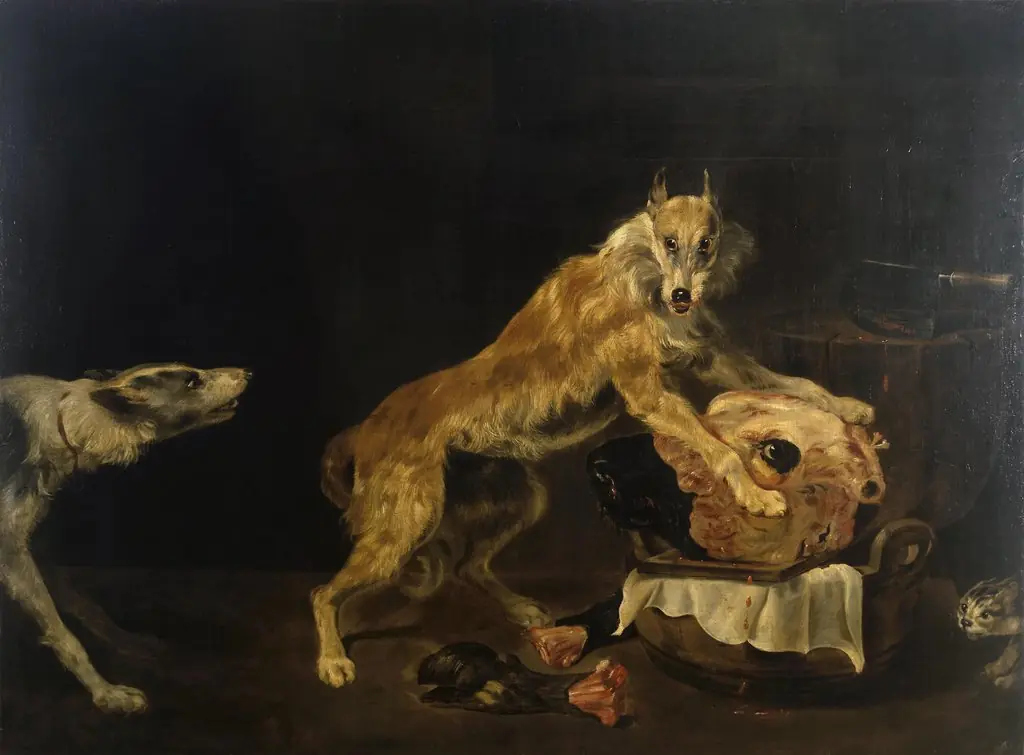
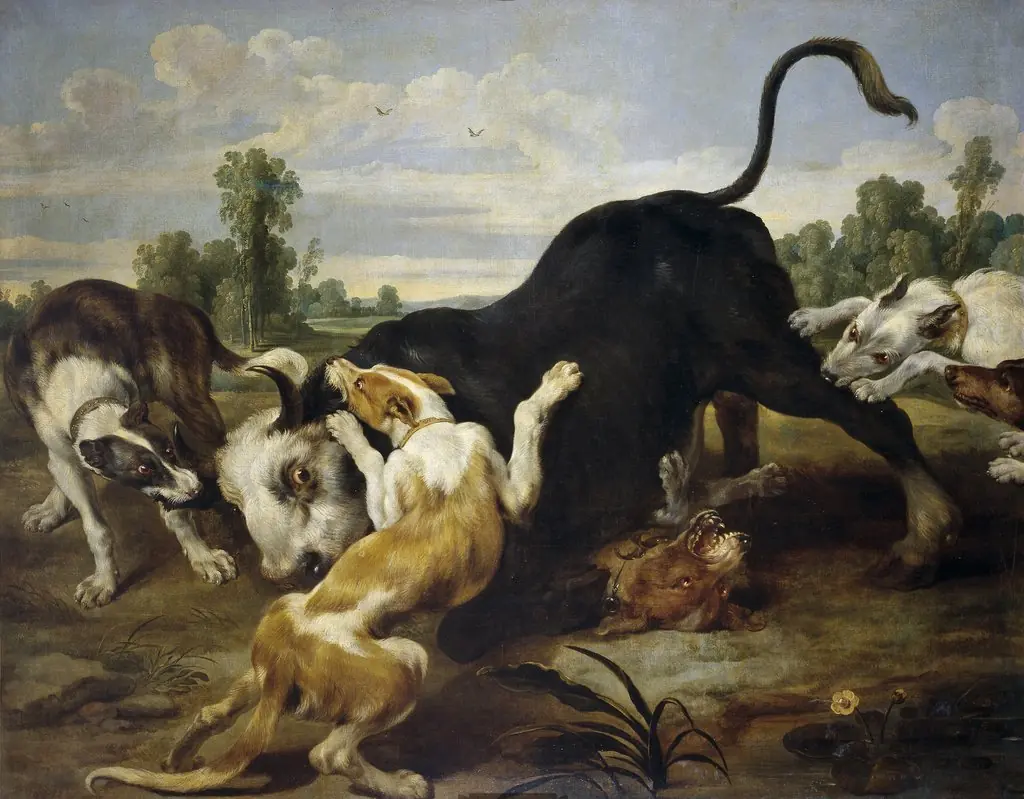
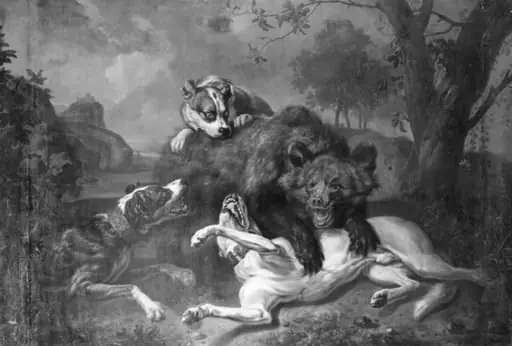
Fighting Dogs is an oil painting by the Flemish Baroque painting artist Paul de Vos. It is held in the collection of the Hermitage Museum.
About this work
Subject & Meaning
The painting depicts a violent confrontation between two dogs, emphasizing themes of aggression and primal struggle. It draws on Baroque conventions of animal combat scenes to symbolize power dynamics and untamed nature. The work reflects 18th-century European fascination with staged animal contests as metaphors for social and political tensions.
Technique & Style
The depiction of dog fighting is rendered with the energetic handling characteristic of early eighteenth-century Flemish animal art produced in Flanders.
Fighting Dogs is executed in oil paint on canvas, a standard Flemish Baroque support suited to the rich, layered handling typical of the period. The composition measures 115 cm in height by 172.5 cm in width, giving the scene a broad horizontal format that accommodates the dynamic confrontation between the hounds. Painted in 1700, the work belongs to the animal-painting genre, and its technique reflects the collaborative Flemish tradition associated with Paul de Vos and Frans Snyders, painters known for vigorous brushwork and dramatic animal subjects.
The depiction of dog fighting is rendered with the energetic handling characteristic of early eighteenth-century Flemish animal art produced in Flanders.
History & Provenance
The painting Fighting Dogs was created around 1700 in Flanders, attributed to Paul de Vos, with Frans Snyders also listed as a creator. After its completion, the work entered the collection of Heinrich von Brühl, a prominent Saxon statesman, whose ownership is recorded in the work’s provenance. Subsequently, the painting was acquired by the Hermitage Museum, where it remains today. No further details concerning the original commission or subsequent transfers are provided in the available sources.
Overview
Fighting Dogs, executed in oil in 1700, presents a turbulent encounter among five canines on a sun‑lit meadow. The composition centers on a large, light‑tan hound lunging forward, its teeth exposed, while two other dogs, one brown, one black, snarl nearby. Two smaller figures retreat toward the background, where a modest farmhouse and trees appear under a warm glow.
Context
Paul de Vos operated within the vibrant artistic milieu of early‑18th‑century Antwerp, often collaborating with leading figures such as Anthony van Dyck and Peter Paul Rubens. Though primarily known for hunting scenes, his animal studies like this one demonstrate his capacity to convey dynamic narratives through detailed observation of fauna.
Artist & collection
Artist
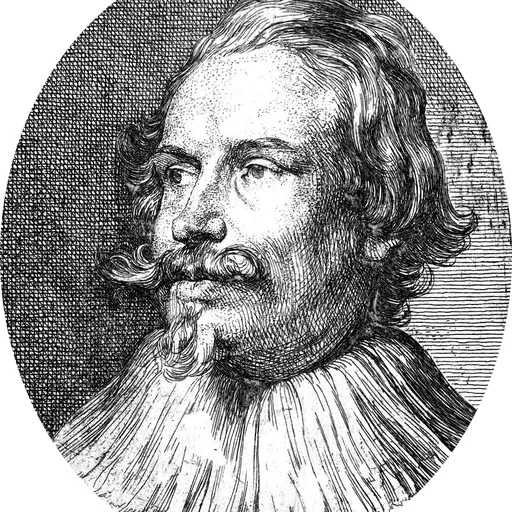
Paul de Vos (1591/92, or 1595 in Hulst – 30 June 1678 in Antwerp) was a Flemish Baroque painter who specialized in mainly in compositions of animals, hunting scenes and still lifes.