Artwork
Asiatic God
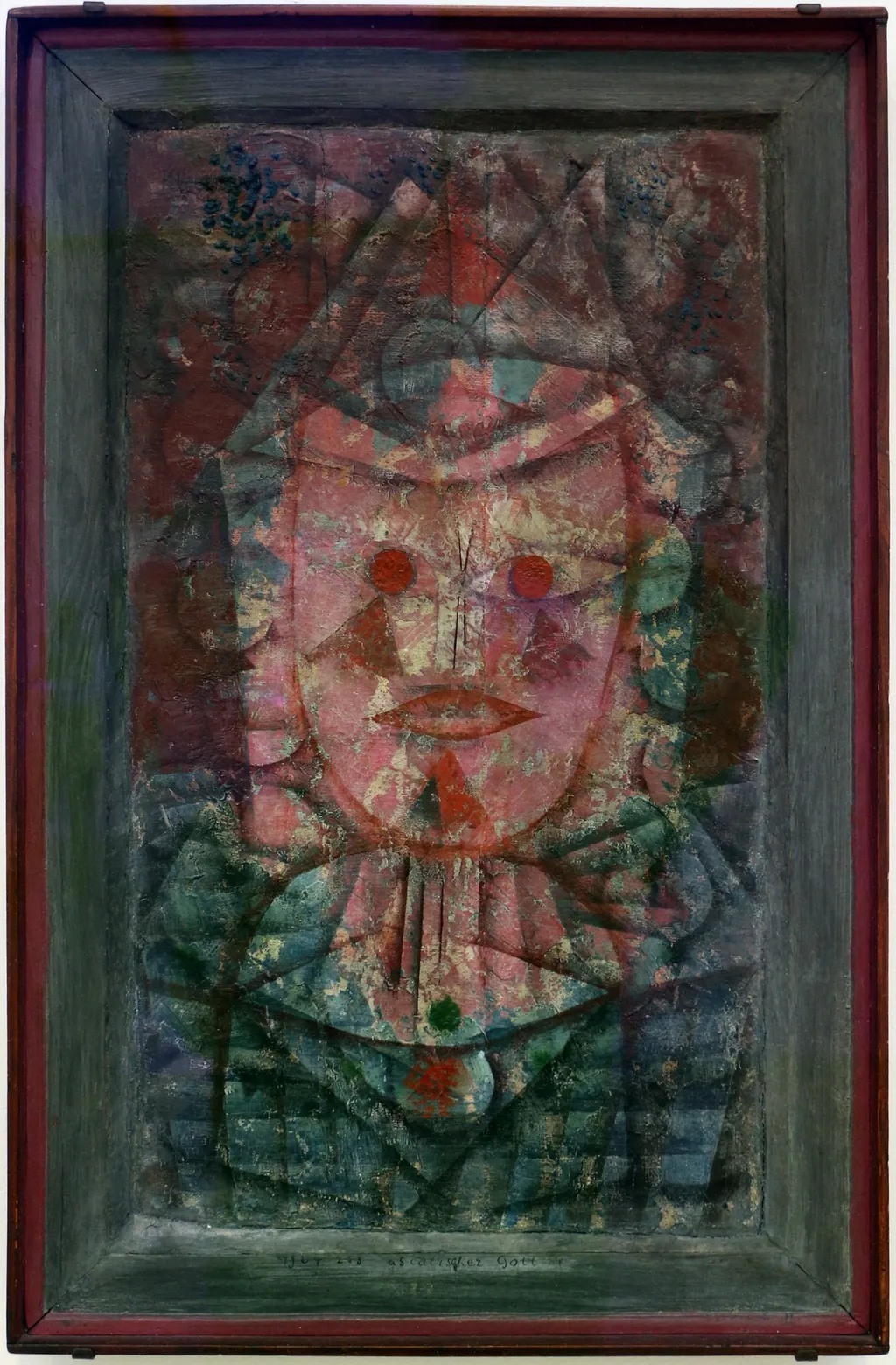
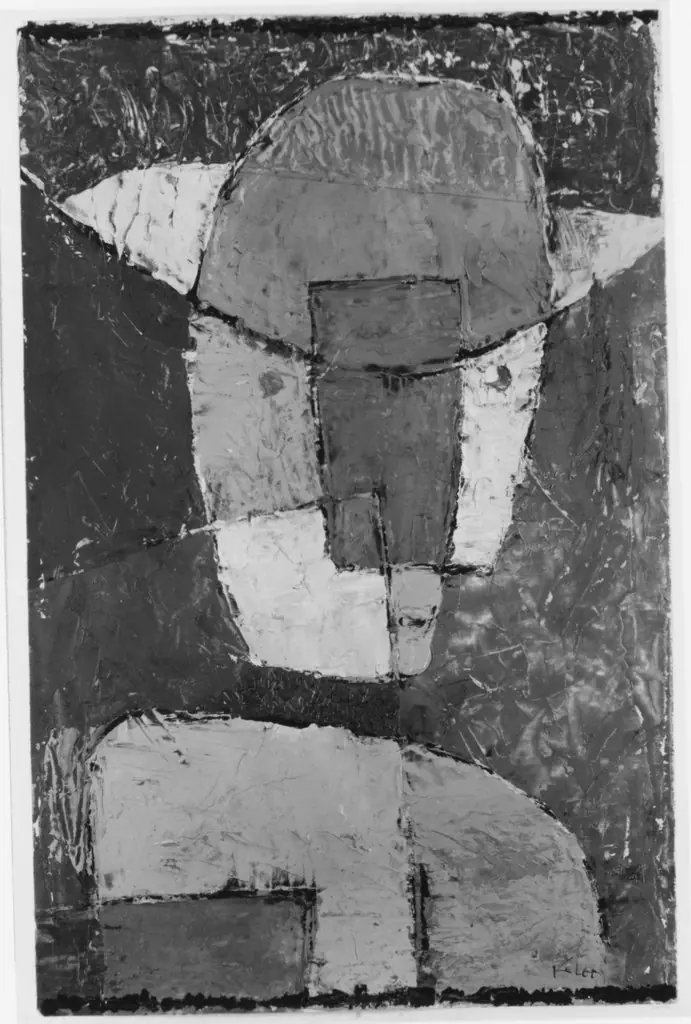
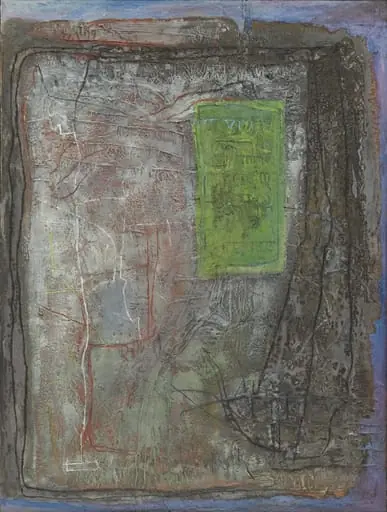
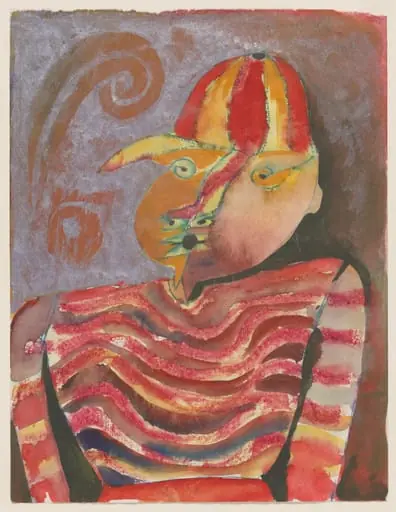
Asiatic God is an oil painting by the Bauhaus artist Paul Klee. It dates from 1924 and is held in the collection of the Art Institute of Chicago.
About this work
Overview
Created in 1924 by Swiss-German artist Paul Klee, Asiatic God is a plaster-based work that blends painting and relief.
Created in 1924 by Swiss-German artist Paul Klee, Asiatic God is a plaster-based work that blends painting and relief. Though classified as a painting, its textured, sculptural surface challenges traditional two-dimensionality. Klee employed plaster to build a fragmented, tactile face, emphasizing materiality over illusion.
The piece reflects his time at the Bauhaus, where he explored the interplay of form, color, and structure in new ways.
Subject & Meaning
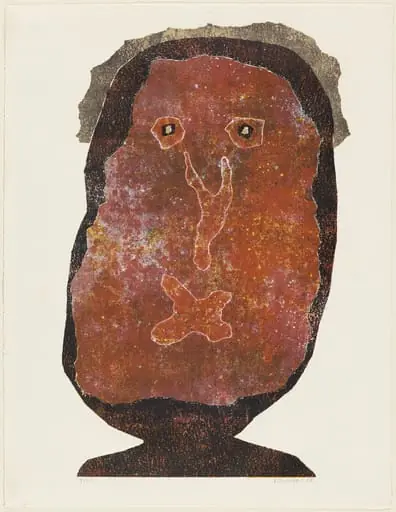
The work presents a stylized, abstracted face that evokes archetypal or mythic imagery without direct reference to any specific deity. Its geometric features, red circular eyes, a single black nasal line, and a thin mouth, suggest symbolic rather than naturalistic representation. The title Asiatic God hints at Klee’s interest in non-Western spiritual forms, though the figure remains enigmatic, inviting interpretation without fixed meaning.
Technique & Style
Klee built the face using layered plaster, creating a rough, uneven surface that resists smoothness. Colors are applied in flat, unblended patches, green, brown, and red, each confined to distinct planes. The effect resembles assembled fragments, as if the face were constructed from broken tiles or carved blocks. This method aligns with his broader exploration of modular composition and tactile texture over conventional brushwork.
History & Provenance
Produced during Klee’s tenure at the Bauhaus, Asiatic God emerged from a period of intense theoretical inquiry into visual language. It entered the Art Institute of Chicago’s collection in the mid-20th century, where it remains part of a significant grouping of Klee’s experimental works. Its preservation reflects institutional recognition of his contributions to modernist material innovation.
Context
In the early 1920s, Klee was deeply engaged with Bauhaus pedagogy, developing theories on color and form that influenced generations of artists. Asiatic God reflects his interest in synthesizing abstraction with symbolic content, drawing from diverse sources including Islamic art, children’s drawings, and non-European iconography. The work stands as a quiet counterpoint to the era’s more overtly political or industrial aesthetics.
Legacy
The piece exemplifies Klee’s unique position between painting and sculpture, influencing later artists who explored materiality and non-traditional surfaces. Its fragmented, hand-built quality prefigured aspects of Arte Povera and postwar assemblage practices. While not widely reproduced, it remains a key example of how Klee transformed humble materials into meditative, symbolic forms.
Own this work as a print
Artist & collection
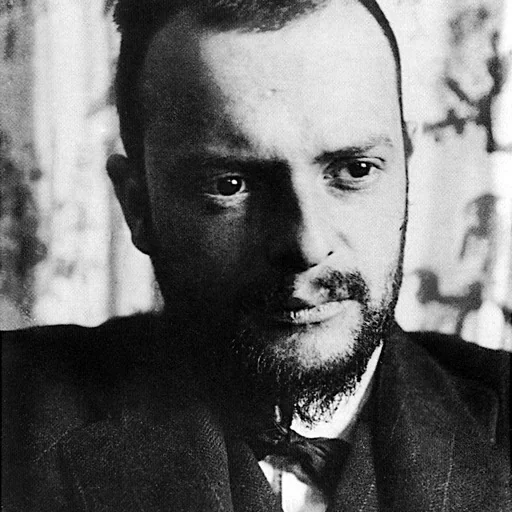
Artist
Paul Klee (German:; 18 December 1879 – 29 June 1940) was a Swiss-born German artist.