Artwork
Landscape with a Castle (fresco from the Painted Dining Room, Drakelowe Hall)
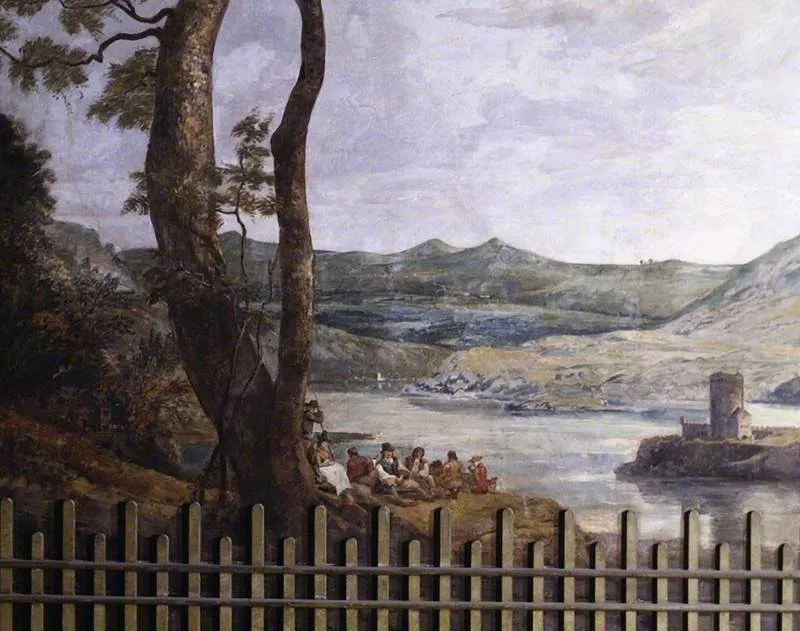
Landscape with a Castle (fresco from the Painted Dining Room, Drakelowe Hall) is an unspecified painting by the British Romanticist artist Paul Sandby. It dates from 1797 and is held in the collection of the Victoria and Albert Museum.
About this work
Overview
As a founding member of the Royal Academy, Sandby brought his experience as a topographical draftsman to this decorative work.
Created in 1797, Landscape with a Castle is a fresco painted by Paul Sandby for the dining room at Drakelowe Hall. As a founding member of the Royal Academy, Sandby brought his experience as a topographical draftsman to this decorative work. The piece was later transferred to the Victoria and Albert Museum, where it remains as part of a broader collection of British decorative arts from the late 18th century.
Subject & Meaning
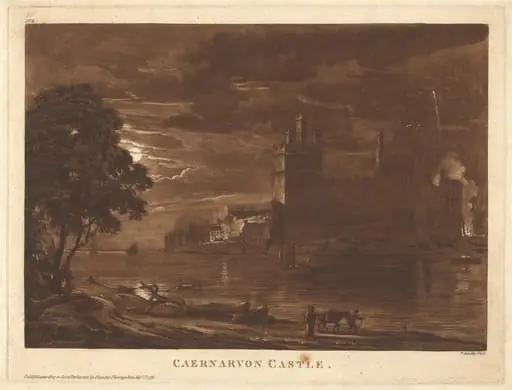
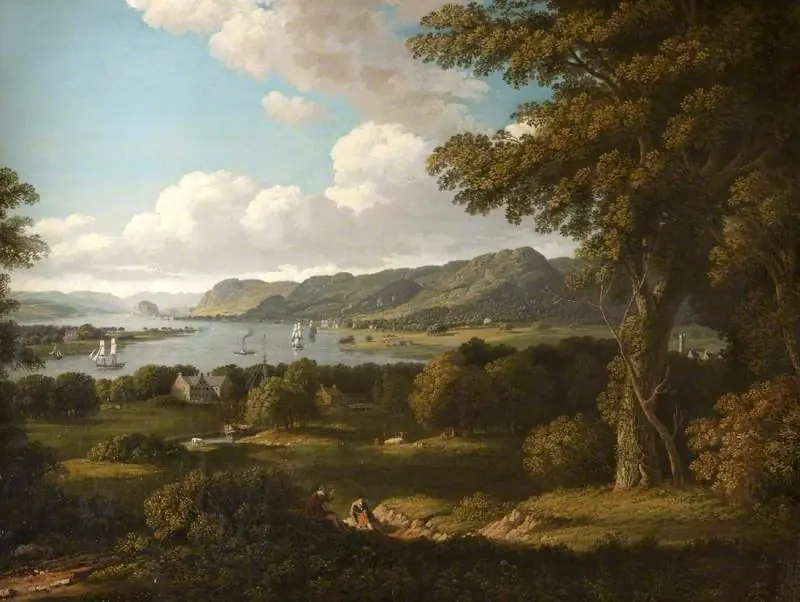
The fresco presents a tranquil rural scene with a distant castle nestled among rolling hills and distant mountains. A large tree anchors the left foreground, while figures rest near a body of water, suggesting quiet leisure. The composition avoids narrative drama, instead emphasizing harmony between human presence and the natural environment, reflecting a contemplative ideal common in late Georgian landscape sensibilities.
Technique & Style
Executed as a fresco, the work employs water-based pigments applied to wet plaster, a method demanding precision. Sandby’s background in surveying informs the careful spatial organization. The palette is restrained, dominated by muted greens, earthy browns, and soft grays, creating a subdued, atmospheric tone. Brushwork is deliberate but unobtrusive, favoring quiet realism over dramatic effect.
History & Provenance
Commissioned for Drakelowe Hall, the fresco was part of a decorative scheme intended to elevate domestic space through landscape imagery. After the hall’s decline, the fresco was carefully removed and preserved. It entered the Victoria and Albert Museum’s collection in the 20th century, where it is now studied as an example of applied art in domestic interiors during the Romantic era.
Context
In the late 18th century, British country houses increasingly incorporated landscape decoration to reflect Enlightenment ideals of nature and order. Sandby’s work aligns with this trend, blending topographical accuracy with poetic restraint. His dual role as mapmaker and artist positioned him uniquely to translate surveyed landscapes into decorative compositions suited to aristocratic interiors.
Legacy
Though not widely exhibited, the fresco exemplifies Sandby’s contribution to the transition from topographical drawing to expressive landscape art in Britain. It illustrates how scientific precision and aesthetic sensitivity coexisted in the period’s visual culture. The work remains a quiet testament to the integration of art into everyday domestic life during the early Romantic age.
Artist & collection
Artist
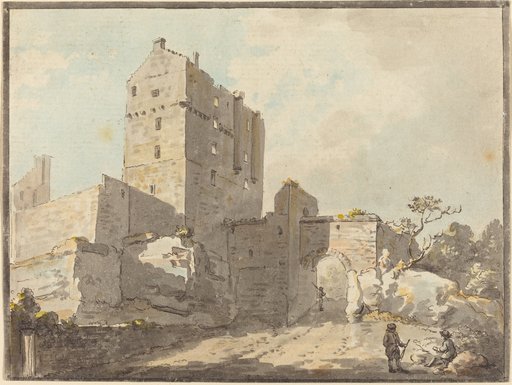
Paul Sandby, (1731 – 7 November 1809) was an English mapmaker and painter who specialised in landscape art. Along with his older brother Thomas Sandby, he was one of the founding members of the Royal Academy in 1768.

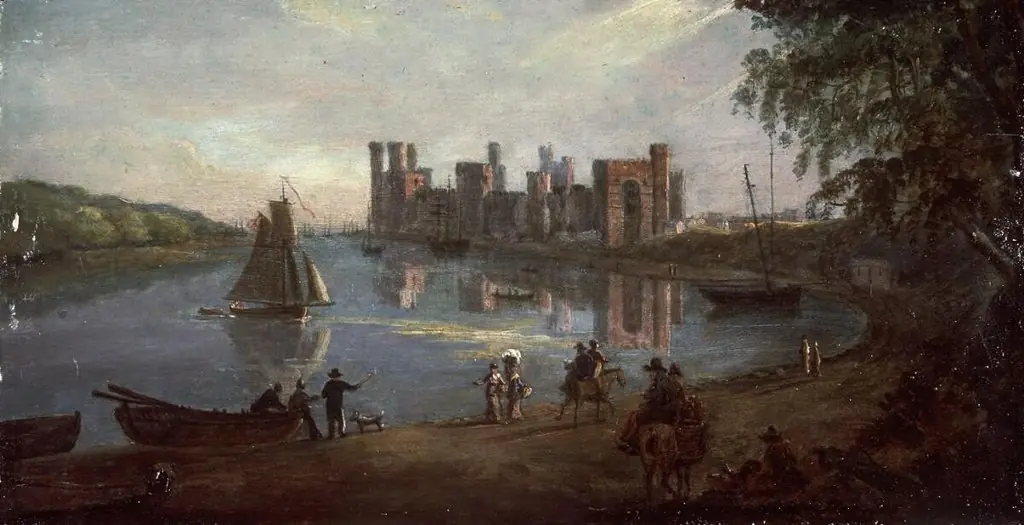
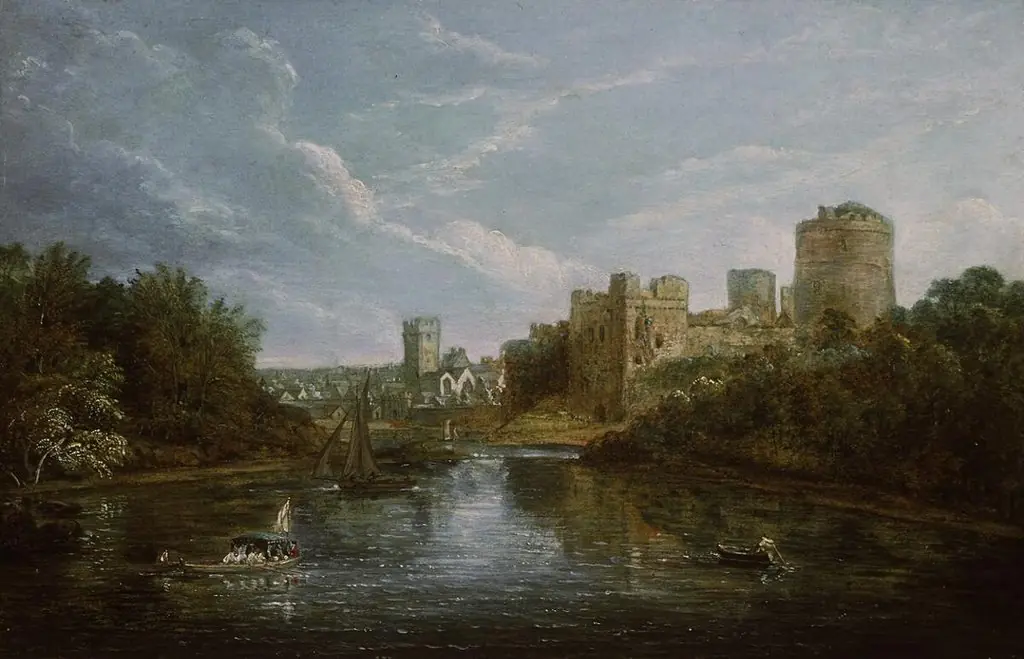
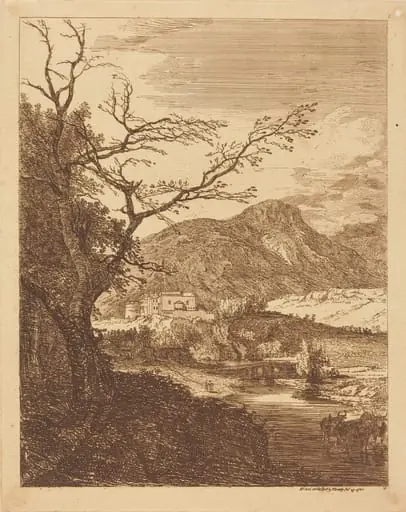
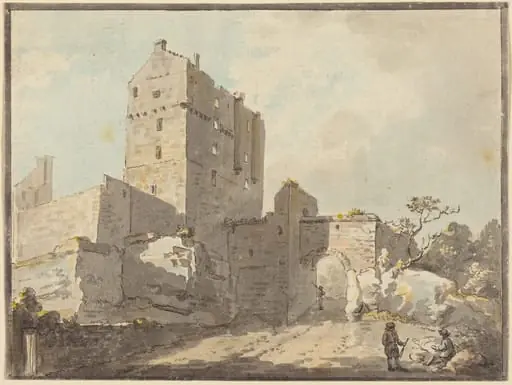
- Lake Scene with a Boat and Anglers
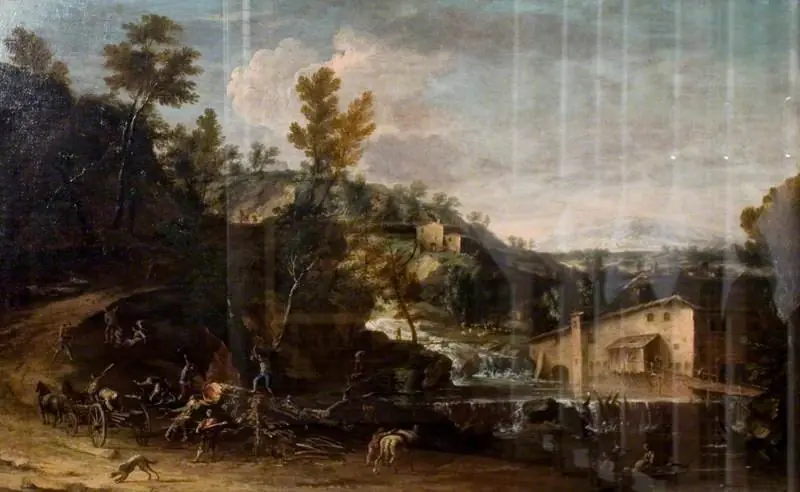 Landscape with Woodcutters
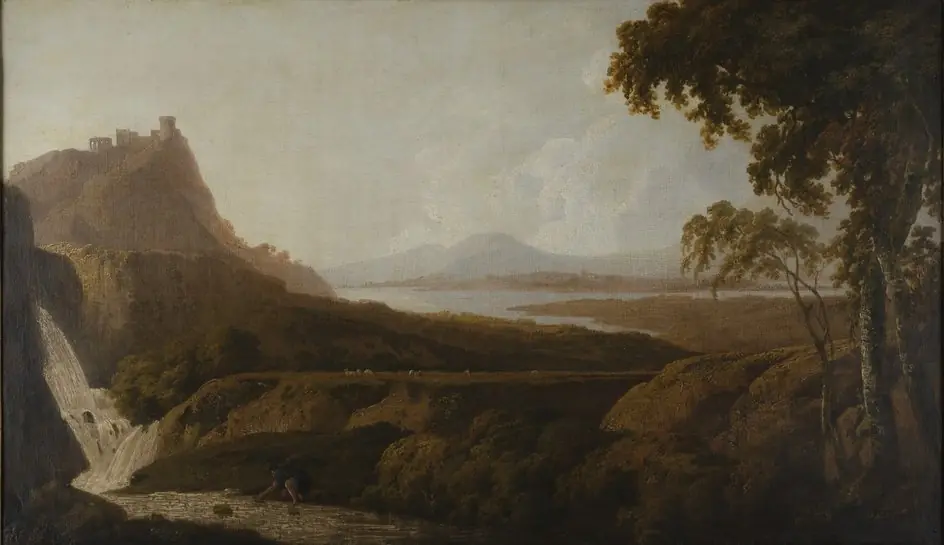 Italianate Lake Scene with Waterfall
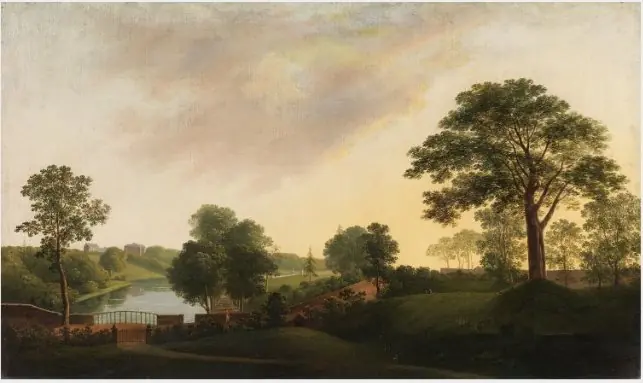 Pleasure Grounds, Ballinrobe
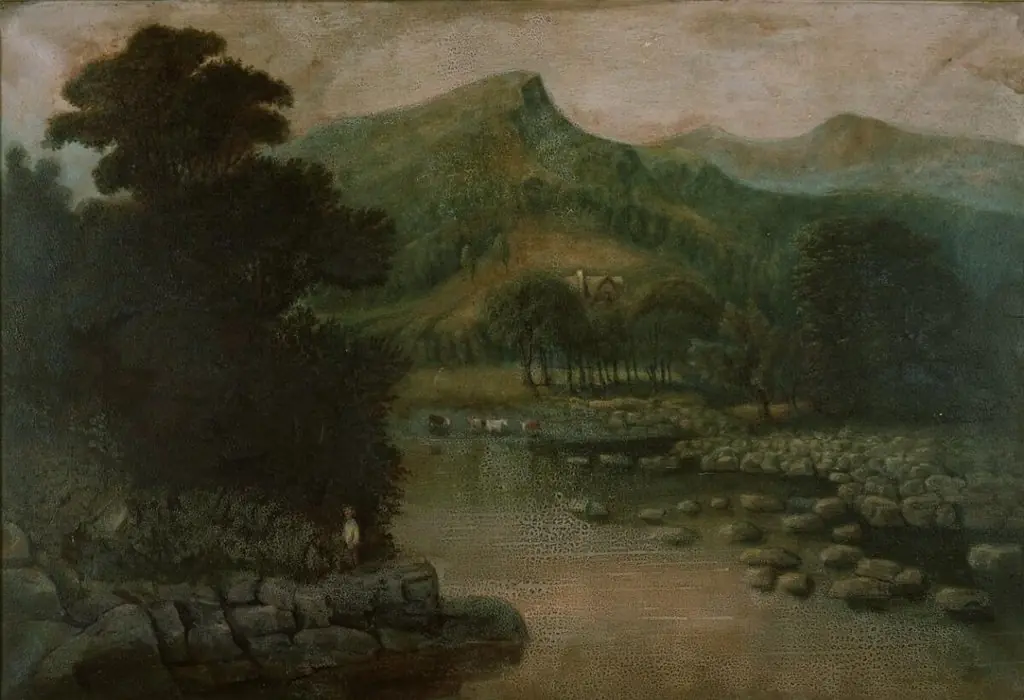 Landscape, South Wales
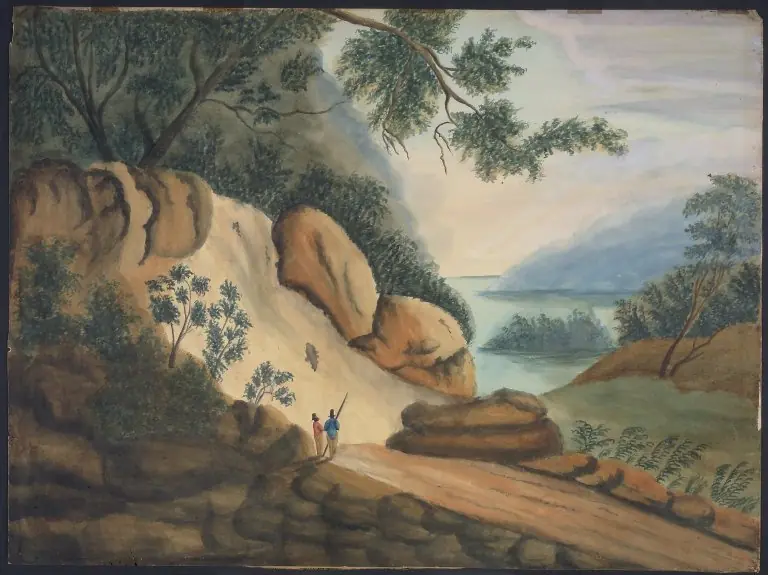 Landscape with Two Figures
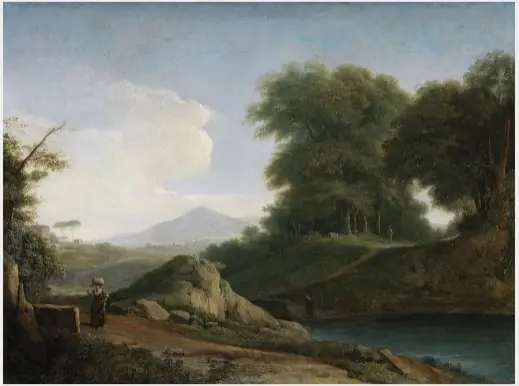 Italianate Landscape
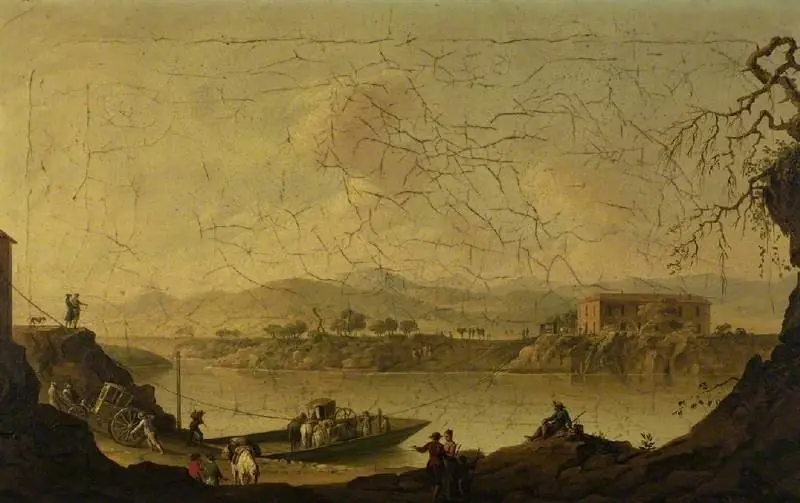 Ferry over the Volturno, near Caiazzo
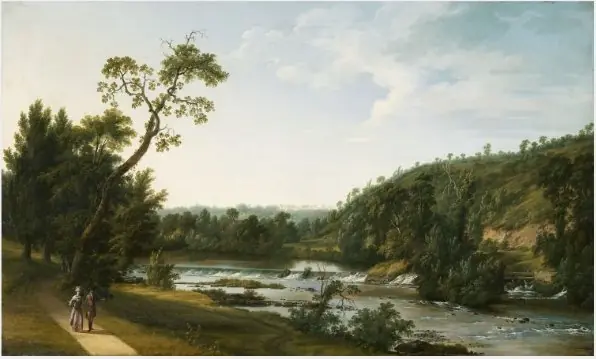 The River Liffey in Lucan House Demesne
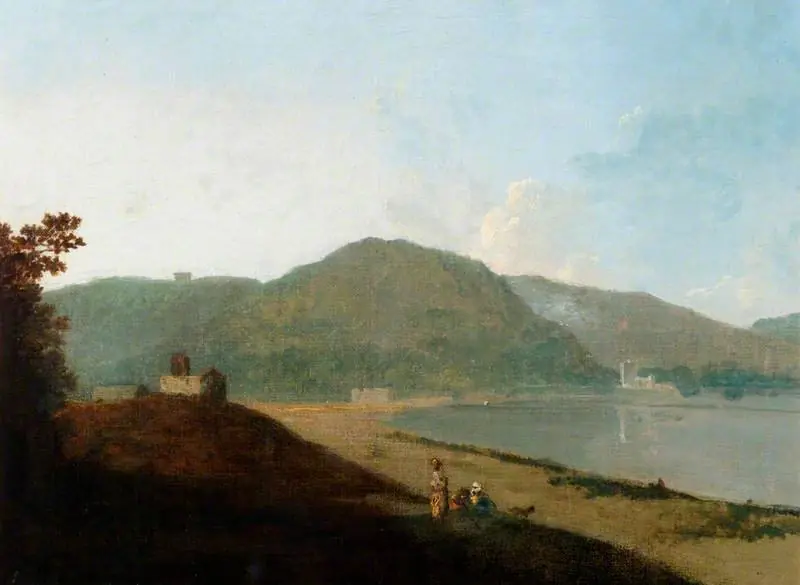 Italian Lake Scene
 First Steamboat on the Clyde
 Wooded River Landscape with a Fisherman in a Rowing Boat, High Banks and Distant Mountains