Artwork
Untitled
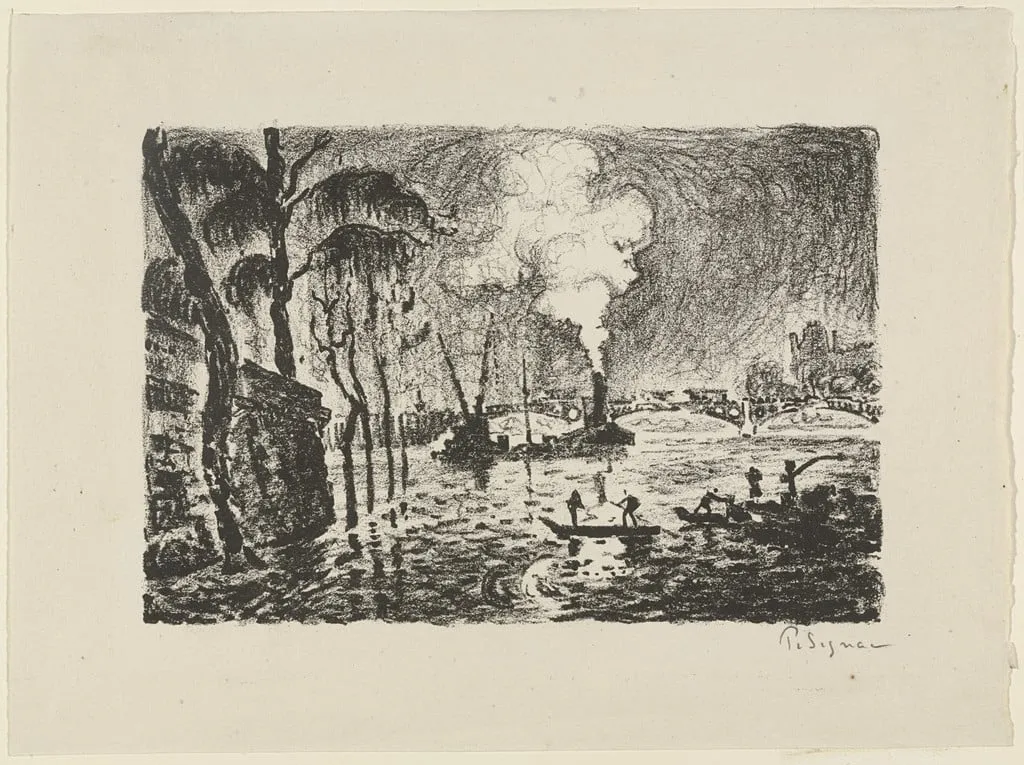
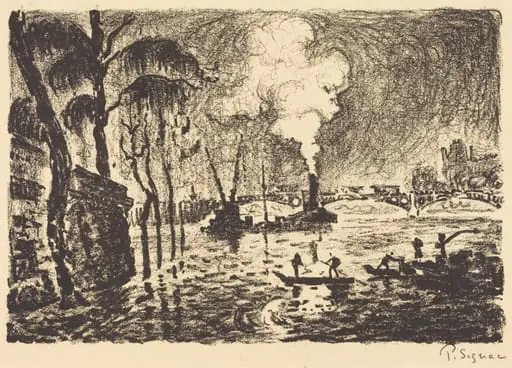
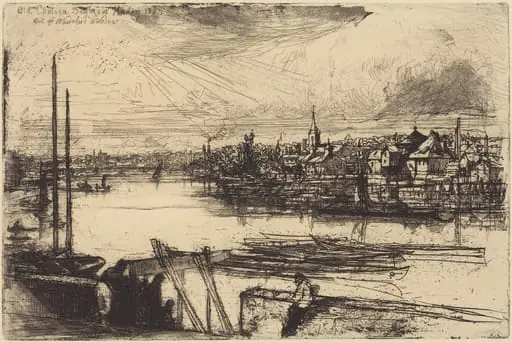
Untitled is an ink print by Paul Signac. It dates from 1923 and is held in the collection of the Museum of Modern Art.
About this work
Overview
Though best known for color-based Pointillist paintings, here he turned to monochrome printmaking, exploring tone and line to convey atmosphere.
Paul Signac produced this 1923 lithograph late in his career, following decades of engagement with Neo-Impressionist principles. Though best known for color-based Pointillist paintings, here he turned to monochrome printmaking, exploring tone and line to convey atmosphere. The work reflects his enduring interest in waterways and maritime life, rendered without the chromatic systems of his earlier work but retaining a sensitivity to light and movement.
Subject & Meaning
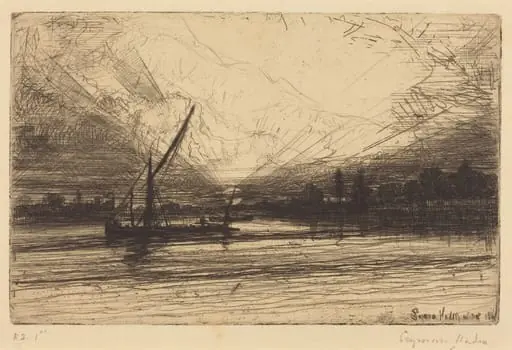
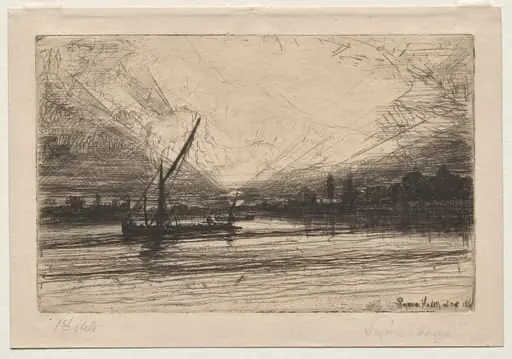
The scene depicts a quiet riverbank at dusk, with trees framing the shore and distant vessels anchored or underway. A small rowboat carries figures, while larger ships with rising smoke suggest commercial or industrial activity. The composition balances stillness and motion, solitary figures contrast with the broader rhythms of water and industry, evoking a contemplative mood without overt narrative, consistent with Signac’s preference for observational realism over symbolism.
Technique & Style
Signac employed lithographic crayon to create a range of tonal values through loose, gestural marks. The dark silhouettes of trees and boats emerge against a softly graded background, suggesting twilight through contrast rather than color. Quick, irregular lines imply wind in foliage and ripples on water, while the absence of fine detail enhances the sense of immediacy. The technique aligns with his shift toward expressive drawing in his later years.
History & Provenance
Created in 1923, this lithograph belongs to Signac’s final productive period, after he had largely moved away from Pointillism. It was likely made for private circulation or as part of a limited print run, common among artists exploring print media later in life. No public record of early ownership exists, but its existence reflects Signac’s continued experimentation with printmaking as a medium for personal expression beyond large-scale canvases.
Context
In the early 1920s, Signac lived near the French coast, frequently observing harbor activity and river traffic. While younger artists embraced abstraction, he remained committed to depicting observable reality, albeit with increasing emphasis on mood and structure. This work aligns with a broader trend among post-Impressionists who turned to printmaking for its immediacy and accessibility, distancing themselves from academic traditions without abandoning figuration.
Legacy
This lithograph exemplifies Signac’s evolution from scientific color theory toward a more intuitive, expressive approach. Though less studied than his color works, such prints demonstrate his adaptability and sustained engagement with visual observation. They influenced later generations of printmakers who valued tonal nuance and atmospheric suggestion over technical precision, anchoring his legacy beyond Neo-Impressionist doctrine.
Artist & collection

Artist
Paul Victor Jules Signac ( seen-YAHK, French:; 11 November 1863 – 15 August 1935) was a French Neo-Impressionist painter who, with Georges Seurat, helped develop the artistic technique Pointillism.

 The Flooded Seine in 1910 (La Seine en crue, en 1910)
 Environs de Gravesend
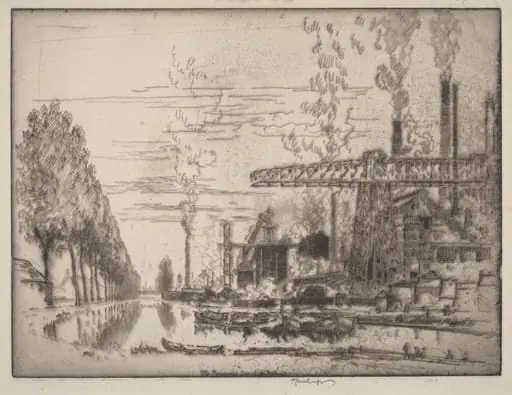 The Brussels Canal, A Modern Hobbema
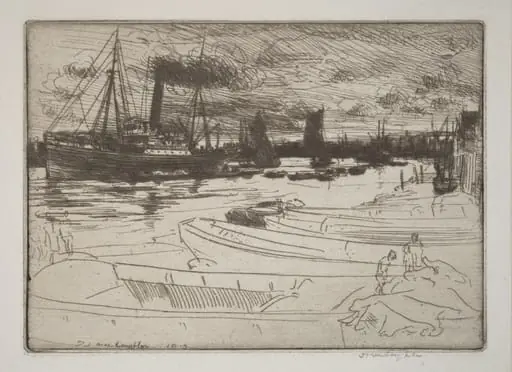 Evening Light
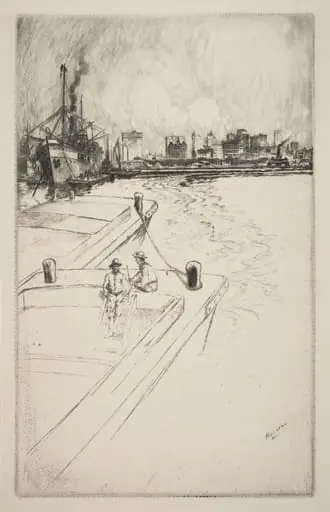 New York from the Harbor
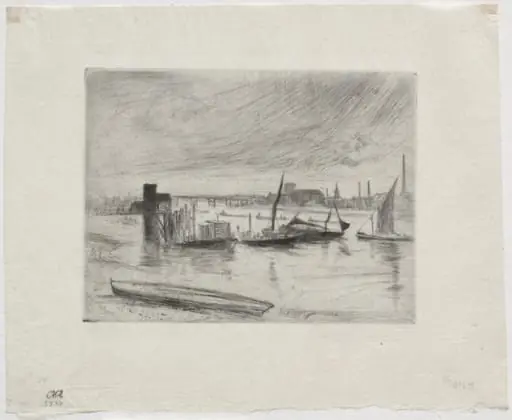 Early Morning, Battersea
 Sunset on the Thames
 Sunset on the Thames
 Unloading Ore
 Old Chelsea (Old Chelsea Church)
 Old Chelsea, Out of Whistler's Window (Battersea Reach)
- Untitled