Artwork
Departure to the Hunt
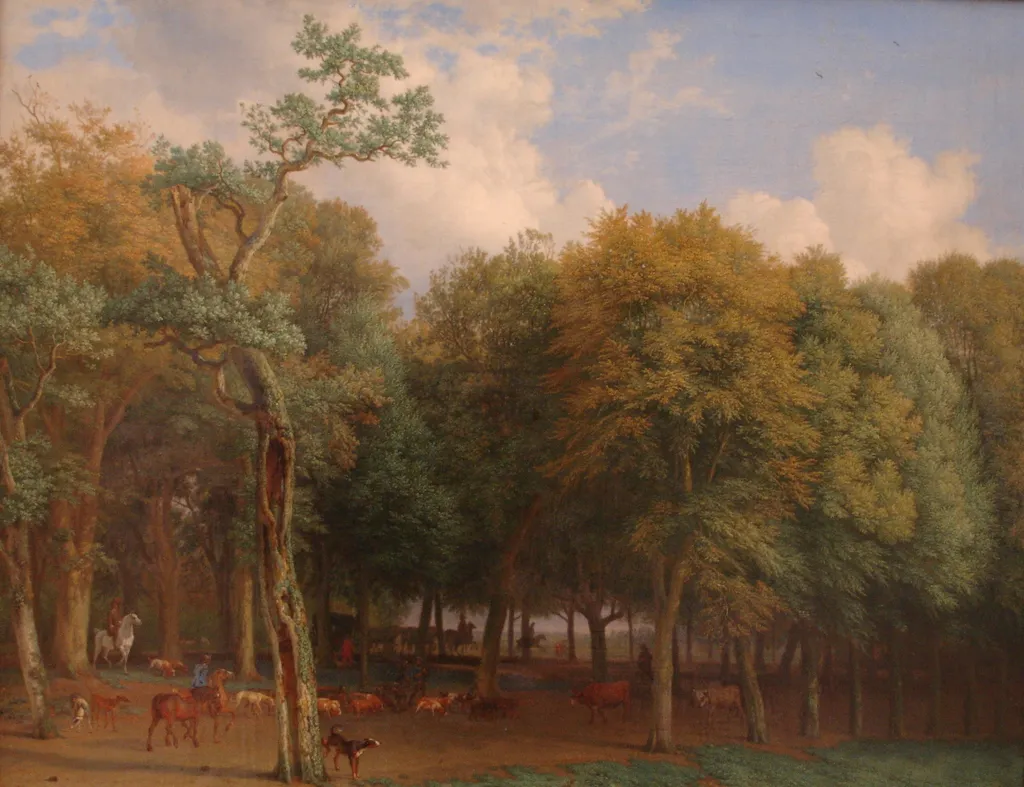
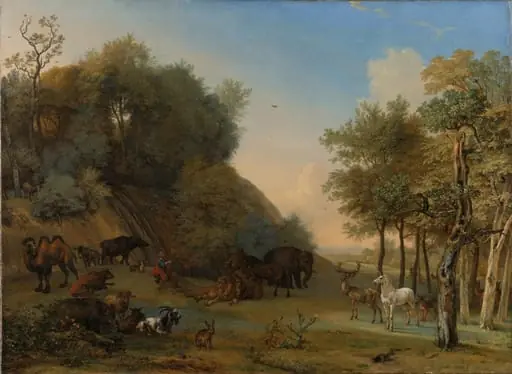
Departure to the Hunt is an oil painting by the Dutch Golden Age artist Paulus Potter. It dates from 1652 and is held in the collection of the Gemäldegalerie Berlin.
About this work
Subject & Meaning
The imagery serves as a direct representation of aristocratic leisure and the organized pursuit of game in the 17th-century Dutch countryside.
Paulus Potter's 1652 oil painting, Departure to the Hunt, portrays a rural landscape scene centered on the preparation for a hunt. The composition depicts specific figures and animals, including a man, horses, and greyhounds, set against a forest backdrop. As a work classified within the landscape genre, the piece captures the moment of departure, focusing on the interaction between the human hunters and their canine companions within a natural environment.
The imagery serves as a direct representation of aristocratic leisure and the organized pursuit of game in the 17th-century Dutch countryside.
Technique & Style
Created in 1652, Departure to the Hunt is an oil painting executed on canvas. The work measures 60 cm in height and 76 cm in width. Stylistically classified as a landscape, the composition depicts a forest setting populated by a man, a horse, and a greyhound. The piece is currently held in the collection of the Gemäldegalerie Berlin.
History & Provenance
Paulus Potter created the oil-on-canvas painting Departure to the Hunt in 1652. The work depicts a landscape scene featuring men, horses, and greyhounds within a forest setting. Historical records indicate that the composition was once part of the collection belonging to Étienne François, duc de Choiseul.
Subsequent provenance traces the ownership to Barthold Suermondt before the piece entered the holdings of the Gemäldegalerie in Berlin, where it remains today. The painting measures 60 cm in height and 76 cm in width.
Paulus Potter's oil painting Departure to the Hunt, created in 1652, is currently held in the collection of the Gemäldegalerie Berlin. The work was previously part of the Cabinet de Monseigneur le duc de Choiseul and is associated with former owners Barthold Suermondt and Étienne François, duc de Choiseul. Specific inventory or accession numbers are not provided in the available records, though the painting's dimensions are recorded as 60 cm in height and 76 cm in width on canvas. No exhibition history is documented in the provided sources.
Overview
Created in 1652, Departure to the Hunt is an oil painting by Dutch artist Paulus Potter. The canvas presents a woodland clearing where a rider on a brown horse, a greyhound, and several other dogs are poised for a hunt. The composition is rendered from a low angle, emphasizing the animals and the moment of preparation.
Context
Departure to the Hunt exemplifies the Dutch Golden Age’s fascination with rural life and animal studies. Potter, baptized in 1625, specialized in landscapes populated by livestock and hunting scenes, a niche that set him apart from his contemporaries focused on portraiture or urban interiors.
Own this work as a print
Artist & collection
Artist
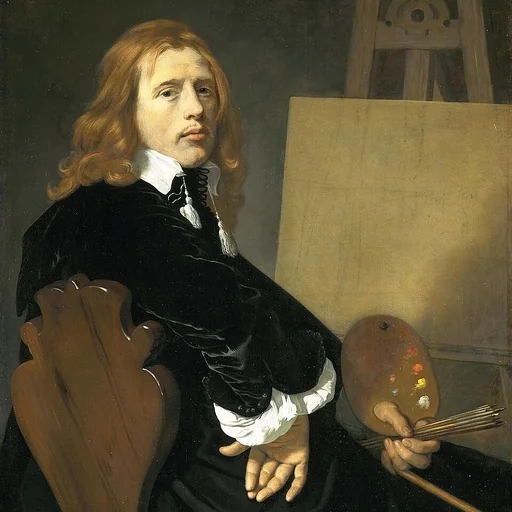
Paulus Potter (Dutch pronunciation:; 20 November 1625 (baptised) – 17 January 1654 (buried)) was a Dutch painter who specialized in landscapes featuring animals, often from a low vantage point.

- Efterårsmorgen i Jægersborg Dyrehave
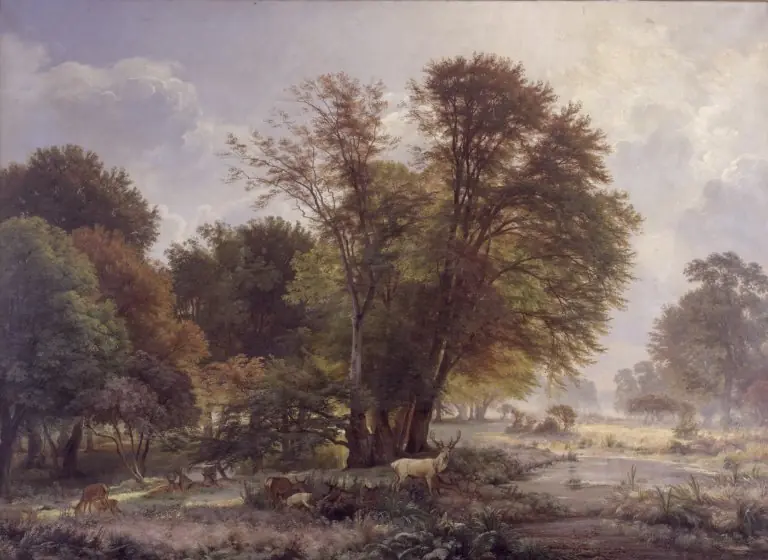 Efterårsmorgen i Jægersborg Dyrehave
 Landscape with two wood sawyers
 View of a Forest
 View near Lichfield - Morning
 View in the Woods
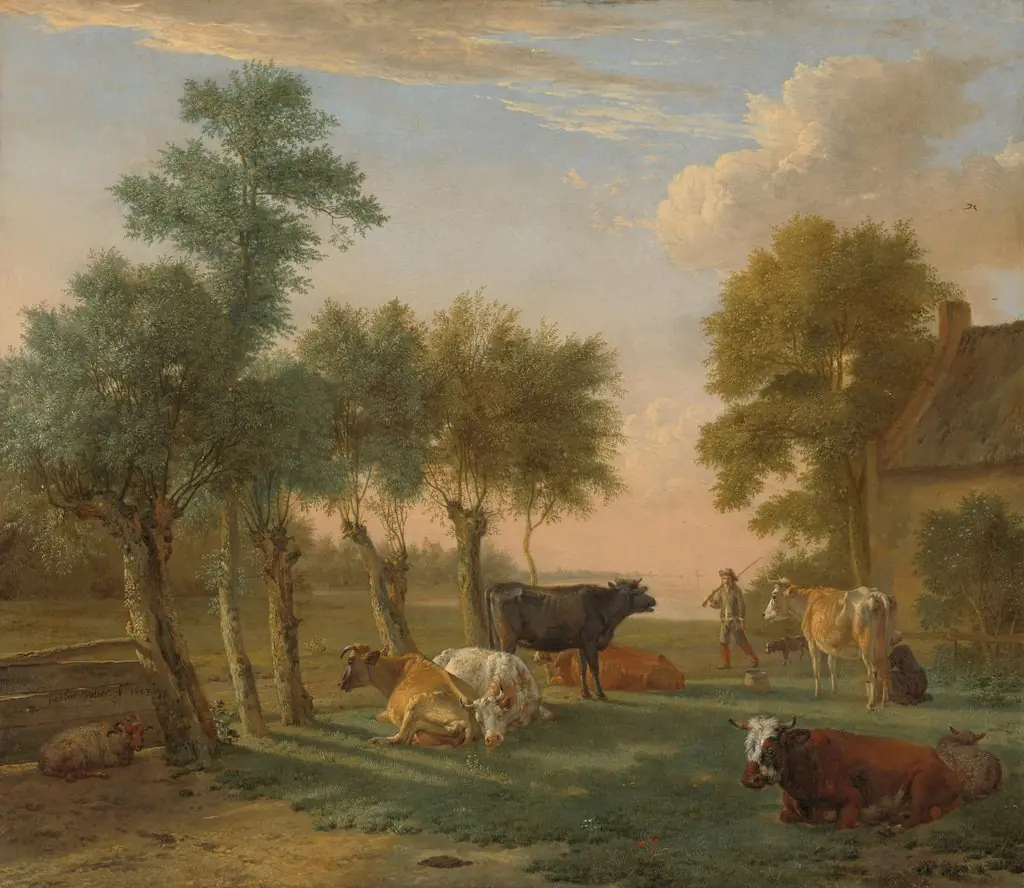
 Landscape with Cows
 Landscape near Hilversum
 Outskirts of the Forest
 Landscape
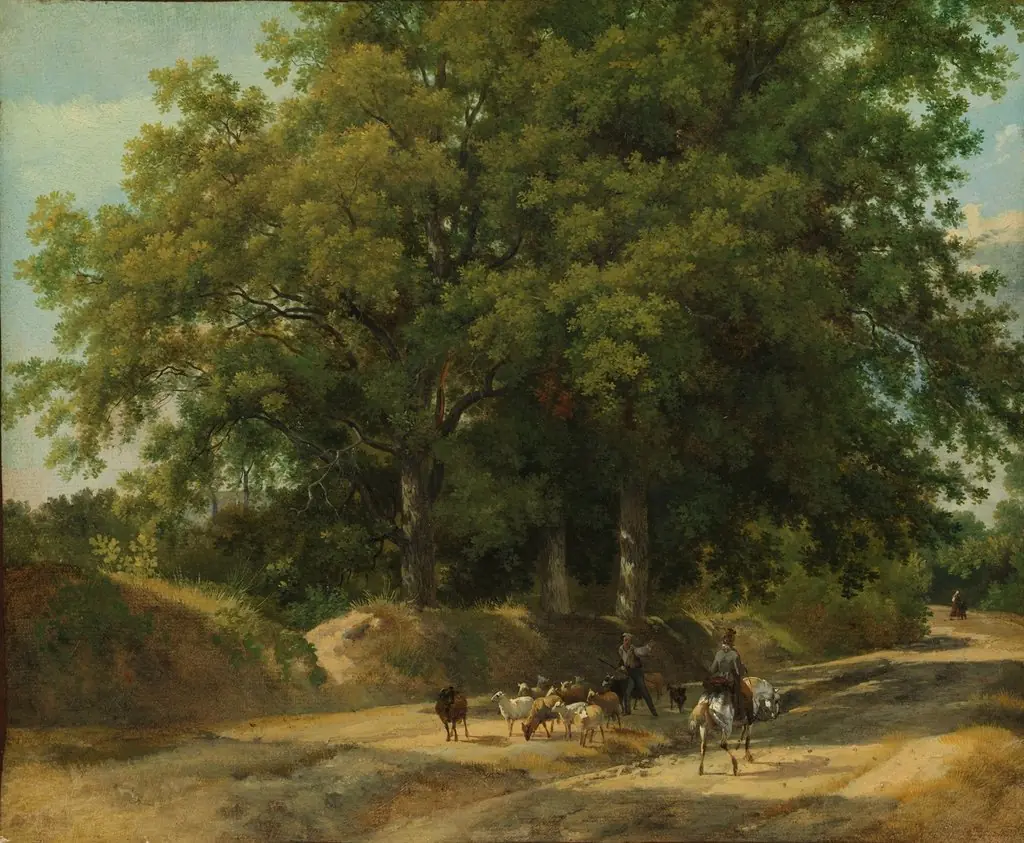 A Shepherd and a Rider on a Country Lane
 A Forrest near Hellebæk in the North of Zealand. Afternoon.