Artwork
Hunter and Hounds with Dead Hare
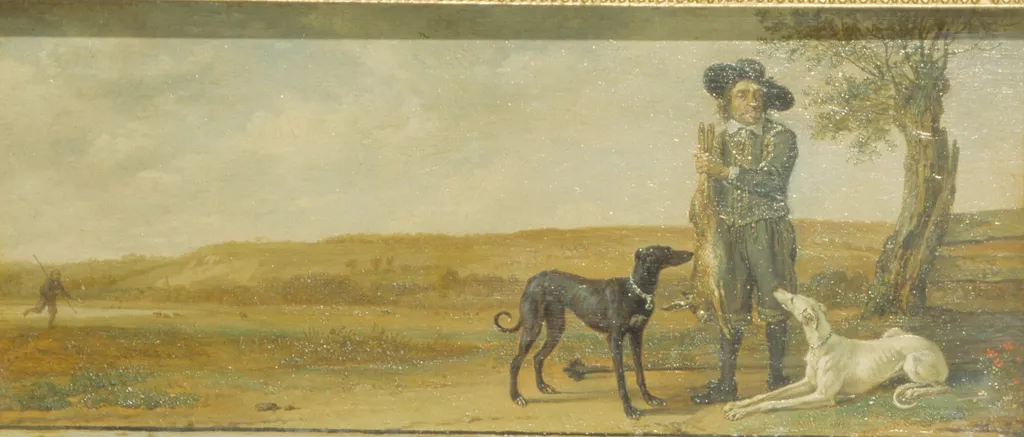
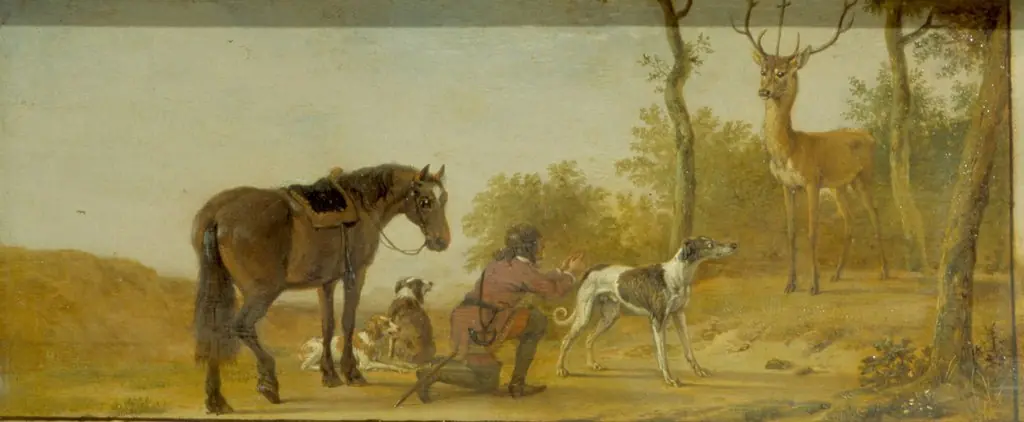
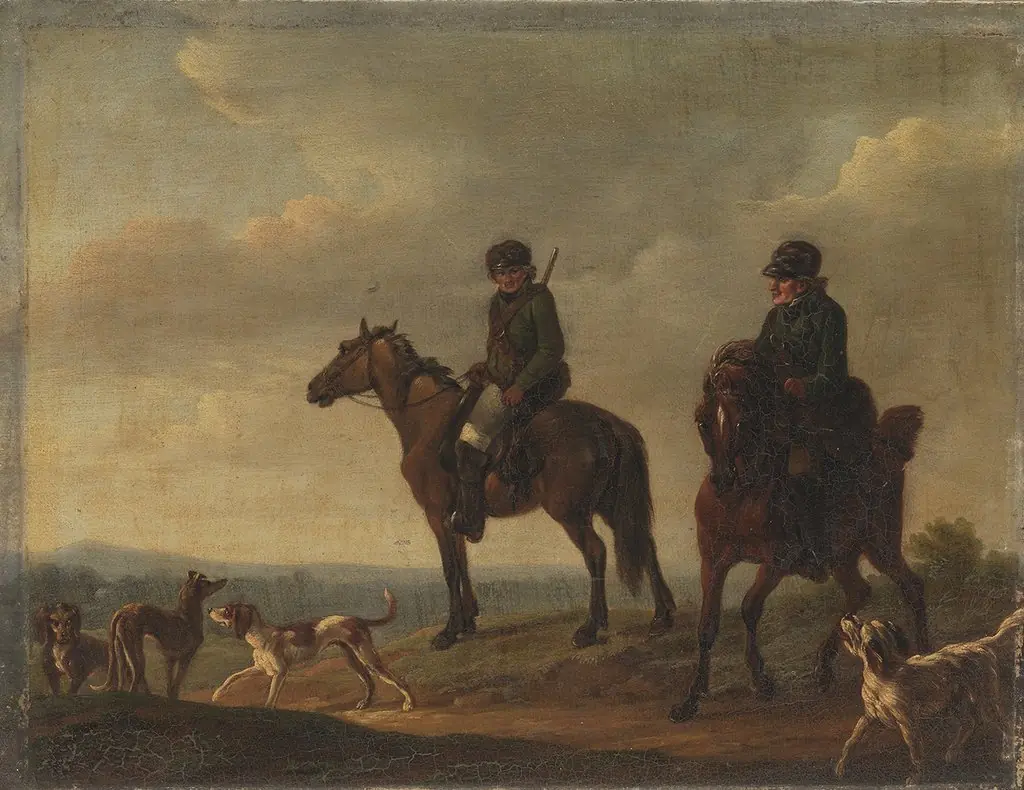
Hunter and Hounds with Dead Hare is an oil painting by the Dutch Golden Age artist Paulus Potter. It dates from 1650 and is held in the collection of the Hermitage Museum.
About this work
Subject & Meaning
The composition features a male figure, specifically identified as John Maurice, Prince of Nassau-Siegen, accompanied by hounds and a dead hare.
The painting portrays a genre scene centered on the aftermath of a hunt. The composition features a male figure, specifically identified as John Maurice, Prince of Nassau-Siegen, accompanied by hounds and a dead hare. The inclusion of the deceased prey alongside the hunter and his dogs underscores the theme of the hunt as both a practical endeavor and a symbol of aristocratic privilege.
By depicting a specific nobleman with the spoils of the chase, the work intertwines portraiture with the iconographic tradition of hunting imagery, representing the sitter's dominion over nature and his cultivated social status.
Technique & Style
Paulus Potter executed Hunter and Hounds with Dead Hare in 1650 using oil paint on a wooden panel. The small-scale work measures 17.3 cm in height and 39.5 cm in width. Stylistically, the painting operates as a genre scene, combining human and animal subjects within a single composition.
The formal arrangement specifically depicts a man alongside hounds and a dead hare, with the human figure portraying John Maurice, Prince of Nassau-Siegen.
History & Provenance
Paulus Potter executed the oil painting Hunter and Hounds with Dead Hare in 1650 on a wooden panel, measuring 17.3 cm in height by 39.5 cm in width. The work depicts a hunting scene featuring a man, identified as John Maurice, Prince of Nassau-Siegen, together with hounds and a dead hare. It is held in the collection of the Hermitage Museum, Saint Petersburg.
The available records do not list a specific inventory number or detail any past exhibitions for the piece.
Context
Paulus Potter's 1650 painting Hunter and Hounds with Dead Hare depicts a man, hare, and hound linked to John Maurice, Prince of Nassau-Siegen, reflecting Dutch Golden Age hunting themes and aristocratic patronage. The work is housed in the Hermitage Museum, where its composition and symbolism have been studied for insights into 17th-century wildlife representation and social status signaling through sport. Scholars analyze its technical handling within Potter's broader oeuvre, noting the integration of naturalistic animal detail with narrative elements tied to courtly hunts, situating it within discussions of Dutch realism and elite cultural practices.
Legacy
The painting's influence is noted through its inclusion in a major museum collection and scholarly references to Dutch Golden Age hunting scenes. It remains part of the Hermitage Museum's collection, where it is cataloged as a significant example of 17th-century Dutch genre painting. The work's legacy is tied to its representation of aristocratic hunting culture, with its composition reflecting the period's interest in naturalistic animal subjects and sporting themes.
Overview
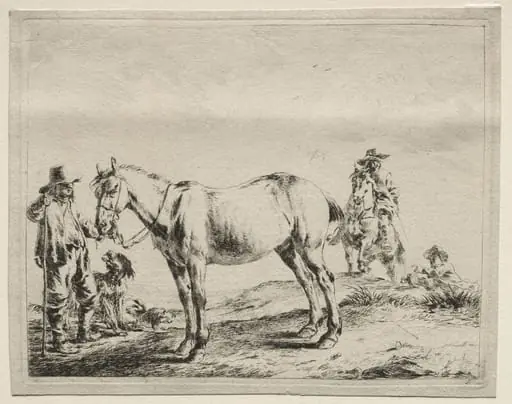
Created circa 1650, this oil painting shows a 17th‑century gentleman in a wide‑brimmed hat and long coat holding a dead hare, flanked by a black and a white hunting dog. A distant figure walks with a staff, while a muted, earthy landscape recedes behind them. The composition centers on the interaction between the hunter and his animals, rendered with careful attention to light and shadow.
Artist & collection
Artist
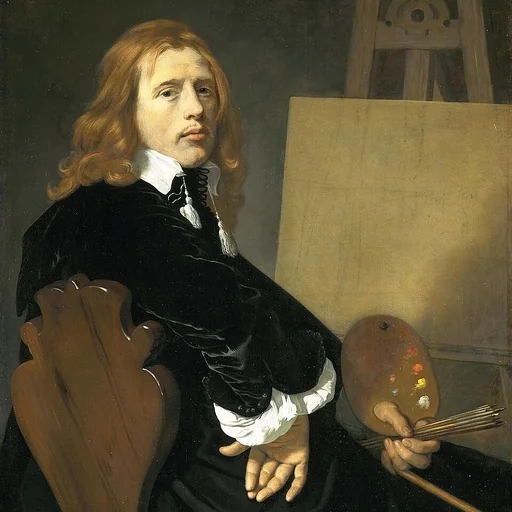
Paulus Potter (Dutch pronunciation:; 20 November 1625 (baptised) – 17 January 1654 (buried)) was a Dutch painter who specialized in landscapes featuring animals, often from a low vantage point.