Artwork
Madonna and Child
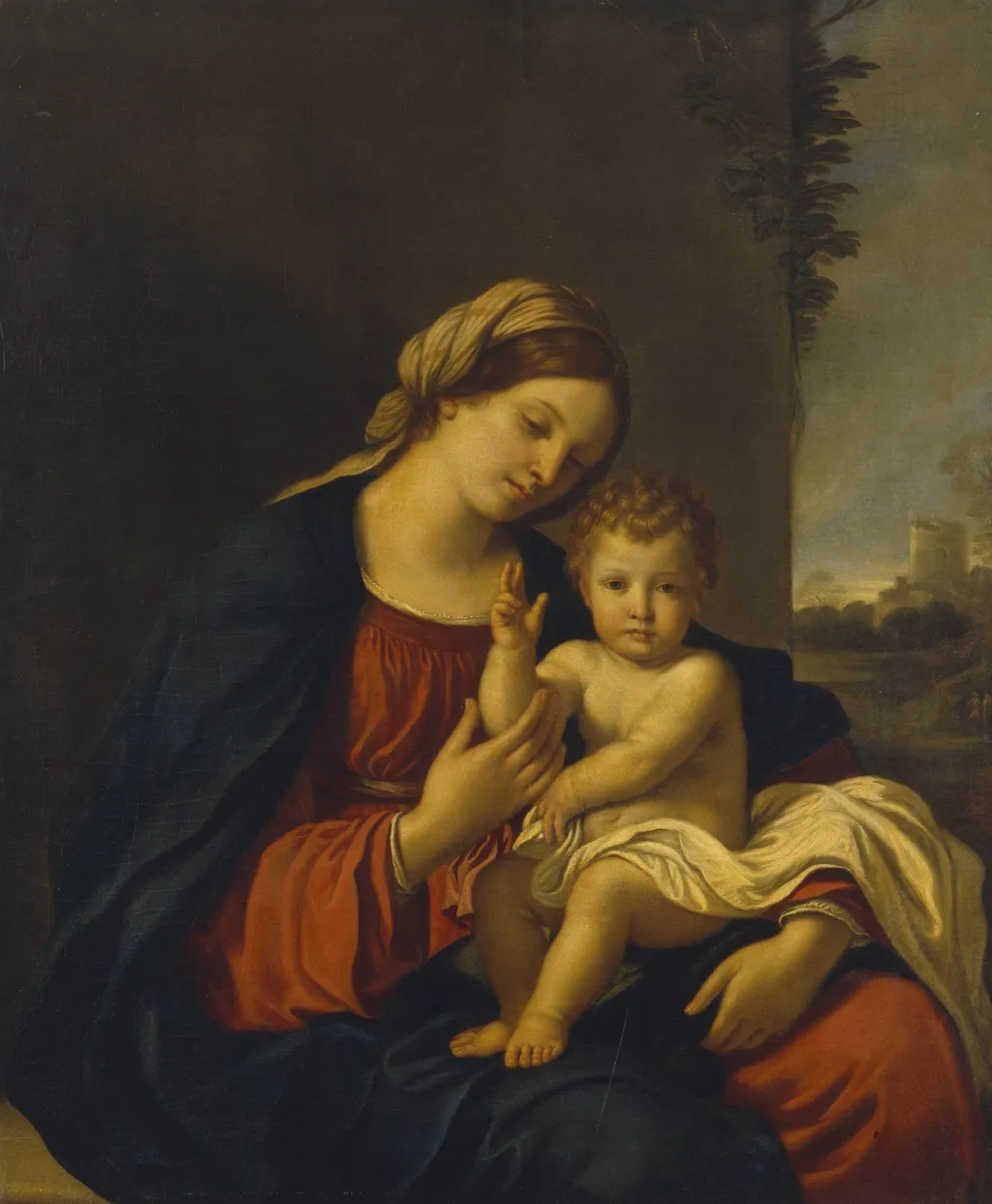
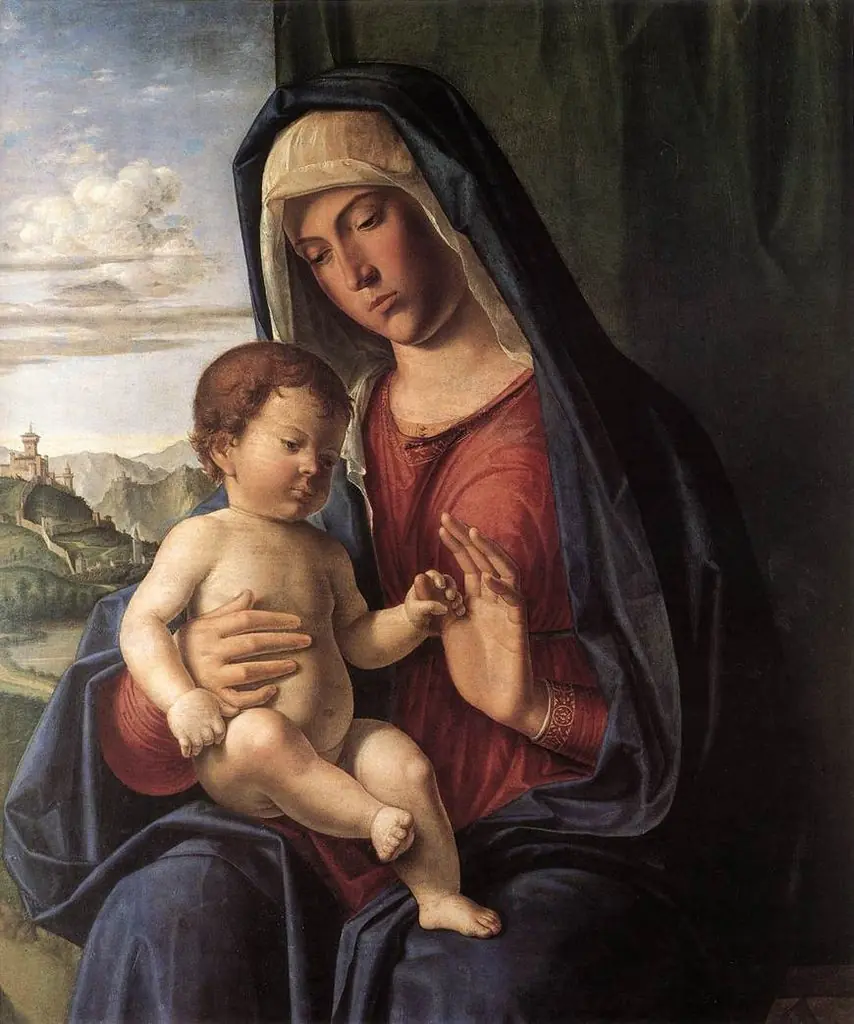
Madonna and Child is an oil painting by Cesare Gennari. It dates from 1672 and is held in the collection of the Hermitage Museum.
About this work
Overview
Madonna and Child is an oil on canvas painting by the Italian Baroque artist Cesare Gennari (1637-1688), now held in the Hermitage Museum in Saint Petersburg.
Madonna and Child is an oil on canvas painting by the Italian Baroque artist Cesare Gennari (1637-1688), now held in the Hermitage Museum in Saint Petersburg. Measuring 117 by 97 centimeters, the work depicts the Virgin Mary seated with the infant Jesus on her lap, set against a dark background with a narrow landscape opening to the right. Gennari, trained in the workshop of his maternal uncle Guercino and active primarily in Bologna, produced religious compositions that bridged the Carracci legacy with emerging Baroque tendencies. This painting exemplifies his refined handling of color, light, and devotional subject matter within the Bolognese school tradition.
Subject & Meaning
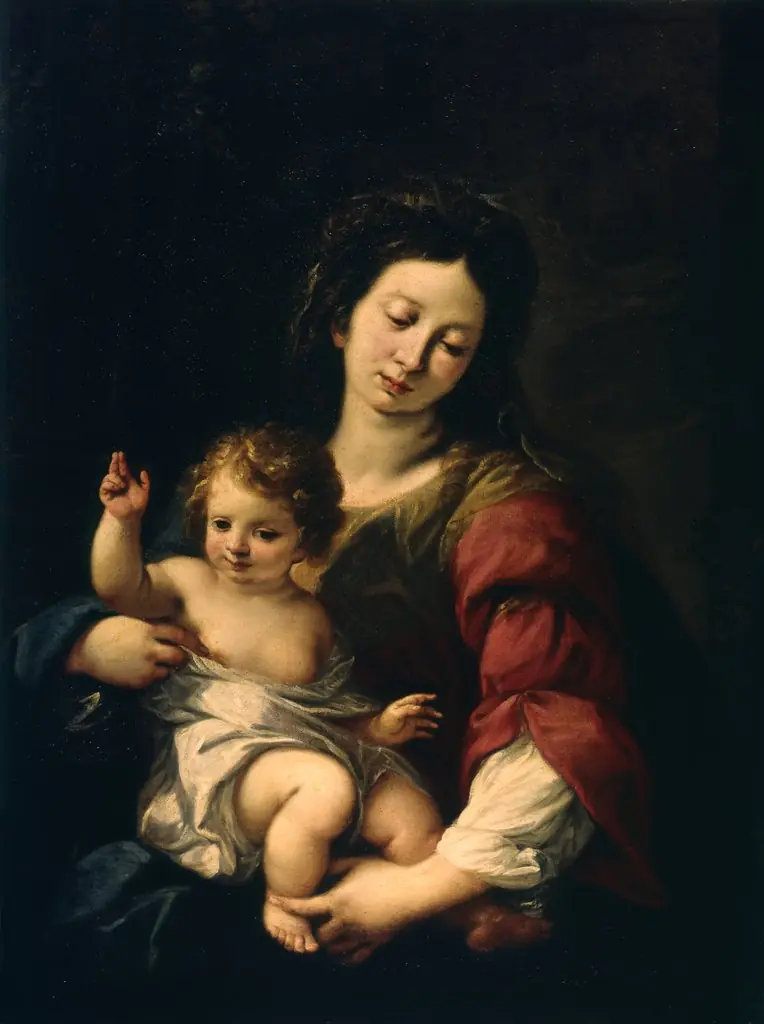
The painting presents the Madonna and Child as its central sacred subject. Mary, clad in a red dress and dark blue cloak with a light-colored headwrap, sits with her head tilted downward toward the infant Jesus, her right hand raised near his torso. The Christ child sits upright, his body turned slightly toward the viewer, his right hand raised with two fingers extended in a gesture of blessing. A white cloth drapes across the infant's lower body and the woman's left arm. The composition adheres to established Christian iconography: the Virgin's downward gaze and protective posture convey maternal devotion and humility, while the Christ child's benedictory gesture affirms his divine nature. The narrow landscape glimpse to the right, with its distant trees, building, and pale sky framed by a single tall tree, introduces a subtle symbolic dimension, perhaps alluding to the redemption narrative or the garden of paradise, without distracting from the intimate devotional focus of the figures.
Technique & Style
Executed in oil on canvas, the painting displays the smooth, polished finish characteristic of Gennari's mature technique. Soft light enters from the left, modeling the rounded forms of the figures and creating gentle shadows that enhance their three-dimensional presence. The palette consists of deep blues, warm reds, creamy flesh tones, and muted earth colors, with subtle transitions between tones demonstrating careful attention to the texture of fabric and skin. The paint surface appears smooth with fine craquelure visible throughout, indicating age and the natural aging of the oil medium. Gennari's handling reflects his training under Guercino, with dramatic lighting effects and expressive figural arrangements tempered by a classical restraint in composition. The pyramidal stability of the seated figures and the controlled emotional register distinguish his style from the more overt theatricality of some Baroque contemporaries.
History & Provenance
The painting was produced in Italy, though the precise circumstances of its commission remain unrecorded in the available sources. Its provenance before acquisition by the Hermitage Museum has not been fully documented here. The work is currently located in the Hermitage Museum, one of the world's major repositories of European painting, where it is accessioned as part of the collection. No specific exhibition history is recorded in the provided sources. The attribution to Cesare Gennari appears in standard catalogues, though the Wikidata entry registers a degree of uncertainty with a parenthetical question mark.
Context
Cesare Gennari occupied a significant position within the Bolognese art world of the seventeenth century. Born in Cento in 1637 into the prominent Gennari family of artists, he was the son of Ercole Gennari and nephew of Guercino (Giovanni Francesco Barbieri), under whose tutelage he trained from the family's relocation to Bologna in 1643 until Guercino's death in 1666. Together with his brother Benedetto Gennari II, Cesare inherited and managed Guercino's studio and papers, preserving an enormous cache of drawings and perpetuating the master's workshop traditions. His early works closely imitated Guercino's manner, leading to later misattributions, but his later style moved toward what scholars have described as courtly accents influenced by international patronage. The Madonna and Child fits securely within his oeuvre of religious paintings, which served both devotional purposes and the maintenance of the family studio's productivity. Critical assessment of Gennari has often been overshadowed by his uncle's reputation, though recent scholarship has recognized his role in transmitting Bolognese Baroque conventions to subsequent generations.
Legacy
The Madonna and Child by Cesare Gennari remains a representative example of Bolognese Baroque devotional painting, preserved and accessible within the Hermitage Museum's encyclopedic collections. While individual works by Gennari have not achieved the canonical status of his uncle Guercino's major compositions, his paintings contribute to understanding the workshop practices and stylistic transmission that sustained the Bolognese school through the later seventeenth century. The painting's afterlife is primarily institutional, maintained within one of the world's most visited museums where it participates in the broader narrative of European religious art. Its value for art history lies partly in its demonstration of how Baroque devotional conventions, color harmonies, and compositional formulas circulated through family-based workshop structures in seventeenth-century Italy.
Own this work as a print
Artist & collection
Artist
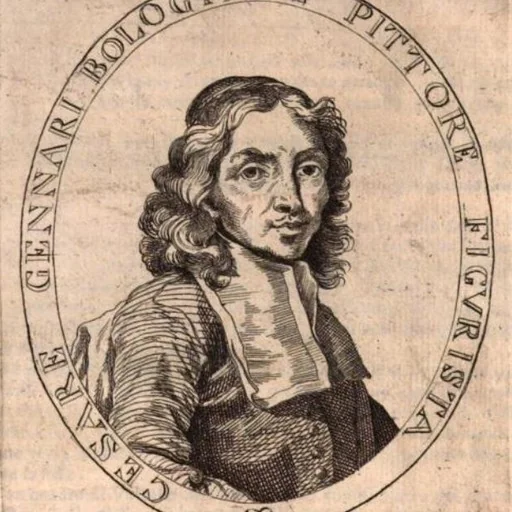
Cesare Gennari (12 December 1637 – 11 February 1688) was an Italian painter of the Baroque period.