Artwork
The Annunciation
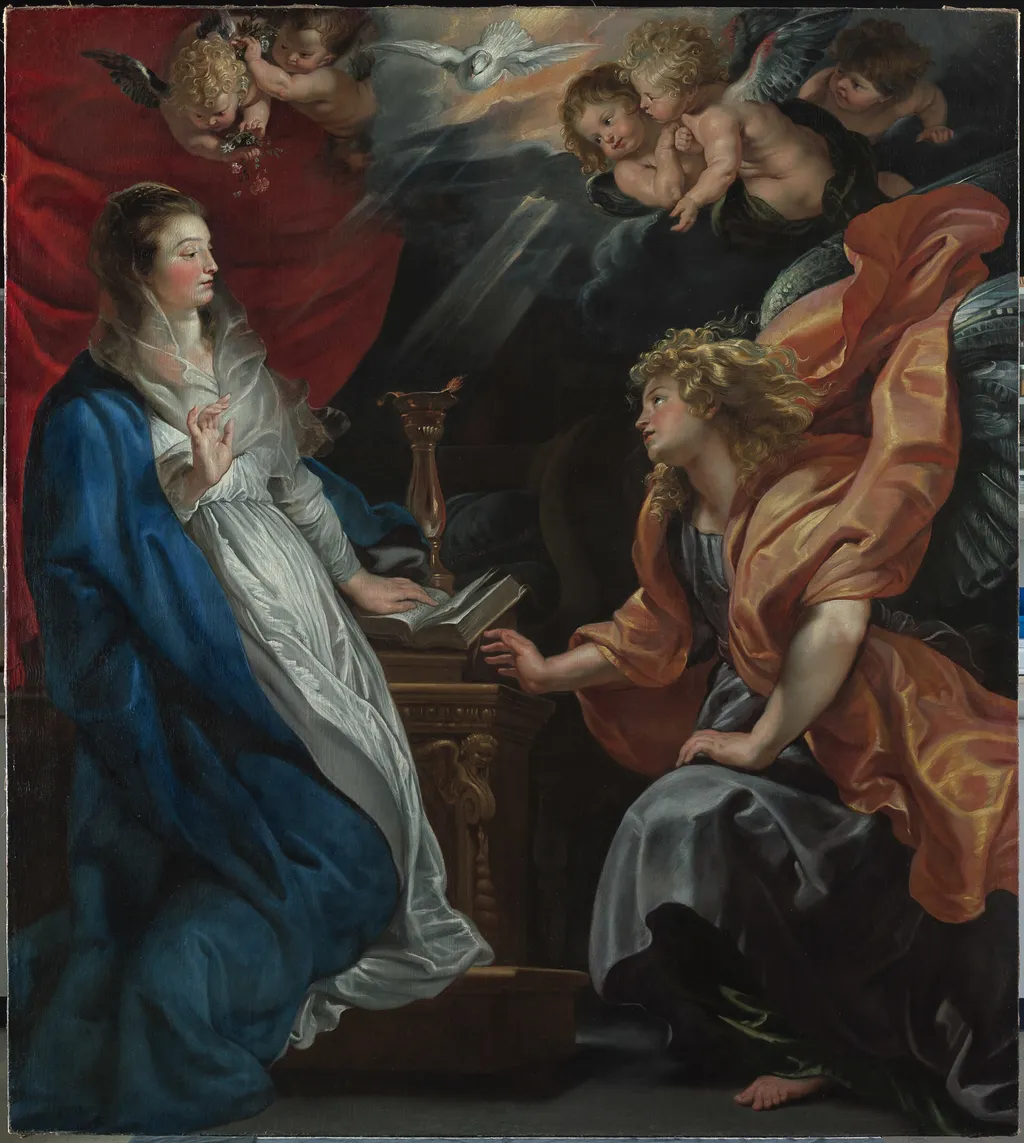
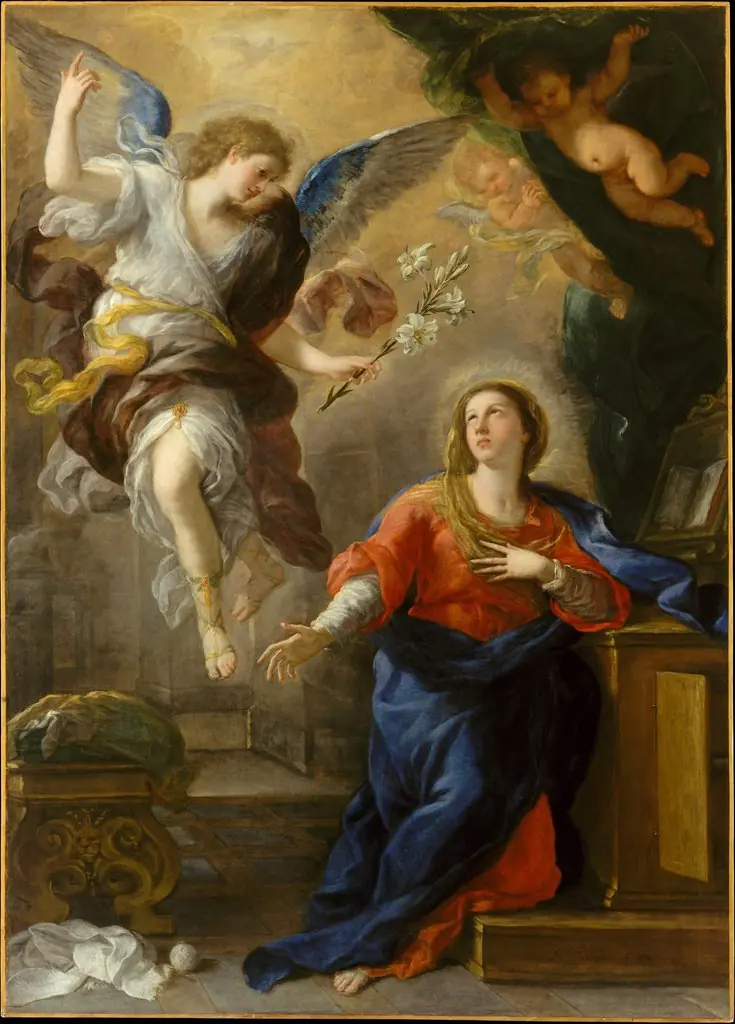
The Annunciation is an oil painting by the Flemish Baroque painting artist Peter Paul Rubens. It dates from 1609 and is held in the collection of the Kunsthistorisches Museum.
About this work
Subject & Meaning
" The subject matter situates the work within the long devotional tradition of Annunciation imagery intended for liturgical and contemplative use.
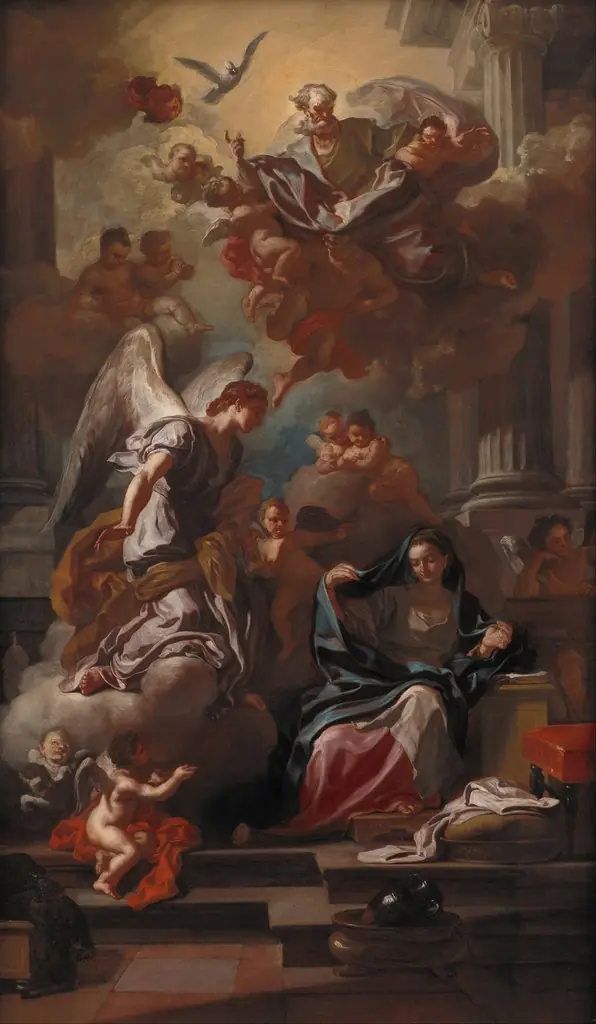
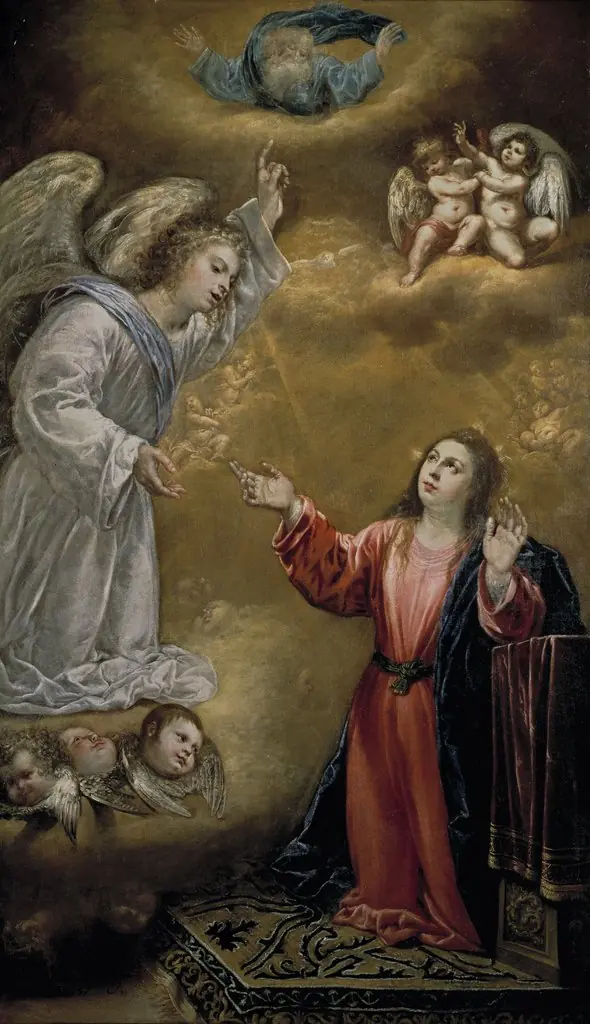
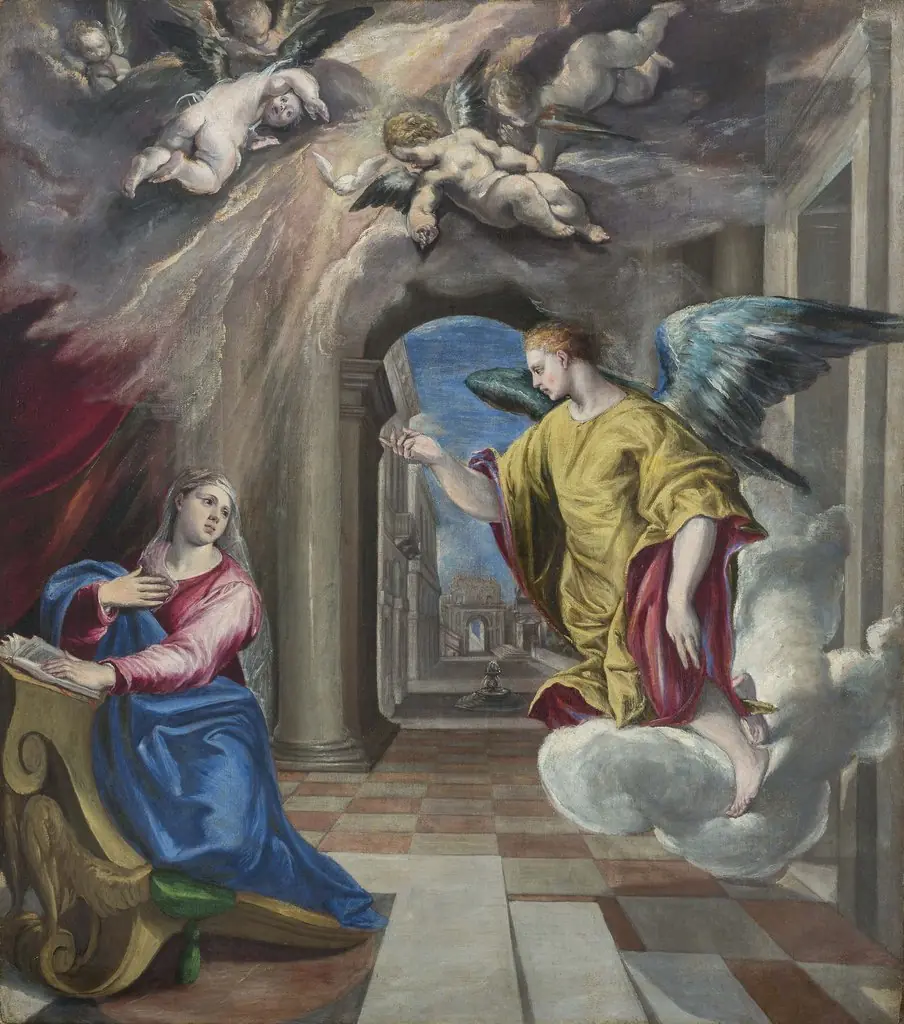
The painting depicts the Annunciation, the New Testament moment when the Archangel Gabriel announces to the Virgin Mary that she will conceive and bear Jesus Christ. As a work of religious art, the subject carries the central Christian symbolism of the Incarnation, marking the transition from the Old to the New Covenant and the fulfillment of messianic prophecy.
In Rubens's treatment, the encounter between angel and Virgin embodies themes of divine grace, humility, and Mary's acceptance of God's will, traditionally expressed in the words "let it be done unto me." The subject matter situates the work within the long devotional tradition of Annunciation imagery intended for liturgical and contemplative use.
Technique & Style
The work is an oil painting executed on canvas, reflecting Rubens' characteristic technique of layered brushwork and vivid color modulation. The composition captures the moment of the Annunciation with dynamic movement and chiaroscuro, emphasizing the divine encounter through dramatic lighting and expressive figures.
History & Provenance
The work titled The Annunciation was created by Peter Paul Rubens in 1609 as an oil painting on canvas. It entered the collection of the Kunsthistorisches Museum in Vienna, where it remains on view. The painting was likely commissioned for a private devotional context, reflecting the Counter‑Reformation emphasis on Marian subjects.
Its dimensions are 224 cm by 200 cm, and it depicts the biblical moment of the angel Gabriel announcing to Mary that she will conceive Jesus.
The Annunciation by Peter Paul Rubens is held by the Kunsthistorisches Museum, which is listed as both its collection and location. The work has been part of the museum's holdings since at least its cataloguing in Wikidata, where it is attributed to the institution.
No specific inventory or accession number is recorded in the available sources, and no exhibition history beyond its residence at the Kunsthistorisches Museum is documented.
Context
Peter Paul Rubens painted The Annunciation in 1609 as an oil on canvas work now housed in the Kunsthistorisches Museum in Vienna, where it remains part of the permanent collection. The painting depicts the biblical moment of the angel Gabriel announcing to Mary that she will bear the Son of God, a subject long favored in Counter-Reformation art for its emotional intensity and dynamic composition. Rubens' treatment of the scene combines dramatic lighting with a sense of movement, reflecting his mastery of the High Baroque style and his influence on religious imagery in the early 17th century.
Scholars have noted the work's significance within Rubens' broader oeuvre, particularly in how it exemplifies his ability to convey theological narratives with both physical realism and spiritual fervor.
Overview
Peter Paul Rubens painted The Annunciation in 1609 using oil on canvas. Executed during his mature period, the work exemplifies the Flemish Baroque aesthetic with its vigorous composition and saturated palette. The painting is part of the permanent collection of the Kunsthistorisches Museum in Vienna.
Own this work as a print
Artist & collection
Artist
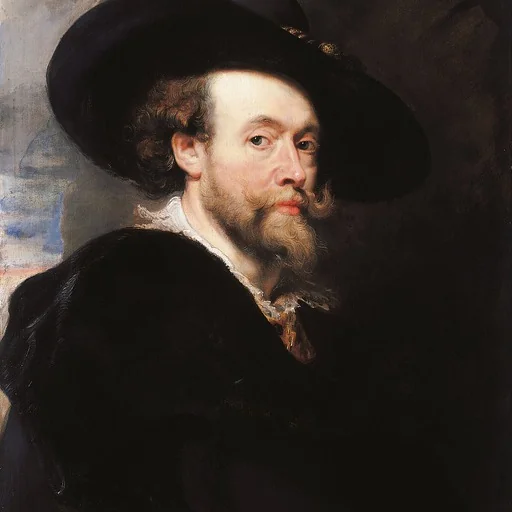
Sir Peter Paul Rubens ( ROO-bənz; Dutch:; 28 June 1577 – 30 May 1640) was a Flemish artist and diplomat.