Artwork
Madonna and Child
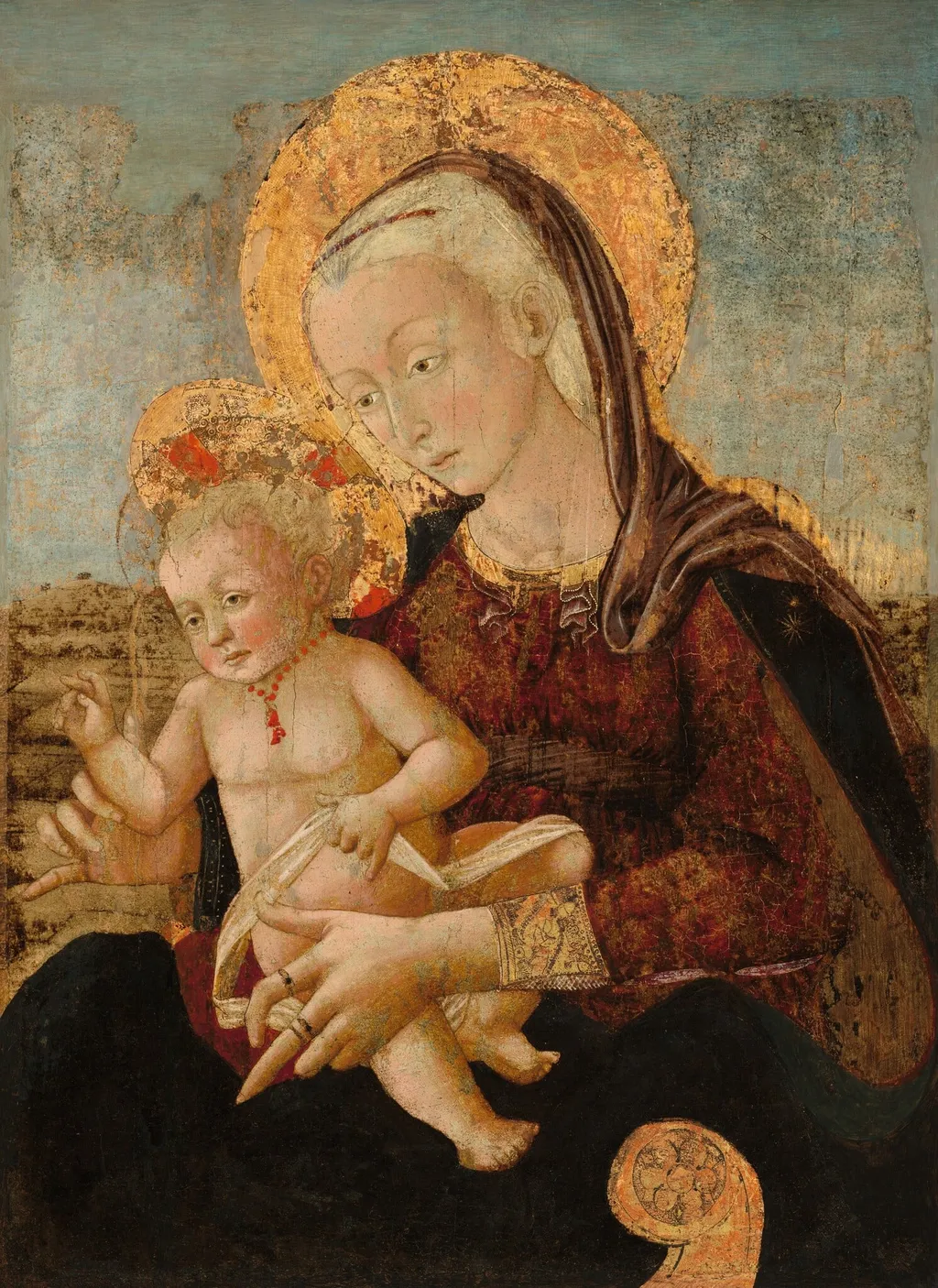
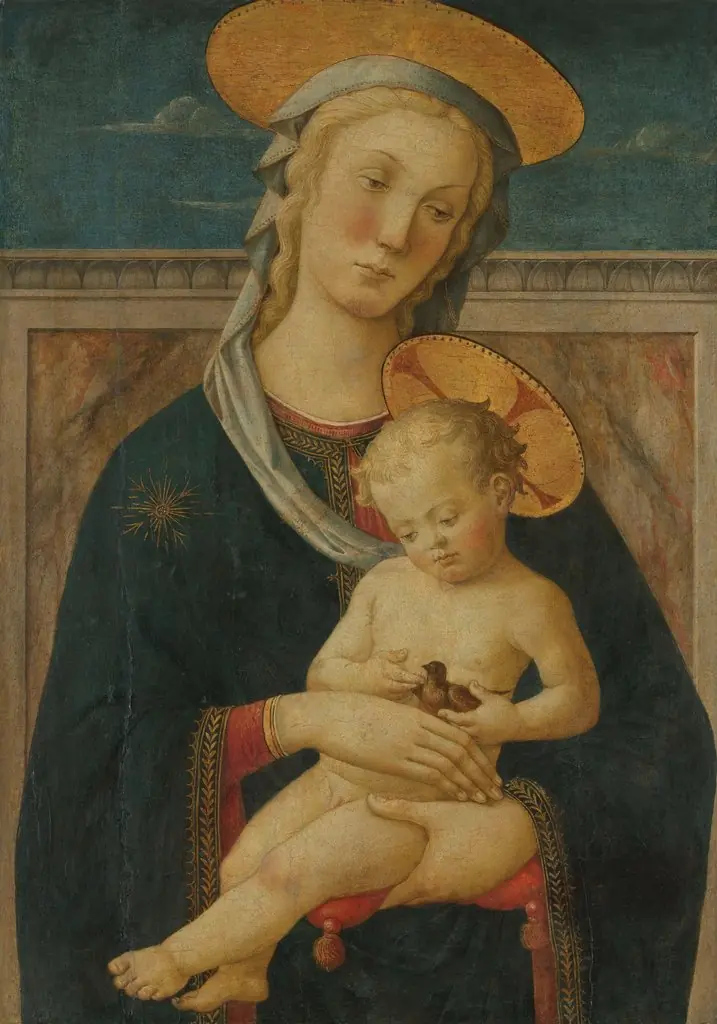
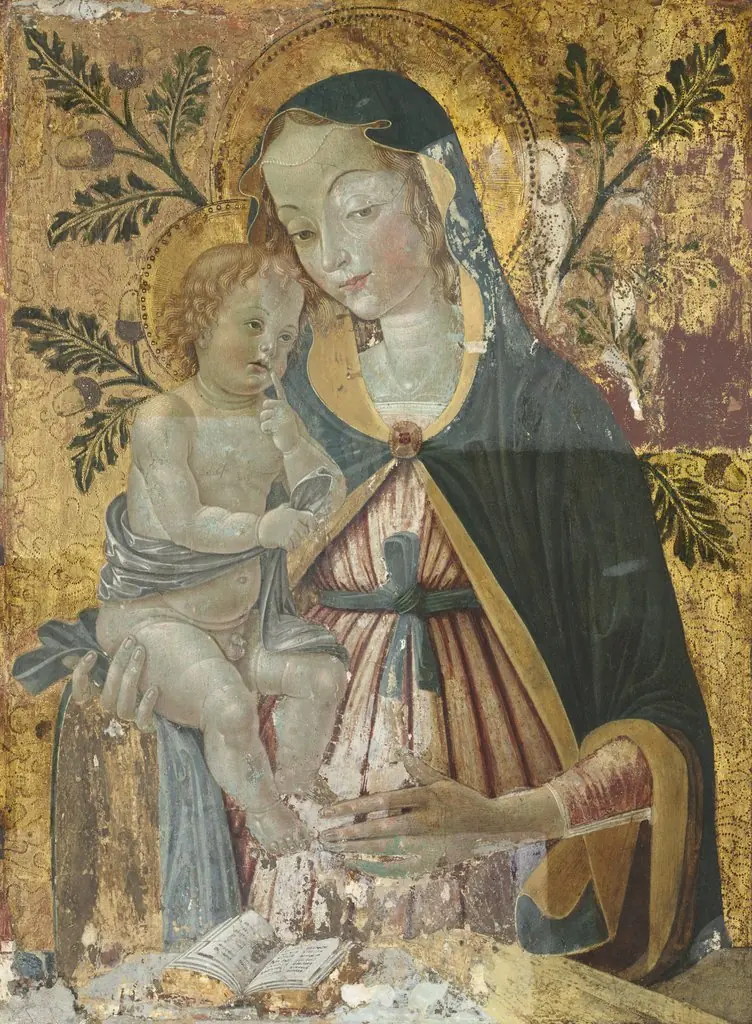
Madonna and Child is a tempera painting by the Early Renaissance artist Pier Francesco Fiorentino. It dates from 1475 and is held in the collection of the National Gallery of Art.
About this work
Subject & Meaning
The work adheres to the traditional Madonna and Child iconography, a central subject in Christian art representing the maternal bond between Mary and Jesus.
Created in 1475 by Pier Francesco Fiorentino, this religious painting depicts the Virgin Mary holding the Christ Child. The work adheres to the traditional Madonna and Child iconography, a central subject in Christian art representing the maternal bond between Mary and Jesus. As a piece of religious genre art, it visually communicates theological themes of incarnation and divine motherhood through the portrayal of these two specific figures.
The composition focuses exclusively on these subjects, serving as a devotional image intended to inspire reverence for the holy figures depicted.
Technique & Style
The painting is a tempera work on a wooden panel that has been transferred to canvas, dating to 1475. Its support is a panel that was later mounted on canvas, a technique often employed to protect early works. The composition portrays the Virgin Mary holding the infant Christ Child within a devotional setting, reflecting the religious genre of the period.
Executed in a naturalistic style characteristic of early Italian painting, the piece measures approximately 79.5 cm in height and 60 cm in width, as recorded in the Kress Collection records.
History & Provenance
Pier Francesco Fiorentino's Madonna and Child was executed in 1475 in tempera on panel, later transferred to canvas. The earliest documented owner is Arnaldo Corsi of Florence, after which the panel may have passed to the Sienese restorer Icilio Federico Joni (1866–1946). In 1912 the work was sold to the Duveen Brothers firm in London and New York, then attributed to Alesso Baldovinetti, and was acquired by New York collector William Salomon (1852–1919).
It descended by inheritance to Mrs. William Salomon, who returned it to Duveen Brothers in 1923. Clarence H. Mackay of Roslyn, New York (1874–1938) owned the painting by 1924 and retained it until at least 1926, after which it likely re-entered the Duveen stock. In 1936 the Samuel H. Kress Foundation purchased the painting in New York, and in 1939 the Foundation donated it to the National Gallery of Art in Washington, D.C., as part of the Kress Collection.
The painting is held by the National Gallery of Art in Washington, D.C., as part of the Samuel H. Kress Collection. It entered the Kress Foundation in 1936 through the Duveen Brothers and was given to the NGA in 1939. Earlier in its documented provenance, the panel passed through Arnaldo Corsi in Florence and possibly the restorer Icilio Federico Joni in Siena before being sold in 1912 to Duveen Brothers, who offered it as a work by Baldovinetti.
It subsequently belonged to William Salomon in New York, then to Clarence H. Mackay of Roslyn by 1924, before returning to Duveen and entering the Kress Foundation. Valentiner's 1976 catalogue of the Mackay collection lists it as no. 2.
Legacy
The painting has attracted sustained scholarly attention, noted by Valentiner and Simpson in studies of early Italian art, underscoring its importance in the development of Renaissance imagery. Its inclusion in the Samuel H. Kress Collection and subsequent display at the National Gallery of Art elevated its public profile and cemented its status as a representative example of 15th‑century devotional painting. Documentation of its provenance, from Corsi to Mackay and finally to the Kress Foundation, illustrates the trajectory of 20th‑century art market practices.
Contemporary catalogues and digital archives continue to reference the work, influencing both academic discourse and museum interpretation of early Italian religious art.
Overview
Pier Francesco Fiorentino's painting, Madonna and Child, created around 1475, presents a traditional religious scene. This tempera on panel work, later transferred to canvas, depicts the Virgin Mary tenderly holding the Christ Child. Its composition and muted palette evoke a sense of quiet intimacy within a simple domestic setting, reflecting the devotional art popular in the late 15th century.
Context
Created during the late 1400s, Madonna and Child exemplifies a common practice of the era: the production of religious images using tempera paint. While new artistic trends were developing, many artists, including Fiorentino, continued to work within established stylistic traditions. This ensured a supply of familiar and reverent depictions of holy figures for private devotion or church settings, appealing to traditional tastes.
Own this work as a print
Artist & collection


![Madonna and Child, with the Blessing Christ [middle panel], by Pietro Lorenzetti](https://artifactworldgallery.com/img/pietro-lorenzetti--madonna-and-child-with-the-blessing-christ-middle-panel--02357aa6ff04175b-w320.webp)