Artwork
Madonna and Child
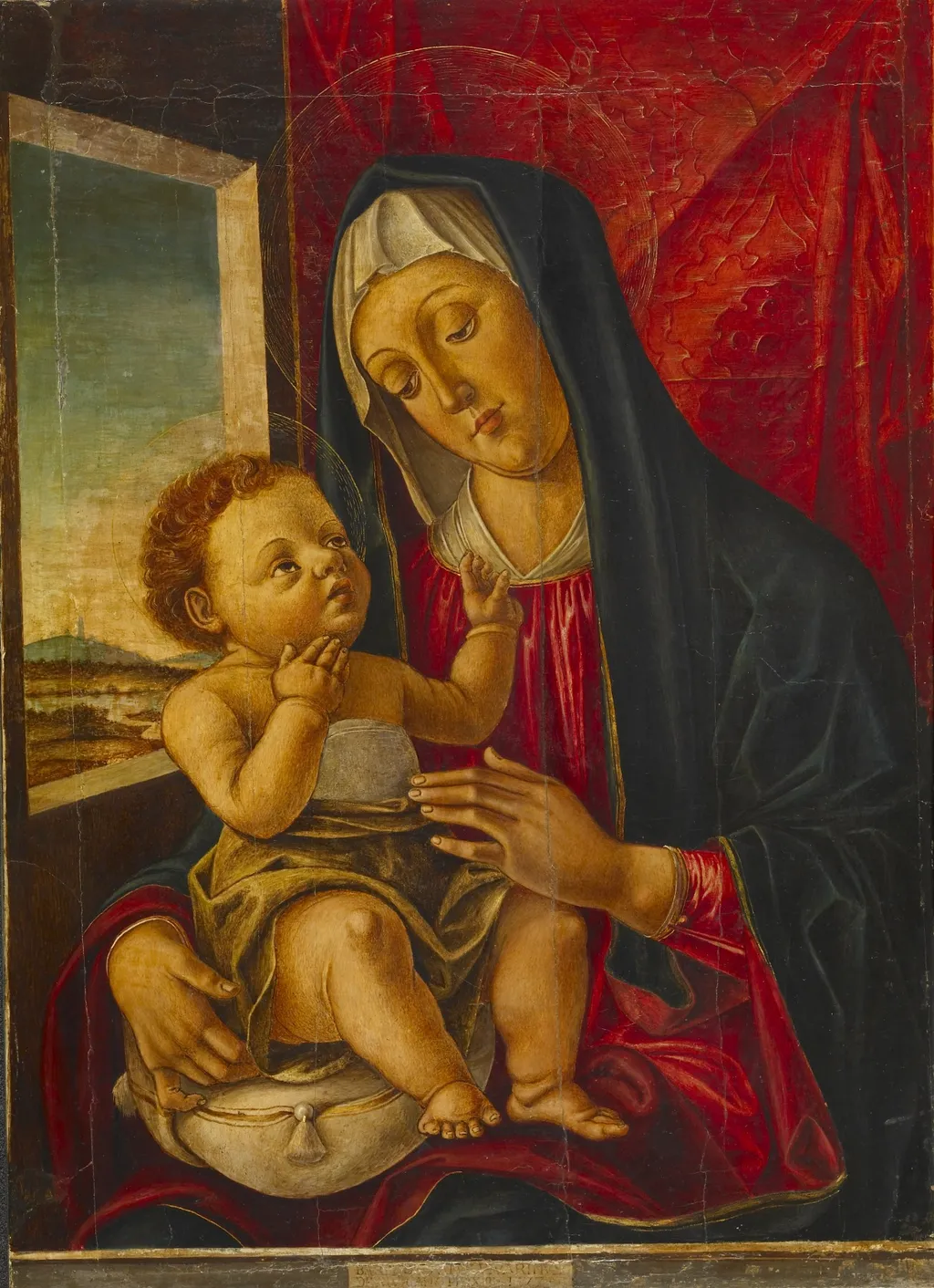
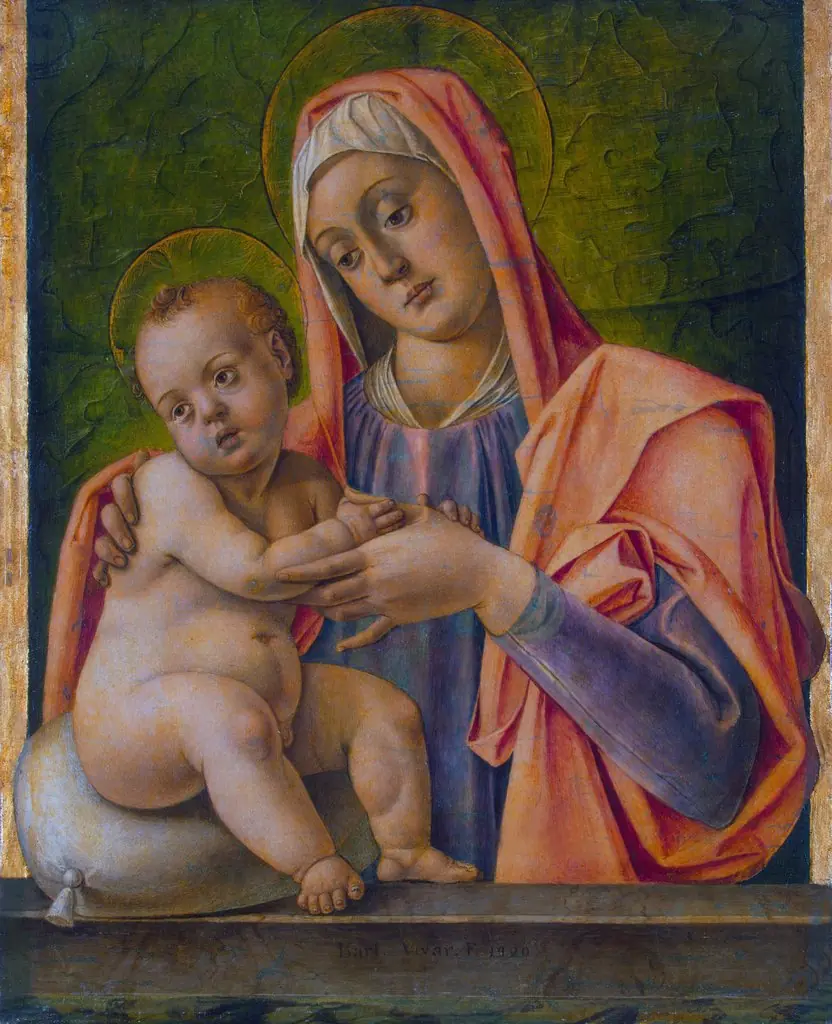
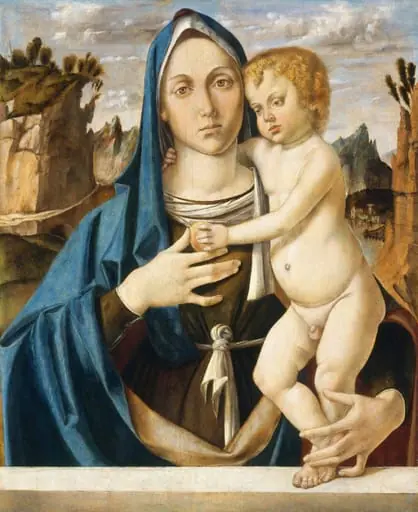
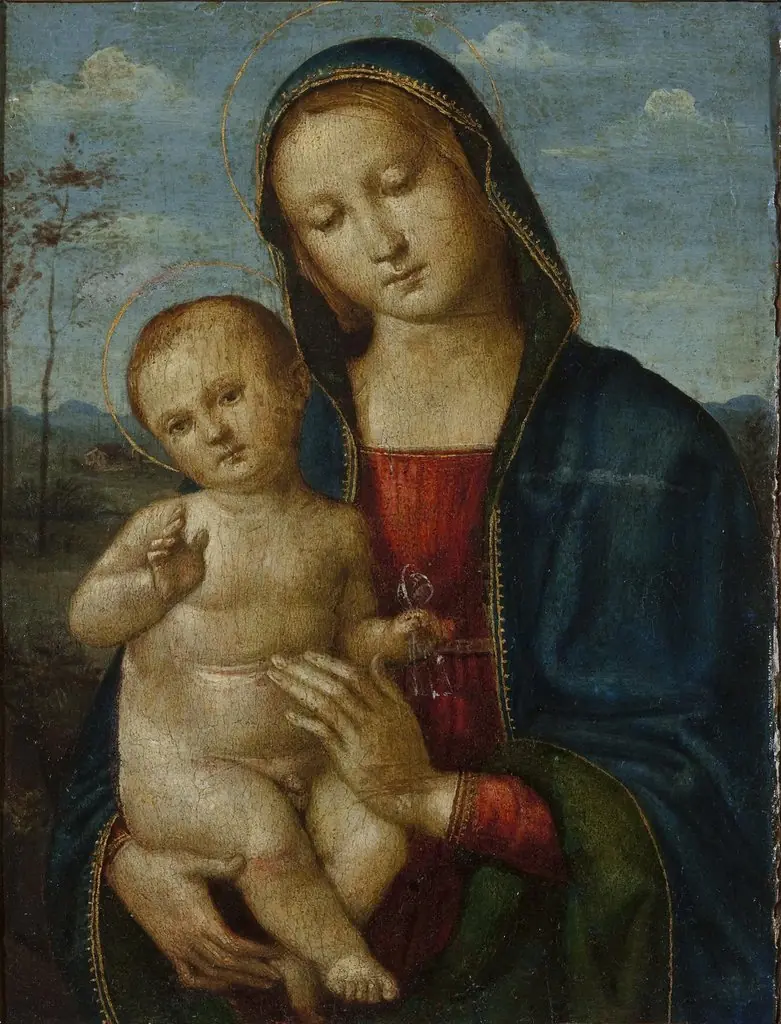
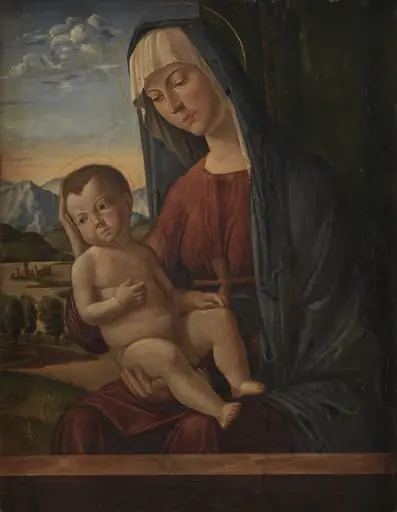
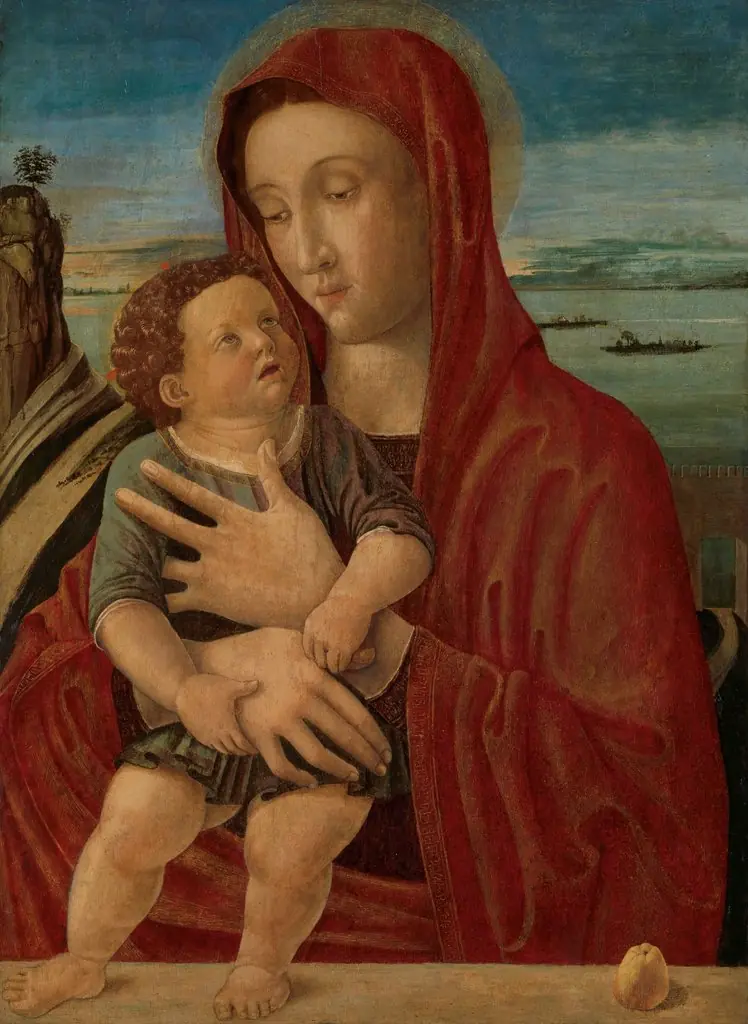
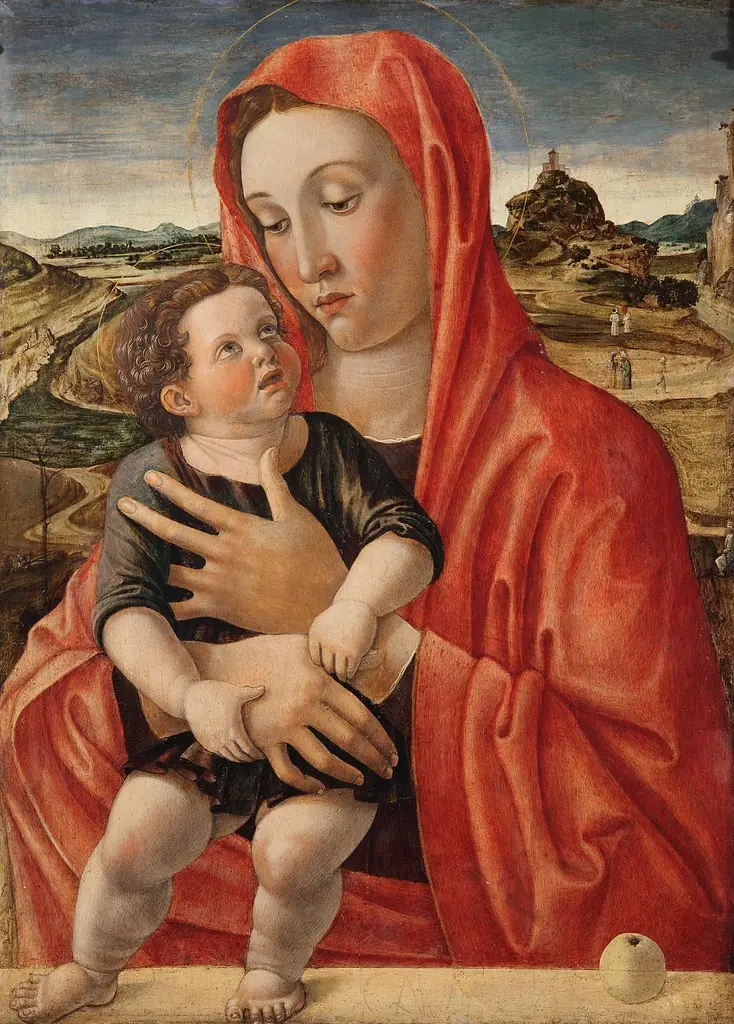
Madonna and Child is an oil painting by the Venetian Renaissance artist Bartolomeo Vivarini. It dates from 1489 and is held in the collection of the Walters Art Museum.
About this work
Overview
Bartolomeo Vivarini completed this oil painting in 1489, representing a devotional image common in late 15th-century Venice.
Bartolomeo Vivarini completed this oil painting in 1489, representing a devotional image common in late 15th-century Venice. The work features the Virgin Mary with the infant Jesus in a quiet, enclosed space, reflecting the spiritual focus of religious art during the Venetian Renaissance. It is now held in the Walters Art Museum, where it contributes to the study of regional painting practices of the period.
Subject & Meaning
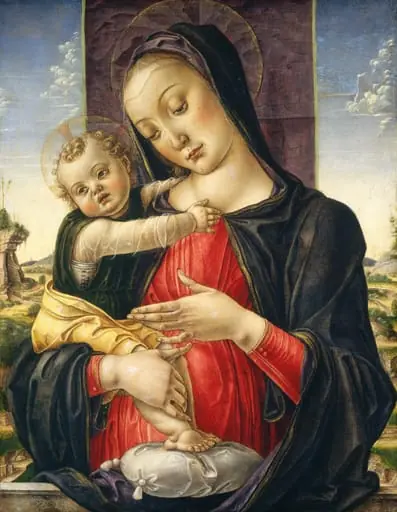
The composition centers on a tender, intimate exchange between Mary and Jesus, emphasizing maternal tenderness over grandeur. Mary’s gentle gaze and the Child’s upward look suggest a moment of quiet connection, reinforcing themes of divine humanity and maternal care. The absence of elaborate symbolism points to a personal, contemplative devotion typical of private worship in Renaissance Venice.
Technique & Style
Vivarini employed oil paint to achieve subtle gradations of light and texture, particularly in the folds of Mary’s garments and the softness of the Child’s skin. The dark blue mantle contrasts with the red undergarment, while the landscape beyond the window is rendered with delicate atmospheric perspective. The figures are arranged in a compact, frontal pose, characteristic of Venetian devotional panels of the era.
History & Provenance
Painted in 1489, the work entered the Walters Art Museum’s collection through documented acquisitions in the early 20th century. Its provenance before that remains unclear, though its style aligns with other works produced in Venice during Vivarini’s active years. The painting has remained largely unaltered since its creation, preserving its original composition and surface quality.
Context
Vivarini worked within a family of Venetian painters who bridged Gothic traditions and emerging Renaissance naturalism. This painting reflects the influence of both local workshops and the growing use of oil techniques, inspired by Northern European models. Religious imagery like this was often commissioned for domestic chapels or personal devotion, catering to a rising lay piety in Renaissance cities.
Legacy
Though not among Vivarini’s most widely known works, this painting exemplifies the quiet refinement of Venetian religious art before the full impact of High Renaissance ideals. It contributes to understanding how regional artists adapted devotional themes with emotional restraint and technical precision, influencing later generations in the Veneto region.
Own this work as a print
Artist & collection
Artist
Bartolomeo or Bartolommeo Vivarini (c. 1432 – c. 1499) was an Italian Renaissance painter, known to have worked from 1450 to 1499.