Artwork
Composition: Light Color Planes with Grey Lines
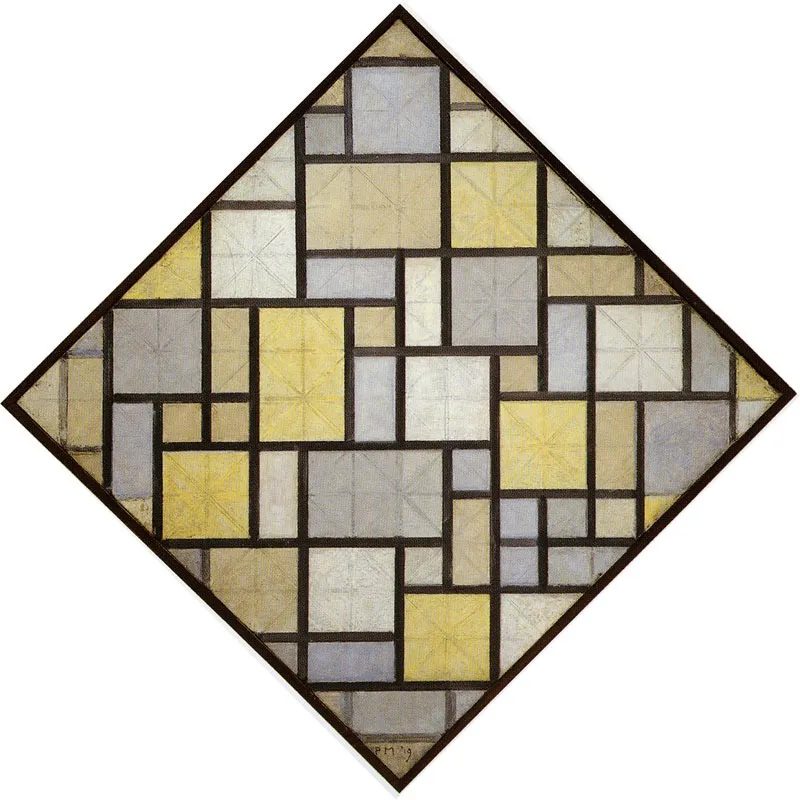
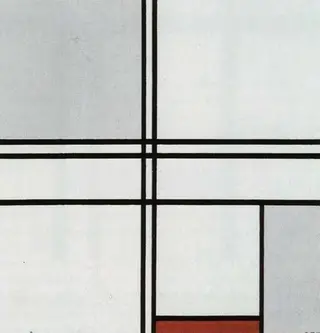
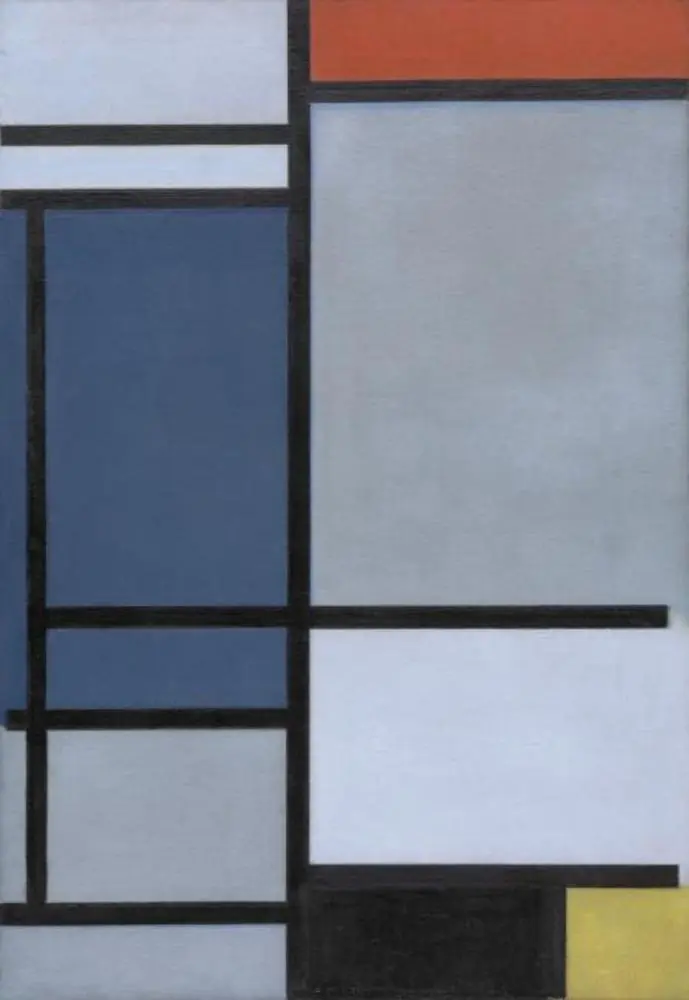
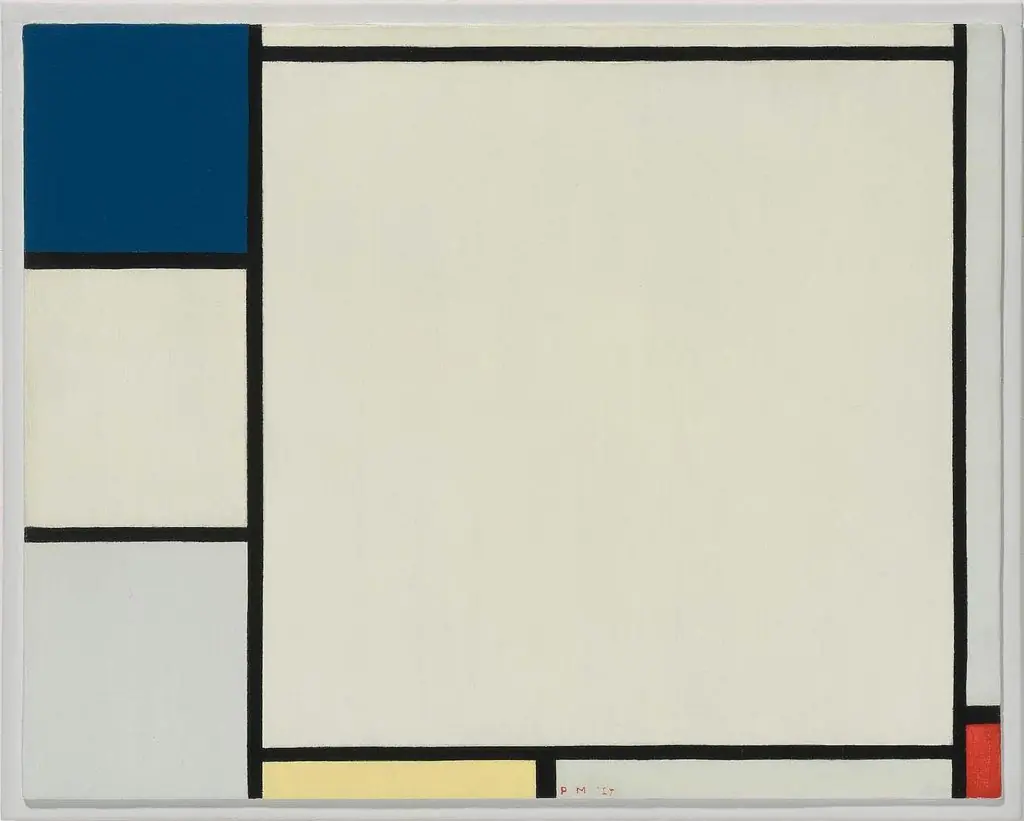
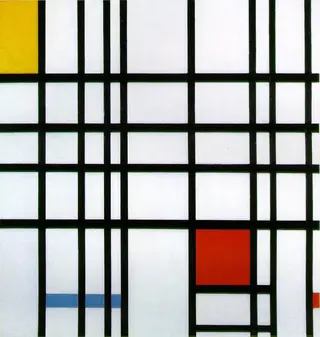
Composition: Light Color Planes with Grey Lines is an oil painting by the De Stijl artist Piet Mondrian. It dates from 1919 and is held in the collection of the Kröller-Müller Museum.
About this work
Overview
Painted in 1919, this oil on canvas work is one of Piet Mondrian’s early abstract compositions following his departure from representational art.
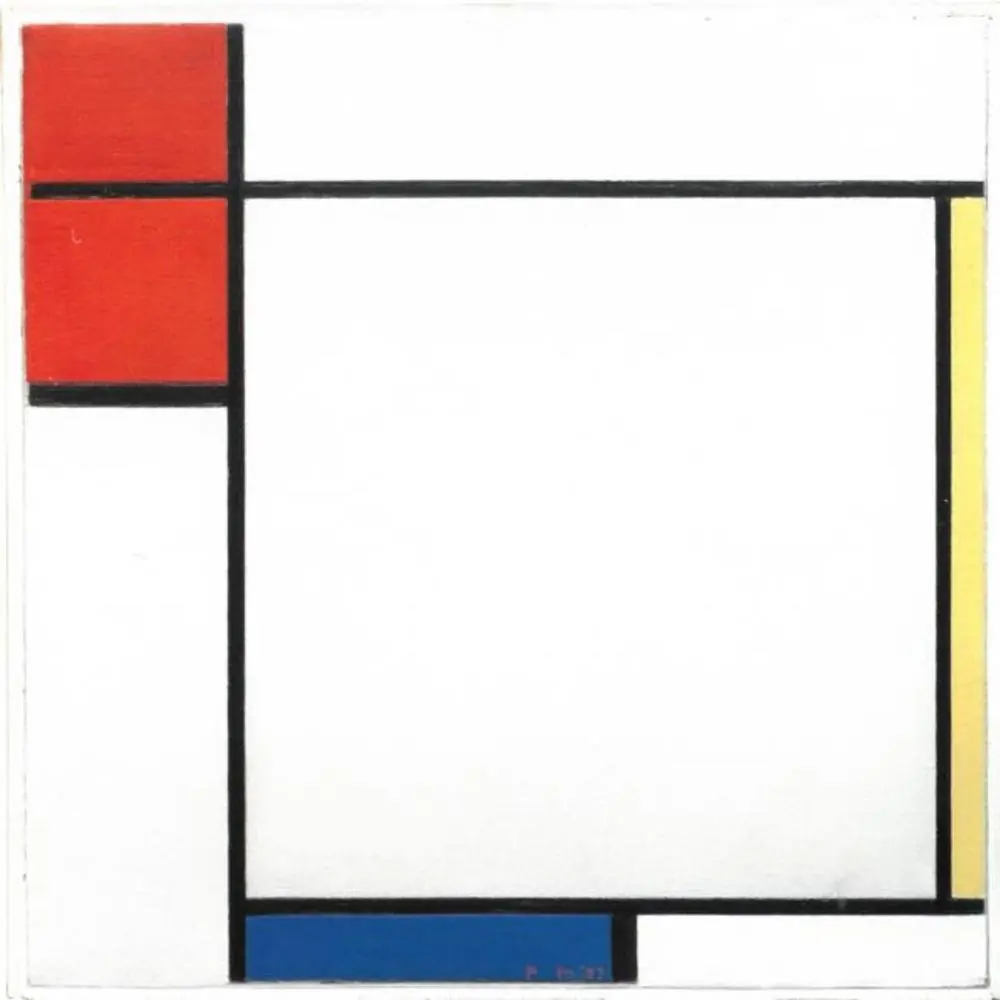
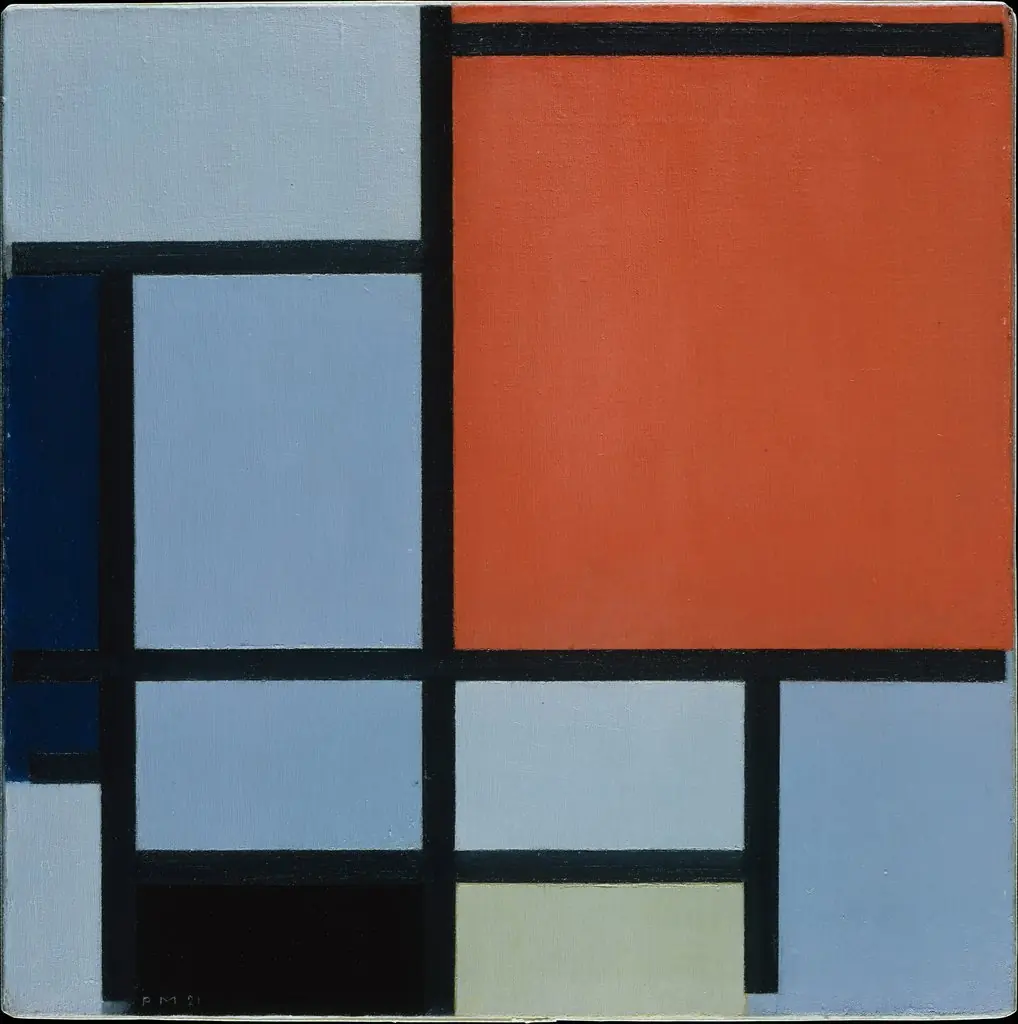
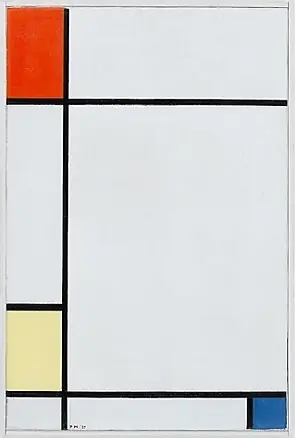
Painted in 1919, this oil on canvas work is one of Piet Mondrian’s early abstract compositions following his departure from representational art. It belongs to the De Stijl movement, which sought to express harmony through pure form and color. The painting features a grid of rectangles and squares defined by thin grey lines, with areas of white, yellow, and pale grey filling the planes. Its restrained palette and structured layout reflect a deliberate move toward visual equilibrium.
Subject & Meaning
The painting has no representational subject; its meaning lies in the relationships between geometric forms and color. Mondrian aimed to convey universal balance through abstraction, believing that basic shapes and primary tones could express underlying cosmic order. The absence of curves and figuration signals a rejection of natural appearance in favor of a purified visual language rooted in spiritual and philosophical ideals of harmony.
Technique & Style
Mondrian applied oil paint with precision, using flat, unmodulated planes of color bounded by fine, straight grey lines. The brushwork is deliberate and even, avoiding texture or gesture. The composition is asymmetrical yet balanced, with larger white and yellow areas counterweighted by smaller grey sections.
This methodical arrangement reflects his evolving system of visual proportion, derived from earlier studies of rhythm and structure.
History & Provenance
Created in 1919 during Mondrian’s time in Paris, the work emerged after his exposure to Cubism and before his full adoption of black grid lines. It entered the Kröller-Müller Museum’s collection in the 1930s through the museum’s founder, Helene Kröller-Müller, an early advocate of modernist art. The painting has remained in the museum’s holdings since, consistently exhibited as a key example of early De Stijl abstraction.
Context
This piece was made during a period of intense artistic experimentation in Europe after World War I. Mondrian, alongside Theo van Doesburg, promoted De Stijl as a visual philosophy aligned with broader cultural efforts to rebuild society through order and clarity. The work’s minimalism resonated with contemporary movements in architecture and design that sought to strip away ornament in favor of functional purity.
Legacy
The painting exemplifies Mondrian’s foundational contribution to abstract art and modern design. Its emphasis on geometric structure and limited color influenced generations of artists, architects, and designers, particularly in the Bauhaus and mid-century modernism. While later works would refine his palette to black lines and primary colors, this 1919 piece marks a critical transition toward the canonical style that defined his legacy.
Artist & collection

Artist
Pieter Cornelis Mondriaan (Dutch:; 7 March 1872 – 1 February 1944), known after 1911 as Piet Mondrian (, US also; Dutch: ), was a Dutch painter and art theoretician, who is regarded as one of the greatest artists of the 20th century.