Artwork
Tableau no 1
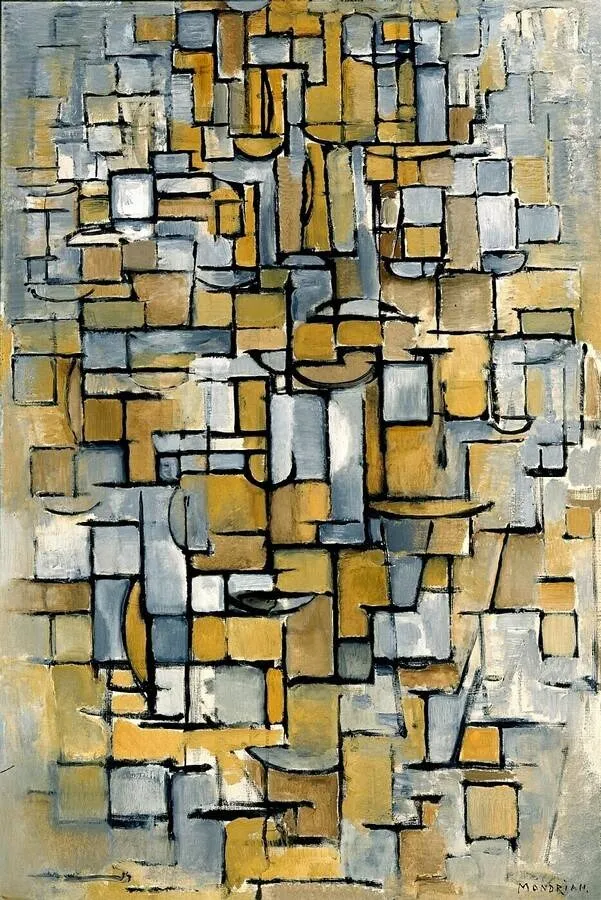
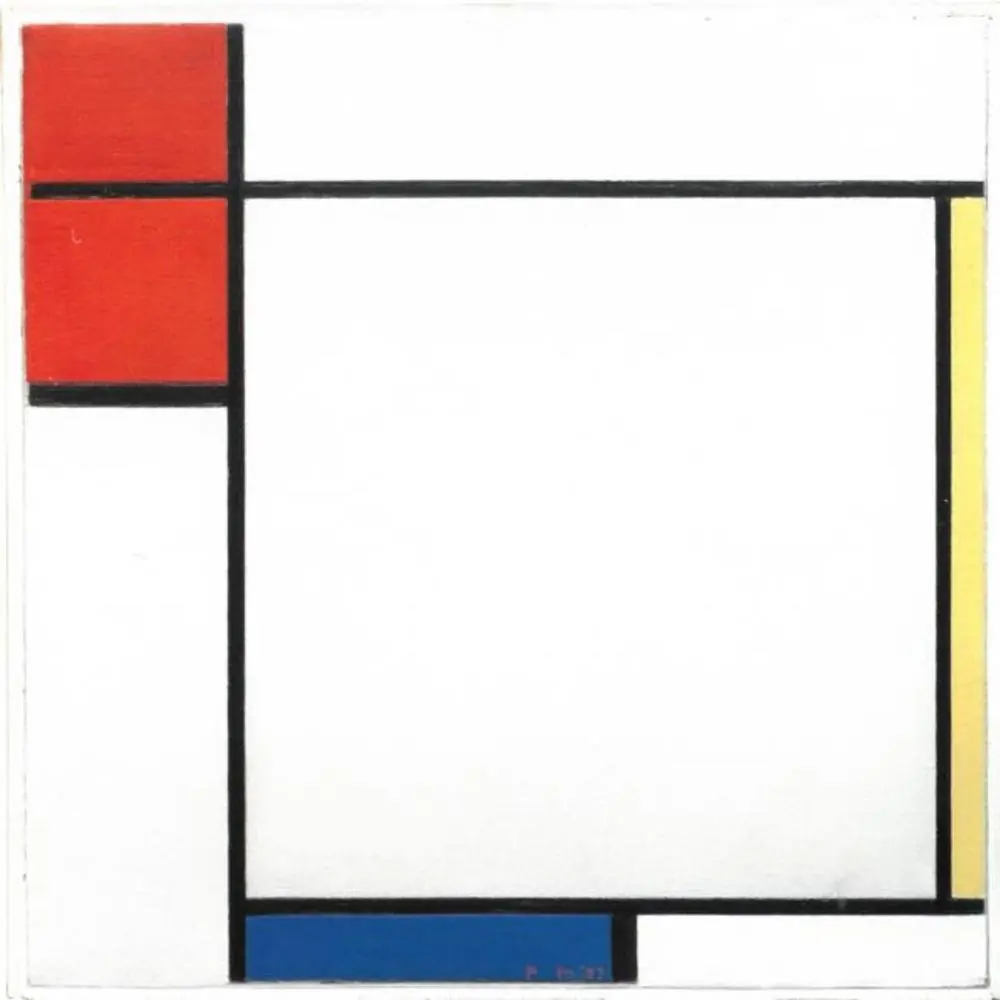
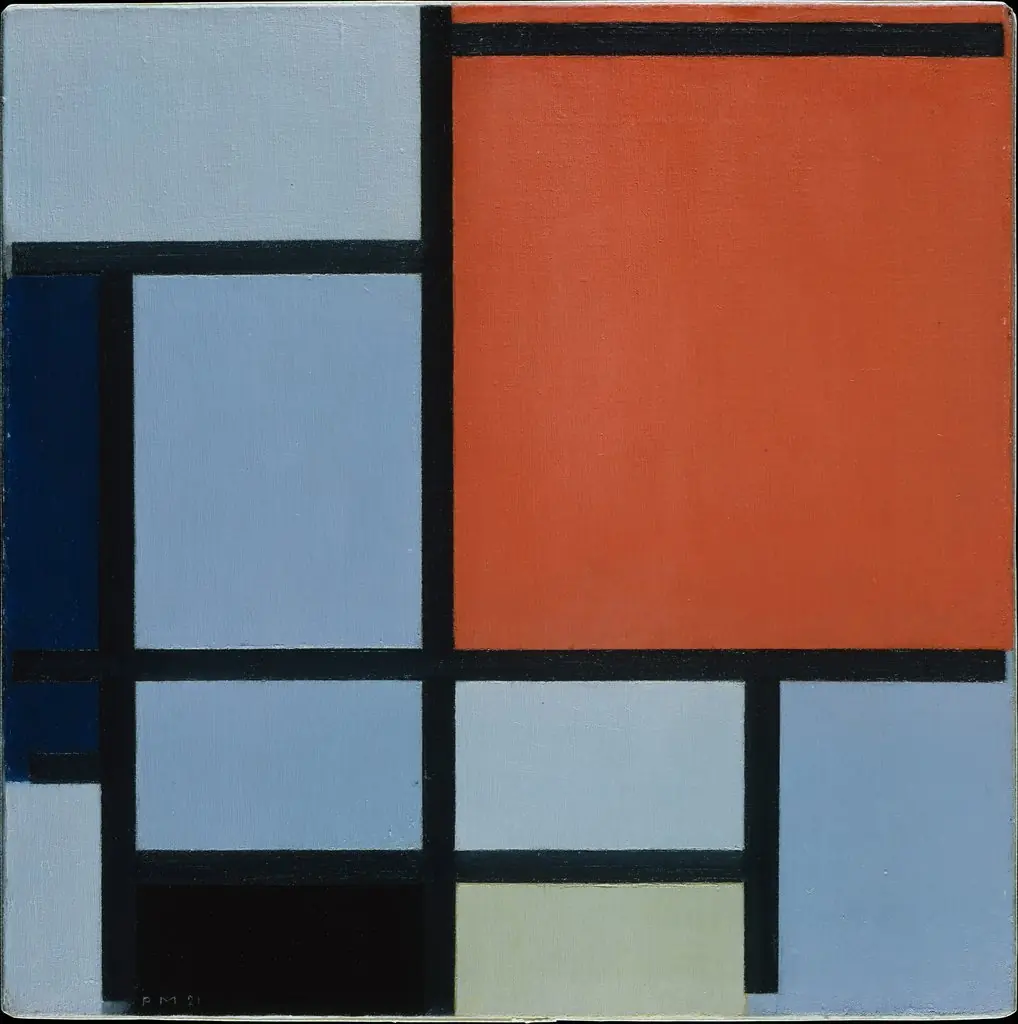
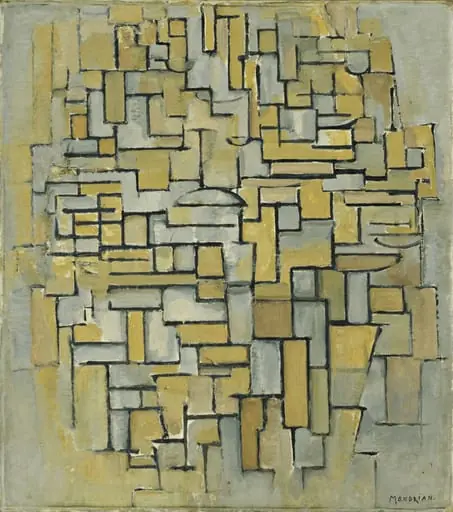
Tableau no 1 is an oil painting by the De Stijl artist Piet Mondrian. It dates from 1913 and is held in the collection of the Kröller-Müller Museum.
About this work
Overview
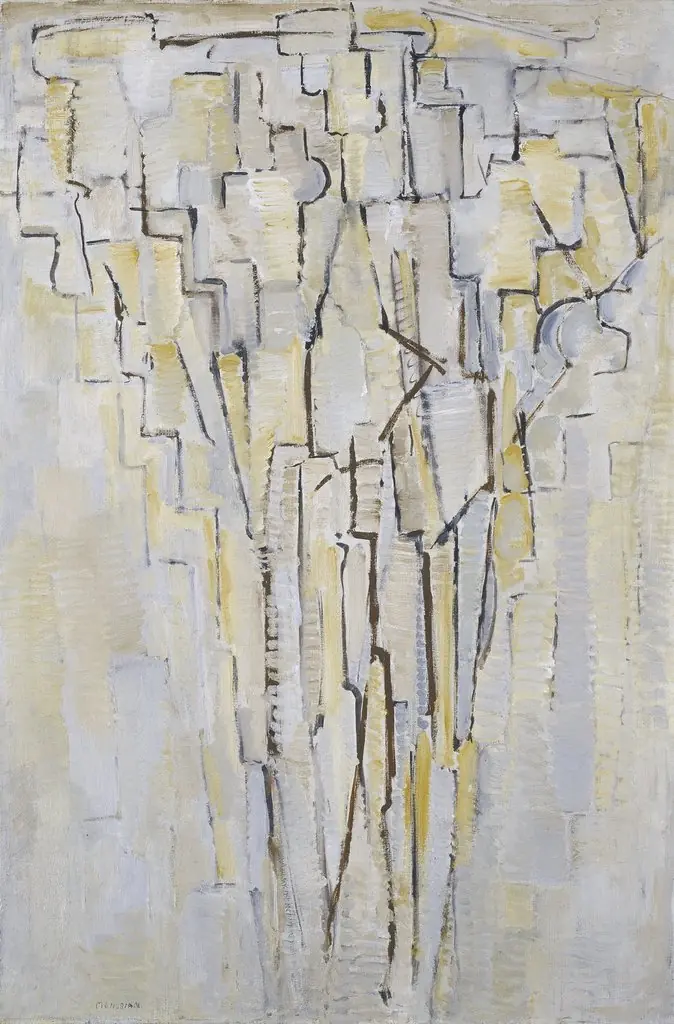
Created in 1913, Tableau no 1 is an oil painting by Dutch artist Piet Mondrian. The work exemplifies his move toward pure abstraction, employing a restrained palette of gray and yellow intersected by thin black lines that generate a grid of rectangular planes.
Subject & Meaning
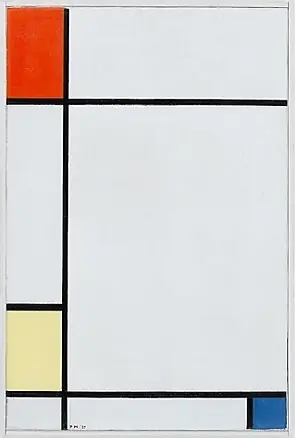
The composition consists of a network of rectangles of varying proportions, arranged within a lattice of black lines. By reducing visual elements to basic geometric forms, Mondrian seeks a universal visual language that emphasizes balance and harmony rather than representational content.
Technique & Style
Executed with oil on canvas, the painting utilizes flat, unmodulated color fields and precise linear divisions. The thin black strokes delineate the rectangles, while the muted gray and bright yellow surfaces create subtle contrast, reflecting the De Stijl aesthetic of simplicity and order.
History & Provenance
Tableau no 1 belongs to the early phase of Mondrian’s involvement with the De Stijl movement, which he co‑founded in 1917. The work marks a transitional moment as he abandoned figurative motifs in favor of the geometric abstraction that would define his later oeuvre.
Context
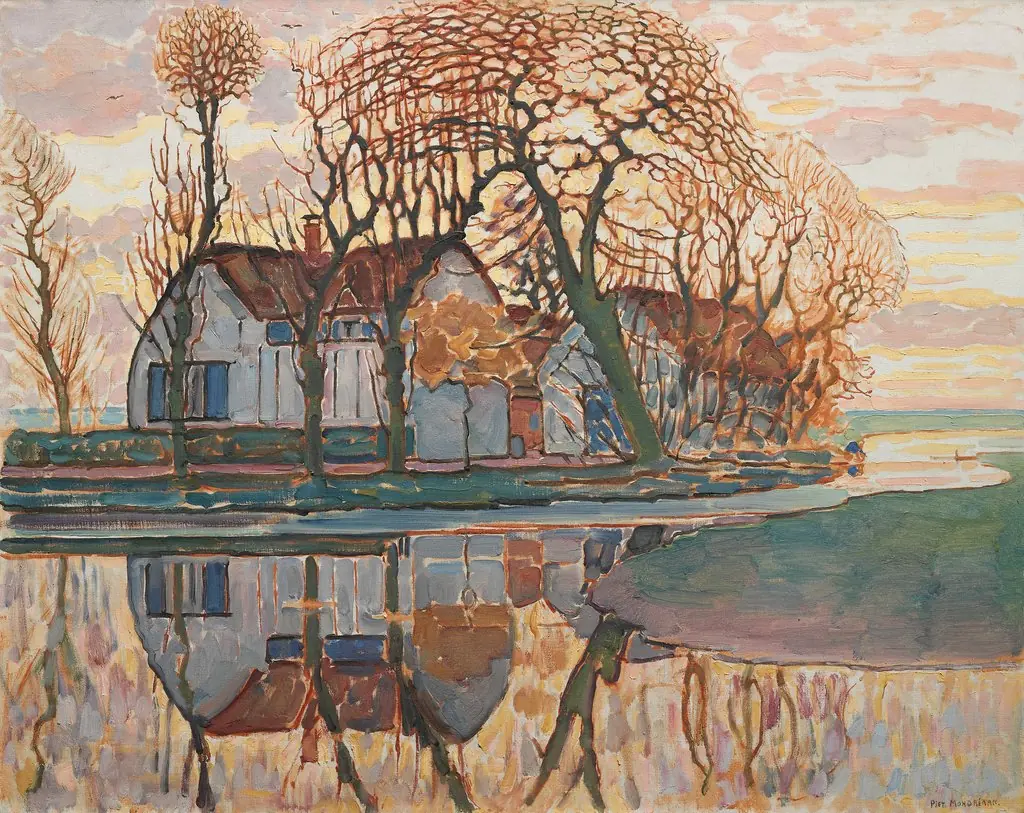
In the early 1910s, European art was shifting toward abstraction, with movements such as Cubism influencing artists like Mondrian. Within this climate, De Stijl advocated a reduction of form and color to their essentials, a principle clearly manifested in this painting’s austere visual vocabulary.
Artist & collection

Artist
Pieter Cornelis Mondriaan (Dutch:; 7 March 1872 – 1 February 1944), known after 1911 as Piet Mondrian (, US also; Dutch: ), was a Dutch painter and art theoretician, who is regarded as one of the greatest artists of the 20th century.