Artwork
Tableau no.I
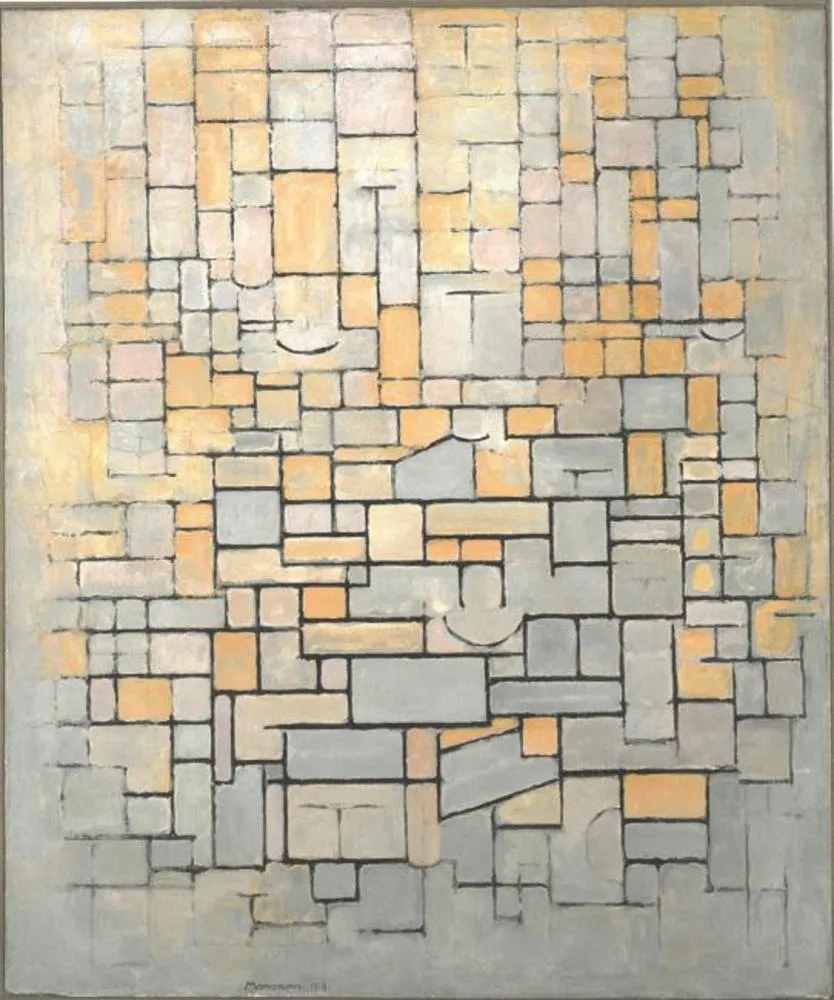
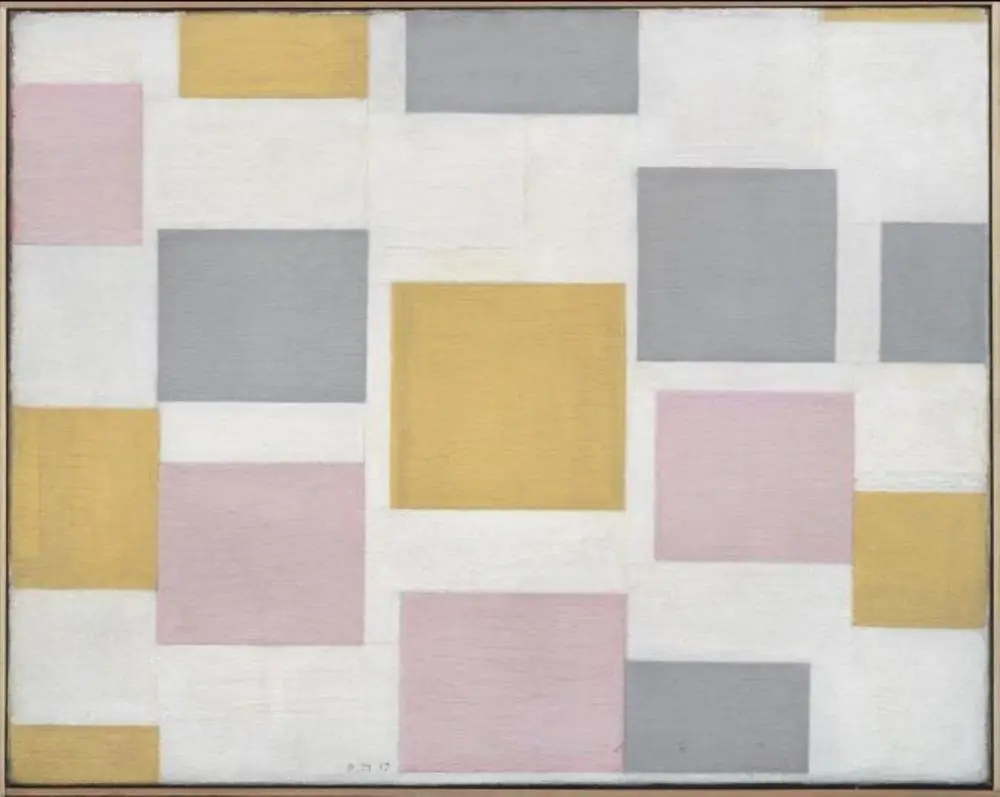
Tableau no.I is an oil painting by the De Stijl artist Piet Mondrian. It dates from 1914 and is held in the collection of the Kimbell Art Museum. Tableau no.
About this work
Overview
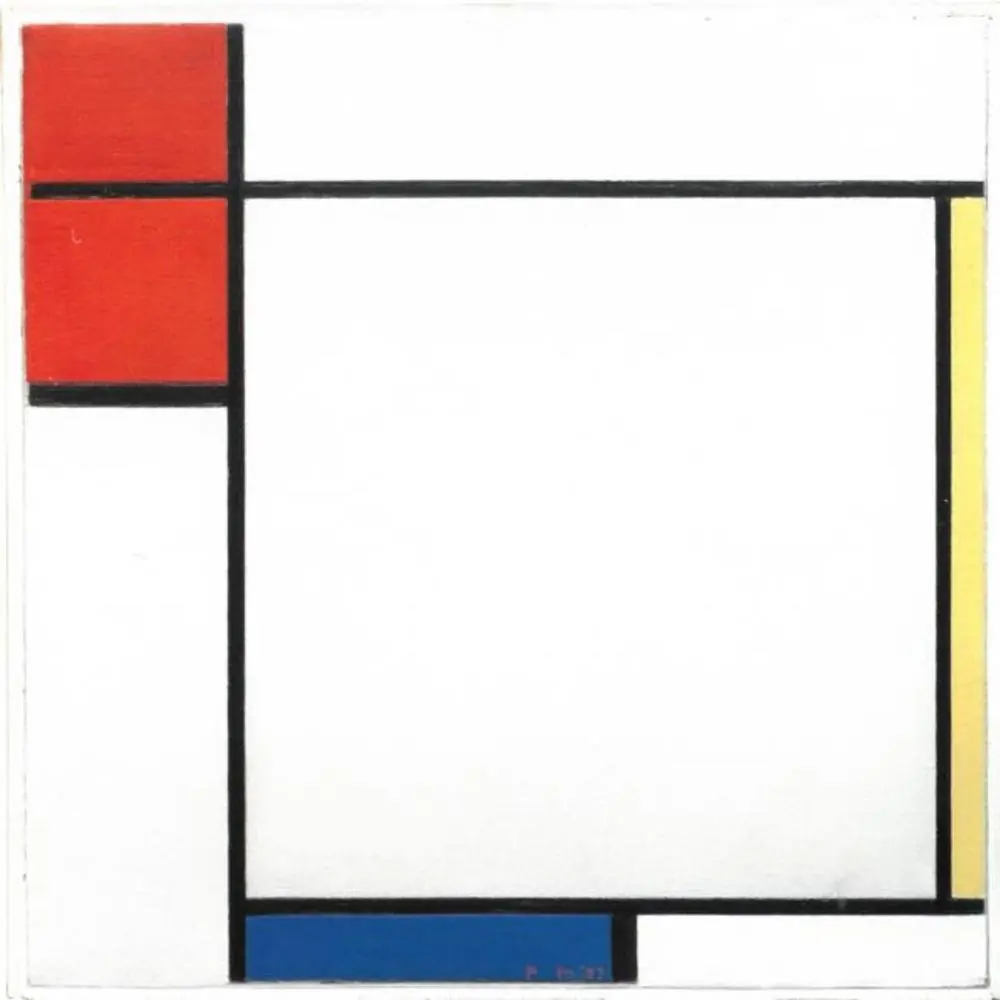
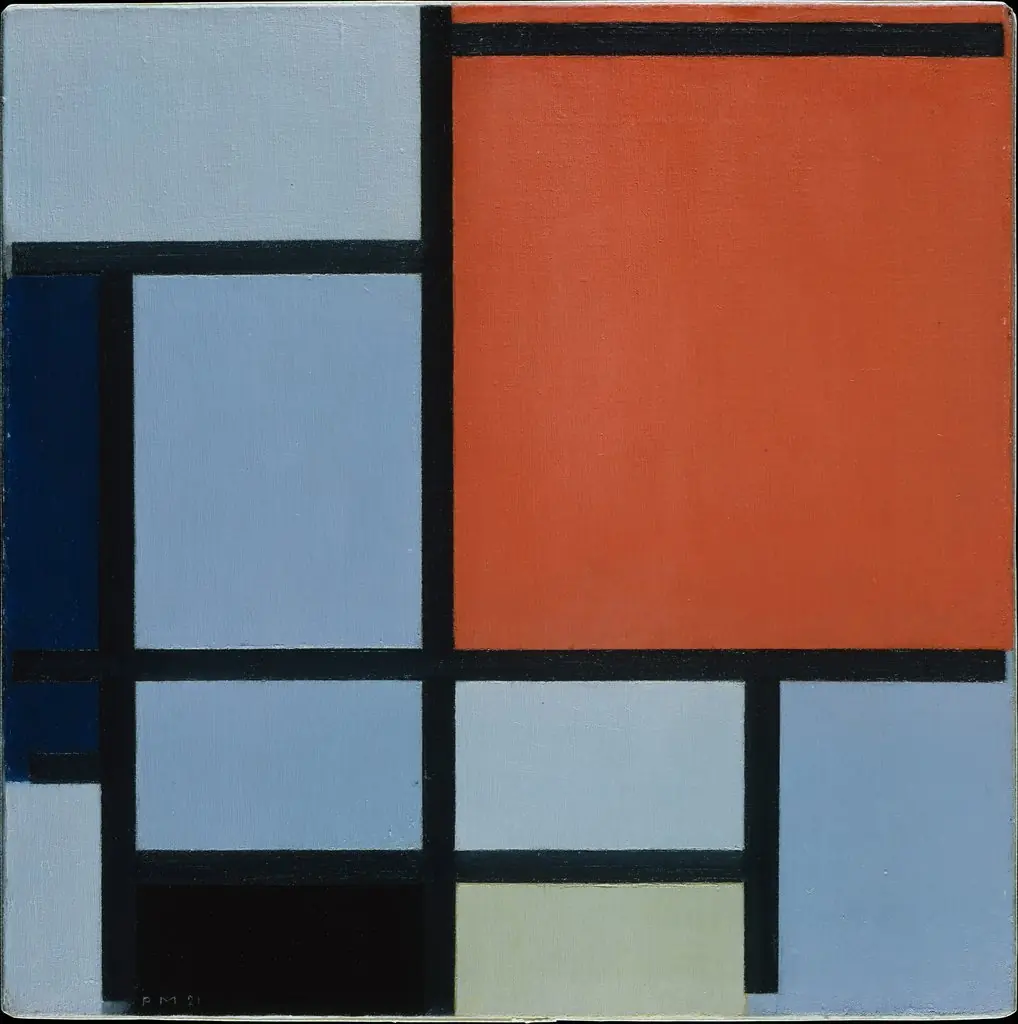
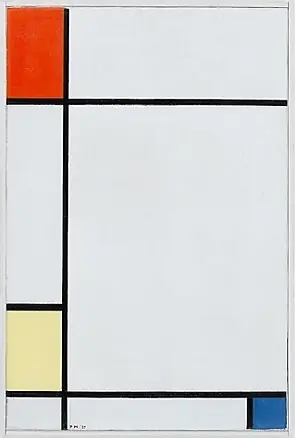
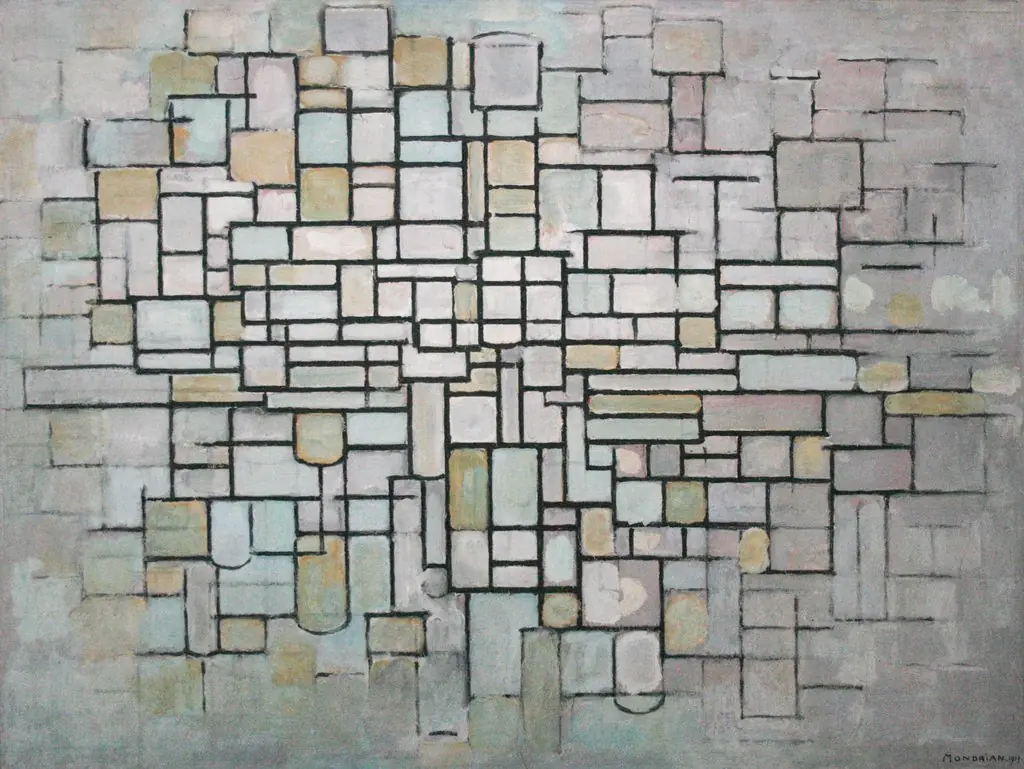
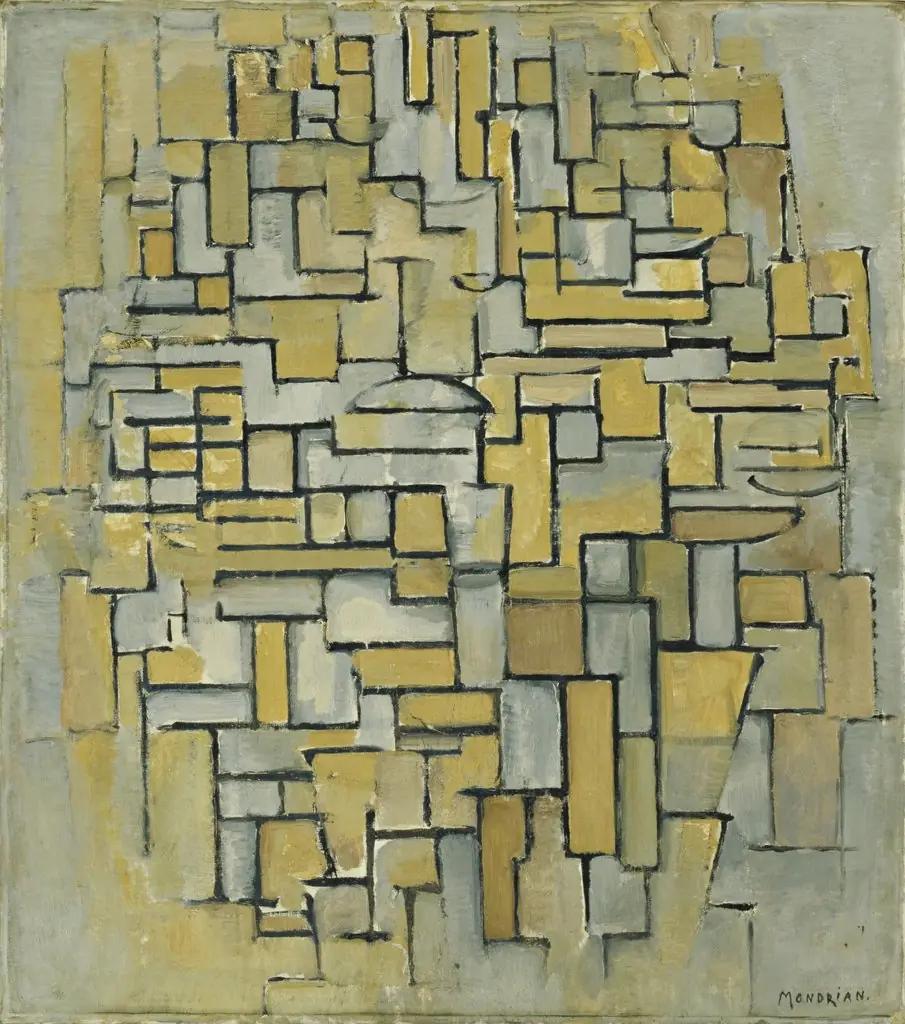
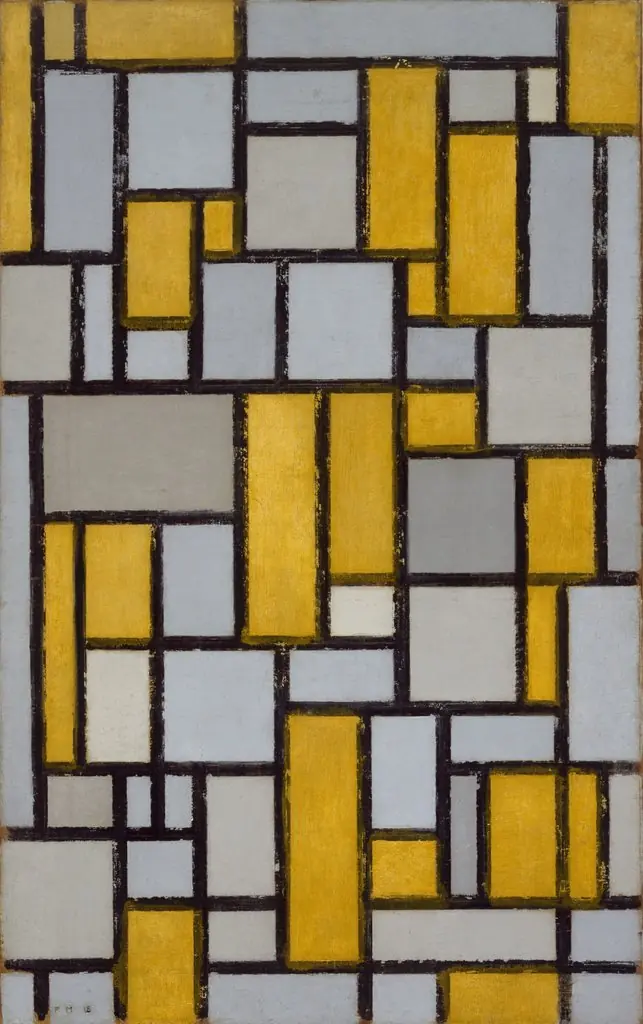
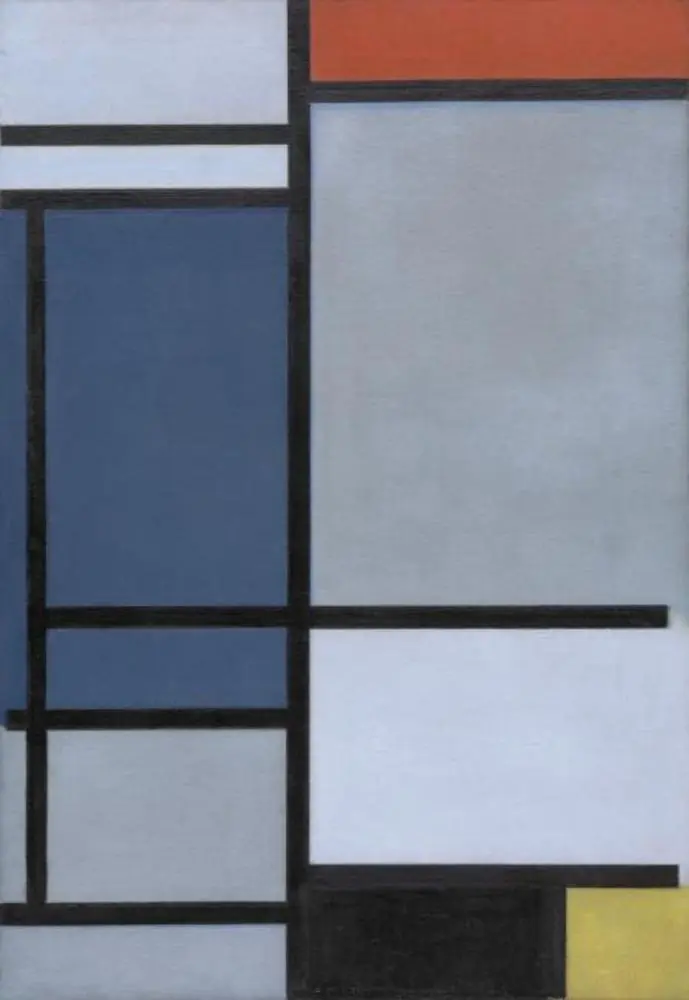
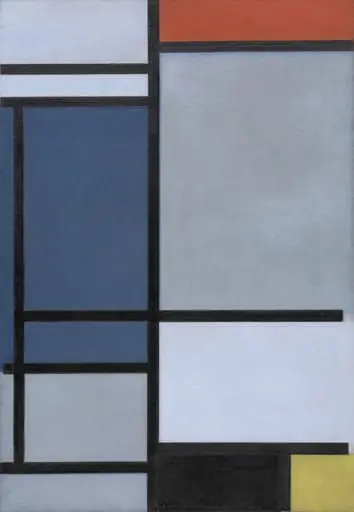
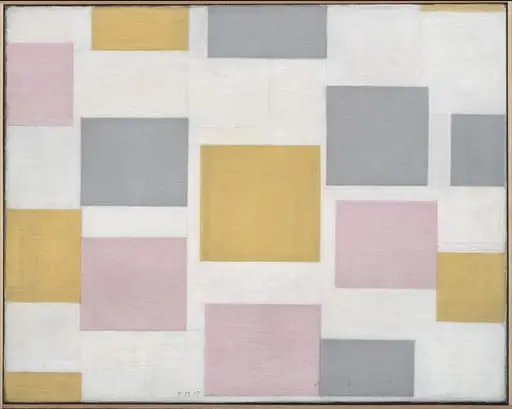
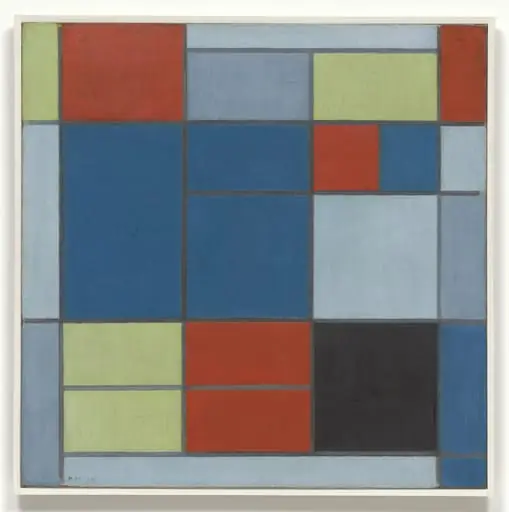
Tableau no.I is a 1914 oil painting by Piet Mondrian, marking a pivotal stage in his shift towards geometric abstraction. Characterized by a grid of rectangles and squares in muted tones (grays, beiges, yellows) outlined in black, the work embodies a balance of order and structured composition.
Subject & Meaning
The painting's subject is the exploration of universal aesthetic principles through the reduction of form to basic geometric elements, eschewing representation in favor of compositional harmony and visual equilibrium.
Technique & Style
Mondrian employs a restrained color palette with black outlines to define shapes, creating a sense of depth and texture. The varied sizes of the geometric forms add complexity to the otherwise orderly grid, reflecting the De Stijl movement's emphasis on simplicity and balance.
History & Provenance
Created in 1914, Tableau no.I represents a transitional work in Mondrian's oeuvre as he moved towards full geometric abstraction, a hallmark of his contribution to the De Stijl movement.
Context
As a leading figure in the Dutch De Stijl movement, Mondrian's work, including Tableau no.I, influenced the development of modern abstract art, emphasizing the emotional and expressive potential of geometric forms.
Legacy
Tableau no.I contributes significantly to the legacy of geometric abstraction, illustrating Mondrian's pioneering role in stripping art down to its essentials and exploring the emotional depth of simplified, structured compositions.
Artist & collection

Artist
Pieter Cornelis Mondriaan (Dutch:; 7 March 1872 – 1 February 1944), known after 1911 as Piet Mondrian (, US also; Dutch: ), was a Dutch painter and art theoretician, who is regarded as one of the greatest artists of the 20th century.