Artwork
Composition No. 11
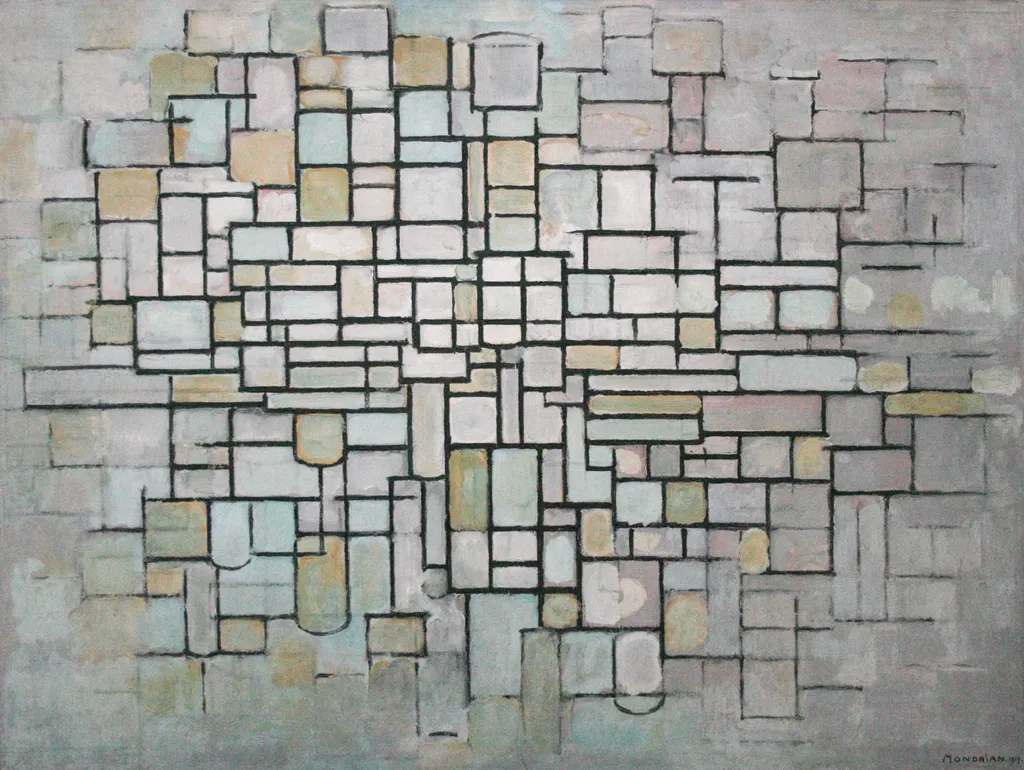
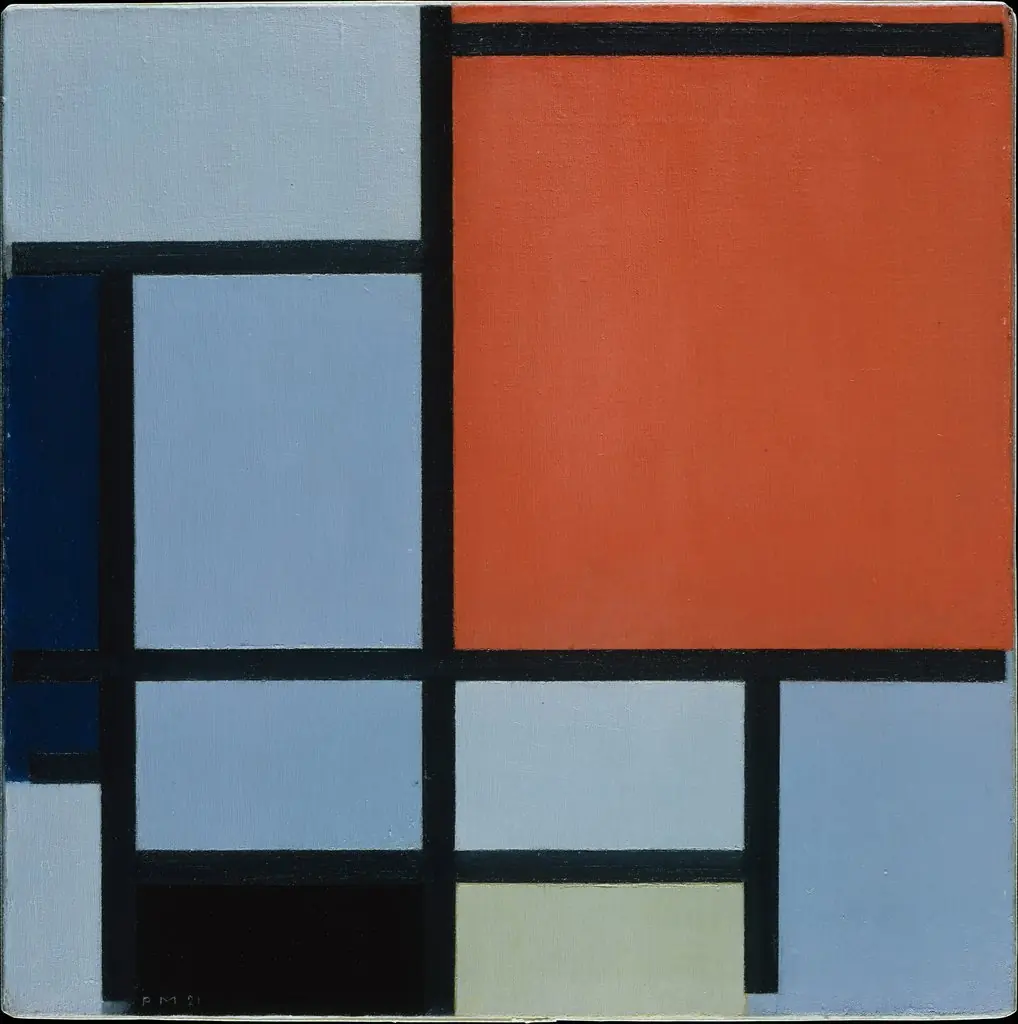
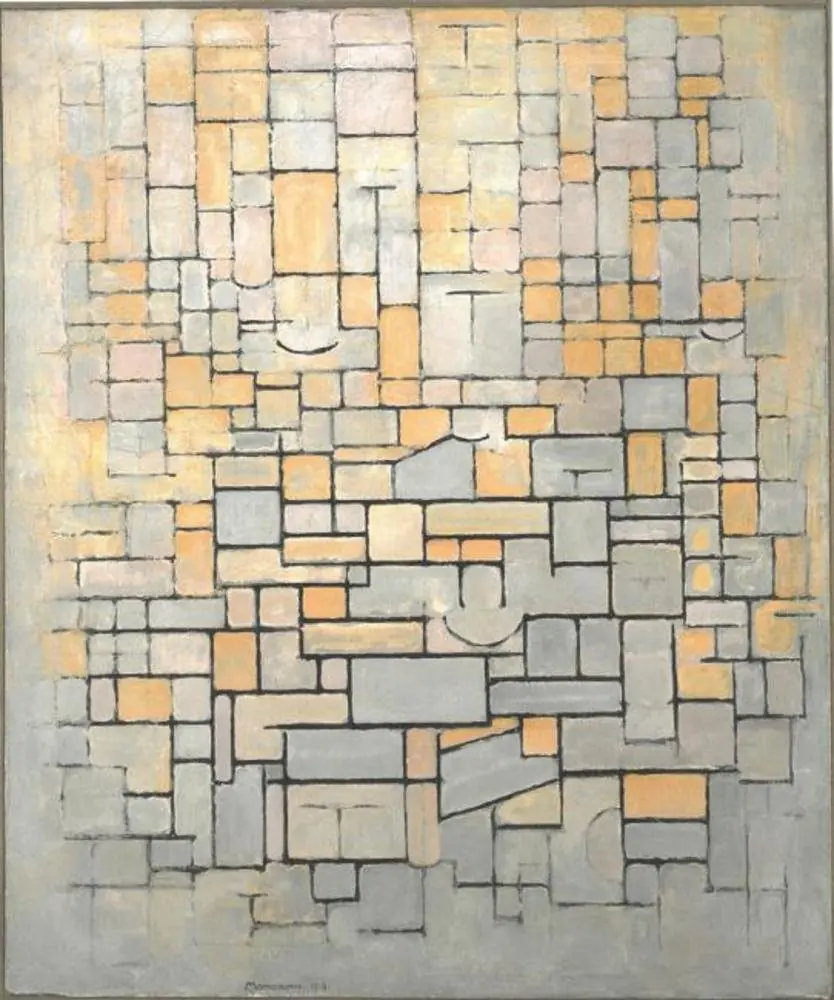
Composition No. 11 is an oil painting by the De Stijl artist Piet Mondrian. It dates from 1913 and is held in the collection of the Kröller-Müller Museum.
About this work
Overview
Piet Mondrian painted Composition No. 11 in 1913 using oil on canvas. It belongs to a transitional phase in his career, when he moved away from representational subjects toward pure abstraction. The work is part of the Kröller-Müller Museum’s collection and reflects his early exploration of geometric structure, preceding the stricter black-grid compositions of his later De Stijl period.
Subject & Meaning
Mondrian sought to express universal order through simplified visual elements, stripping away the particular to reveal underlying structure.
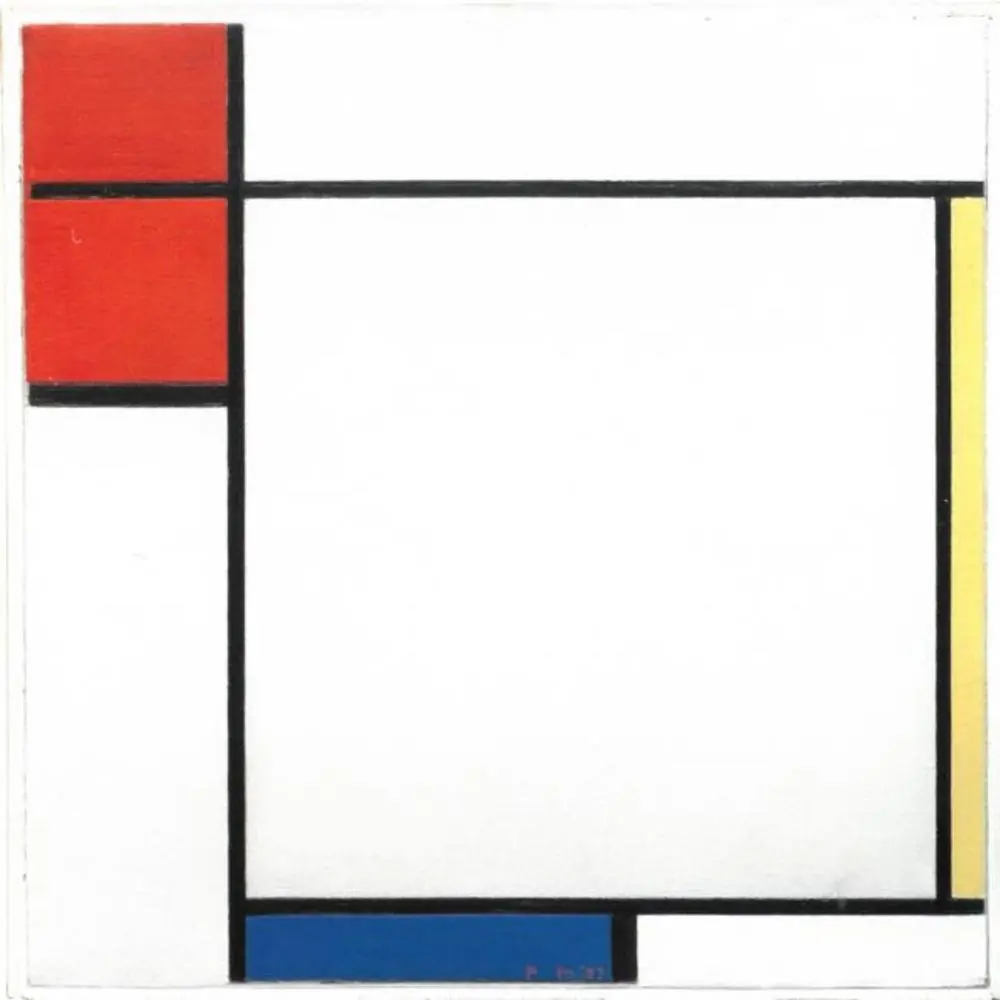
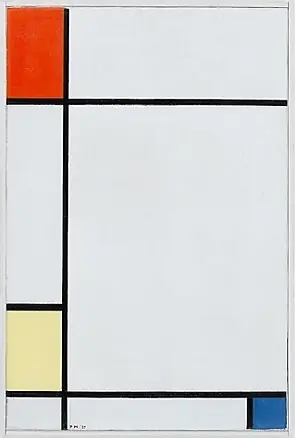
The painting contains no recognizable figures or natural forms. Instead, it presents an arrangement of irregular rectangles in muted tones, gray, beige, and white, outlined in black. These shapes suggest a quiet rhythm, evoking balance and spatial harmony without narrative.
Mondrian sought to express universal order through simplified visual elements, stripping away the particular to reveal underlying structure.
Technique & Style
Mondrian applied oil paint with precision, using thin layers to achieve subtle tonal variations. The black outlines define the edges of each rectangle, creating a sense of layered depth without perspective. The composition avoids symmetry, yet maintains equilibrium through careful placement. The palette’s restraint and the absence of curves emphasize his pursuit of elemental form.
History & Provenance
Created during Mondrian’s time in Paris, the painting emerged from his engagement with Cubist ideas and his growing interest in abstraction. It entered the Kröller-Müller Museum’s collection in the early 20th century, acquired through the museum’s founder, Helene Kröller-Müller, who was an early supporter of modernist artists. The work has remained in the museum’s holdings since its acquisition.
Context
In 1913, Mondrian was moving beyond the influence of Cubism toward a more radical reduction of form. Though De Stijl as a formal movement would not be established until 1917, Composition No. 11 anticipates its principles: clarity, geometry, and the elimination of ornament. This work sits at the intersection of personal evolution and broader shifts in European modernism.
Legacy
Composition No. 11 exemplifies Mondrian’s path toward pure abstraction, influencing later developments in minimalism and design. Its restrained palette and structured composition became foundational for 20th-century abstract art. Though less known than his later black-grid works, this painting reveals the quiet discipline that underpinned his entire artistic project.
Own this work as a print
Artist & collection

Artist
Pieter Cornelis Mondriaan (Dutch:; 7 March 1872 – 1 February 1944), known after 1911 as Piet Mondrian (, US also; Dutch: ), was a Dutch painter and art theoretician, who is regarded as one of the greatest artists of the 20th century.