Artwork
Untitled
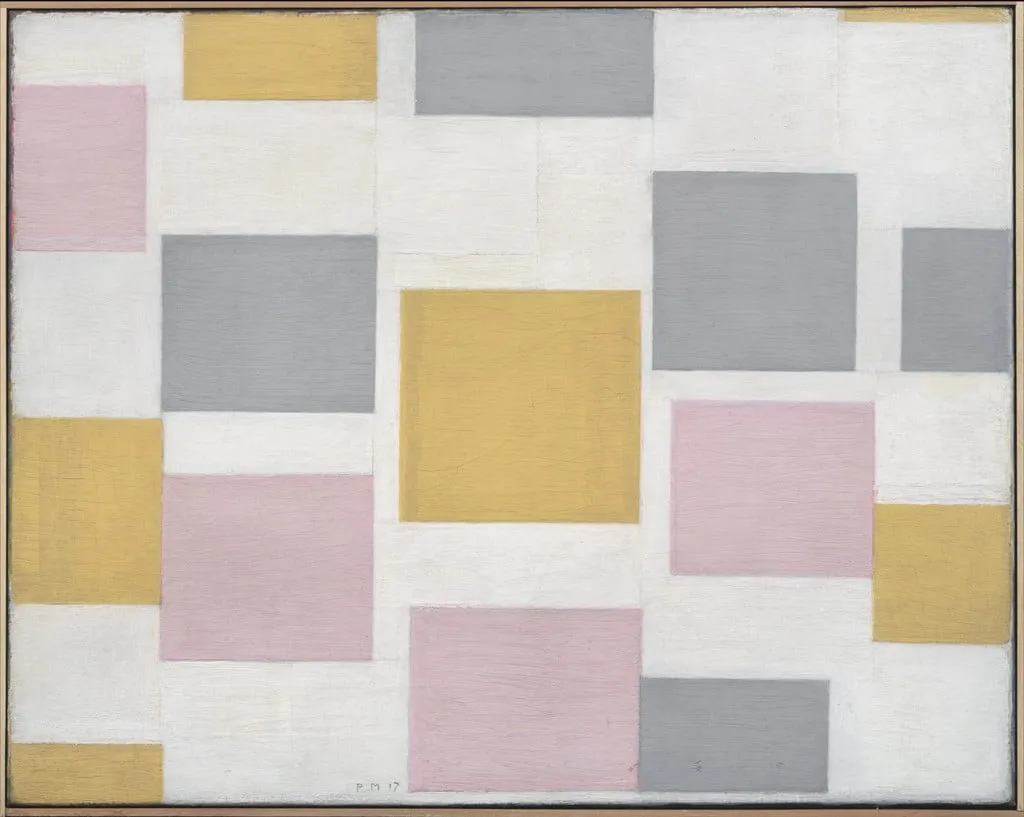
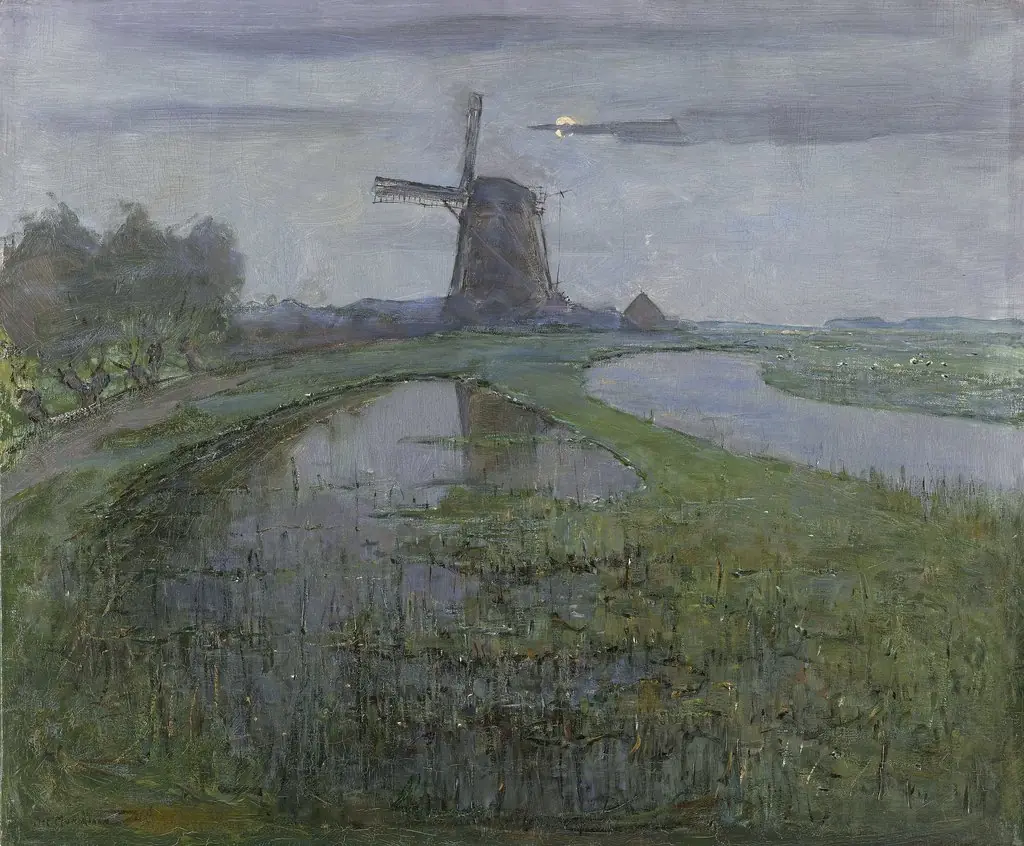
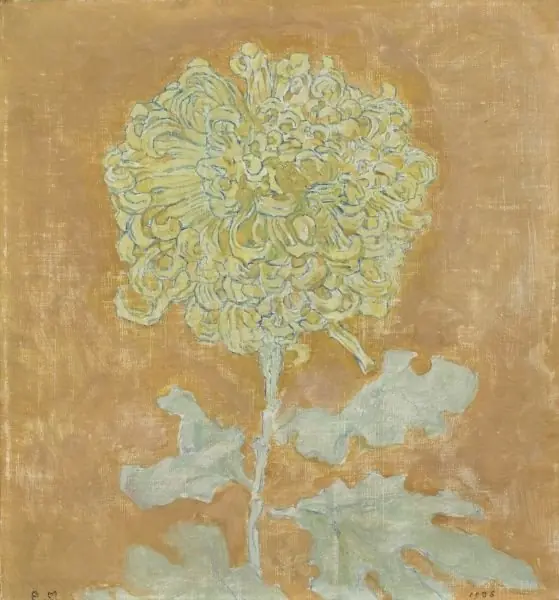
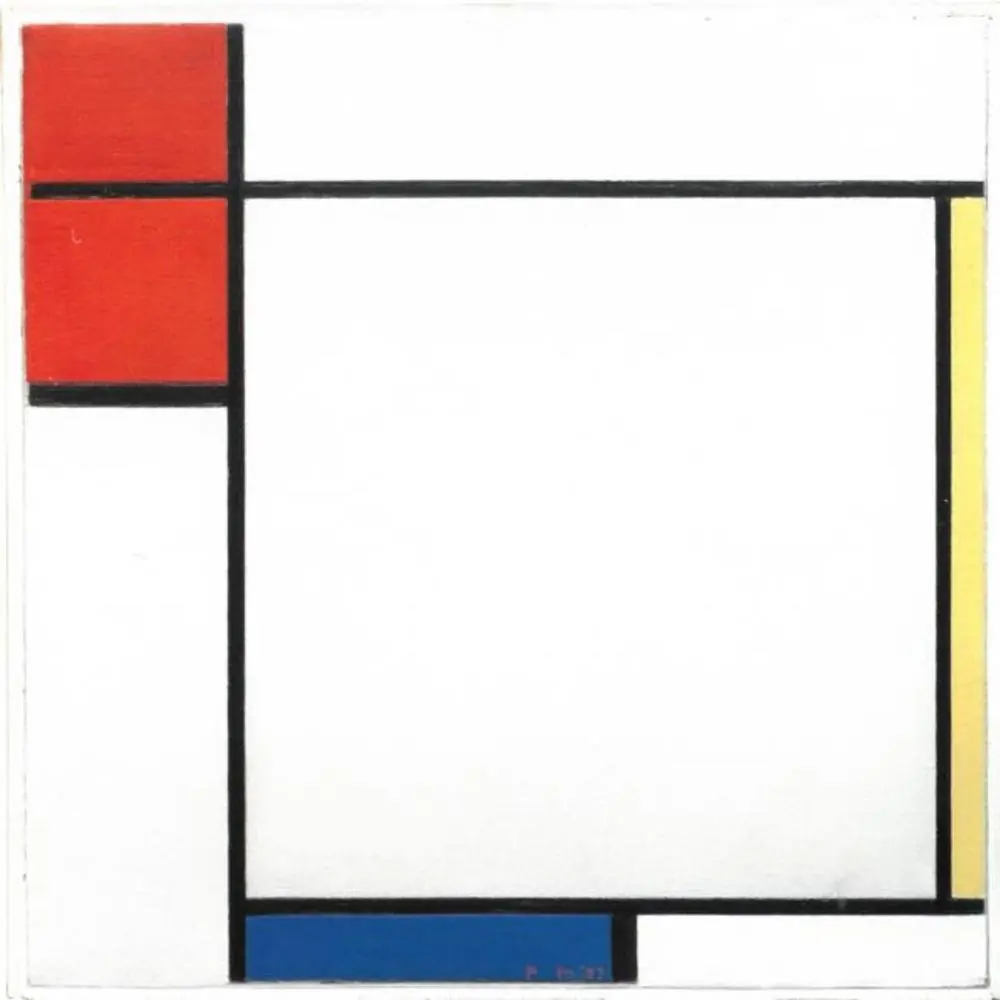
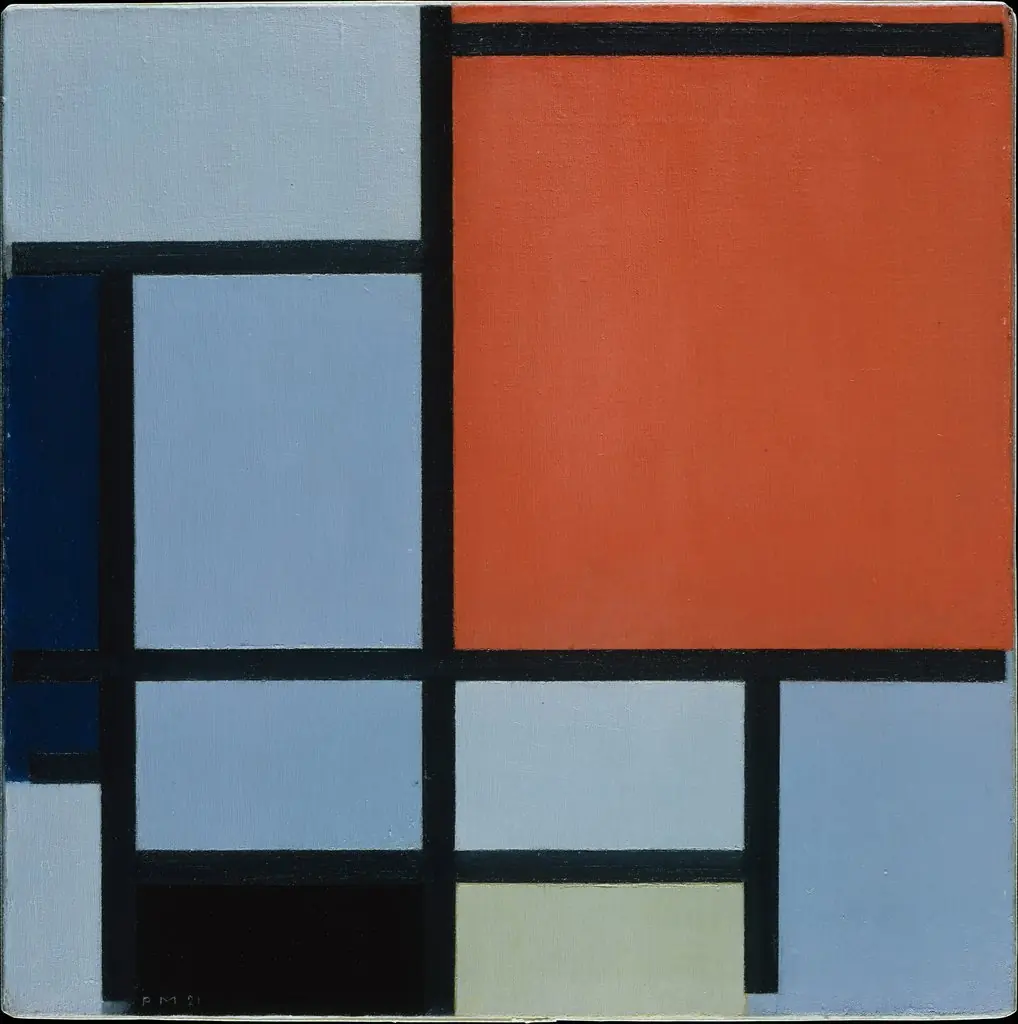
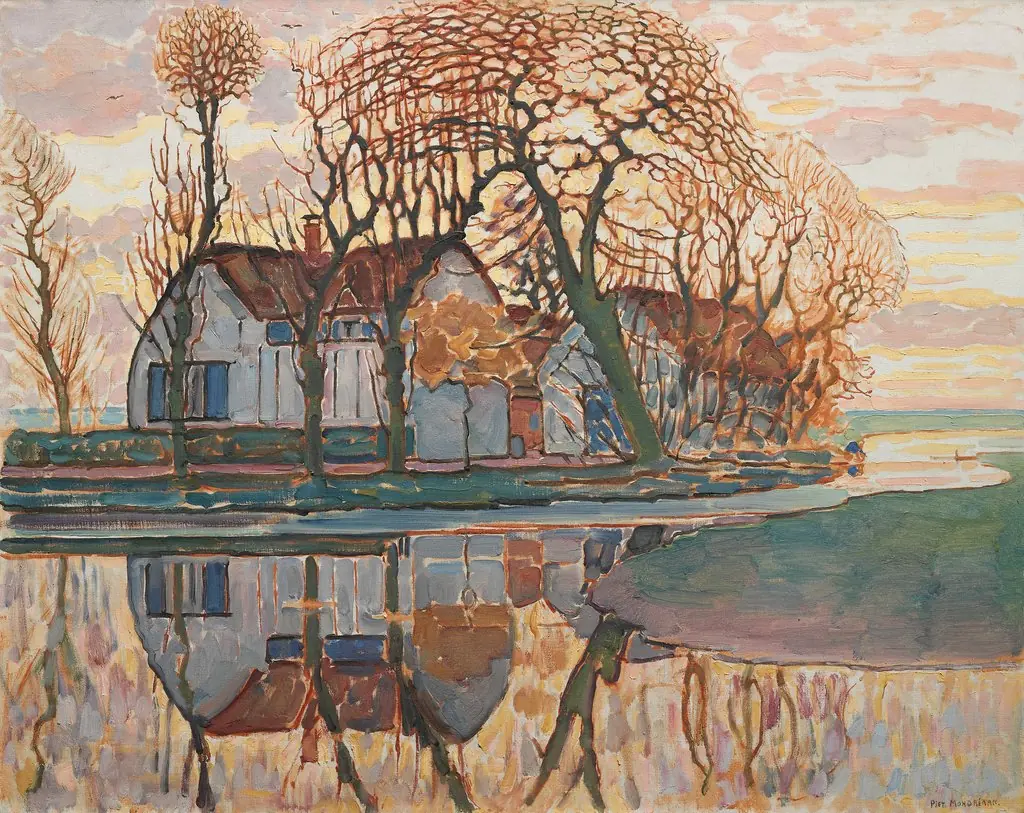
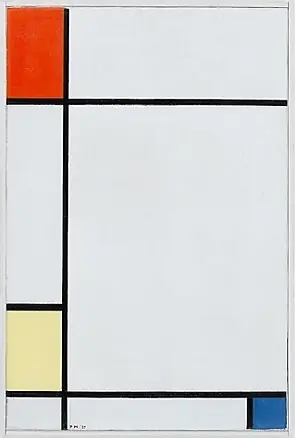
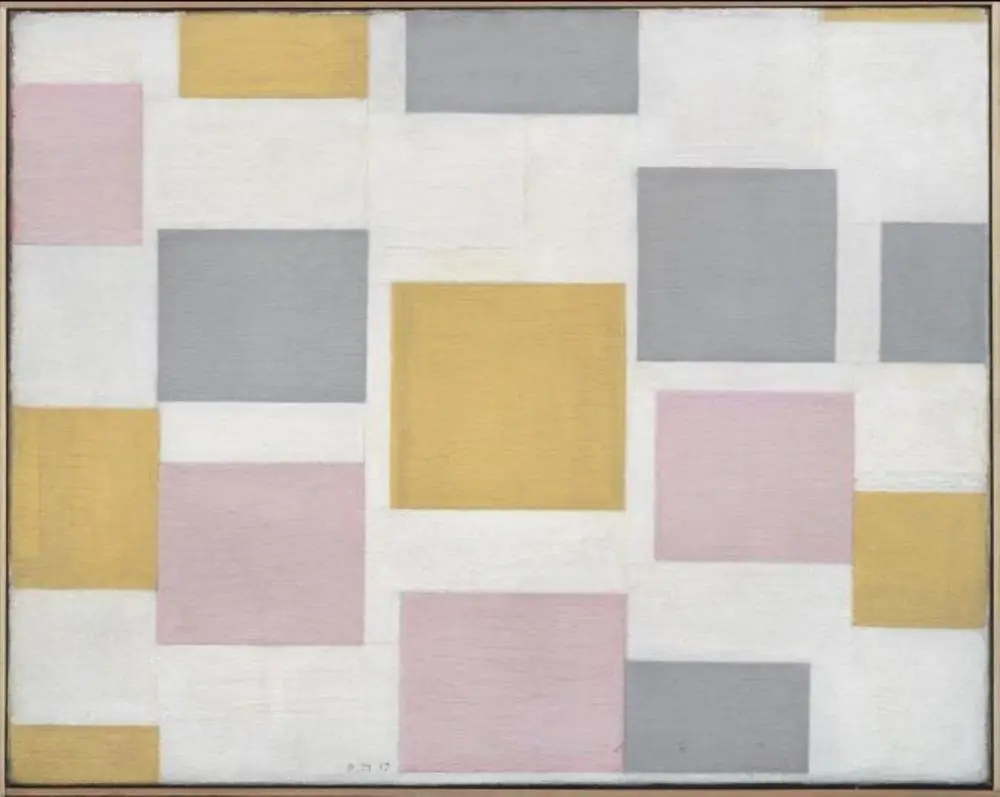
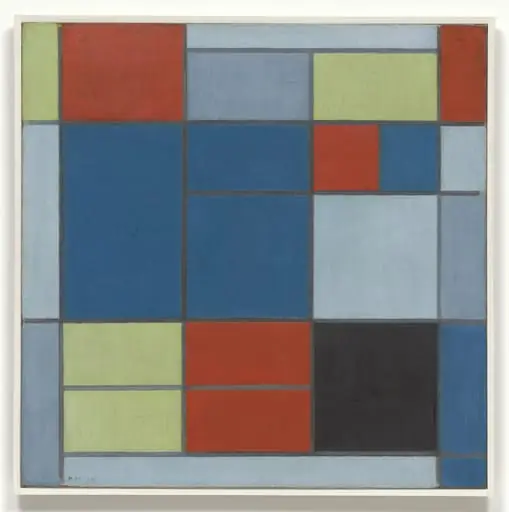
Untitled is an oil painting by the De Stijl artist Piet Mondrian. It dates from 1917 and is held in the collection of the Museum of Modern Art.
About this work
Overview
Painted in 1917, this oil on canvas work by Piet Mondrian belongs to his early abstract phase, preceding his fully mature grid compositions.
Painted in 1917, this oil on canvas work by Piet Mondrian belongs to his early abstract phase, preceding his fully mature grid compositions. It reflects a transitional moment in his practice, moving away from representational forms toward a structured visual language grounded in geometry and primary color relationships. The piece is part of The Museum of Modern Art’s collection, where it represents a key step in the evolution of modern abstraction.
Subject & Meaning
The painting holds no figurative subject; instead, it proposes an aesthetic system based on balance and harmony. Through the arrangement of rectangular planes in white, gray, yellow, and pink, Mondrian seeks to express universal order. The asymmetrical placement of elements, such as the off-center gray rectangle, introduces dynamic tension without disrupting equilibrium, suggesting a visual philosophy rooted in spiritual and mathematical ideals.
Technique & Style
Mondrian applied oil paint in flat, unmodulated layers with precise edges, eliminating brushwork texture and tonal gradation. The colors are deliberately restrained, warm off-white and thick, matte gray dominate, while yellow and pink appear as accents. Surfaces are matte and uniform, with no sense of depth or shadow.
The composition relies on the relationship between form and color rather than perspective or modeling, embodying the De Stijl principle of reduction.
History & Provenance
Created during Mondrian’s time in the Netherlands amid the formation of the De Stijl movement, the work was likely made in close dialogue with contemporaries like Theo van Doesburg. It entered The Museum of Modern Art’s collection in the mid-20th century, recognized for its role in documenting the transition from early abstraction to the rigid grid structures Mondrian would later refine. Its provenance reflects its significance within modernist art historiography.
Context
This painting emerged alongside the founding of De Stijl in 1917, a Dutch avant-garde group advocating for art stripped of individual expression in favor of universal form. Mondrian’s work here aligns with the movement’s ideals: simplicity, clarity, and the use of horizontal and vertical lines. It responds to broader early 20th-century inquiries into abstraction, influenced by Cubism but rejecting its fragmentation in favor of structural purity.
Legacy
Though less known than Mondrian’s later black-grid paintings, this work laid foundational principles for his mature style. Its disciplined use of color and geometry influenced postwar design, architecture, and minimalism. The painting remains a reference point for artists exploring abstraction as a system rather than an expression, demonstrating how restraint can generate visual coherence and intellectual depth.
Artist & collection

Artist
Pieter Cornelis Mondriaan (Dutch:; 7 March 1872 – 1 February 1944), known after 1911 as Piet Mondrian (, US also; Dutch: ), was a Dutch painter and art theoretician, who is regarded as one of the greatest artists of the 20th century.