Artwork
The Egg Dance
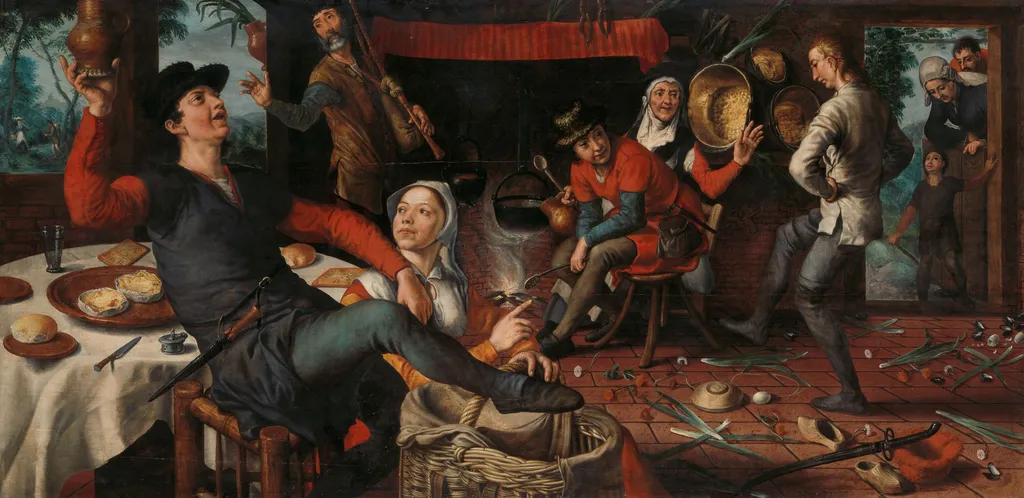
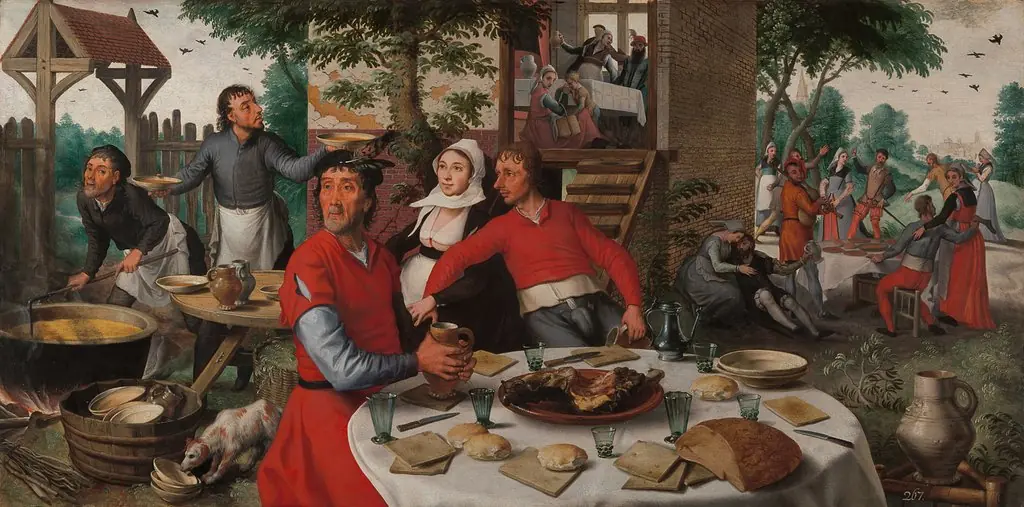
The Egg Dance is an oil painting by the Dutch Golden Age artist Pieter Aertsen. It dates from 1552 and is held in the collection of the Rijksmuseum.
About this work
Subject & Meaning
While the central activity represents frivolous amusement and the drinking signifies excess, two respectable citizens appear in a doorway on the right.
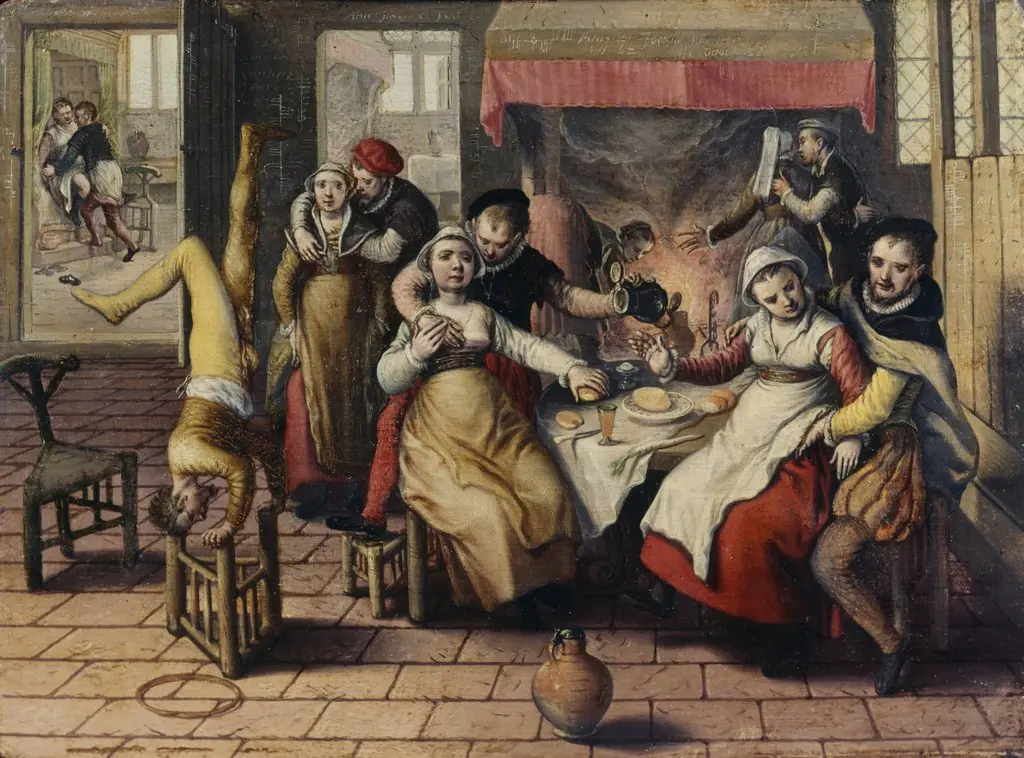
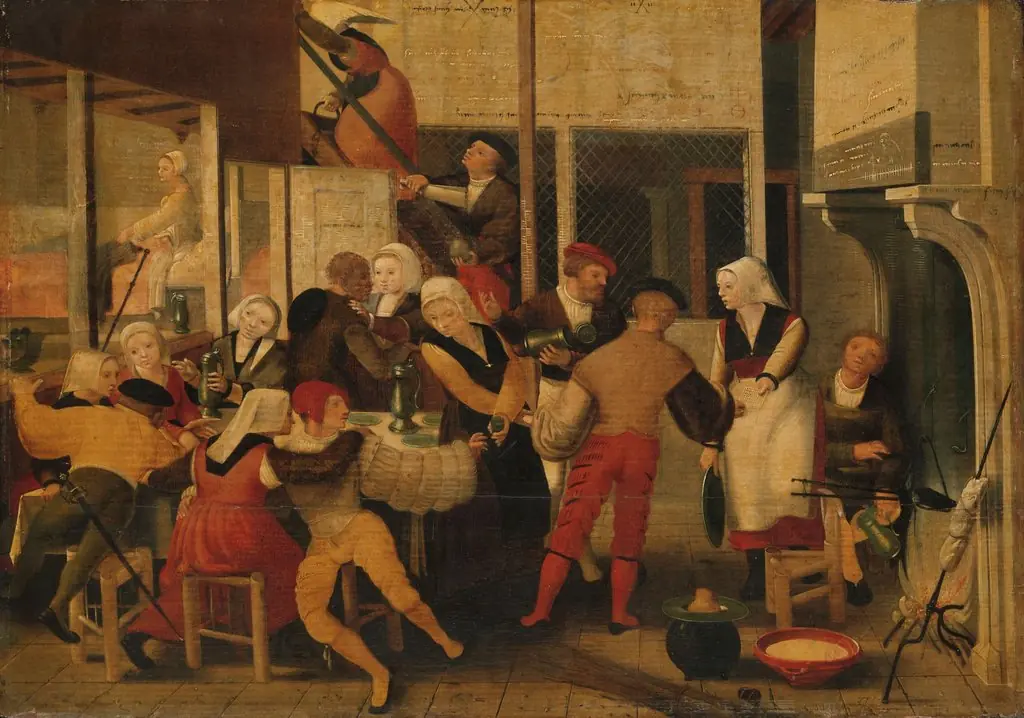
Pieter Aertsen's 1552 painting depicts an inn interior where figures engage in the egg dance, a carnival or Easter custom. A young man dances barefoot on a floor scattered with flowers and leek leaves, attempting to roll an egg within a chalk circle and cover it with a wooden bowl without breaking it. Surrounding him are a bagpiper, a drinking man, and other festivity participants, creating a scene of revelry often associated with brothels.
The work functions as a moralizing satire against decadence and licentious behavior. While the central activity represents frivolous amusement and the drinking signifies excess, two respectable citizens appear in a doorway on the right. These figures point out the scene to their son, explicitly illustrating how one should not behave, thereby framing the entire composition as a warning against sinful indulgence.
Technique & Style
The Egg Dance is executed in oil paint on a wooden panel, a common support for Netherlandish works of the mid‑16th century. Aertsen’s handling shows the meticulous, fine brushwork characteristic of his genre scenes, rendering the varied textures of food, fabrics, and interior details with clarity. Stylistically, the painting exemplifies Northern Renaissance genre painting: a lively, narrative composition illuminated by natural light, populated with figures engaged in a festive yet morally ambiguous activity, and marked by realistic detail and a balanced, horizontal format.
History & Provenance
The Egg Dance is an oil-on-panel painting created by Pieter Aertsen in 1552, as indicated by the date inscribed on the fireplace mantel within the composition. Executed in Antwerp, the work depicts a festive scene centered on the carnival or Easter custom of the egg dance. The painting remained in private hands until 1839, when it was acquired by the Rijksmuseum in Amsterdam from the collection of Colonel Andreas Daniel Berthold von Schepeler in Aachen.
Since that acquisition, the artwork has been part of the Dutch national collection, specifically housed in hall 0.6 of the museum.
The Egg Dance (1552) by Pieter Aertsen is held in the Rijksmuseum, Amsterdam, accessioned as SK-C-1205.
It entered the museum’s collection in 1839 after purchase from the estate of Colonel Andreas Daniel Berthold von Schepeler of Aachen. Since then it has remained in the Rijksmuseum’s holdings without subsequent deaccessioning.
Context
Created in 1552 by Pieter Aertsen, The Egg Dance serves as a moralizing critique of 16th-century decadence within the Dutch genre tradition. The work depicts a carnival custom where a youth attempts to roll an egg within a chalk circle without breaking it, a game historically associated with excess and licentious behavior during the festive season. Art historical analysis suggests the painting functions as a warning against futile amusement and drunkenness, contrasting the revelers with two sober citizens depicted in the doorway who observe the scene as a lesson for their son.
This thematic approach aligns with Aertsen's broader practice of embedding didactic narratives within scenes of everyday life, elevating the genre painting beyond mere documentation of social customs to a commentary on moral conduct.
Overview
Pieter Aertsen, a Dutch artist, completed The Egg Dance in 1552. This oil painting on panel is classified as a genre scene, depicting everyday life rather than historical or religious narratives. It is currently housed in the Rijksmuseum in Amsterdam, where it represents an early example of a distinct Northern European artistic tradition focusing on common activities and customs.
Artist & collection
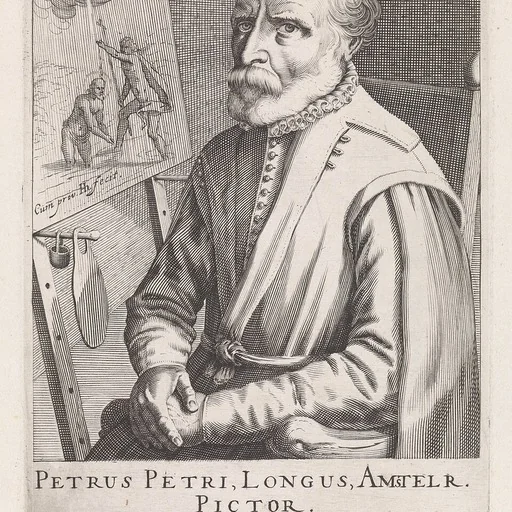
Artist
Pieter Aertsen (1508 in Amsterdam – 2 June 1575 in Amsterdam), called Lange Piet ("Tall Pete") because of his height, was a Dutch painter in the style of Northern Mannerism.