Artwork
Christ with Mary and Martha
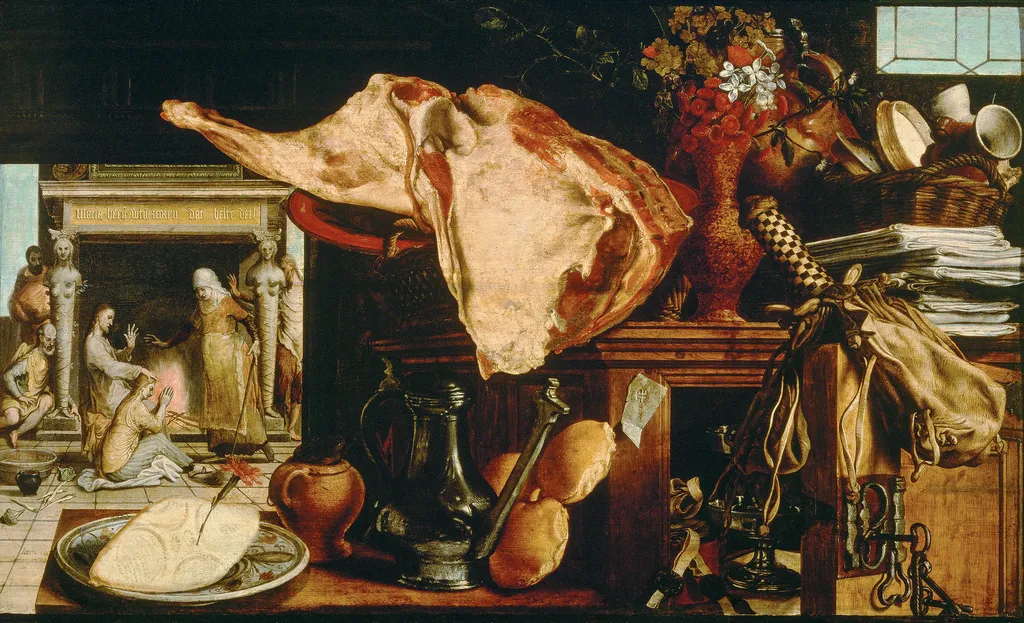
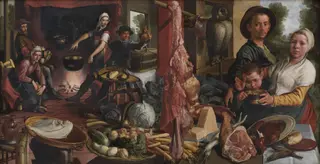
Christ with Mary and Martha is an oil painting by the Dutch Golden Age artist Pieter Aertsen. It dates from 1552 and is held in the collection of the Kunsthistorisches Museum.
About this work
Subject & Meaning
The still life thus acts as an allegorical bridge between the worldly and the divine, exemplifying Aertsen’s early inverted still‑life approach.
The painting shows Christ visiting the sisters Martha and Mary, illustrating the Luke 10 episode in which Mary sits at Jesus’ feet while Martha is occupied with household duties. In the background the biblical narrative is made explicit by inscriptions: ‘LUCA 10’ on a floor tile and ‘Maria si è scelta la parte buona’ on the fireplace mantel. The foreground is dominated by a life‑size still life of food, kitchen utensils, a flower vase and a purse, rendered in trompe‑l’œil.
This profane abundance contrasts with the sacred scene, symbolizing that material nourishment cannot satisfy the spirit, whereas Christ’s word provides true sustenance. The still life thus acts as an allegorical bridge between the worldly and the divine, exemplifying Aertsen’s early inverted still‑life approach.
Technique & Style
The work is an oil painting executed on an oak panel, measuring 600 by 1015 centimeters, created in 1552 by Pieter Aertsen. The composition is divided into two zones: a foreground filled with a life-size still life of meat, bread, butter, flowers, and kitchen utensils rendered in a trompe-l'œil style, and a background depicting the biblical scene of Christ visiting Martha and Mary, with contemporary Dutch inscriptions quoting Luke 10 and marking the hearth and floor tiles. The foreground functions as an allegorical counterpart to the sacred narrative, contrasting the material with the spiritual and guiding the viewer from the mundane into the divine word.
The painter's trident signature and the date '1552 25 Julj' appear on a paper fragment near the window. The painting is housed in the Kunsthistorisches Museum in Vienna.
History & Provenance
Pieter Aertsen completed the oil-on-oak painting Christ with Mary and Martha on July 25, 1552, as indicated by the date inscribed beneath the window ledge in the upper right corner. The work entered the collection of Archduke Leopold Wilhelm of Austria during the seventeenth century while he served as Governor of the Netherlands in Brussels. Upon the Archduke's return to Vienna in 1659, the majority of his holdings were bequeathed to his nephew, Emperor Leopold I; however, this specific painting was not included in that transfer.
By 1930, the artwork was in the possession of Albert Figdor in Vienna. That same year, it was sold through the J. Goudstikker gallery in Amsterdam to the Kunsthistorisches Museum in Vienna, where it remains part of the collection today.
Christ with Mary and Martha is held by the Kunsthistorisches Museum in Vienna. It entered the museum's collection in 1930 through the sale of Albert Figdor in Vienna, who had acquired the work from the J. Goudstikker gallery in Amsterdam. The painting was previously part of Archduke Leopold Wilhelm's collection in the 17th century, later passed to Emperor Leopold I. It is catalogued under the museum's inventory as part of the former Jacques Goudstikker collection, accessioned as part of the Goudstikker legacy.
The work has been exhibited in museum displays focusing on Northern Renaissance art and still-life painting, including thematic exhibitions on biblical narratives in art and early modern visual culture.
The painting was part of a larger acquisition that included other works from the Goudstikker collection, which was dispersed after the Holocaust and later reconstituted in European museum holdings. It remains on permanent display in the museum's European paintings wing, often contextualized within discussions of inverted still lifes and religious symbolism.
Context
Critical reception of Christ with Mary and Martha emphasizes its innovative compositional structure and symbolic contrast between sacred narrative and material abundance. Scholarship highlights the work's role as an early example of inverted still life, where the foreground's detailed banquet scene functions both as allegory and visual counterpoint to the biblical moment of Christ's visit to Martha and Mary. This duality reflects broader Renaissance interests in merging devotional content with sensory realism, positioning Aertsen's painting as a precursor to later developments in genre painting.
The work's inclusion in the Kunsthistorisches Museum's collection, formerly part of the Leopold Wilhelm archducal collection and later acquired from Albert Figdor in 1930, underscores its historical journey through elite European patronage. Art historical analysis situates the painting within Aertsen's broader oeuvre, characterized by hybrid subjects that merge religious scenes with abundant material depictions, influencing contemporaries and successors in the Low Countries and beyond.
The painting's significance is further reinforced by its documented features, such as the inscription 'Maria heeft wtuercoren dat beste deel' on the fireplace lintel and 'LUCA 10' on the floor tile, which explicitly link the visual narrative to Luke 10:38-42. These textual elements, combined with the trompe-l'oeil rendering of everyday objects, contribute to scholarly discussions on the interplay between the sacred and the profane in Aertsen's work. Researchers like Kenneth M. Craig and Ralph Dekoninck have analyzed how this piece redefines traditional religious storytelling through its material richness, while David Ekserdjian contextualizes it within the evolution of still life as a genre.
The work remains a focal point for understanding the development of narrative depth and spatial complexity in 16th-century Northern European art.
Legacy
Pieter Aertsen's 1552 painting is recognized as an early and influential example of the 'inverted still life,' a genre where a large, illusionistic foreground of food and kitchenware dominates over a smaller biblical scene in the background. This composition creates a deliberate contrast between the profane material world and the spiritual narrative, guiding the viewer's gaze from the tangible to the divine. Art historians credit Aertsen with a significant innovation by including the 'out-of-work' space, the area typically excluded from the frame, thereby breaking spatial boundaries and engaging the viewer directly.
This structural and thematic breakthrough served as an important source of inspiration for subsequent painters who explored similar allegorical contrasts and spatial inversions.
Overview
Created in 1552, this oil painting by Dutch artist Pieter Aertsen presents a biblical episode in which Christ is seated with the sisters Mary and Martha of Bethany. The work belongs to the period later identified as the Dutch Golden Age and is currently part of the Kunsthistorisches Museum’s collection.
Own this work as a print
Artist & collection
Artist
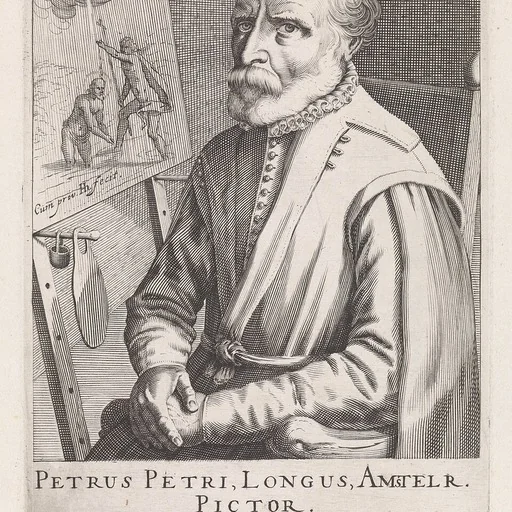
Pieter Aertsen (1508 in Amsterdam – 2 June 1575 in Amsterdam), called Lange Piet ("Tall Pete") because of his height, was a Dutch painter in the style of Northern Mannerism.

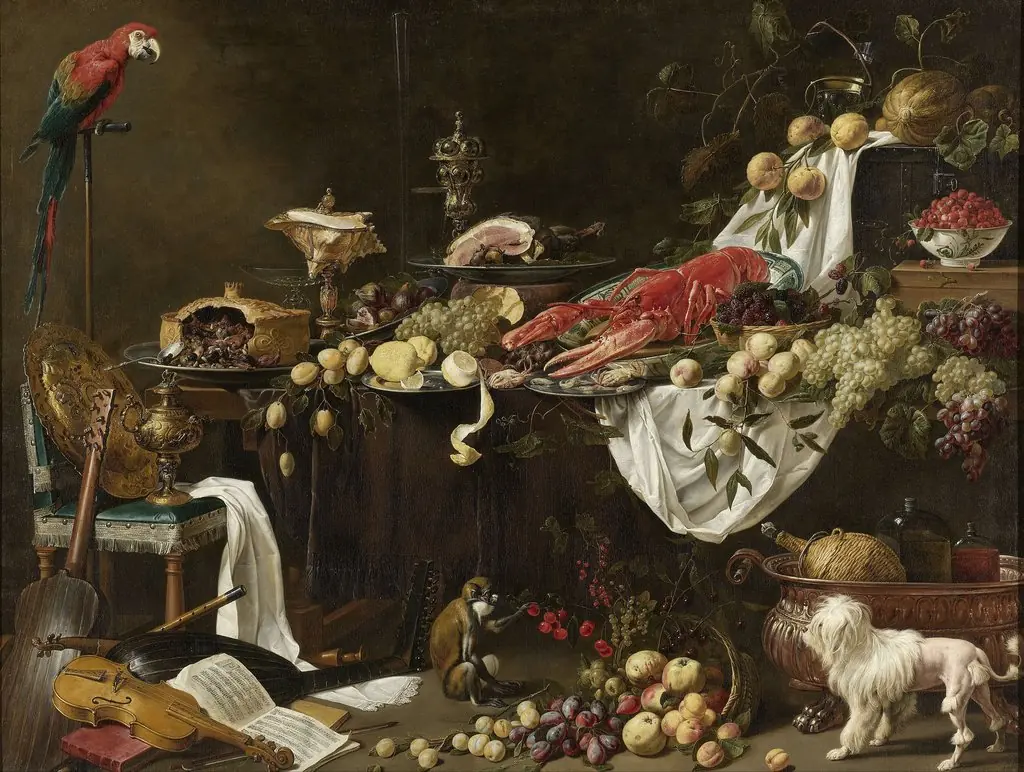 Banquet Still Life
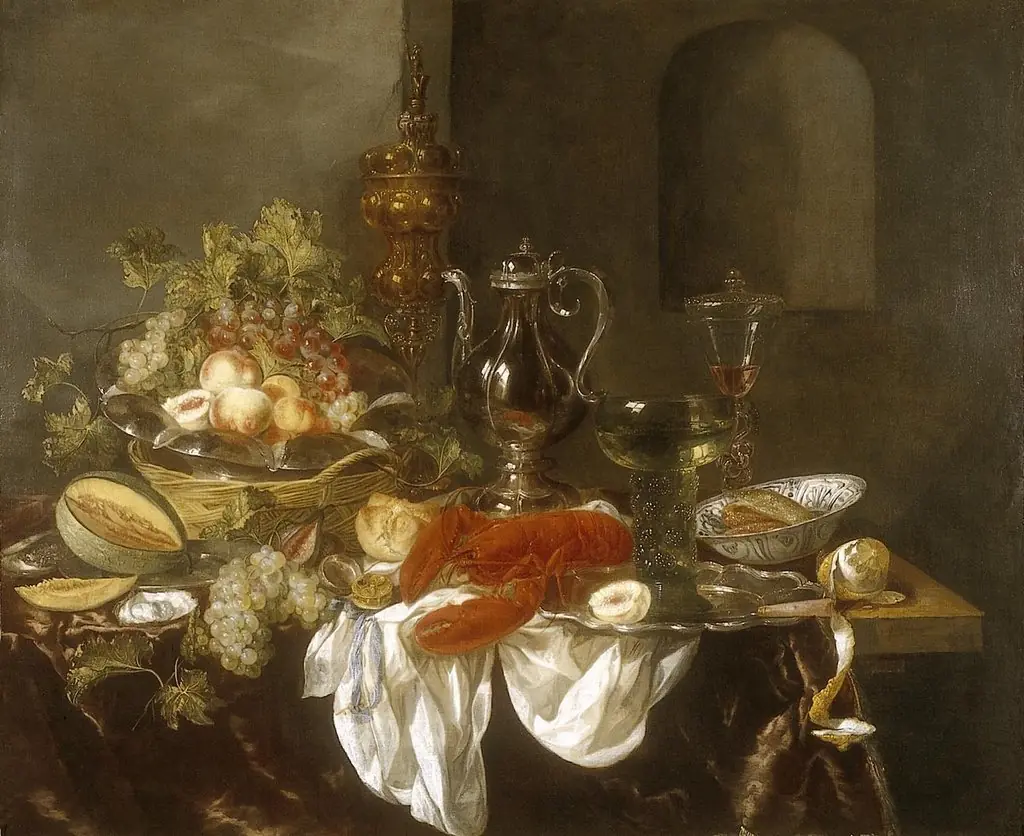 still-life
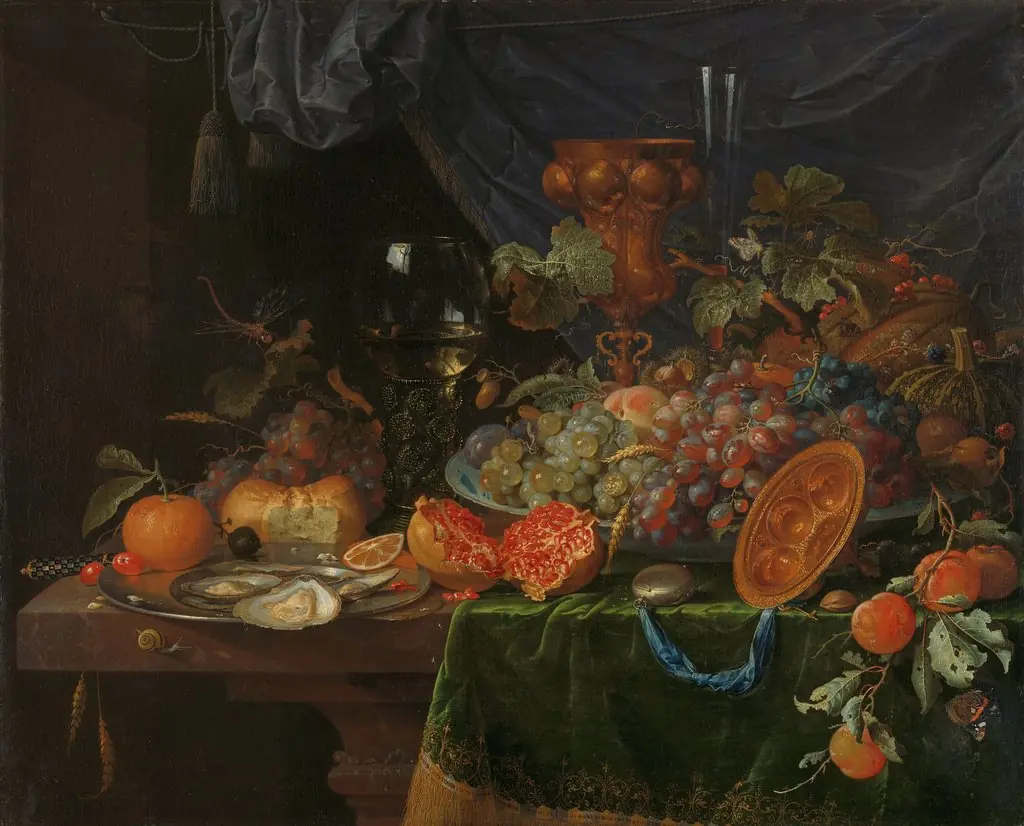 Still life with fruit and oysters
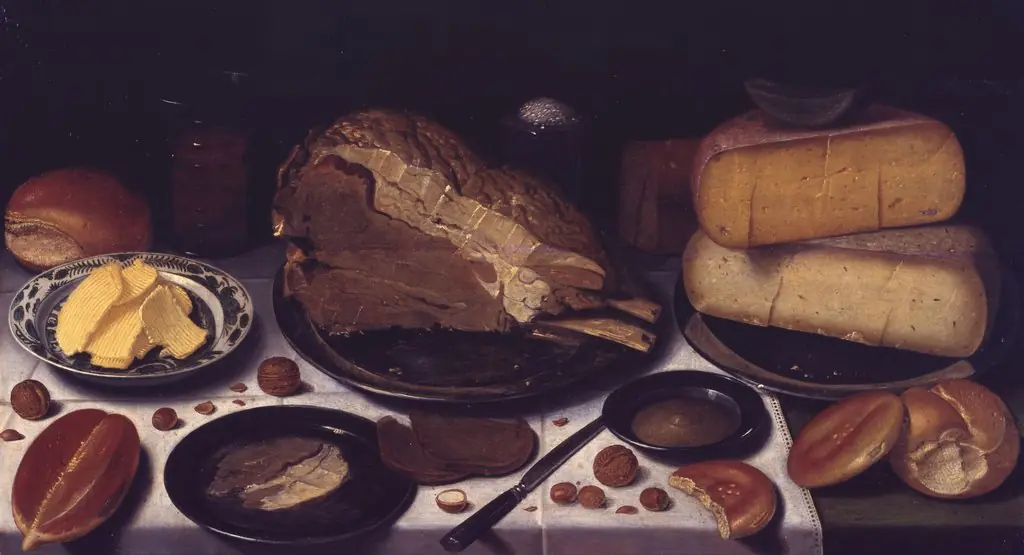 Breakfast
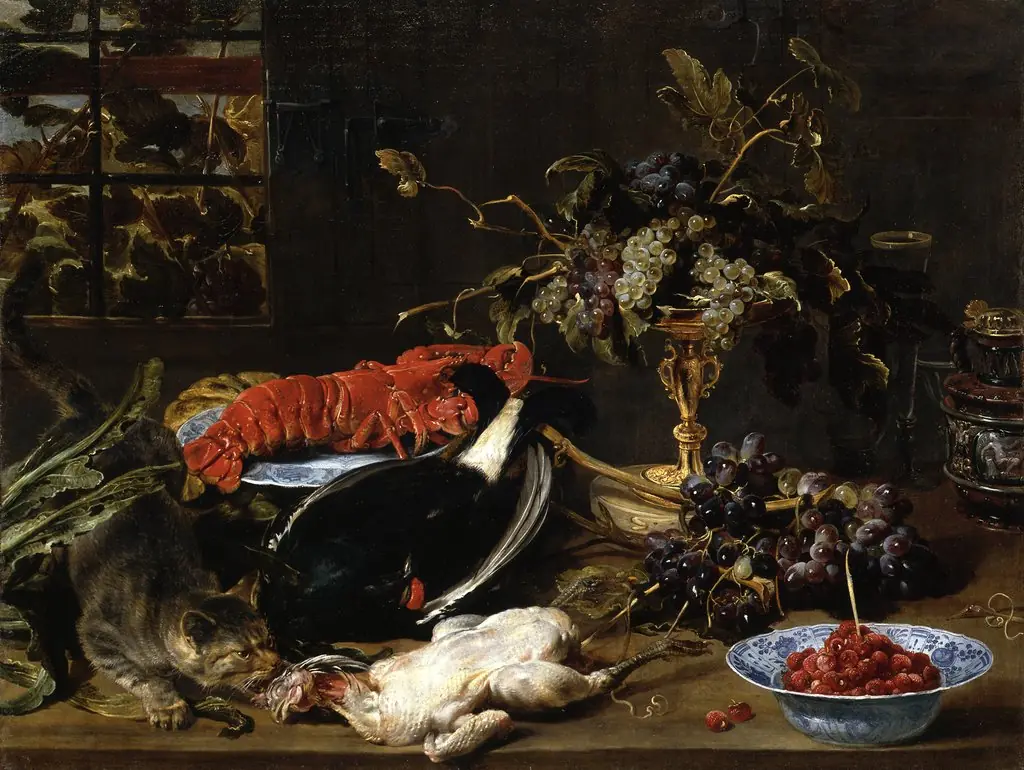 Still Life with Lobster and Fruits
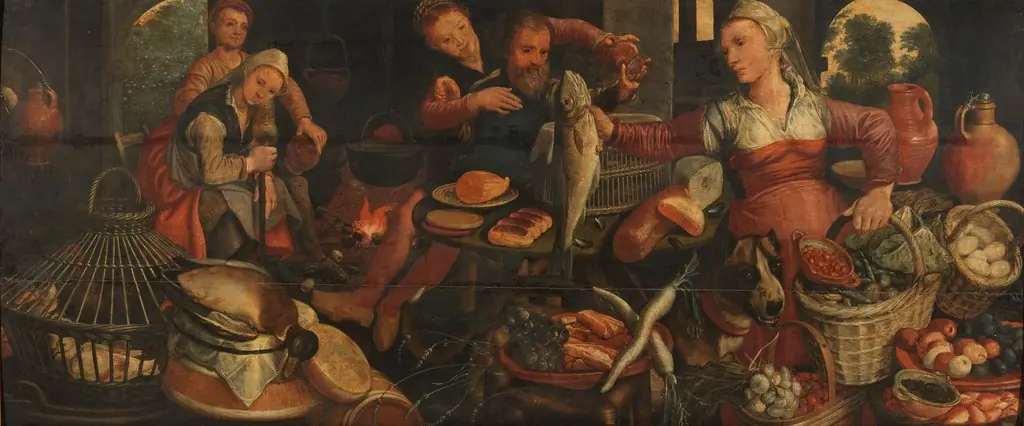 Kitchen scene
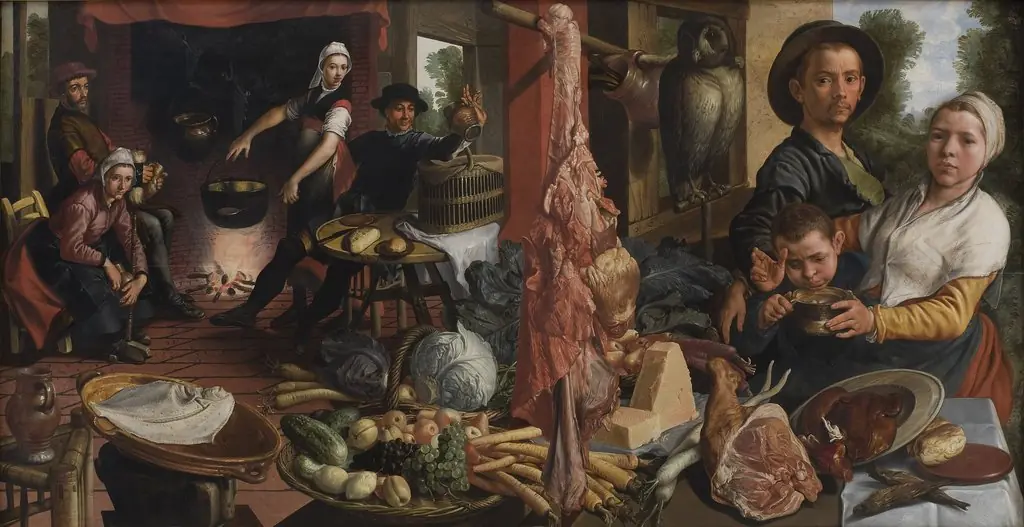 The Fat Kitchen. An Allegory
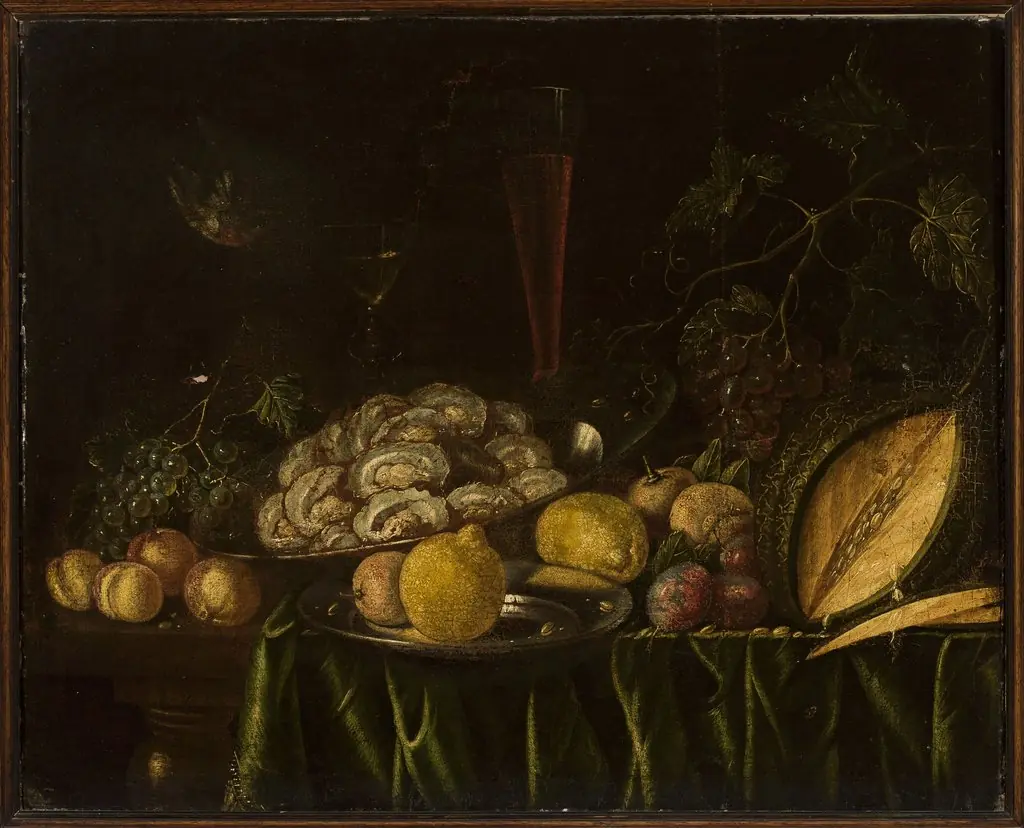 Still life with – fruit, mussels and a bird
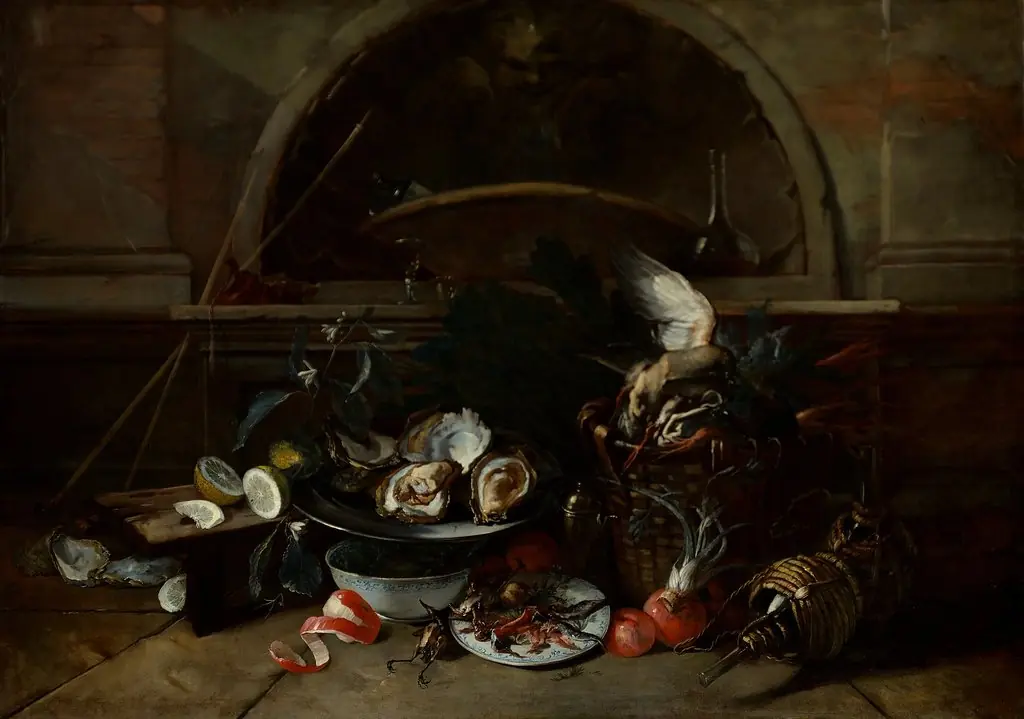 Still Life with Bottles and Oysters
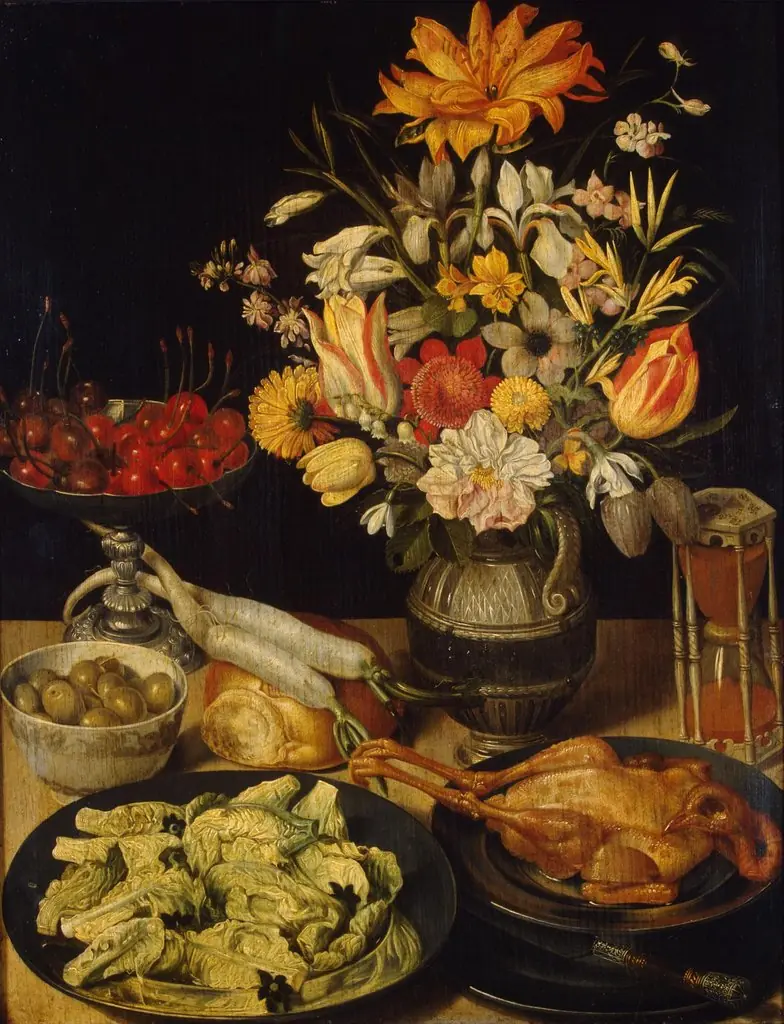 Still Life with Flowers and Snacks
 The Fat Kitchen. An Allegory
- Christ at home with Martha and Mary