Artwork
Untitled
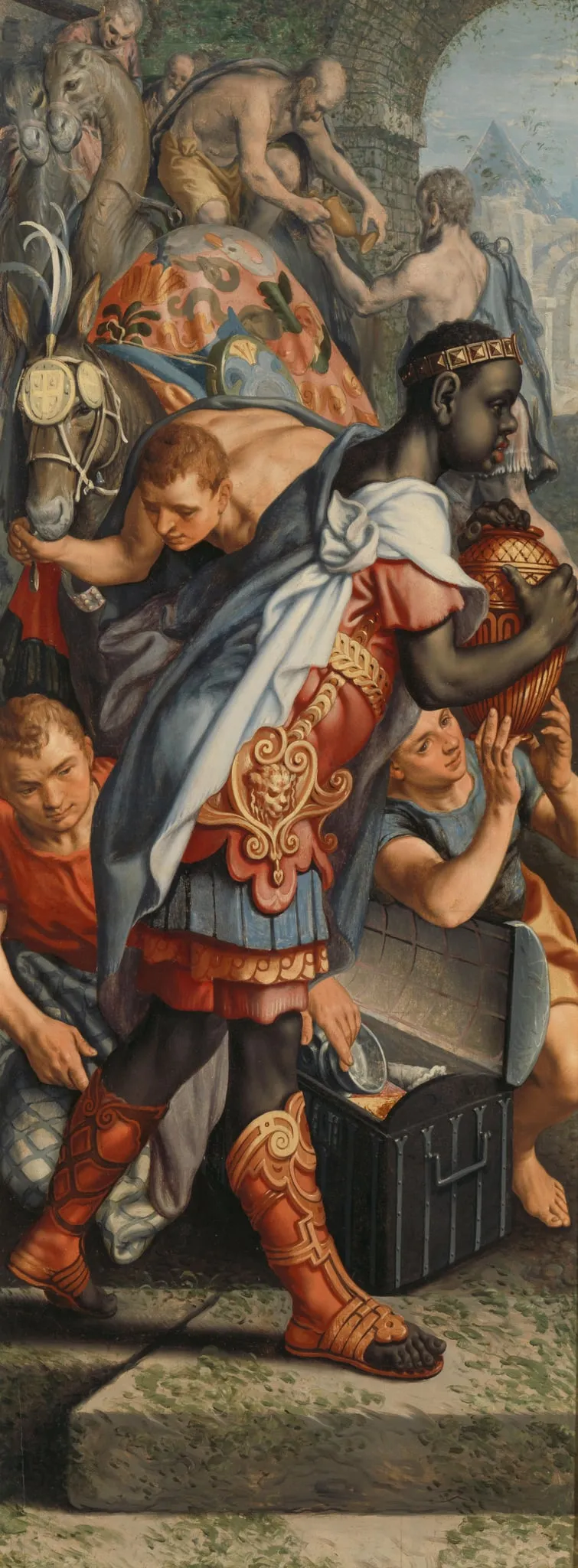
Untitled is an unspecified painting by the Northern Renaissance artist Pieter Aertsen. It dates from 1562 and is held in the collection of the Rijksmuseum.
About this work
Subject & Meaning
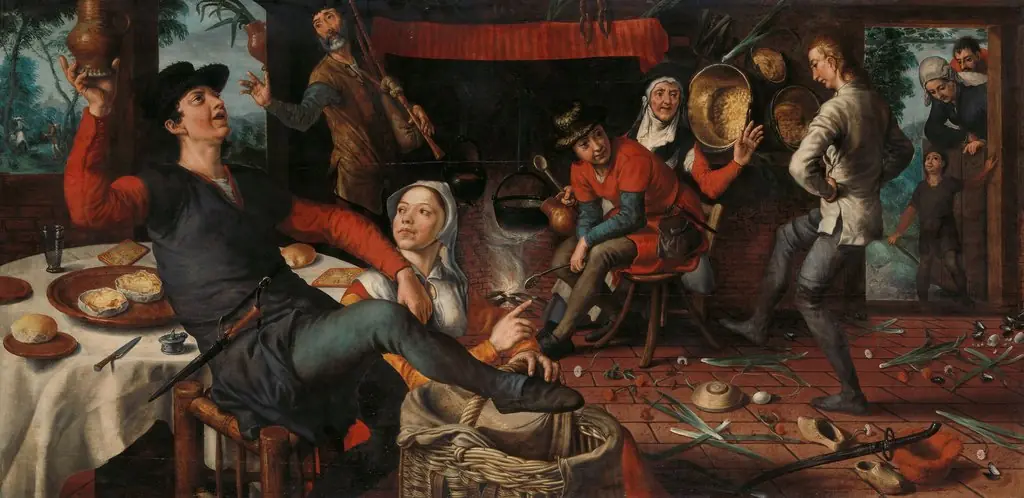
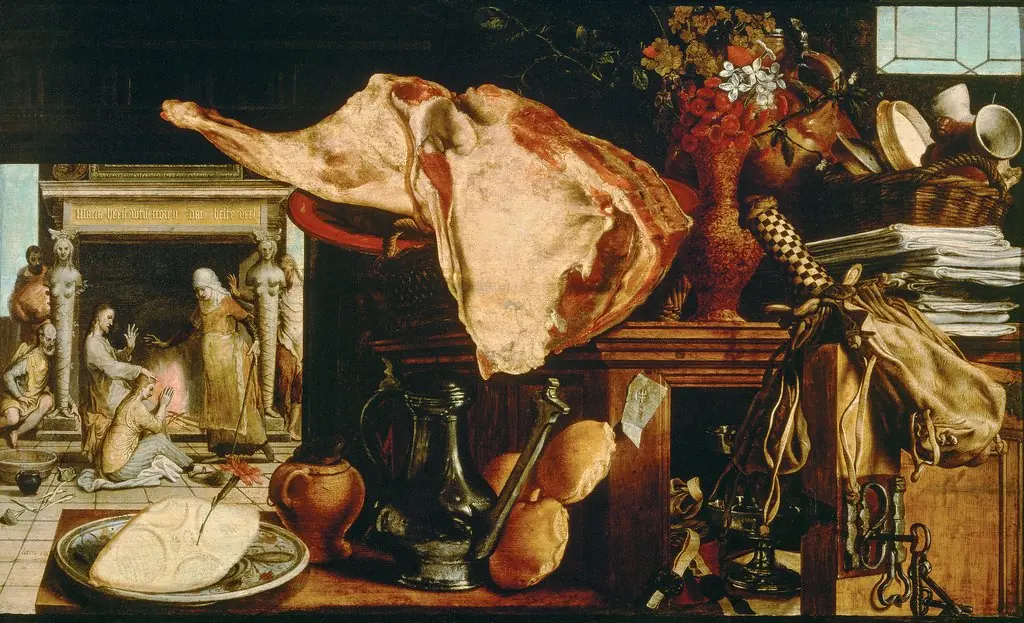
Pieter Aertsen pioneered the inversion of traditional compositional hierarchy by foregrounding genre elements within history paintings.
Pieter Aertsen pioneered the inversion of traditional compositional hierarchy by foregrounding genre elements within history paintings. His works, such as Butcher's Shop with the Flight into Egypt (1551), embed biblical scenes in the background while domestic activities dominate the foreground, transforming 'low' subjects into central visual narratives. This technique drew on earlier innovations like Jan Sanders van Hemessen's background genre treatments but amplified their prominence.
Aertsen's genre figures, often idealized with dignity rather than comic exaggeration, reflected influences from classical art and court portraiture, as seen in his depictions of female cooks. His genre scenes, frequently commissioned by civic groups like the Butcher's Guild, combined realistic material detail with allegorical themes, such as the juxtaposition of physical and spiritual sustenance in the Uppsala painting. These works bridged Renaissance humanist justification of genre painting (citing Peiraikos) and influenced later artists like Rubens and Bruegel, though Aertsen's specific formula persisted only briefly in his immediate legacy.
Technique & Style
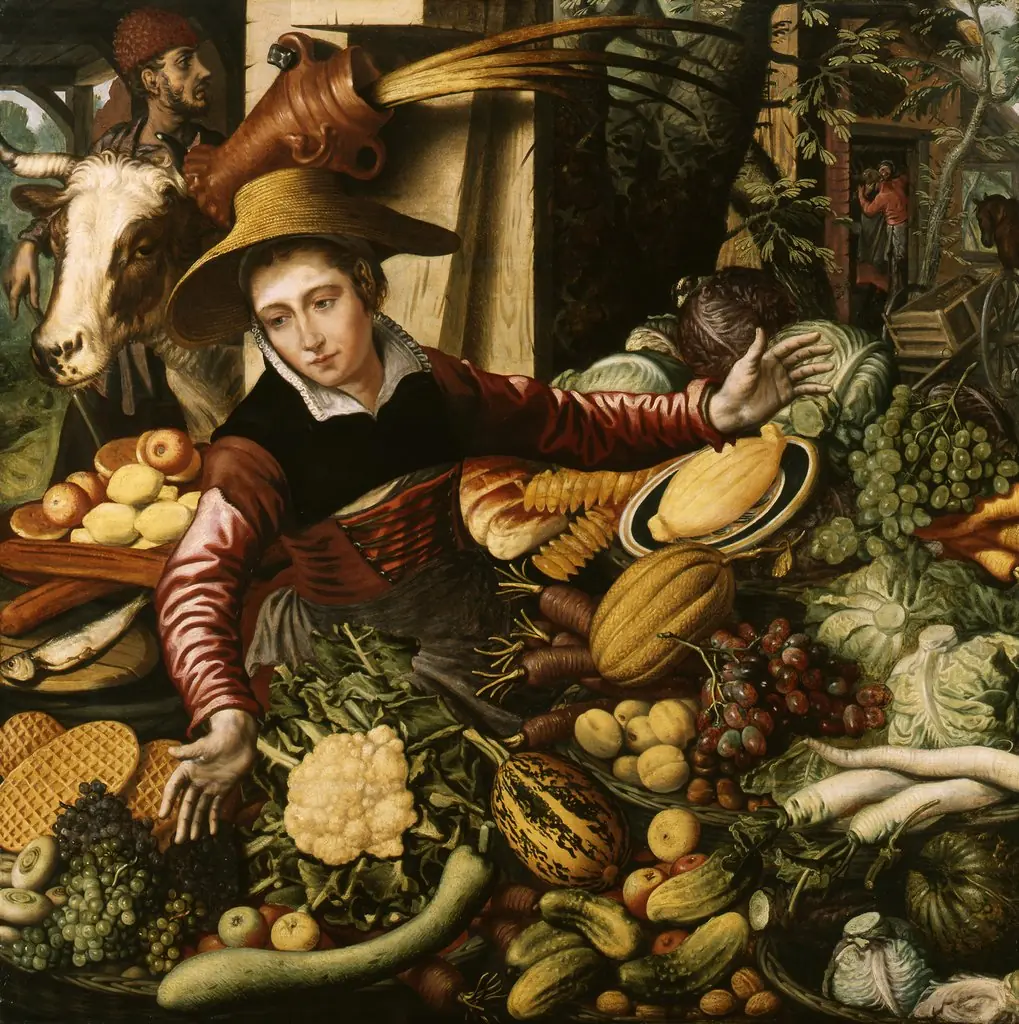
Pieter Aertsen executed his works primarily in oil on wood panels, often utilizing oak as the support material. His technique is defined by a distinctive Mannerist inversion where monumental still-life elements and genre figures dominate the foreground with extreme realism, while biblical or historical narratives are relegated to the background. He rendered domestic objects, including cooking utensils, raw meat, fish, and vegetables, with meticulous attention to texture and detail.
The figures, particularly women in kitchen or market scenes, are depicted with idealized dignity and classical poses rather than comedic exaggeration. This stylistic approach combined Venetian influences with Northern tradition, creating a visual hierarchy that prioritized secular, everyday material over sacred subjects. Although many of his large-scale religious altarpieces were destroyed during the iconoclastic Beeldenstorm of 1566, his surviving panel paintings demonstrate a consistent handling of light and form that established the monumental genre scene.
History & Provenance
The work titled Untitled is attributed to Pieter Aertsen and dated to the period between 1560 and 1565. Aertsen, who was active in Antwerp before returning to Amsterdam around 1555–1556, developed a distinctive style during this era that combined detailed genre scenes with background religious narratives. While specific commission details or an ownership chain for this particular untitled piece are not recorded in the available sources, the dating aligns with his mature period of producing market and kitchen scenes.
Many of his religious commissions from this time, particularly altarpieces for Amsterdam churches, were later destroyed during the iconoclastic outbreaks of 1566 and the political shifts of 1578, though this specific painting survives as a classified history painting.
Context
Pieter Aertsen (1508–1575), working in the style of Northern Mannerism, is credited with inventing the monumental genre scene, a format that combined still life and genre painting with a biblical or history scene relegated to the background. This pictorial inversion, exemplified by his Butcher's Shop with the Flight into Egypt (Uppsala, 1551), has been called the earliest example of Mannerist inversion of still life in Northern painting. The Dutch humanist Hadrianus Junius compared him favorably to the classical painter Peiraikos in his posthumously published Batavia (1588).
Aertsen's market and kitchen scenes profoundly shaped later Flemish Baroque painting and Dutch still life, and his peasant subjects preceded the comparable works of Pieter Bruegel the Elder by several years. His nephew and pupil Joachim Beuckelaer continued and developed this tradition, while his sons Pieter Pietersz, Aert, and Dirk Pietersz also became painters.
Many of Aertsen's religious commissions were destroyed during the 1566 beeldenstorm and the 1578 Alteratie in Amsterdam, leaving his secular output as the principal evidence of his influence on seventeenth-century Netherlandish art.
Overview
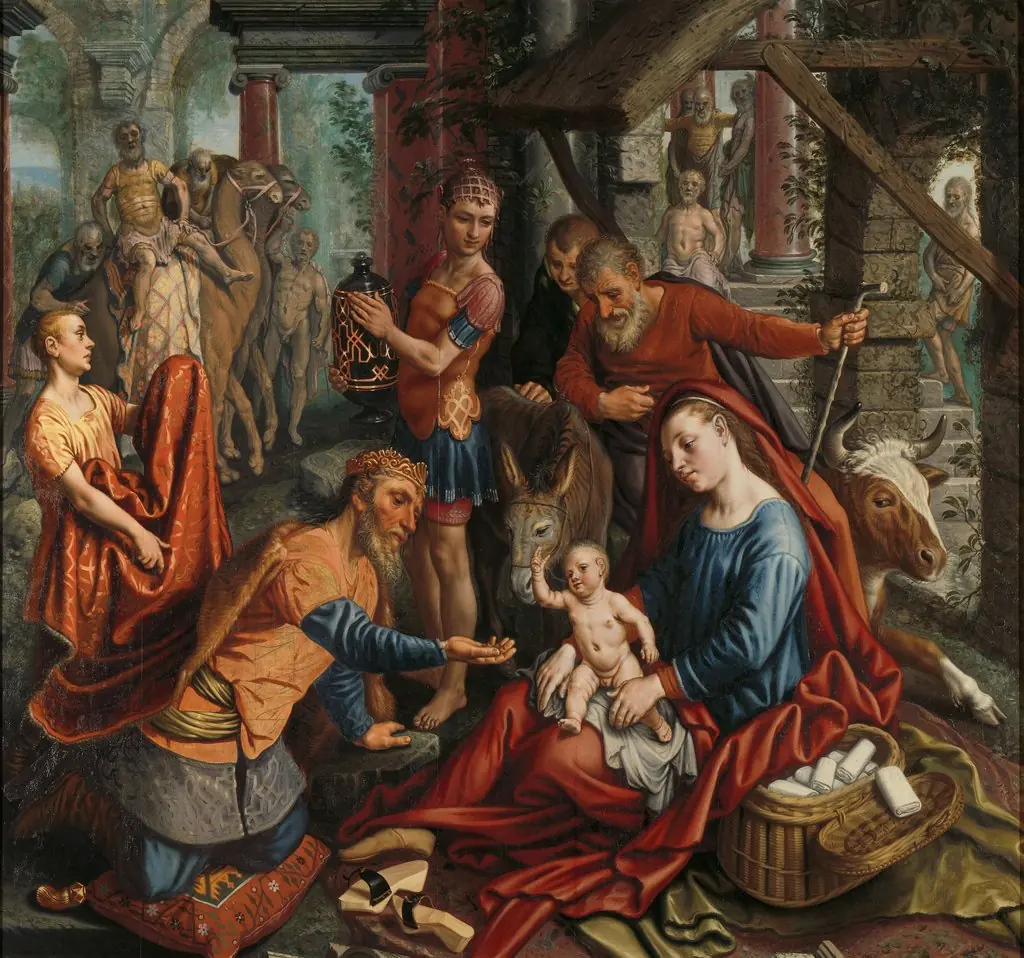
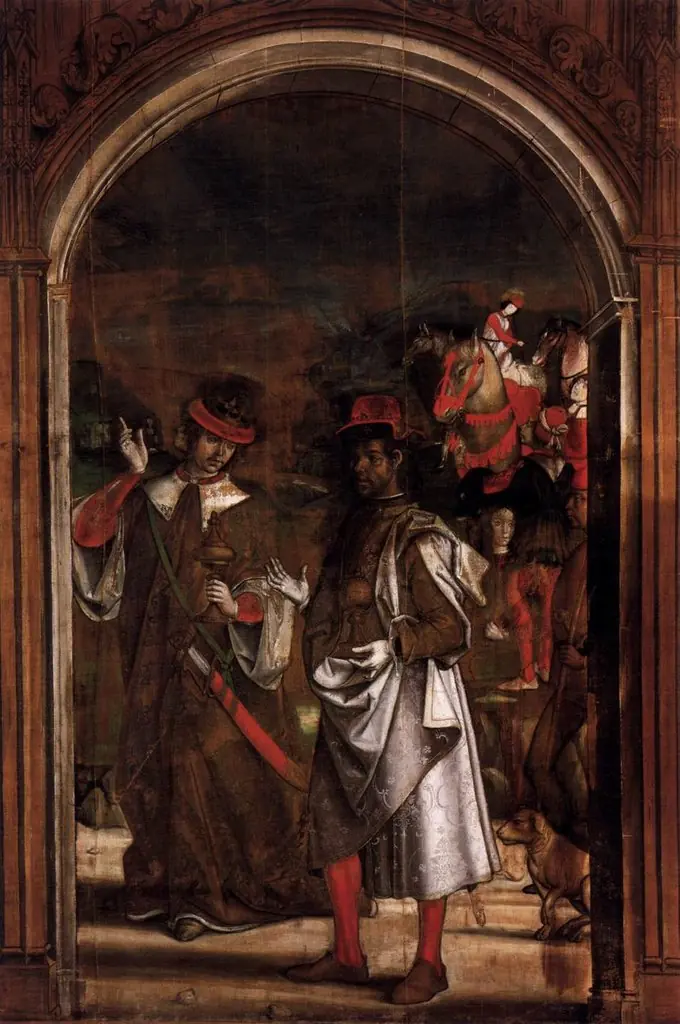
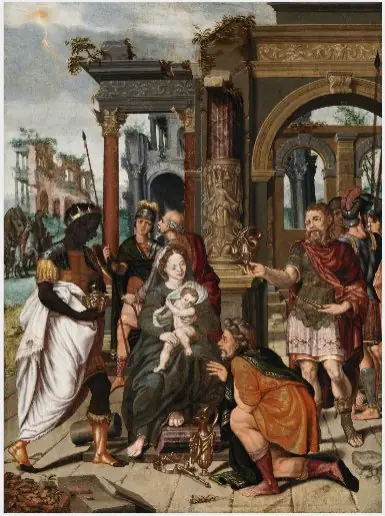
This work consists of two surviving panels from a mid‑16th‑century triptych by Pieter Aertsen (1509‑1575). The central panel and a narrow side panel each portray a different Magus kneeling before the infant Christ, while the third panel, showing the youngest king, remains lost. The panels were originally arranged together, each focusing on a single king, an uncommon compositional choice for Nativity scenes.
Artist & collection
Artist
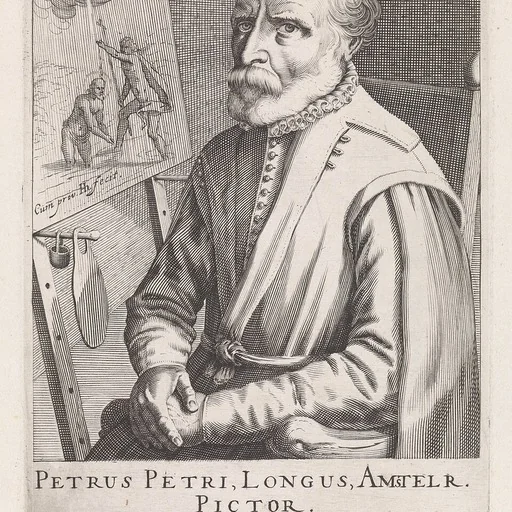
Pieter Aertsen (1508 in Amsterdam – 2 June 1575 in Amsterdam), called Lange Piet ("Tall Pete") because of his height, was a Dutch painter in the style of Northern Mannerism.

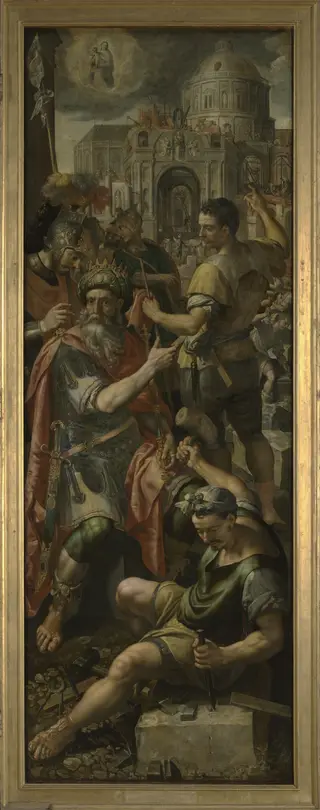 The Emperor Constantine erecting a church dedicated to Saint George
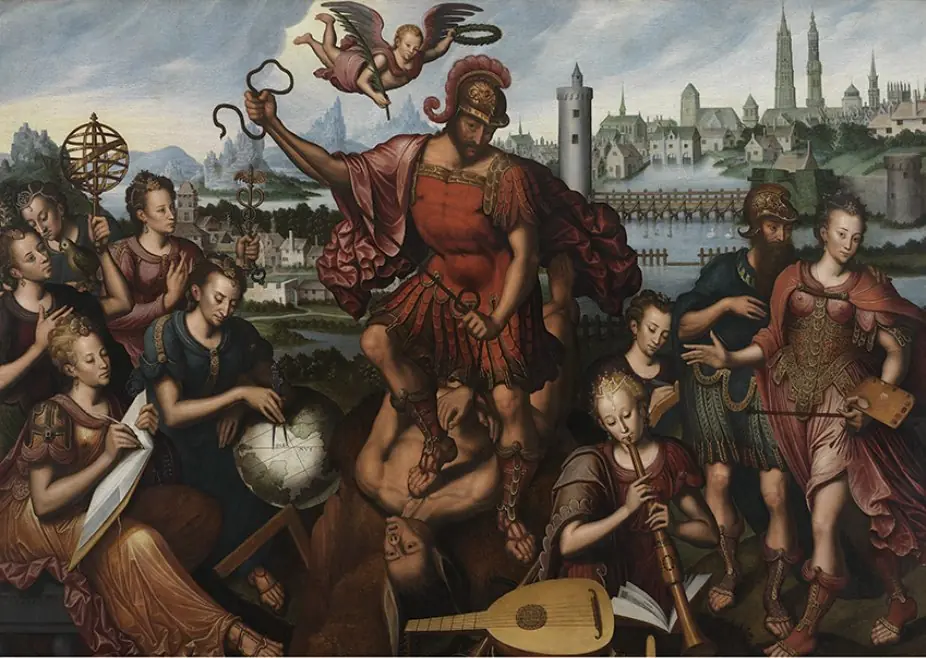 Mars, surrounded by the Arts and Sciences, conquers Ignorance
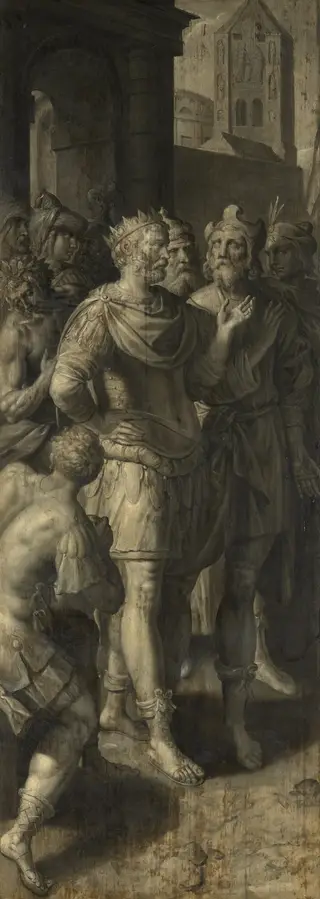 The Burial of Sarah
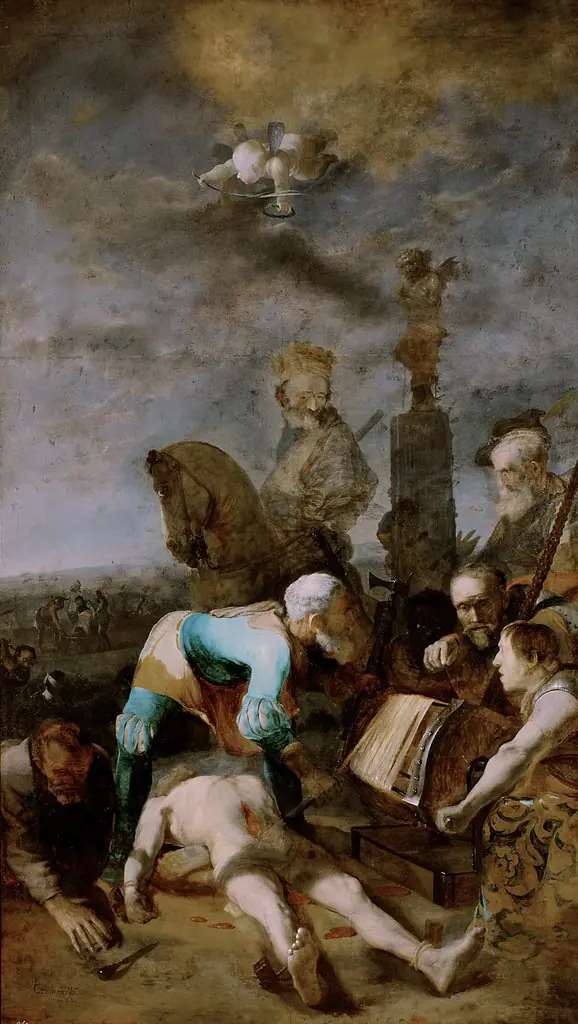 Martyrdom of Saint Thiemo
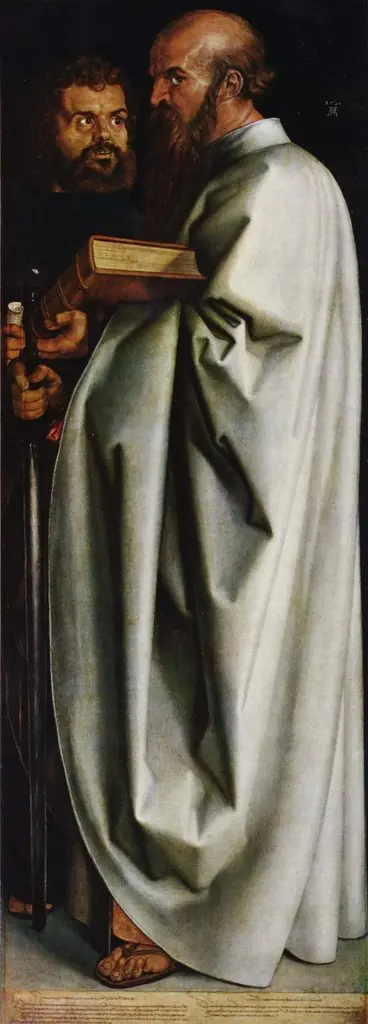 The Four Apostles: Saints Mark and Paul
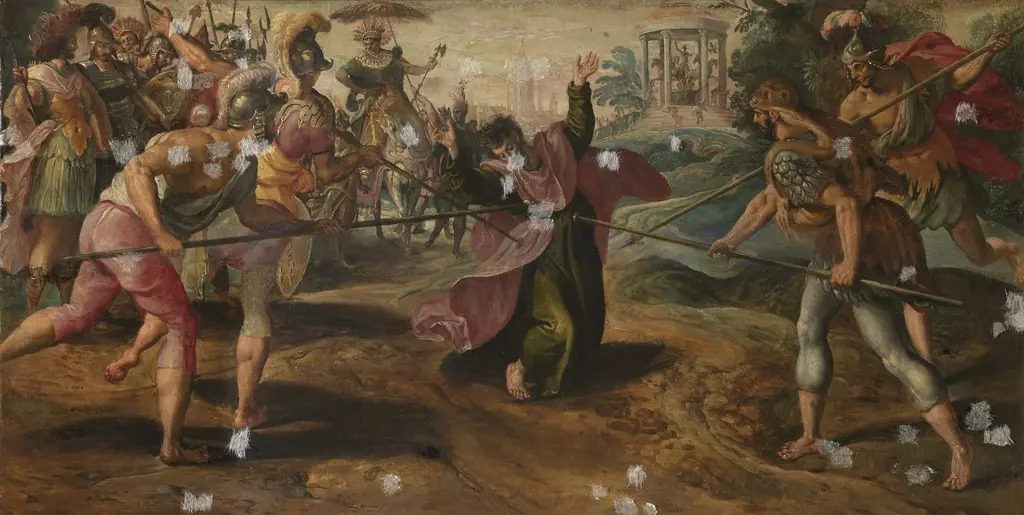 A Martyr
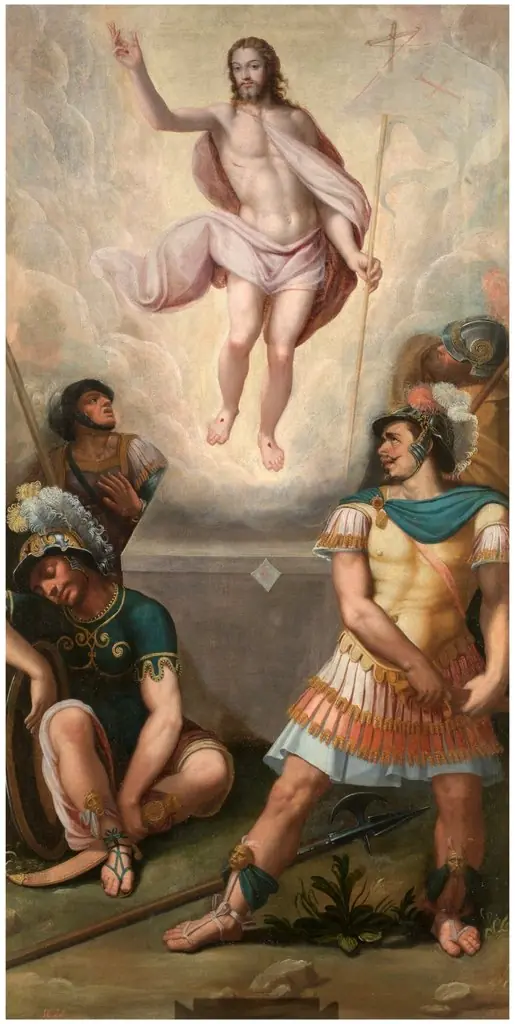 La Resurrección de Cristo
 Two Magi
 Judit with the Head of Holofernes
 The Adoration of the Magi