Artwork
Eed van de kleermakers
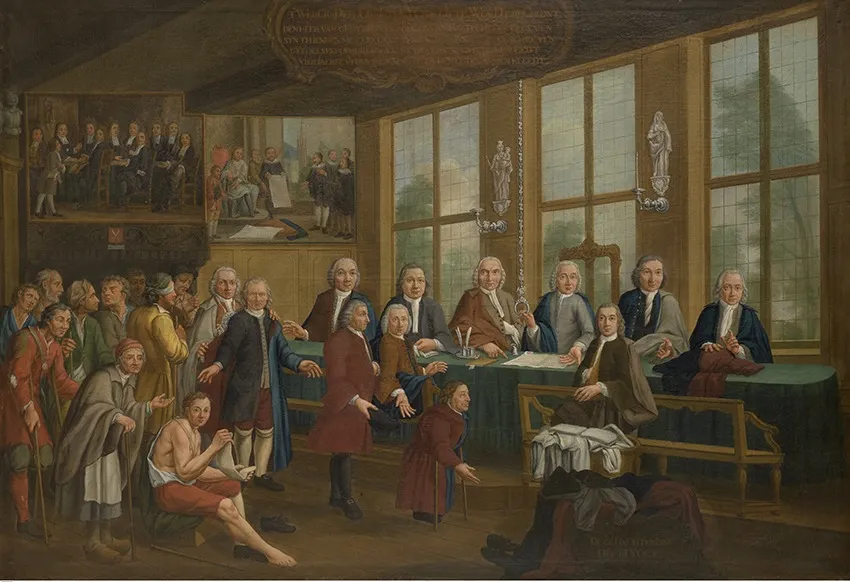
Eed van de kleermakers is an oil painting by the Rococo painting artist Pieter Beuckels. It dates from 1754 and is held in the collection of the Groeningemuseum.
About this work
Subject & Meaning
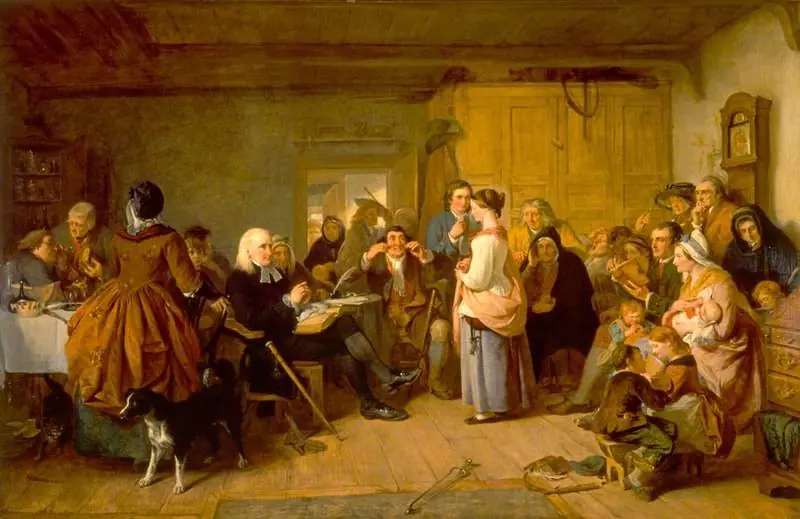
The title, Eed van de kleermakers (‘Oath of the tailors’), indicates that the scene captures the moment of a guild oath being sworn.
The painting portrays a tailor in his workshop, surrounded by items that identify his trade, a wig, a quill, a bench, a table, and a window that lets light into the interior. The title, Eed van de kleermakers (‘Oath of the tailors’), indicates that the scene captures the moment of a guild oath being sworn. The quill may allude to the signing of the oath, while the tailor’s tools and the workshop setting emphasize his professional identity and the collective solidarity of the tailors’ guild.
Technique & Style
Eed van de kleermakers is an oil painting executed on canvas, a medium and support combination typical of mid-eighteenth-century Flemish portraiture. The work measures 146.7 cm in height by 209.5 cm in width, a broad horizontal format suited to a group composition. Painted in 1754 by Pieter Beuckels, it is classified as a portrait and depicts tailors gathered around a table and bench, with additional elements including a window, a framed painting, a wig, and a quill.
The wide canvas accommodates the assembly of figures and the interior setting, while the inclusion of attributes such as the quill and the depicted painting-within-a-painting suggests a careful staging of the guild's ceremonial moment. The scale and oil-on-canvas handling are consistent with the formal group portraits produced for Bruges civic institutions during this period.
History & Provenance
The painting Eed van de kleermakers by Pieter Beuckels is dated 1754, as recorded in both the artist’s corpus and the Groeningemuseum’s records.
It has been held by the Groeningemuseum in Bruges since at least the late 19th century, where it remains part of the museum’s collection. The work depicts a tailor in an interior setting, consistent with the genre portraiture of the period. No archival evidence links the painting to a specific commission or private patron; its early institutional presence suggests it may have entered the museum through a donation or municipal acquisition before 1900.
The painting Eed van de kleermakers by Pieter Beuckels, created in 1754, is held in the collection of the Groeningemuseum. This institution, located in Bruges, houses the work as part of its permanent display of portraits and historical scenes. The artwork is cataloged within the museum's holdings, though specific inventory or accession numbers are not detailed in the available records.
The piece has been associated with the Groeningemuseum since at least its current cataloging, reflecting its status as a significant example of 18th-century Flemish portraiture. No specific exhibition history beyond its permanent location is documented in the provided sources.
Overview
Pieter Beuckels’ 1754 oil painting presents an interior scene in which a group of formally dressed men gather around a table laden with papers and a quill. The composition is anchored by a bench in the foreground, while tall windows admit daylight that illuminates the space. The work is part of the collection of the Groeningemuseum in Bruges.
Context
The work reflects the Enlightenment’s emphasis on rational discourse and documentation, themes common in mid‑1700s Flemish art. By portraying a formal gathering, Beuckels aligns with a broader visual tradition that highlighted the social importance of learned assemblies and the administrative functions of civic institutions.
Artist & collection

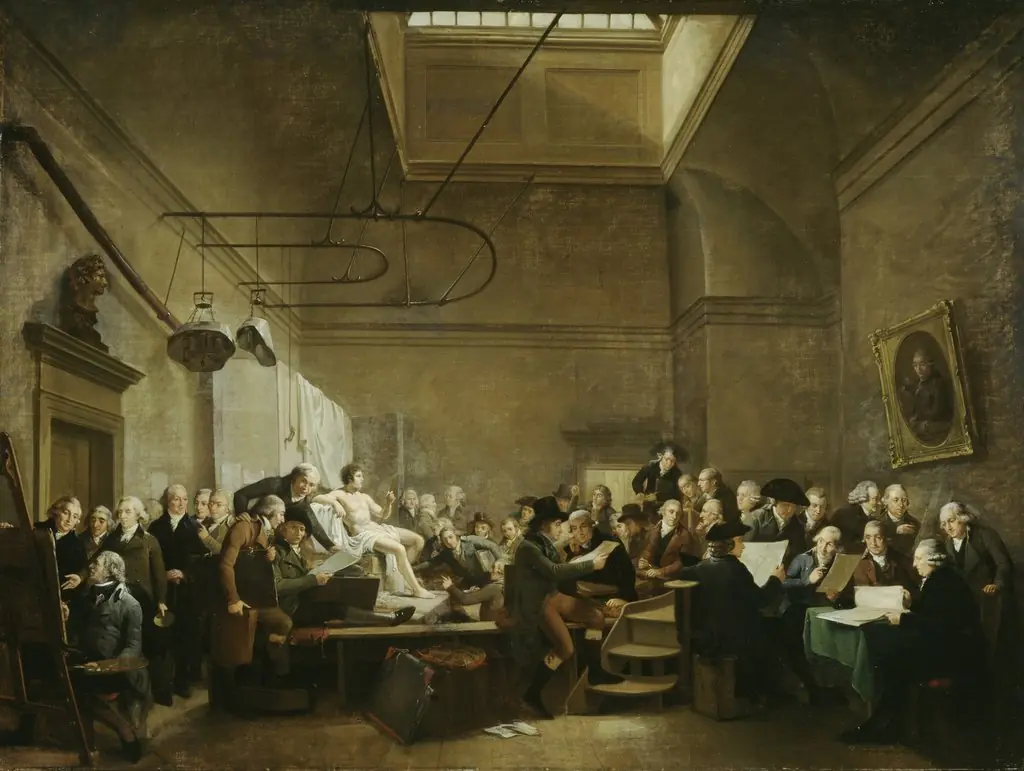
- The Drawing Gallery of the Felix Meritis Society
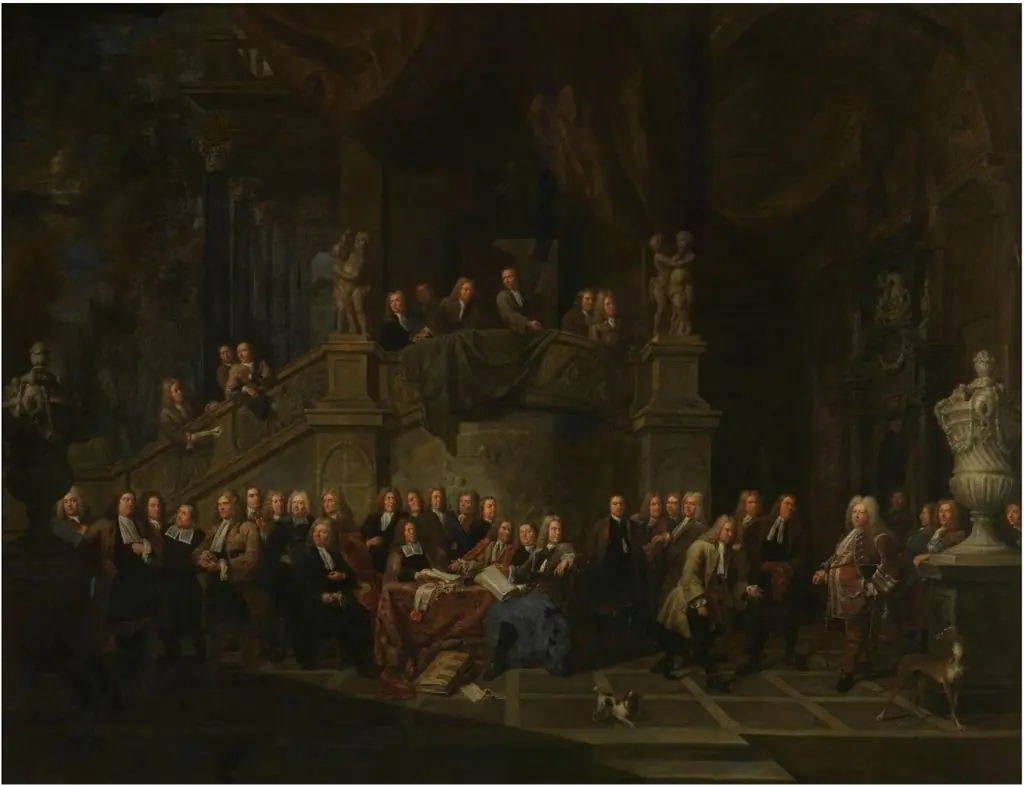 The reception of Jan Karel de Cordes at the guild hall
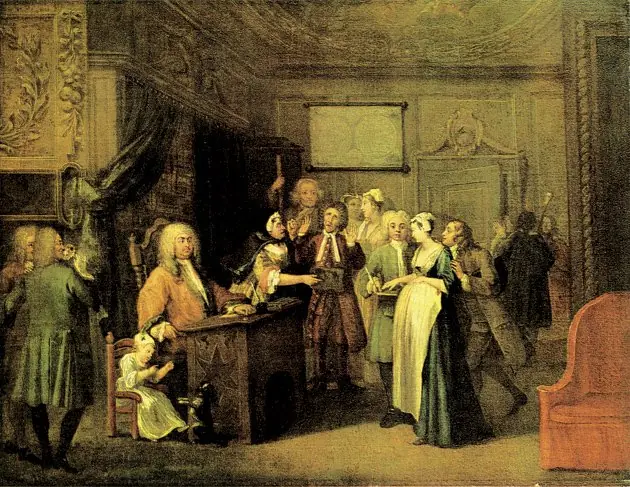 The Denunciation
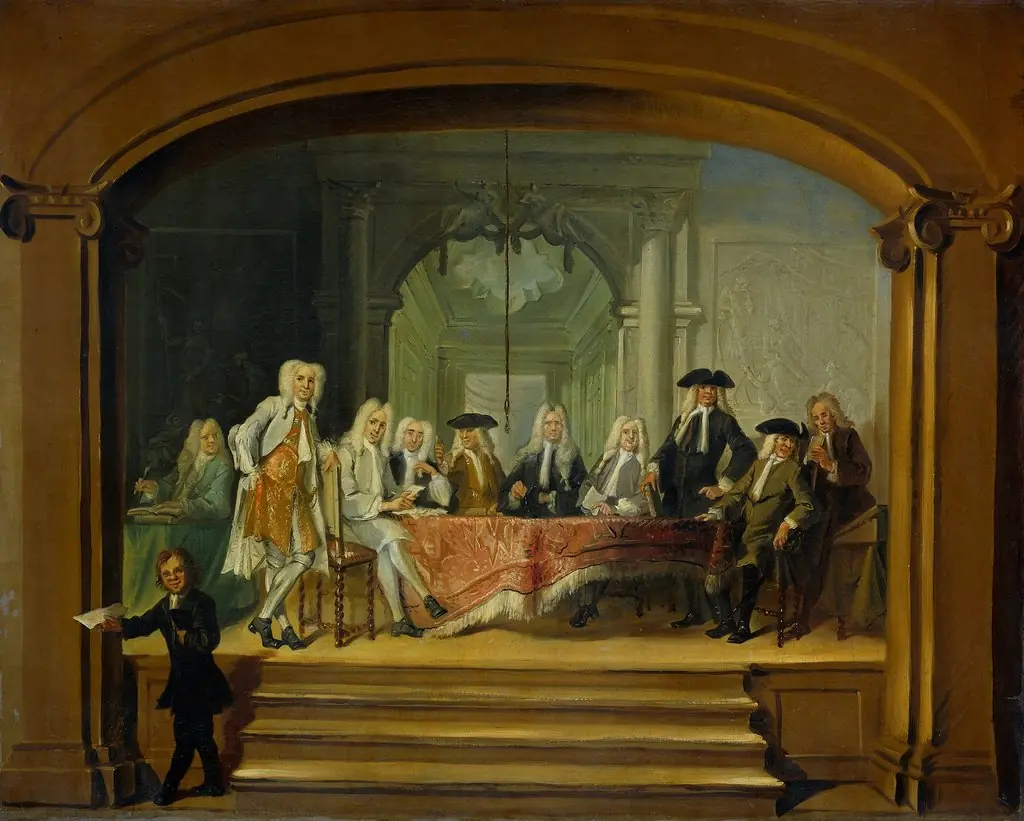 Regents of the Almshouse, 1729
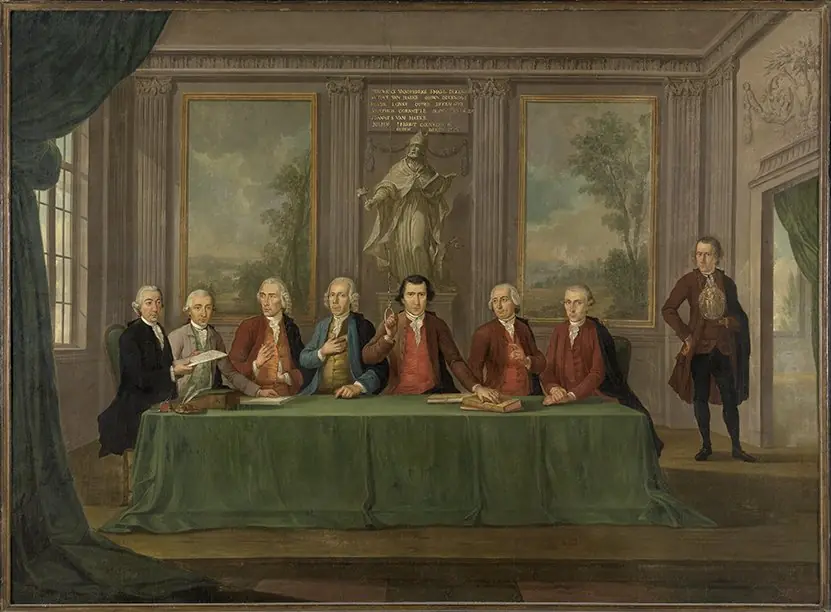 Het bestuur van het Brugse smedenambacht
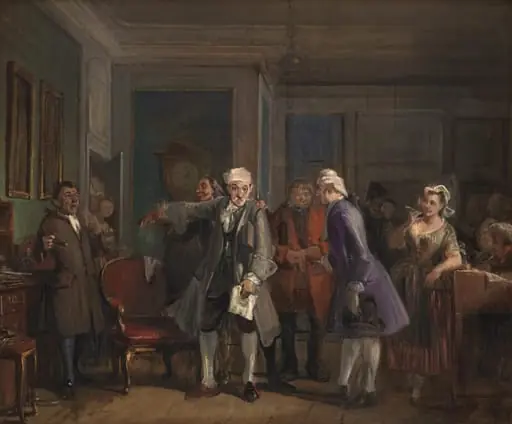 Fra Ludvig Holbergs "Den Stundesløse", I akt, 6. scene
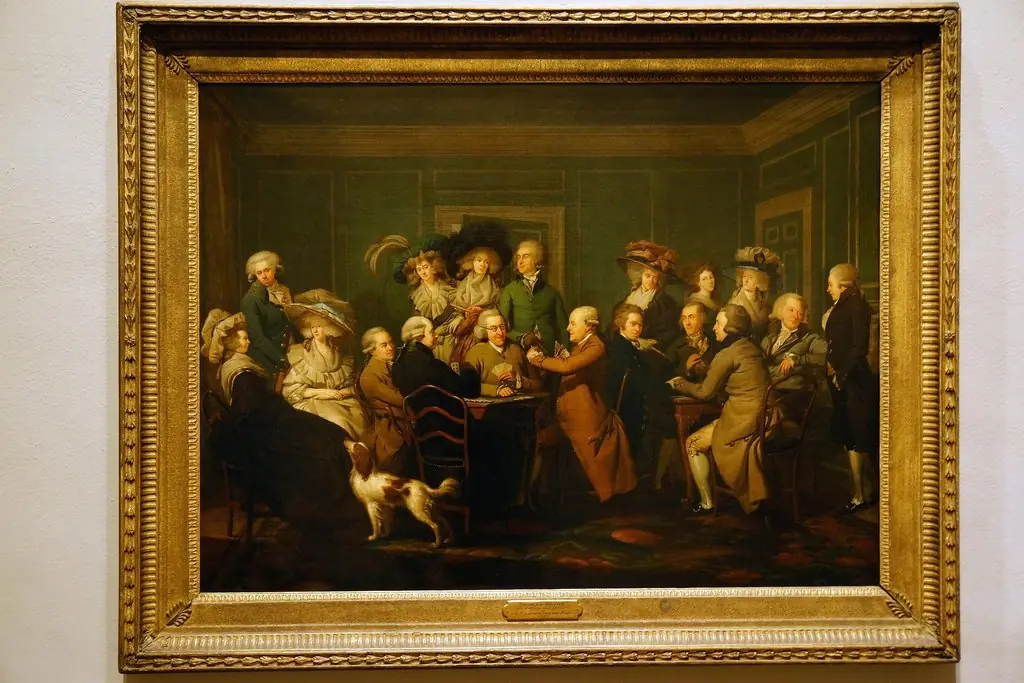 Portrait of Thomas Payne with His Family and Friends
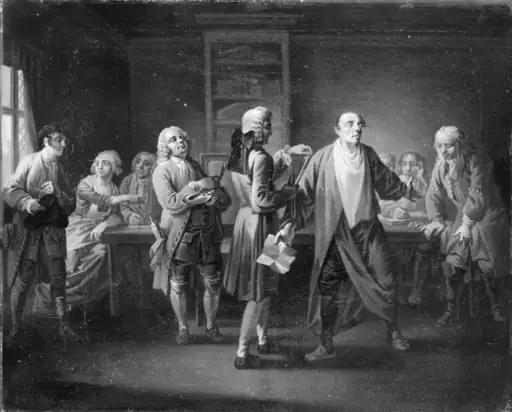 Den Stundesløse, I akt, 6. scene
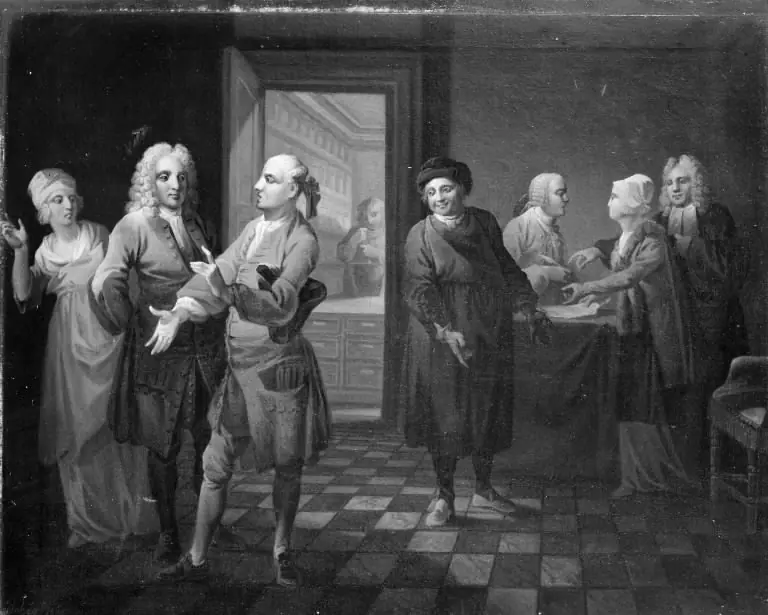 Mester Gert Westphaler, 25. scene
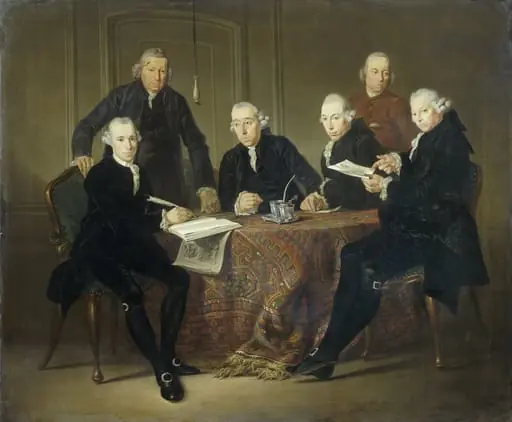 The Four Regents, the Secretary and the House Father of the Lepers' House of Amsterdam, 1773
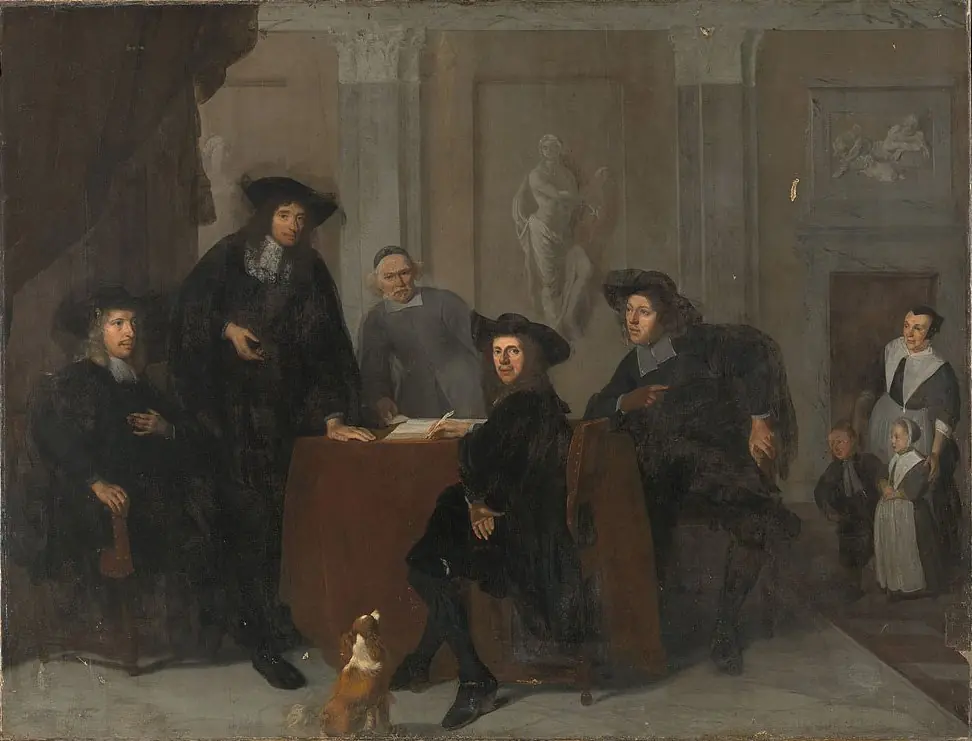 Regents of the Leper's house in Amsterdam
 Presbyterian Catechising