Artwork
Still life of a laid table
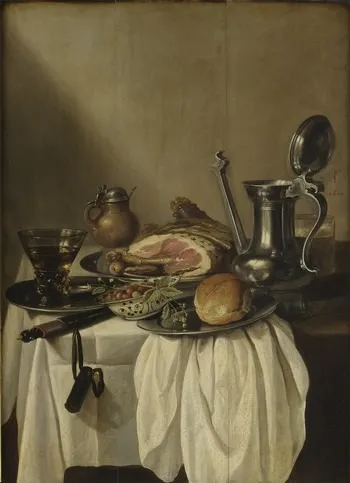
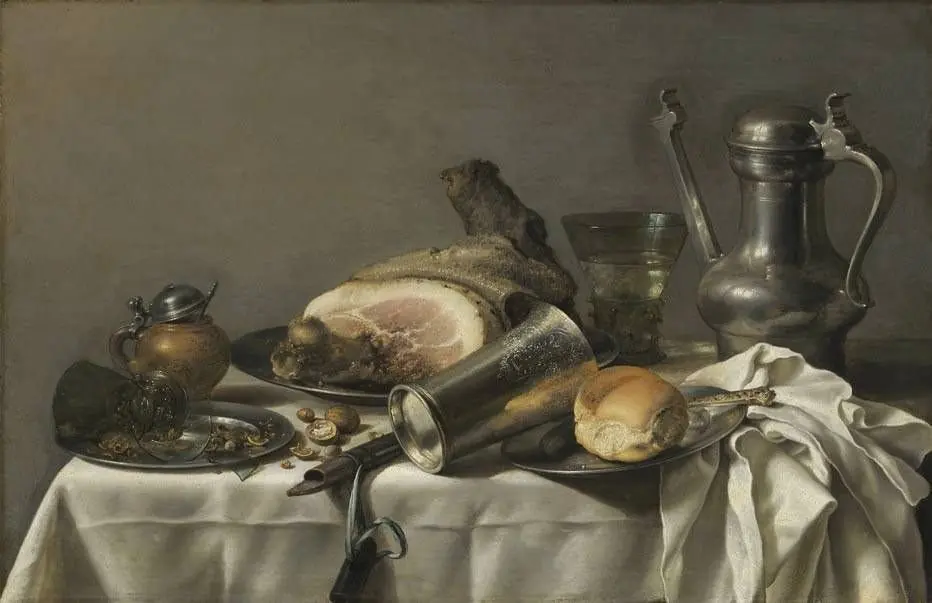
Still life of a laid table is an oil painting by the Dutch Golden Age artist Pieter Claesz. It dates from 1643 and is held in the collection of the Royal Museums of Fine Arts of Belgium. Created in 1643, this oil on canvas presents a modest banquet scene arranged on a white‑draped table.
About this work
Subject & Meaning
The painting depicts a banquet spread on a richly covered table, featuring a Jan Steen pitcher, a linen tablecloth, a knife, ham, bread, and a berkemeyer glass, all arranged on a wooden panel. These elements symbolize the transience of earthly abundance and moral lessons about consumption, linking the material wealth to themes of humility and the fleeting nature of worldly pleasures.
The composition emphasizes the centrality of the laid table as a vanitas motif, reminding viewers of the inevitable passage of time and the futility of material excess.
Technique & Style
The work is executed in oil paint on panel, a support combination characteristic of Dutch still life practice in the mid-seventeenth century.
The work is executed in oil paint on panel, a support combination characteristic of Dutch still life practice in the mid-seventeenth century. The composition measures 39 by 64 centimeters in a horizontal format suited to the laid-table subject. The arrangement centers on a draped tablecloth and assembles everyday objects including a Jan Steen pitcher, a berkemeyer, a knife, bread, and ham, rendered with the restrained palette and careful attention to surface textures associated with Pieter Claesz's mature banquet pieces.
The attribution is shared between Pieter Claesz and Adriaen Jansz Kraen, suggesting collaborative handling of the painting. Held by the Royal Museums of Fine Arts of Belgium, the panel is catalogued as a still life painting dated 1643.
History & Provenance
Pieter Claesz created Still life of a laid table in 1643. The artwork was co-created by Adriaen Jansz Kraen. Executed in oil paint on panel, the painting eventually entered the collection of the Royal Museums of Fine Arts of Belgium, where it remains today.
The painting is held in the collection of the Royal Museums of Fine Arts of Belgium in Brussels.
It is inventoried as inv. 678 in the holdings of the Royal Museums of Fine Arts of Belgium.
Its exhibition history includes display at the Royal Museums of Fine Arts of Belgium, Brussels, where it remains accessible in the permanent collection.
Legacy
The painting's influence is noted through its inclusion in major institutional collections, particularly the Royal Museums of Fine Arts of Belgium, which holds the work in its permanent collection. Its legacy is reinforced by scholarly attention to Claesz's role in developing the 'banketstuk' or banquet scene, a genre that influenced later Dutch still life painters. The work's compositional elements, such as the depiction of a laid table with specific objects including a Jan Steen pitcher and ham, have been cited in art historical analyses of 17th-century Dutch painting as exemplars of the genre.
Overview
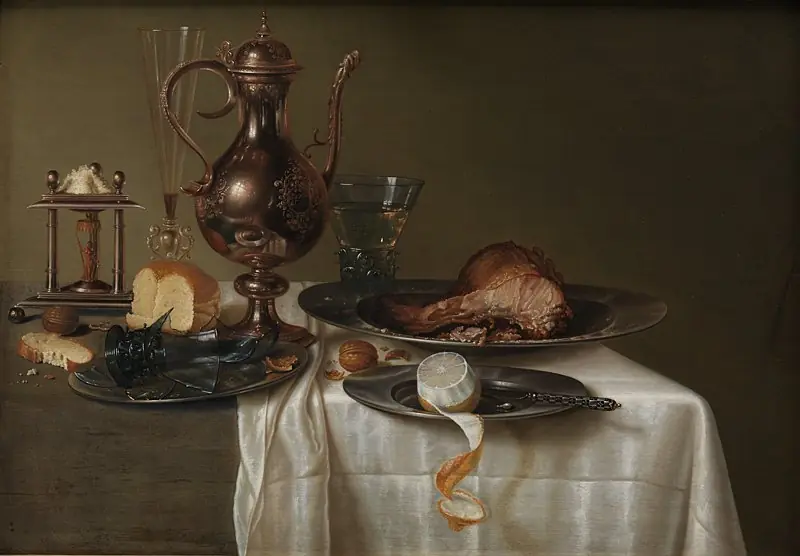
Created in 1643, this oil on canvas presents a modest banquet scene arranged on a white‑draped table. A substantial ham occupies the centre, flanked by a loaf of bread and a bowl of fruit. To the left rest two glasses and a pitcher, while a tall silver jug with an elongated handle stands on the right. The composition is illuminated from the left, casting soft shadows that enhance the tranquil atmosphere.
Context
Executed during the height of the Dutch Golden Age, the piece aligns with a tradition of still‑life paintings that celebrated the material culture of the period. Objects such as the berkemeyer, a shallow drinking glass, and the Jan Steen‑style pitcher reference contemporary domestic ware, situating the work within everyday life rather than aristocratic display.
Artist & collection

Museum
Royal Museums of Fine Arts of Belgium
Continue through works from the same source collection.
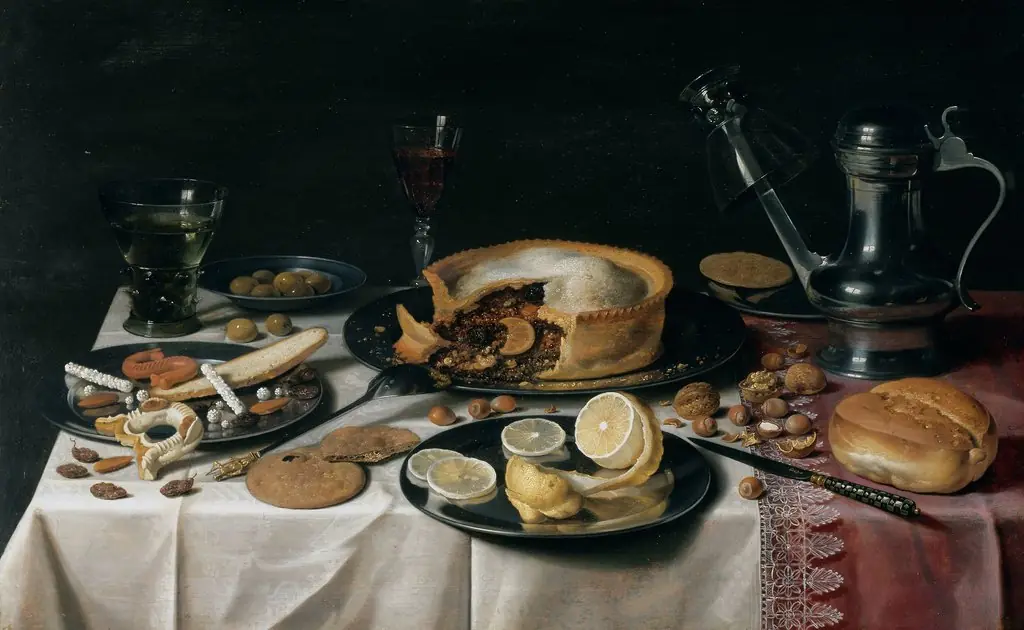
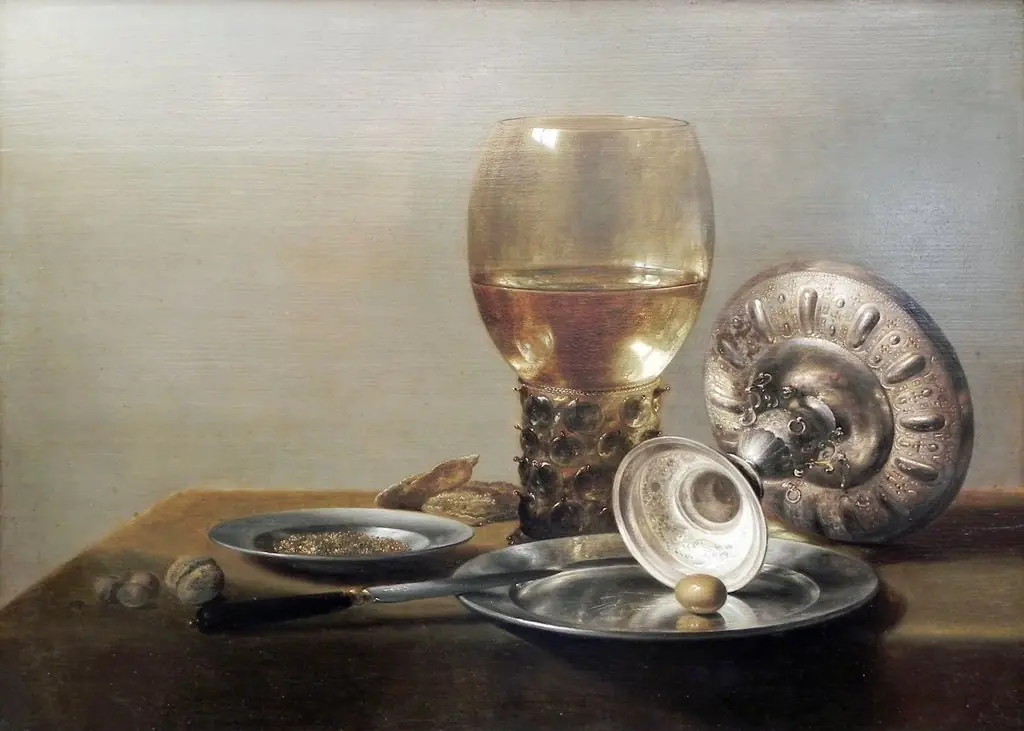
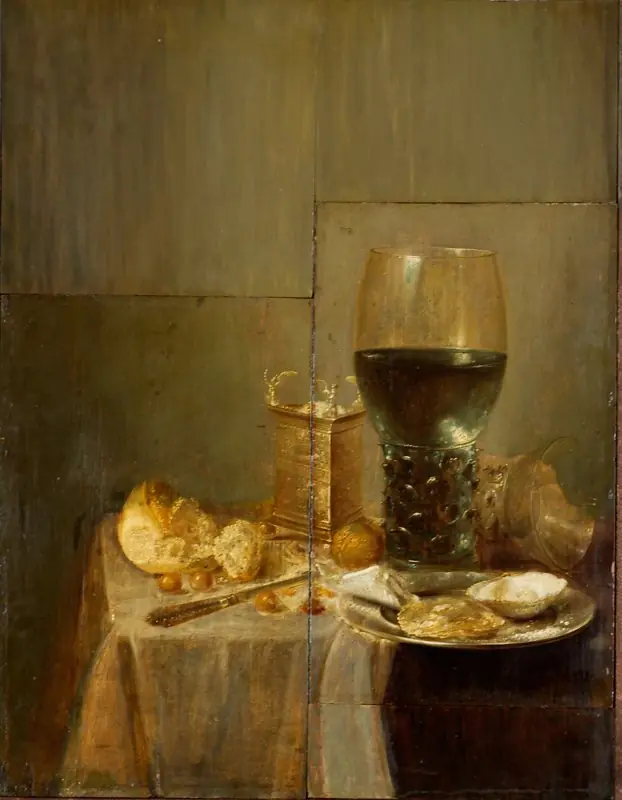
 Laid table with Jan Steen pitcher and ham
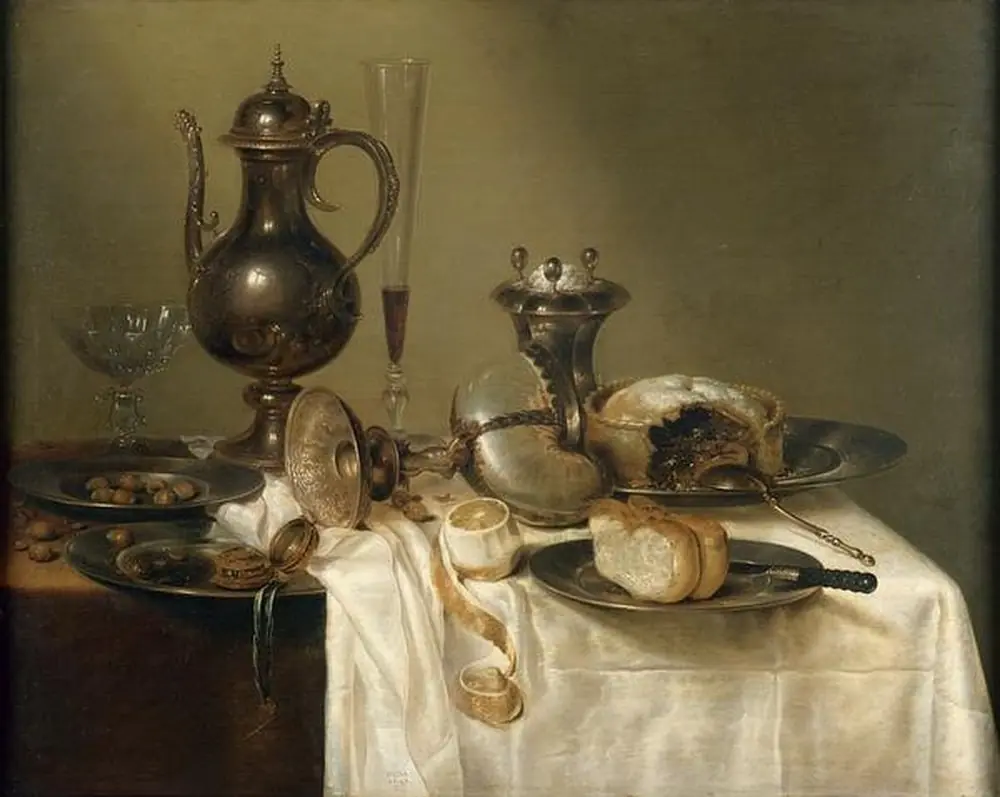 Still life with decanter, nautilus cup, wine glasses and pie
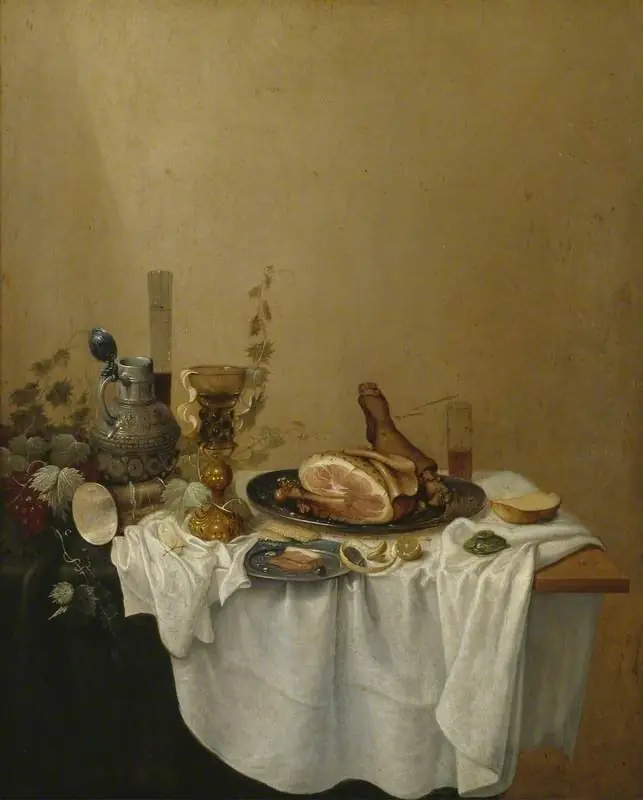 Still life with stoneware jug, bekerschroef, glassware and a leg of ham
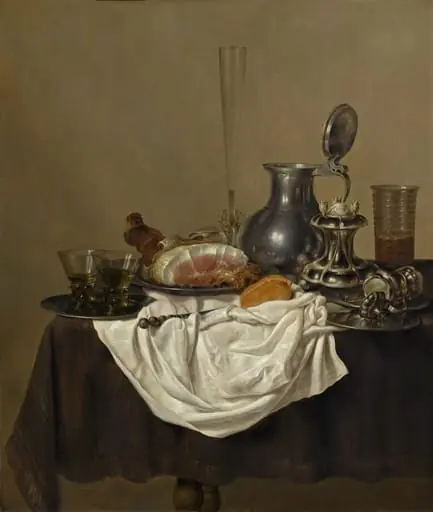 Still Life with Ham
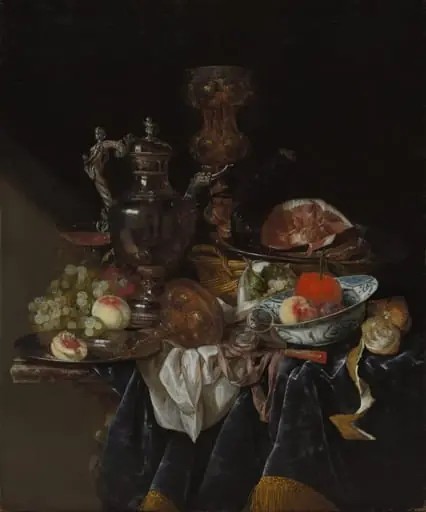 Silver Wine Jug, Ham, and Fruit
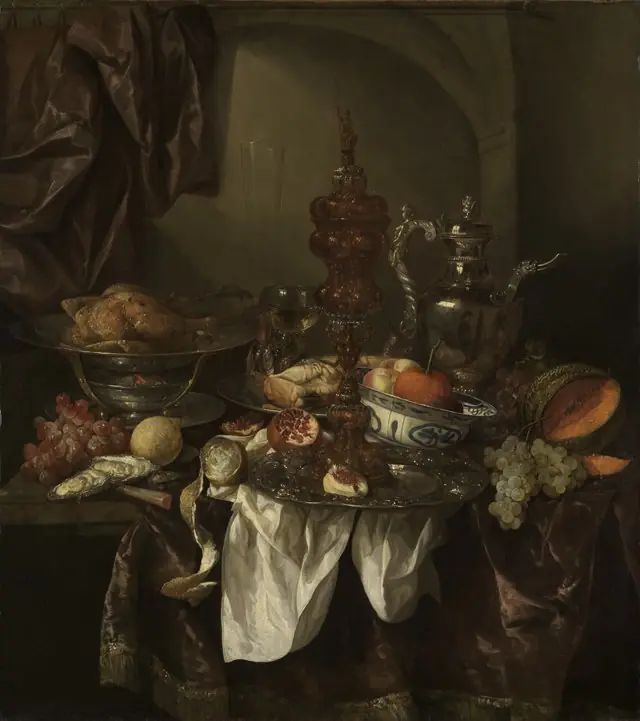 Still life with fruit, roast, silver- and glassware, porcelain and columbine cup on a dark tablecloth with white serviette
 Still Life. Breakfast Piece