Artwork
The Faint
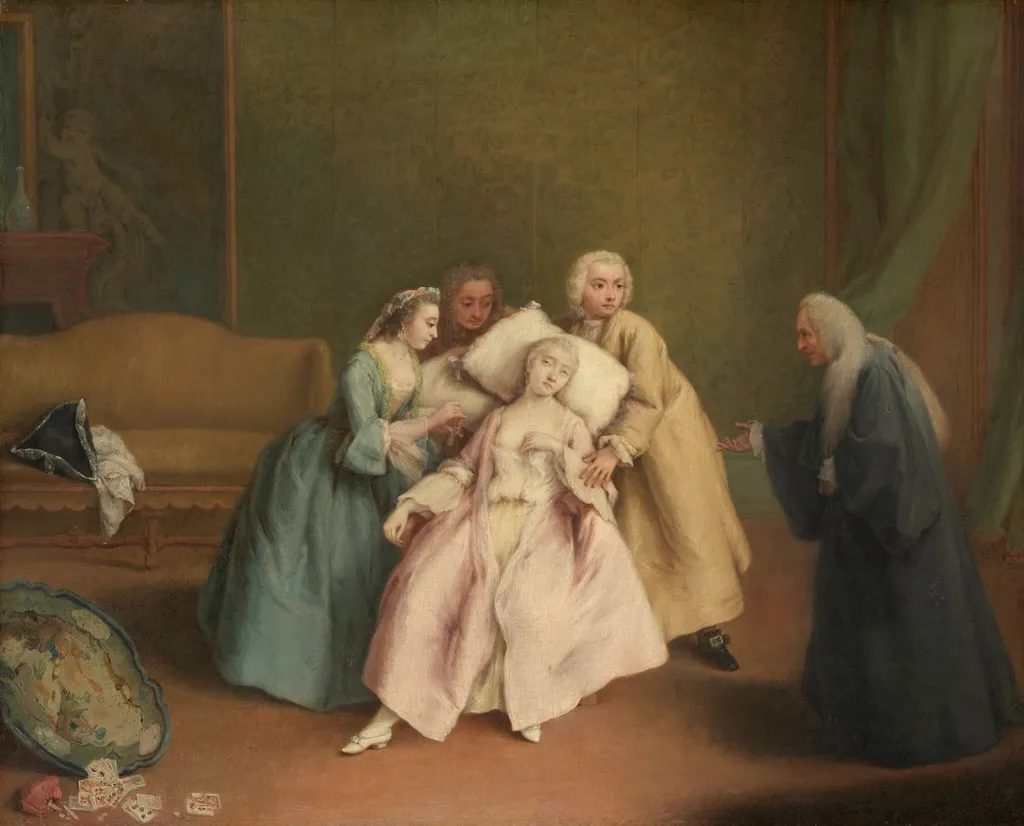
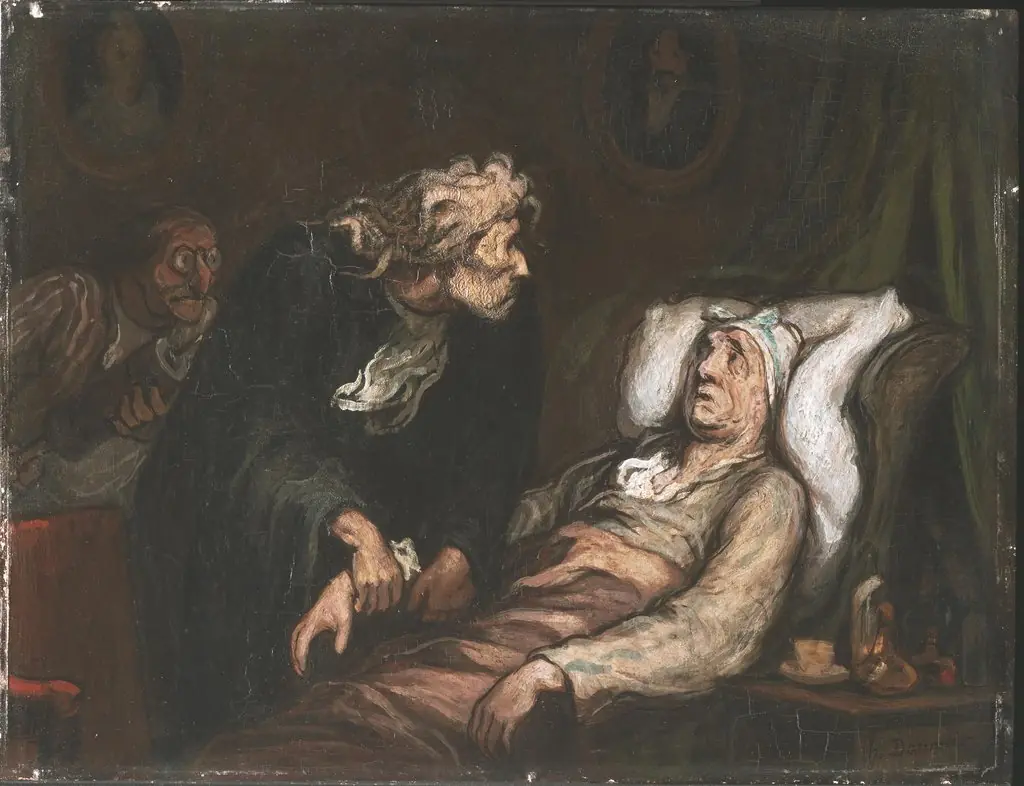
The Faint is an oil painting by the Baroque artist Pietro Longhi. It dates from 1744 and is held in the collection of the National Gallery of Art.
About this work
Technique & Style
Executed in oil on canvas in 1744, the work measures 50 cm in height by 61.
Executed in oil on canvas in 1744, the work measures 50 cm in height by 61.7 cm in width. The handling is characterized by Longhi’s light, precise brushwork and a restrained palette that emphasizes delicate tonal transitions and softly modeled figures. Stylistically, the composition aligns with Longhi’s genre scenes, employing a shallow, stage-like space and carefully observed interiors to frame the narrative action.
History & Provenance
Pietro Longhi created the oil-on-canvas painting The Faint in 1744. The work remained in the possession of Prince Alberto Giovanelli in Venice until approximately 1930. It subsequently passed through the collection of Count Alessandro Contini Bonacossi in Rome before being purchased by the Samuel H. Kress Foundation in New York in 1931.
The Kress Foundation officially gifted the painting to the National Gallery of Art in Washington, D.C., in 1939, where it remains part of the Samuel H. Kress Collection.
Pietro Longhi's 1744 oil painting The Faint is held in the collection of the National Gallery of Art in Washington, D.C., as part of the Samuel H. Kress Collection. The work entered the foundation's holdings in 1931 after being purchased from Count Alessandro Contini Bonacossi in Rome. Prior to this acquisition, the canvas belonged to Prince Alberto Giovanelli of Venice until approximately 1930.
The Samuel H. Kress Foundation subsequently gifted the painting to the National Gallery of Art in 1939, where it remains today.
Legacy
The Faint is frequently cited in studies of eighteenth-century Italian art as an example of Pietro Longhi's portrayal of everyday Venetian life. Its reputation was reinforced by inclusion in the Samuel H. Kress Collection, which acquired the work in 1931 and gave it to the National Gallery of Art in 1939. The painting remains in that collection, where it continues to represent Longhi's contribution to Venetian genre painting.
Overview
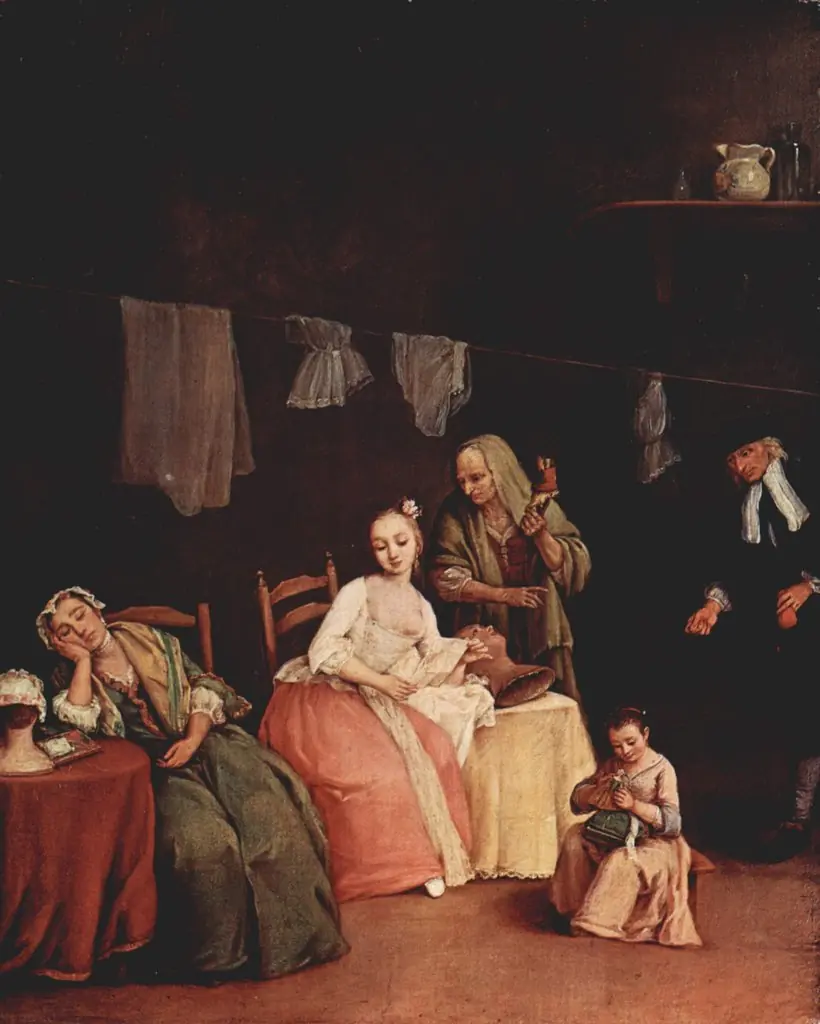
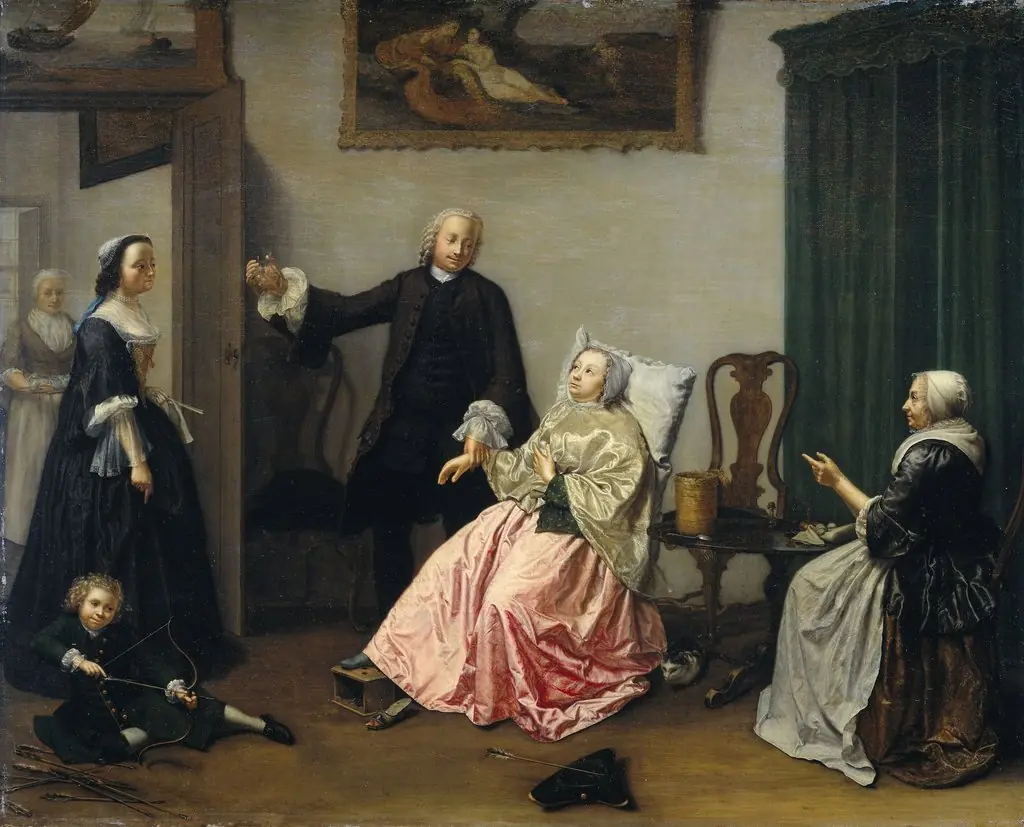
Pietro Longhi’s oil painting The Faint, executed around 1744, presents a domestic interior where a woman collapses into a man’s lap. The scene captures a moment of sudden illness, surrounded by onlookers whose gestures convey alarm and assistance.
Subject & Meaning
The central figure, dressed in a pink gown, lies with her head on a white cushion, her pallid complexion indicating faintness. Around her, a man in a yellow robe and three additional figures, a pair of women and another man, react with concern, one holding a fan, suggesting attempts to revive her.
Context
During the Rococo period, Venetian painters like Longhi turned to intimate, anecdotal subjects, moving away from grand historical narratives. This painting reflects contemporary interest in the private sphere, emphasizing human interaction and the fleeting moments of daily existence.
Own this work as a print
Artist & collection