Artwork
Bakı şəhərinin dənizdən görünüşü
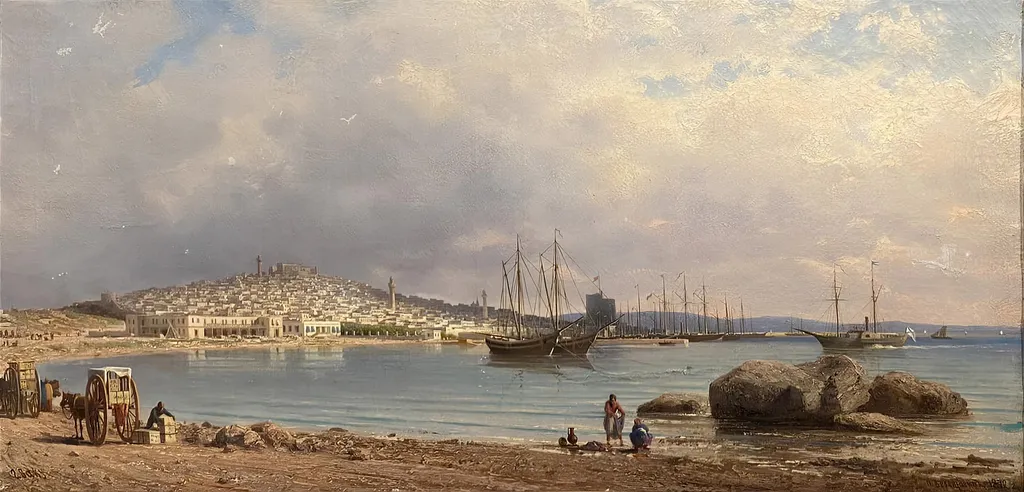
Bakı şəhərinin dənizdən görünüşü is an unspecified painting by the Impressionist artist Piotr Petrovitch Veretschagin. It dates from 1872 and is held in the collection of the National Art Museum of Azerbaijan.
About this work
Overview
Painted in 1872 by Russian artist Pyotr Petrovich Vereshchagin, this work captures the coastal silhouette of Baku as seen from the Caspian Sea.
Painted in 1872 by Russian artist Pyotr Petrovich Vereshchagin, this work captures the coastal silhouette of Baku as seen from the Caspian Sea. Executed in the Academic tradition, the painting blends precise topographical detail with atmospheric rendering. It is held in the National Art Museum of Azerbaijan and represents a moment in 19th-century Russian art when landscape painting increasingly turned toward regional subjects beyond the empire’s core.
Subject & Meaning
The scene presents Baku’s settlement nestled along a rocky shore, with calm waters reflecting the sky and distant vessels at rest. Human figures and a carriage near the water’s edge suggest quiet daily activity, not grandeur or conflict. The composition emphasizes harmony between settlement and environment, conveying a sense of stillness rather than political or economic narrative. It reflects a contemplative gaze on a distant provincial town within the Russian Empire.
Technique & Style
Vereshchagin employed careful brushwork to define architectural forms and subtle gradations of light across water and sky. His use of muted tones and soft transitions between foreground and background creates spatial depth. While rooted in Academic conventions, the painting shows sensitivity to natural light and atmospheric conditions, hinting at influences from plein-air practice, though not fully abandoning studio-based composition.
History & Provenance
Created during Vereshchagin’s period of travel and study in the Caucasus, the painting entered the collection of the National Art Museum of Azerbaijan in the 20th century. Its preservation reflects the museum’s commitment to documenting regional visual history under imperial and Soviet cultural frameworks. No significant alterations or reattributions are recorded; its origin and ownership remain consistent since its creation.
Context
In the 1870s, Russian artists increasingly turned to the empire’s peripheries for subject matter, drawn by both ethnographic interest and state-sponsored exploration. Baku, then a growing oil town, was rarely depicted in fine art. Vereshchagin’s view avoids industrial elements, focusing instead on a timeless, pastoral impression, aligning with broader trends that idealized non-Russian landscapes as serene and unspoiled.
Legacy
Though not widely exhibited outside Azerbaijan, the painting remains a key example of 19th-century Russian landscape work focused on the Caucasus. It contributes to the visual record of Baku before rapid industrialization and stands as a quiet counterpoint to more dramatic imperial narratives. Vereshchagin’s approach influenced later regional painters who sought to document local environments with observational fidelity.
Artist & collection
Artist
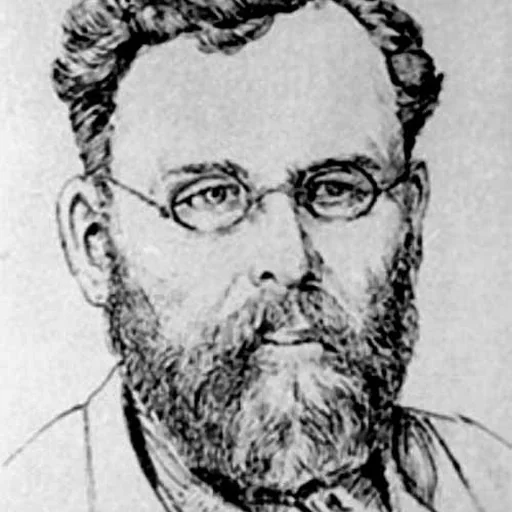
Pyotr Petrovich Vereshchagin (Russian: Пётр Петрович Верещагин; 14 January 1834/36 in Perm – 16 January 1886 in Perm) was a Russian landscape and cityscape painter in the Academic style.

- Southern Harbour Town
 A View From Beirut (2)
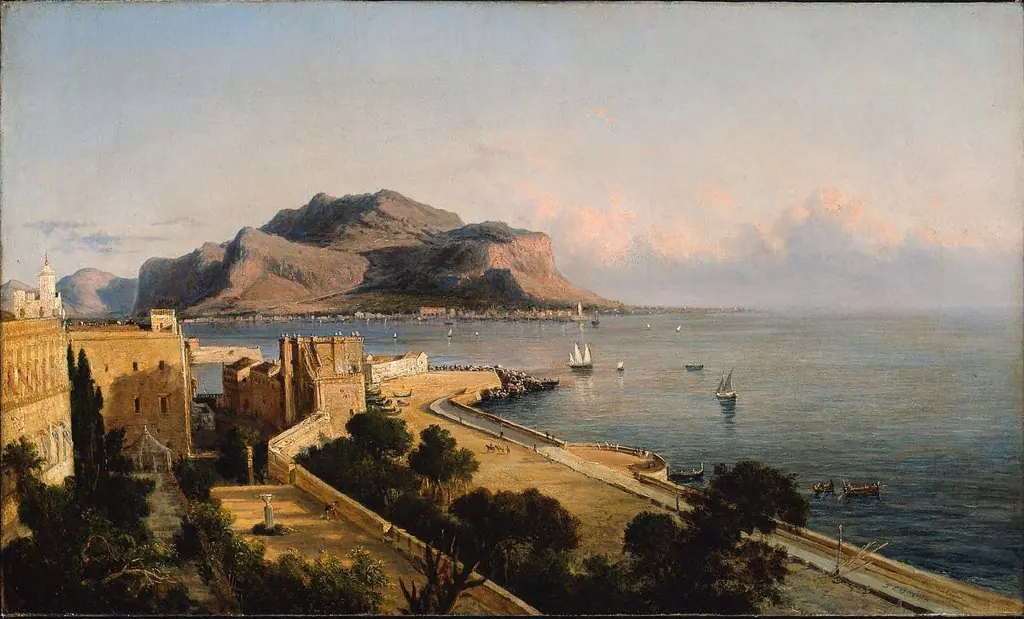 Monte Pellegrino at Palermo, Italy
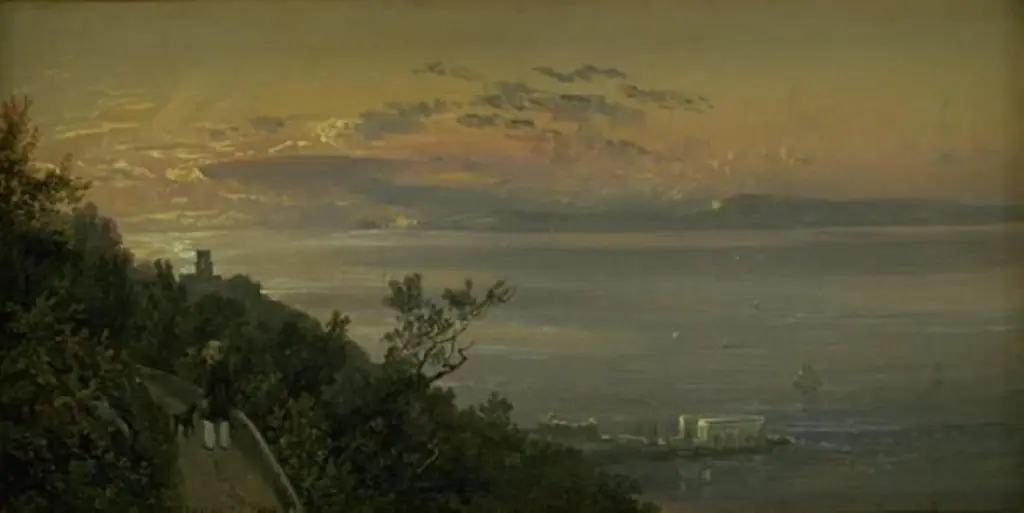 View from the Hills above Castellamare at Naples
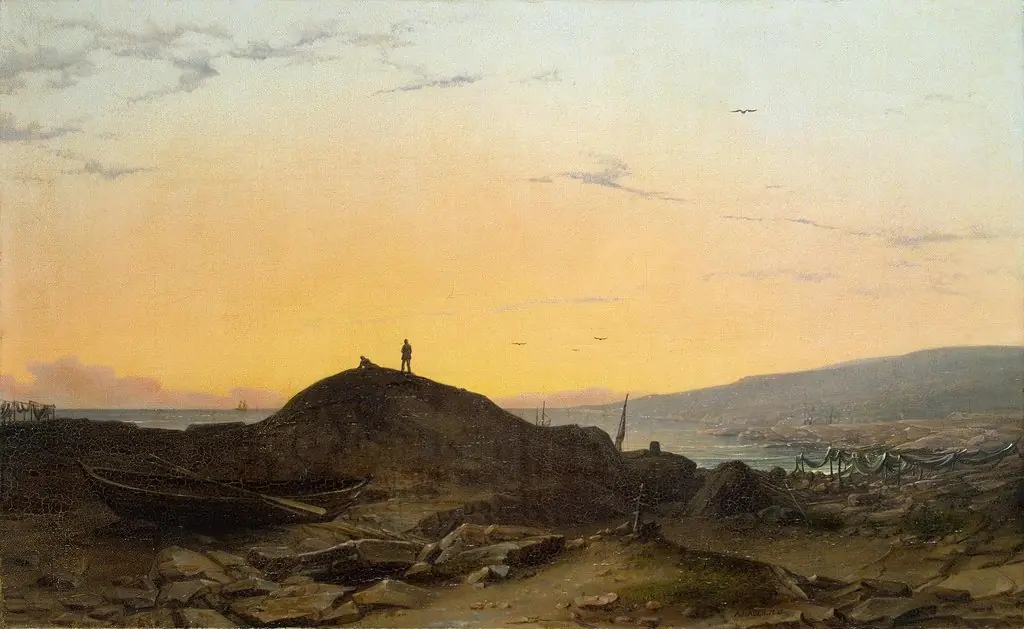 Sea Bay
 View from the Hills above Castellamare at Naples
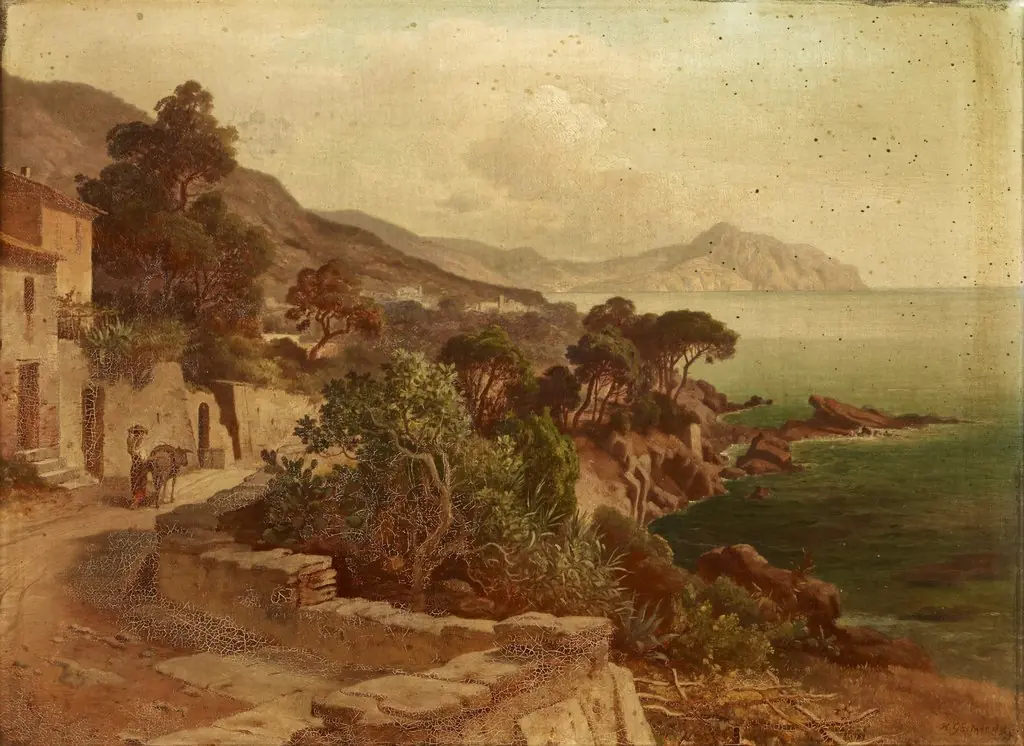 Mediterranean Landscape
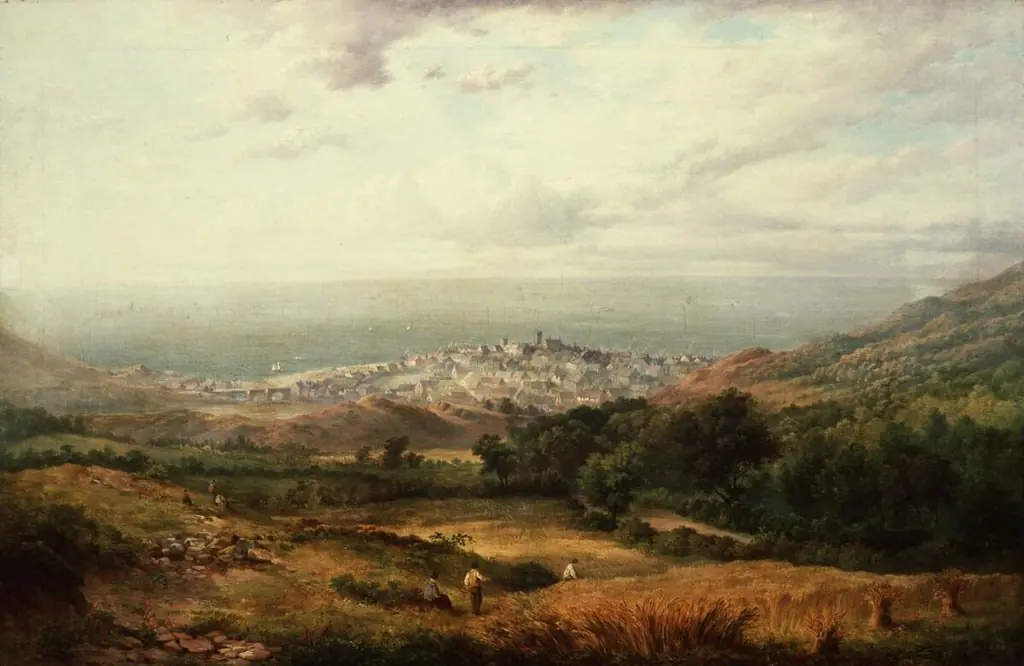 View of Aberystwyth
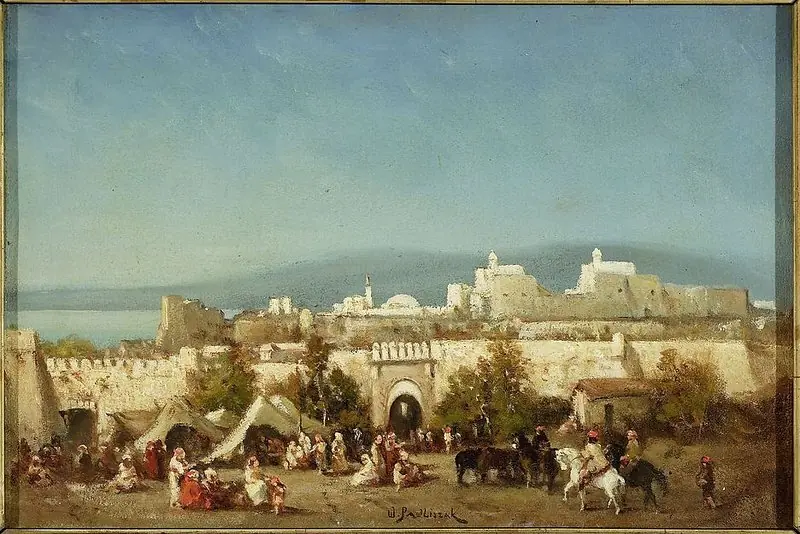 Southern landscape with staffage
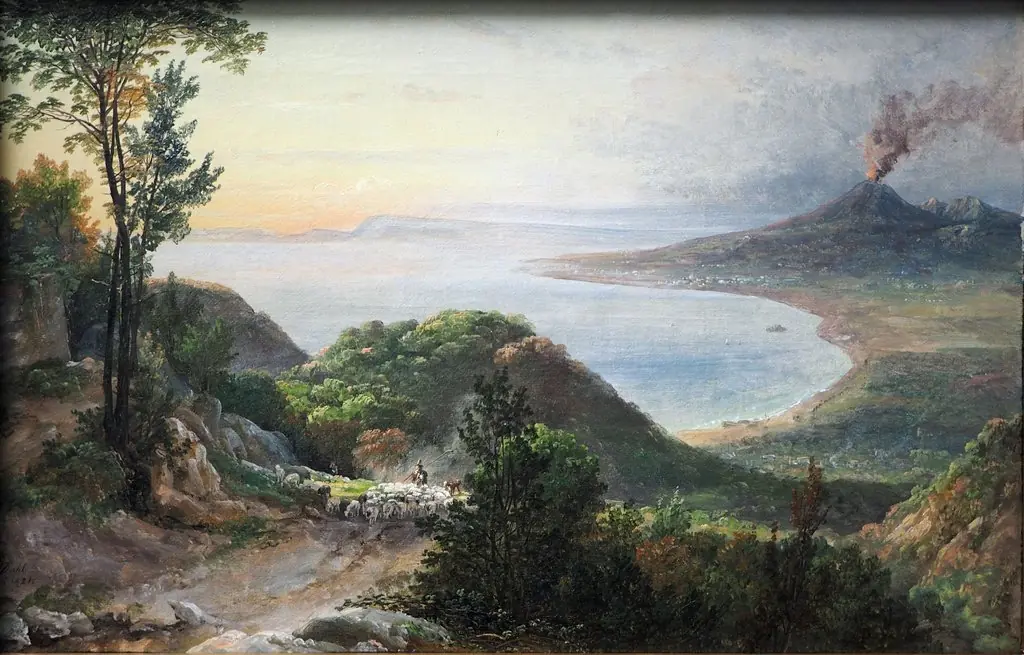 Blick von Pimonte auf die Bucht von Neapel
 Vedere din Bosfor
 View of Mainz on the Rhine